

Four tools put software on sales work. Two of them build pipeline you do not have, and two of them answer visitors you already do. Most proposals confuse the two.
A founder sent me a proposal last month for an autonomous SDR. Twelve pages, a nice ROI table, a pilot price. I asked one question: what is broken right now?
The answer was that pricing-page visitors reach the page, do nothing, and leave. That is a routing problem. The proposal was for an outbound tool.
We see this constantly, so we wrote the comparison as a buying decision rather than a feature grid. The 11x vs Artisan vs Qualified vs Drift study reads each vendor's published pricing and positioning, verified 16 August 2026.
Here is the part that matters before you book anything: the decision is a lane decision first and a demo decision second.

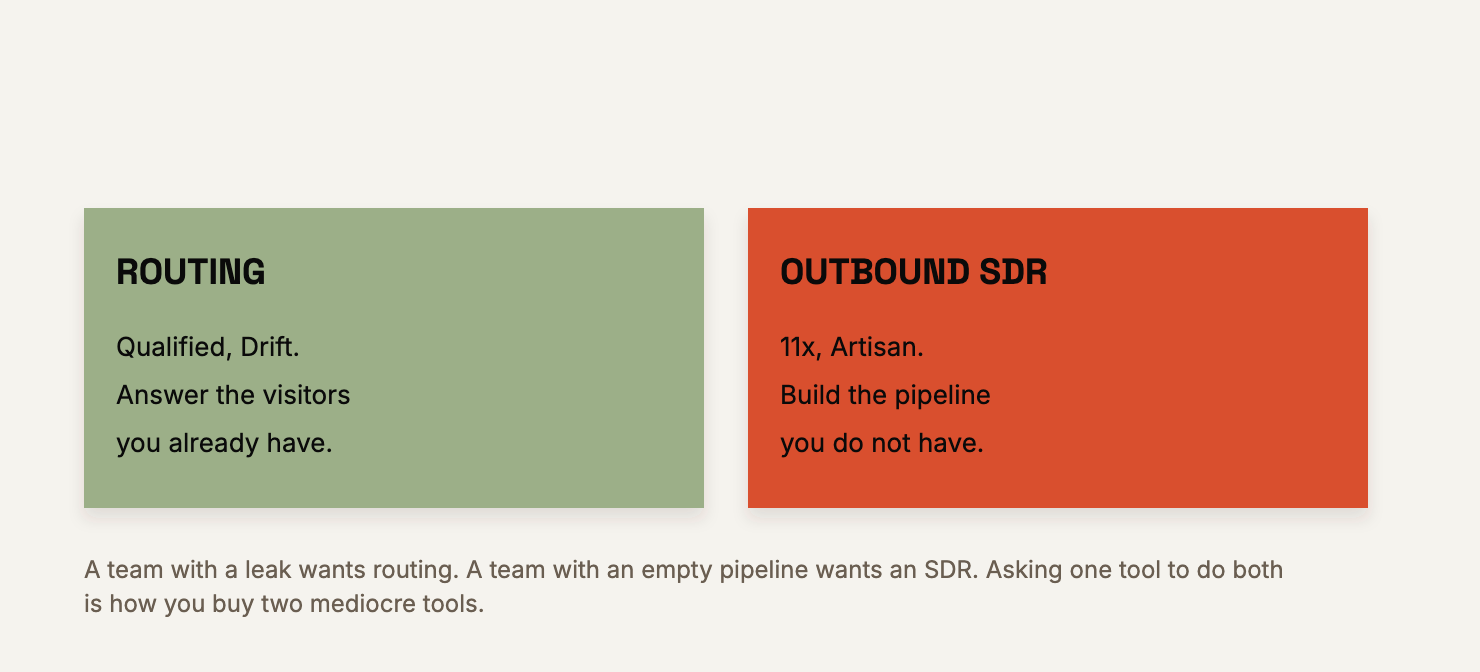
Two lanes, and they are not competitors
On paper these four look interchangeable. Software that talks to buyers, priced per month. In practice they split cleanly into two groups that only overlap on a slide deck.
*On-site routing.* Qualified and Drift answer visitors already on your domain. They qualify intent, route to a rep, or book the meeting. They are for teams with high-intent traffic that dies at the booking step.
*Outbound and inbound SDR.* 11x and Artisan find prospects, write the sequences, run the phone work, and book meetings with no human in the loop. They are for teams with little or no SDR coverage.
A team with a pipeline leak wants a routing tool. A team with an empty pipeline wants an SDR. Asking one product to do both is how you end up with two mediocre tools and one confused RevOps lead.
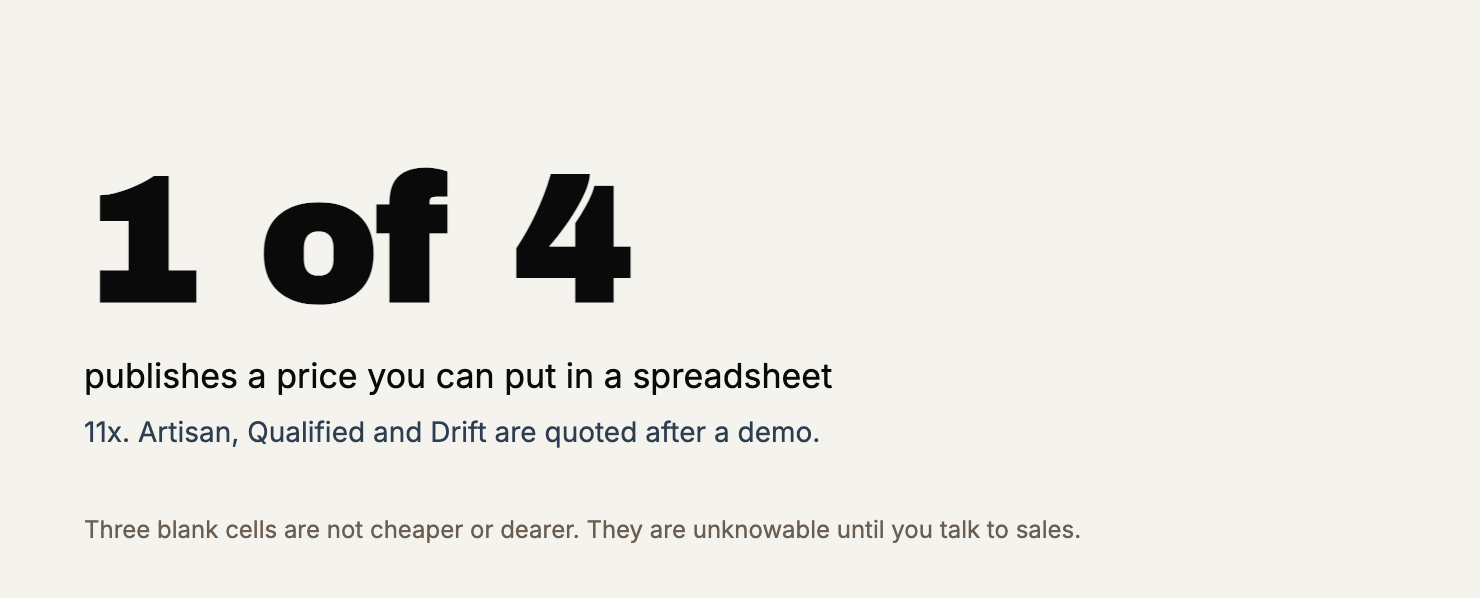
Only one of the four publishes a price
This is the most useful fact in the whole comparison, and it barely shows up in evaluations.
11x publishes a floor. Artisan, Qualified and Drift are all custom-quoted after a demo or a sales conversation.
That means your spreadsheet has exactly one number in it, and three blank cells. The blank cells are not higher or lower. They are unknowable until you talk to sales, which is a very different purchase process.
Do not let a "from" figure in a deck override what a rep actually quotes. The study is blunt about this: for outbound tooling the price tracks headcount and volume.
No public number is as good as the one in writing.
What the published floor buys
11x sells a small suite of digital workers with distinct jobs. Alice runs cold outbound. Julian answers inbound chat and phone and books the meeting.
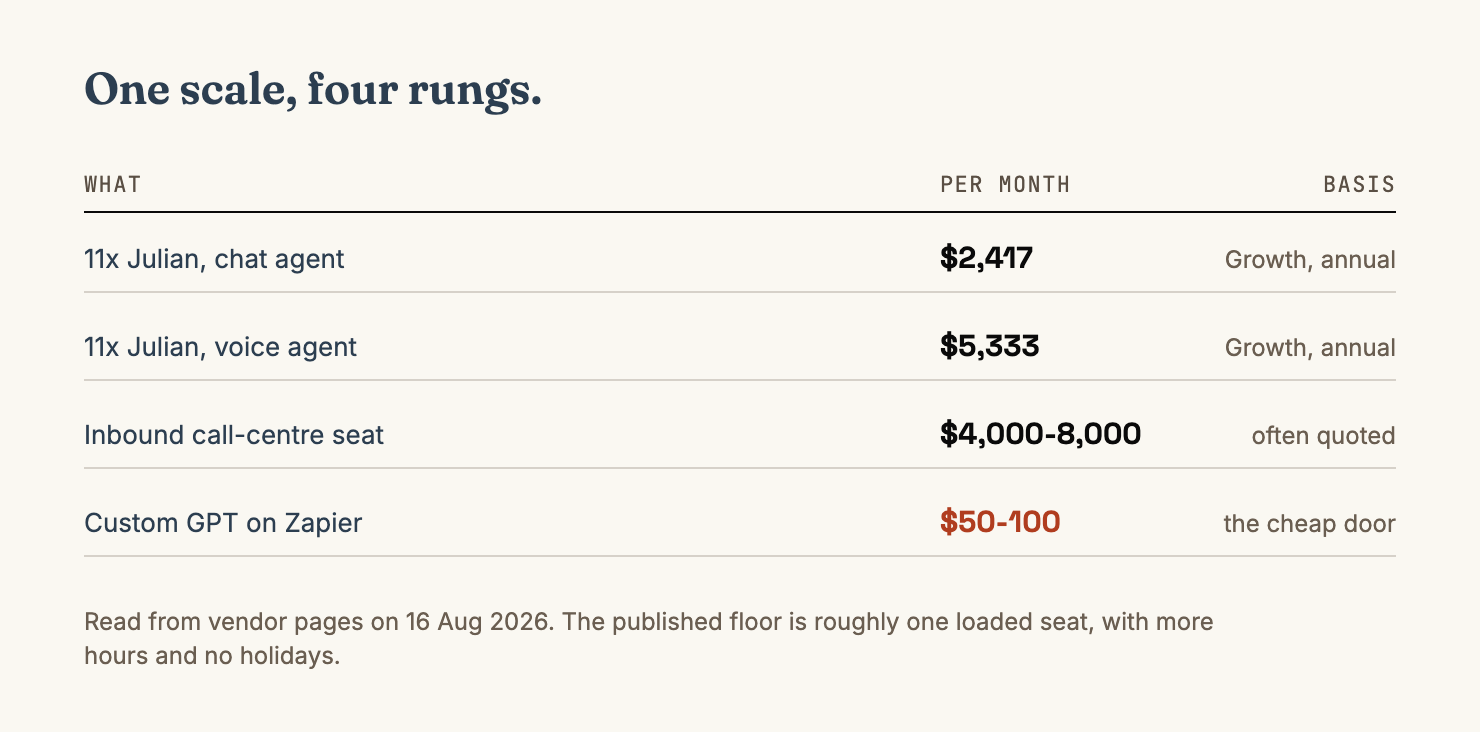
Julian starts at $2,417 a month for the chat agent and $5,333 a month for the voice agent, billed annually on the Growth plan. Pro and Enterprise are custom. Funding is reported as a16z and Benchmark backed.
The comparison that makes those numbers legible: a single inbound call-centre seat is often quoted at $4,000-8,000 a month. So the published floor is roughly one loaded seat, with more hours and no holidays.
Two honest cautions. The voice tier is a real commitment, and an AI sender without reply-spam controls can damage your domain reputation in weeks. Deliverability hygiene is not optional.
The upside is the opposite of the downside: it covers both directions, so it fits a team replacing a whole function rather than plugging one gap.
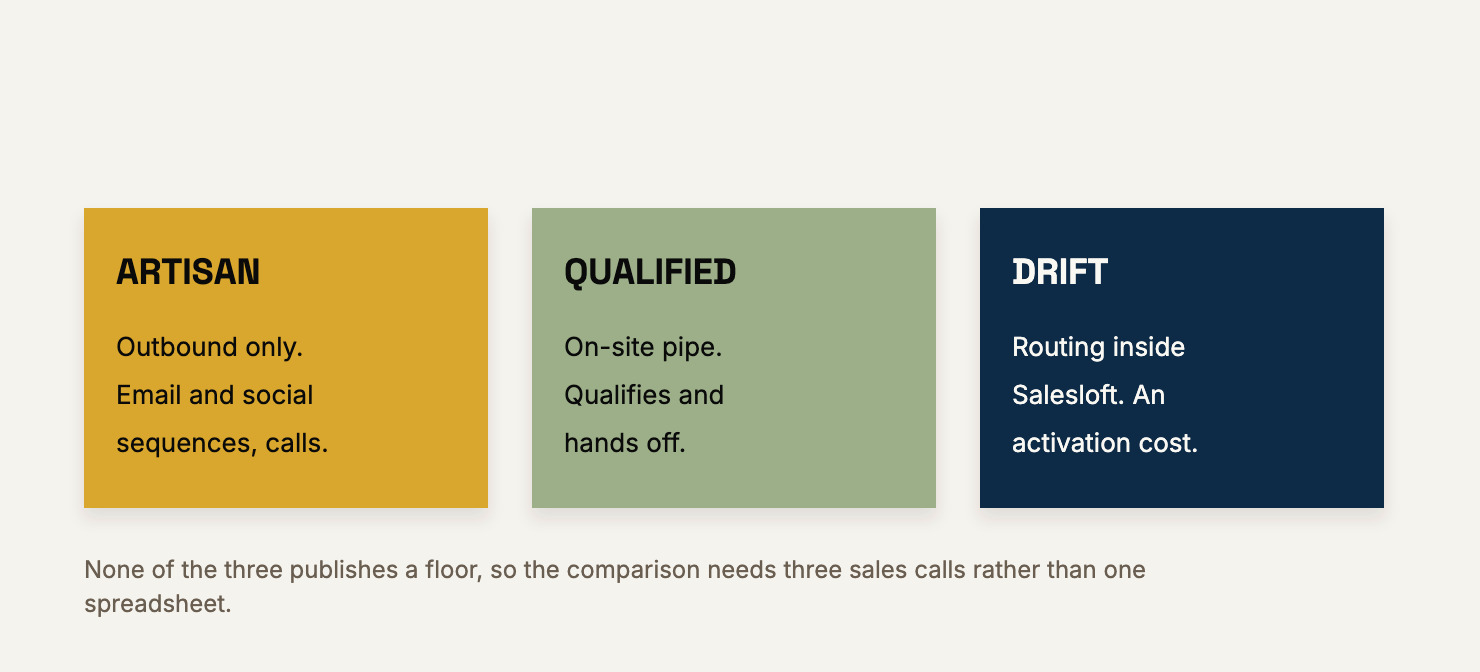
The other three, priced by what you cannot see
Artisan (Ava) is the tighter outbound pick: prospect identification, enrichment, autonomous email and social sequences, queued calls, meetings booked. It is narrow on purpose, which is its strength and its limit.
It will not answer your inbound chat or your site visitors, and there is no published floor to compare on a spreadsheet.
Qualified is the on-site pipe. It reads buying signals from the visitor's path, qualifies in-conversation, and pushes the full context into the CRM so your rep is not starting cold.
That clean context is the whole argument for it, and it beats a generic chatbot that forgets the visitor between pages. It is not an outbound tool. It waits on your domain, and it is unhelpful if you have no high-intent traffic to route.
Drift, now inside Salesloft, does the same front-door job with an older, battle-tested routing layer that handles chat and re-engagement without heavy setup. Its value drops sharply if your reps ignore routed chats.
The practical question is whether you already pay for Salesloft, in which case Drift is often an activation cost rather than a new line item.
That consolidation is not unique to routing. The Gong vs Chorus vs Clari vs Fathom comparison, verified 21 October 2026, records two of those four vendors as features of platforms rather than products you can price: Chorus sits inside ZoomInfo and Clari redirects to Salesloft, and neither platform publishes a figure.
One thing worth knowing before you chase a single tool that does all of it. 11x comes closest, covering chat, email and phone on both sides. The others pick a lane.
Asking one product to do routing and outbound thoroughly is rare, and it usually means you are paying for two products in one licence.
Which tool for which situation
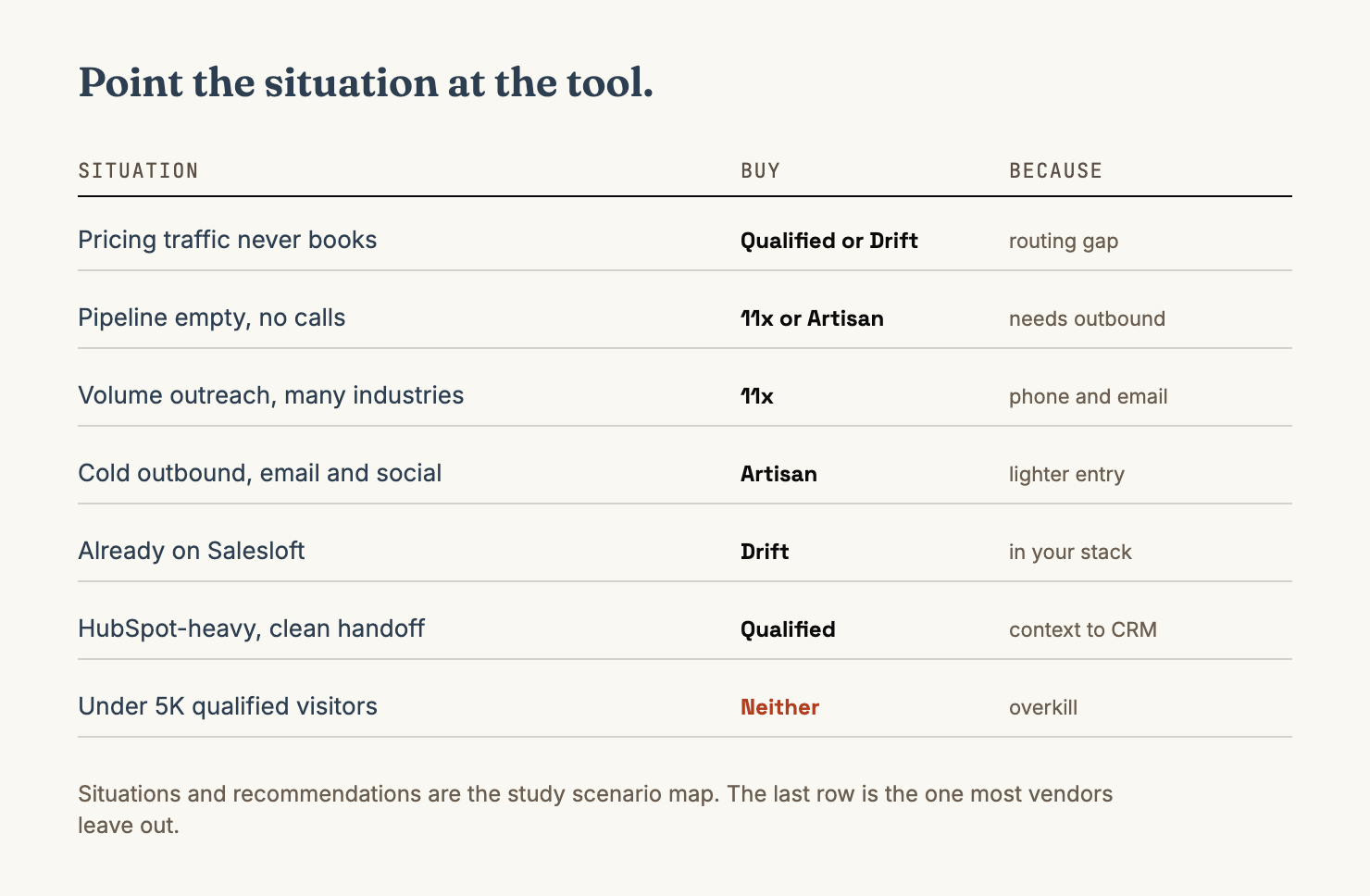
The study maps each situation to a recommendation rather than to a feature list. It is the fastest way to see whether you are even in the right lane.
| Situation | Buy | Why |
|---|---|---|
| Pricing-page traffic that never books | Qualified or Drift | The leak is routing, and a conversation plus a handoff fixes it |
| Empty pipeline, nobody cold-calling | 11x or Artisan | The gap is pipeline generation, which needs outbound |
| Volume outreach across many industries | 11x | Phone, email and chat cover the widest motion in one seat |
| Cold outbound, email and social only | Artisan | Focused BDR scope at a lighter entry |
| Already on Salesloft | Drift | The front door is answered inside the stack you own |
| HubSpot-heavy, want clean context push | Qualified | A pipeline-first handoff into the CRM |
| Under 5K qualified visitors, small team | Neither | A custom GPT on Zapier covers it at this volume |
Six questions that decide it
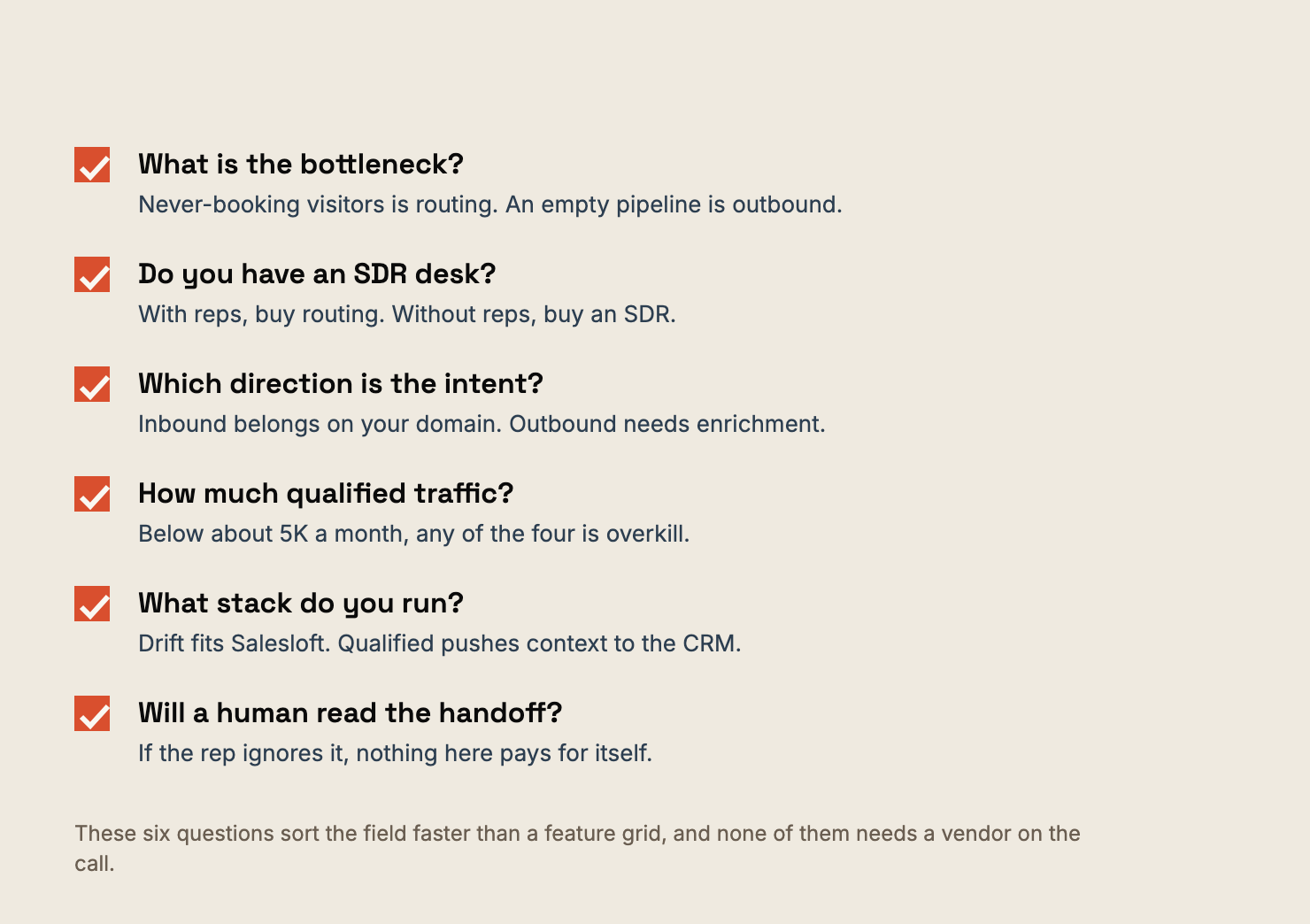
We wrote these into the study because they sort the field faster than any feature grid.
1. *What is the bottleneck?* Visitors reach pricing but never book is routing. An empty pipeline where nobody calls anyone is outbound.
2. *Do you have an SDR desk?* With reps, buy routing. Without reps, buy an SDR. An AI SDR sitting under a human SDR is a coordination problem, not a force multiplier.
3. *Is the intent inbound or outbound?* Inbound intent is best served on your own domain. Outbound needs enrichment and sequencing, which is 11x or Artisan territory.
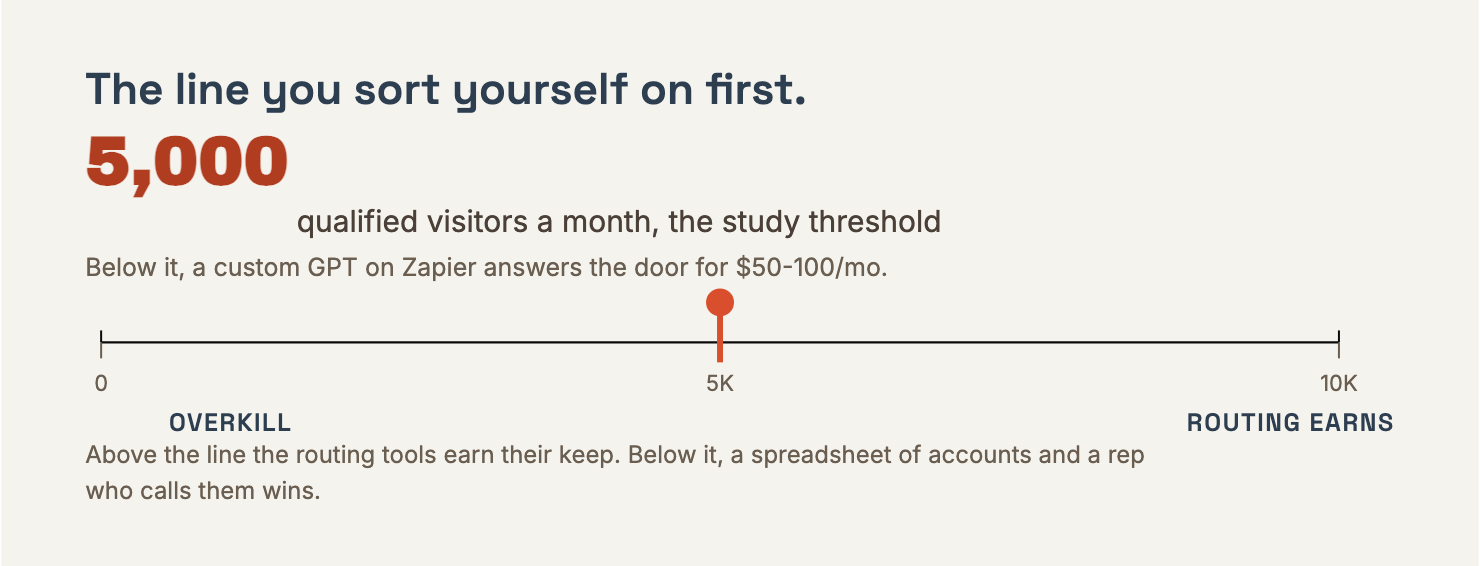
4. *How much qualified traffic?* Below about 5K qualified visitors a month, any of these is overkill.
5. *What stack do you already run?* Drift slots into Salesloft. Qualified pushes context into the CRM cleanly, which is why it pairs with HubSpot so often. 11x and Artisan are more stack-agnostic, but each syncs differently, so verify the connector.
6. *Will a human read the handoff?* None of these work if the rep ignores the meeting the agent booked.
Below 5,000 qualified visitors, buy none of them
This is the section most comparison content skips, because it argues against the sale.
At low volume an on-site tool is overkill and outbound is a distraction. A custom GPT on Zapier can answer the front door for $50-100 a month.
A spreadsheet of accounts and a rep who actually calls them beats any AI SDR at low volume. There is no product in this category that fixes a team with no one to make the calls.
There is a second case for buying none of them. If the real problem is that ChatGPT and Perplexity describe your brand wrongly, or do not cite you at all, none of these four tools touch it.
That is visibility work, not sales-chat work. Wrong label, wrong tool.
Five ways the implementation goes wrong
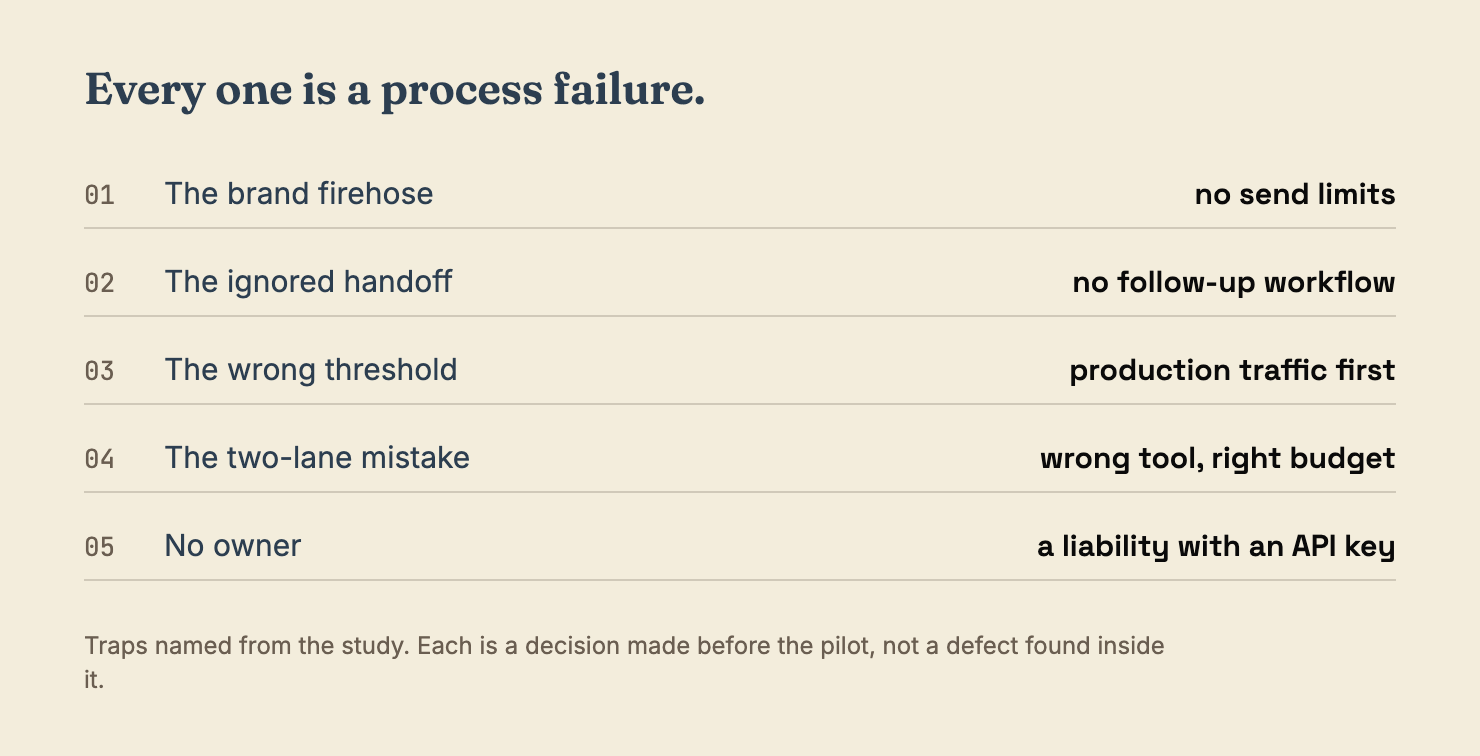
The traps are consistent across all four vendors, and every one of them is a process failure rather than a product failure.
*The brand firehose.* An AI sender launched without send limits burns domain reputation. Enforce limits from day one.
*The ignored handoff.* The agent books a meeting and the rep is not watching. Buy a follow-up workflow alongside the tool.
*The wrong threshold.* These tools qualify on signals, so they will route a lot of "maybe". Decide your threshold before you hand it production traffic.
*The two-lane mistake.* Buying outbound to fix an inbound leak, or routing to fix a cold-pipeline drought. Score the bottleneck first.
*No owner.* A revenue-adjacent agent with no human accountable for its replies is a liability with an API key.
The lanes themselves mix fine. Many teams run Qualified or Drift on the site and 11x or Artisan for outbound, and the two do not fight each other.
What they share is a dependency: if nobody reads the handoff, neither one pays for itself.
Who this is for
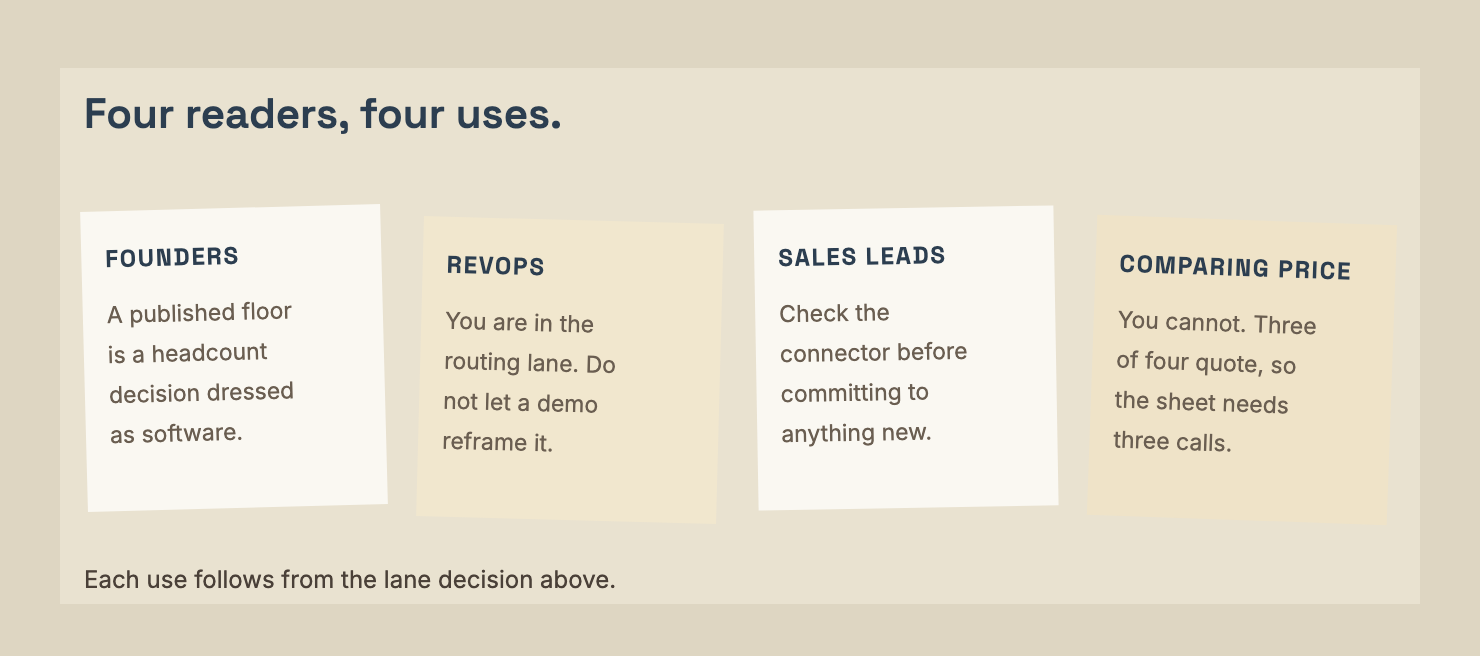
*Founders with no SDR coverage.* The honest starting question is whether you can afford the floor, not which interface you prefer. $2,417 a month billed annually is a headcount decision dressed as a software decision.
*RevOps leads with a booking leak.* You are in the routing lane. Do not let an outbound demo reframe your problem.
*Sales leaders already on Salesloft or HubSpot.* Your answer is probably already in your stack. Check the connector before you commit to anything new.
*Buyers comparing all four on price.* You cannot. One vendor publishes and three quote, so the comparison you want requires three sales calls and a spreadsheet you build yourself.
How confident we are
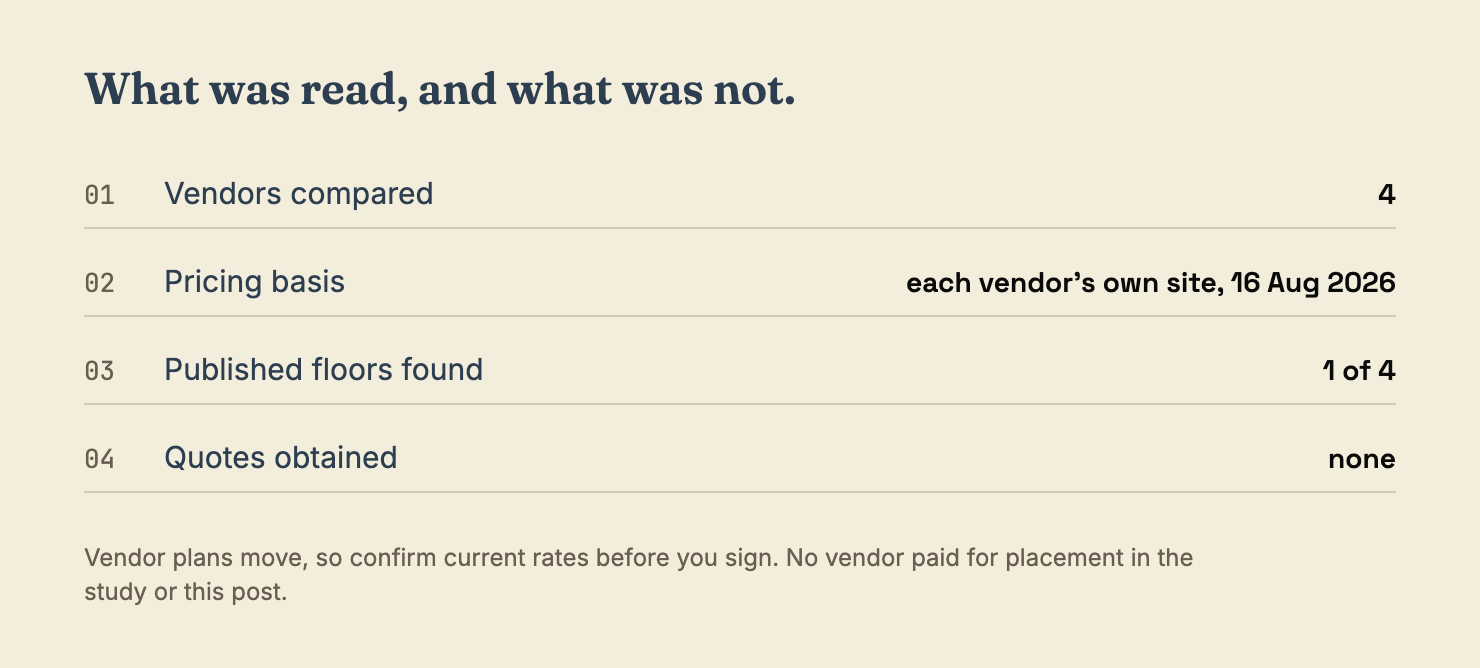
This is a snapshot, not a market measurement. Pricing and positioning were read from each vendor's own site on 16 August 2026, and vendor plans move. Confirm current rates before you sign anything.
Three of the four publish no price, so any statement about what they cost is a statement about what they decline to say. We did not obtain quotes, and we did not invent figures where none are published.
The capability descriptions reflect current public documentation and positioning. No vendor paid for placement in the study or in this post.
Wrap-up
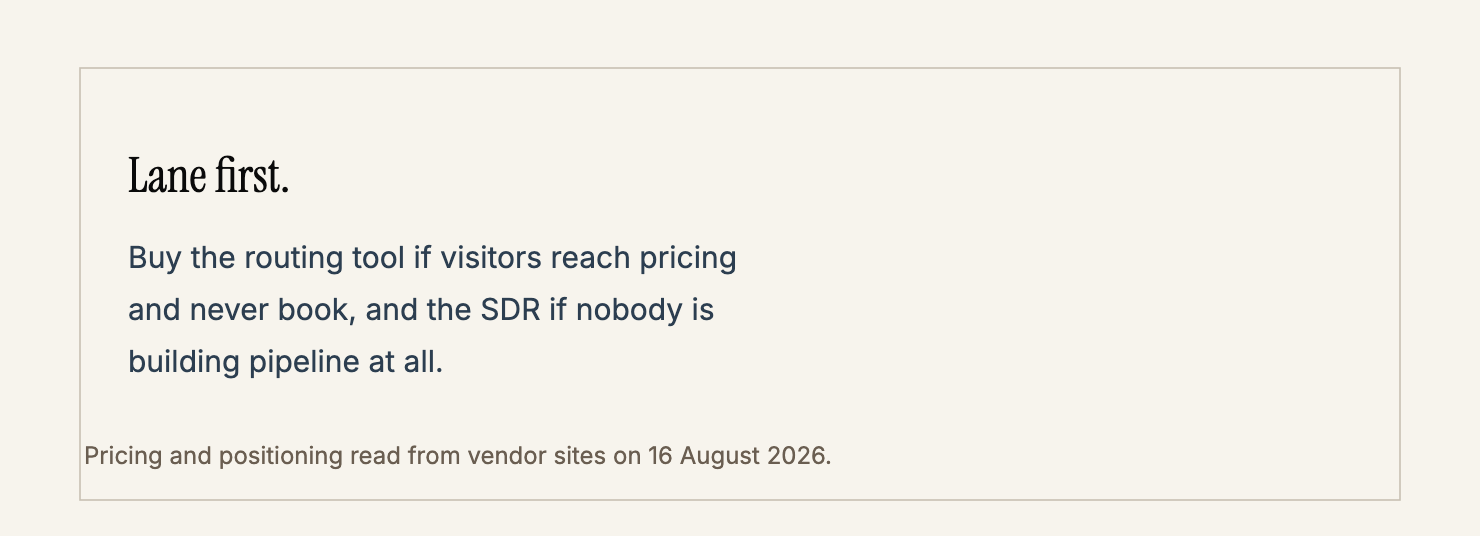
Buy the lane, then the vendor. If your visitors reach pricing and never book, you need routing: Qualified, or Drift if Salesloft is already your invoice.
If nobody is building pipeline at all, you need an SDR: 11x if you want a published floor and phone work, Artisan if outbound email and social is the whole job.
And if you are under about 5,000 qualified visitors a month, keep the money. The cheap version of this works, and the expensive version of the wrong tool does not.
Want to check whether the real leak is on your page rather than in your pipeline?
Start with the page a buyer reads before they decide, then scan it for the friction that stops them.