

We use this word constantly and define it rarely. Here is the definition I actually apply to a page, the seven that cost B2B SaaS companies real deals, and the audit I run before I ask anyone for a budget.
Google sends us two queries looking for that definition. Between them they produced 535 impressions in six months. We answered with three blog posts, written between 2022 and 2024, none of which agree on what the phrase means.
That is the first finding, and it is mine to admit. If our own archive cannot hold one definition steady, the term is doing more work than it can carry.
So here is how I define it now, why I make the distinction, and what to change on a page that a qualified buyer reaches and then leaves.
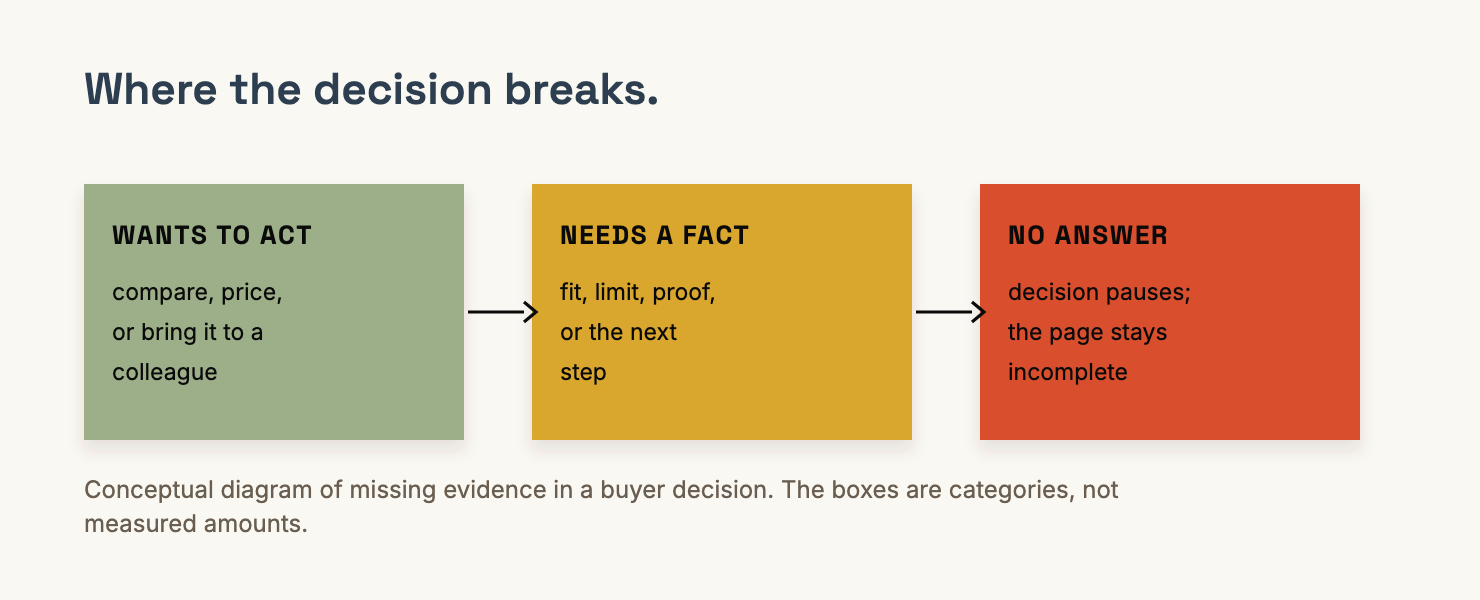
A friction point is a decision the buyer cannot complete
The word gets used for anything annoying: slow servers, ugly buttons, too many form fields. Some of those matter. Most of them are not friction in the sense that costs you a sale.
A friction point is the place where a buyer wants to move forward and cannot, because the page did not give them what the next step requires. They are ready to estimate a cost. There is no number. They are ready to rule out a rival. There is no comparison. They are ready to forward something to a colleague. There is nothing worth forwarding.
Two things follow from the definition. Friction is located at a step, and it is a missing fact, not a feeling. "Confusing" is not a finding. "No usage limits stated, so the buyer cannot price month three" is.
Friction is also not the buyer's fault. That line comes from the 2024 post on friction logging, and it survived the rewrite.
The gap sits between what someone expects and what your page states.
Three tests separate friction from a bug or a preference
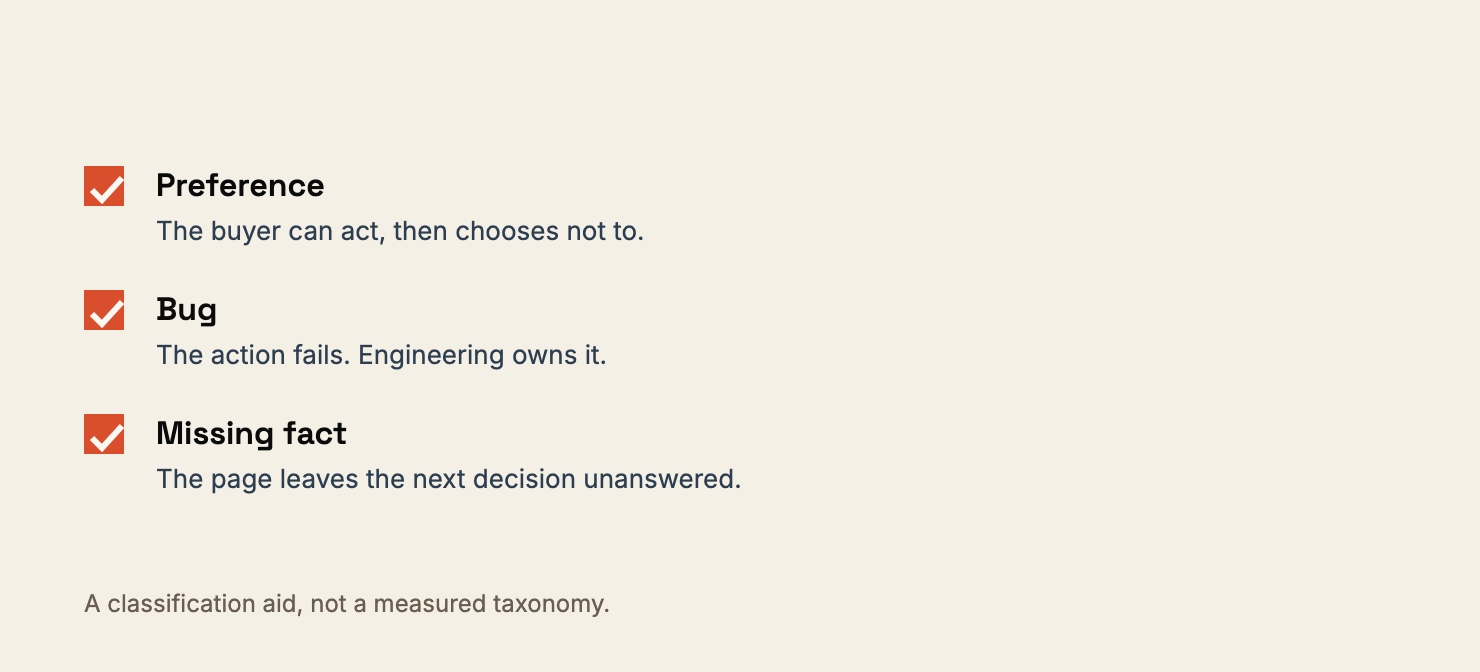
Before you spend a quarter fixing something, run it through three questions. I ask them in this order because the first one kills most of the list.
*Can the buyer do the action but choose not to?* That is a preference or a positioning mismatch. Your page is honestly saying something they do not want. Decide whether you want them before you rewrite anything.
*Does the action fail outright?* That is a bug. It belongs in engineering, not in an editorial backlog, and it will be fixed faster there.
*Does the buyer stop because a fact is missing?* That is friction. It is a content job, and it is the one that quietly costs the most, because a lost deal never files a ticket for a page that was merely incomplete.
Put this checklist in front of the team that owns the page. That is how an objection gets a name and an owner instead of becoming a paragraph buried in an old post.
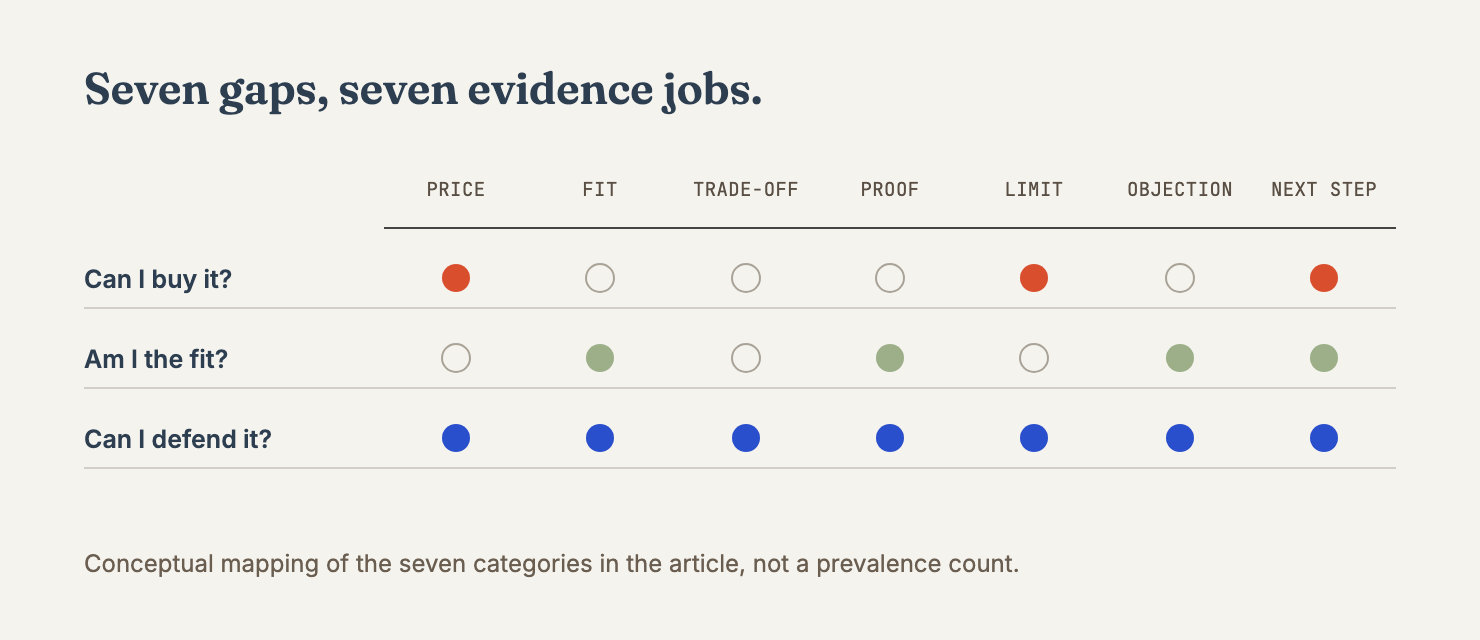
The seven frictions that show up on B2B SaaS pages
These are the seven I find repeatedly on decision-stage pages in this market, and the ones our own Decision Friction Scanner flags. It reports a friction score, then five components: decision readiness, objection coverage, trust and proof, CTA clarity, and champion support.
| The friction | What the buyer was trying to do | What the page failed to say |
|---|---|---|
| No price, no band, no unit | Work out whether you are affordable | The number, or an honest reason there is not one |
| No fit criteria | Check whether they are your customer | Who this is for, and who should go away |
| No trade-offs stated | Compare you against a rival | The constraint, the migration cost, the version you lose |
| Proof far from the decision | Believe a claim at the moment it is made | Result, owner, date, near the ask |
| No usage limits | Predict what month three costs | Where the plan stops working |
| Objections unanswered | Resolve the specific doubt that blocks approval | A direct answer, not a testimonial |
| One CTA, or six | Take the obvious next step | A single next action, labelled |
The 2022 list named frictions inside the marketing function: bad data, misalignment between developers and marketers, and one person expected to do everything.
Those are real organisational problems. They are not what a buyer experiences on your pricing page. Mixing the two is how a company spends a quarter on team-building and converts no better.
Half this market will not tell you the price
The first friction in that table is not an oversight. It is the dominant behaviour in the segment.
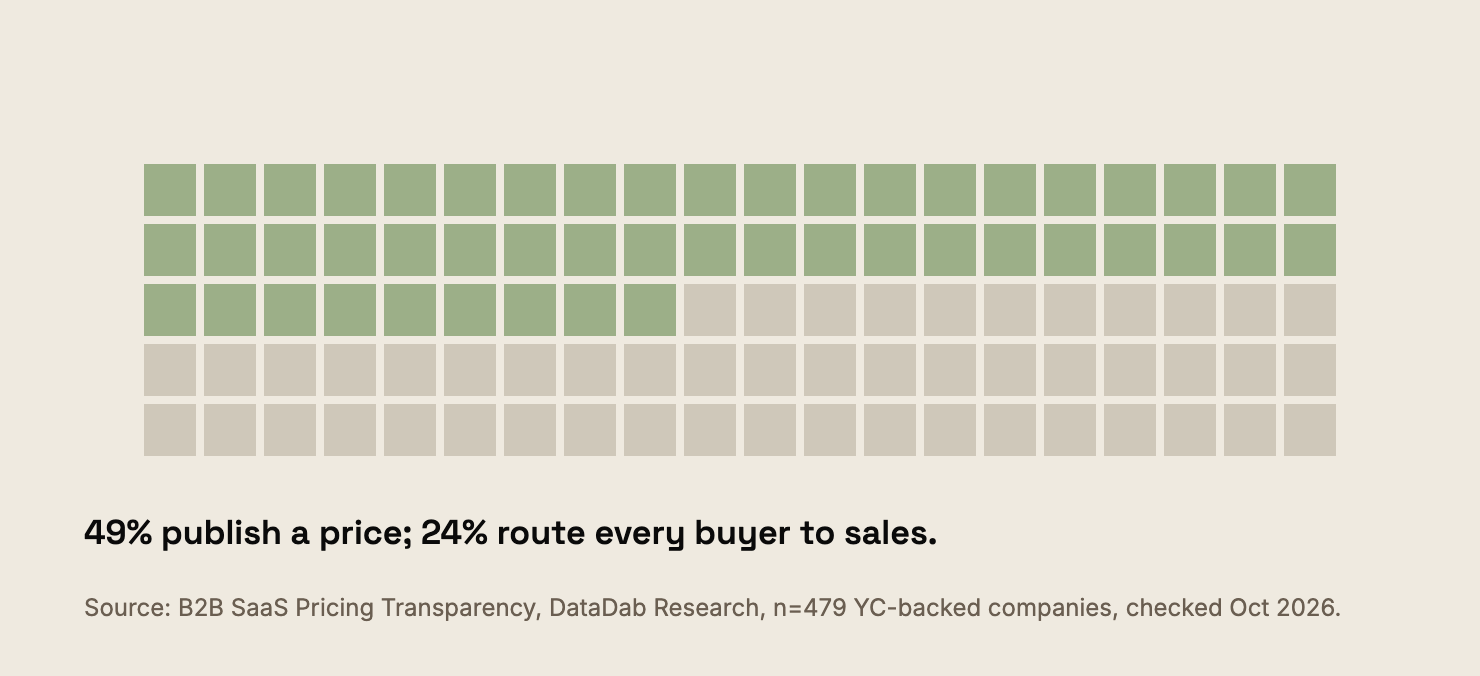
In our pricing-transparency census of 479 YC-backed B2B software companies, 49% publish a price. 24% list contact with sales as their only pricing option. The 95% interval on the publishing rate is wide, 44.4 to 53.3, so even at the optimistic end roughly half the market is hiding the number a buyer needs first.
This friction compounds. A buyer cannot compare you, so they compare the vendors who did publish.
You arrive at the shortlist as an unknown with a demo request attached. And when an answer engine is asked for options in your category, a page with no price gives it nothing quotable to carry.
If your sales team's argument is that hiding the price books more meetings, that argument belongs on this list as a decision, not a default. Each of the seven is someone choosing a shorter path for themselves and a longer path for the buyer.
Most companies publish no comparison at all
The third friction is the one I would fix first if I had one page.
Our comparison-page map crawled 479 company homepages and sitemaps and fetched 8,717 candidate URLs.
30.9% publish at least one genuine vendor-versus-vendor comparison. Among the companies that do, the median is three pages, and the 90th percentile is twenty.
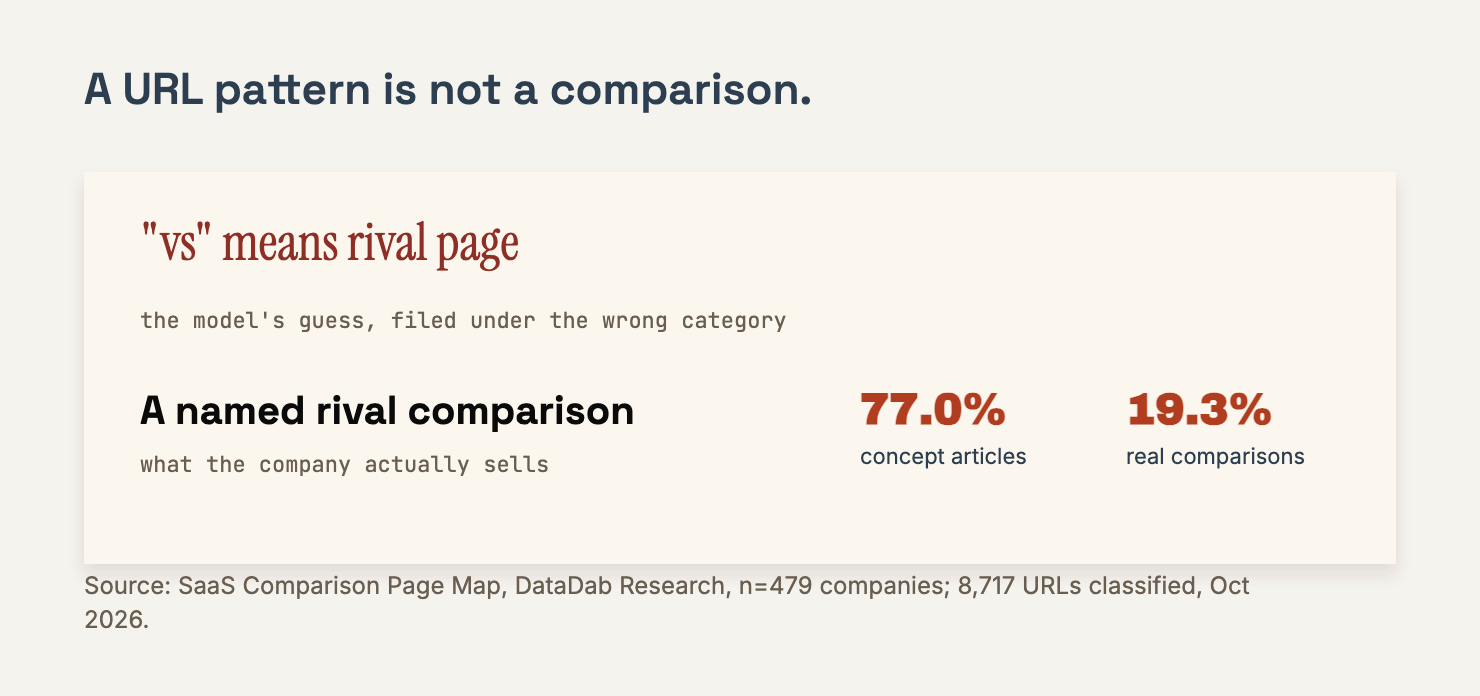
The trap is counting the wrong pages. Of every URL containing "vs" or "alternatives", 77.0% were concept articles. "Lead versus prospect." "Inbound versus outbound." Only 19.3% were actual comparisons, which is why so many confident claims about a comparison library collapse when someone counts properly.
A buyer who never sees you named alongside the rival you both lose to does not conclude you are out of scope. They conclude you are not in the market.
That is a missing fact, the kind the definition puts on the content team's desk.
Some friction is worth keeping
A long intake form is friction. So is a pricing page that makes you read twice before the tiers make sense. And some of it earns its keep.
Deliberate friction makes the buyer slower in exchange for a better decision.
Usage limits stated plainly are the clearest example. They stop the wrong customer early, which costs a demo and saves a churned account.
Asking why you need a phone number is friction that pays. Asking for it silently is friction that costs.
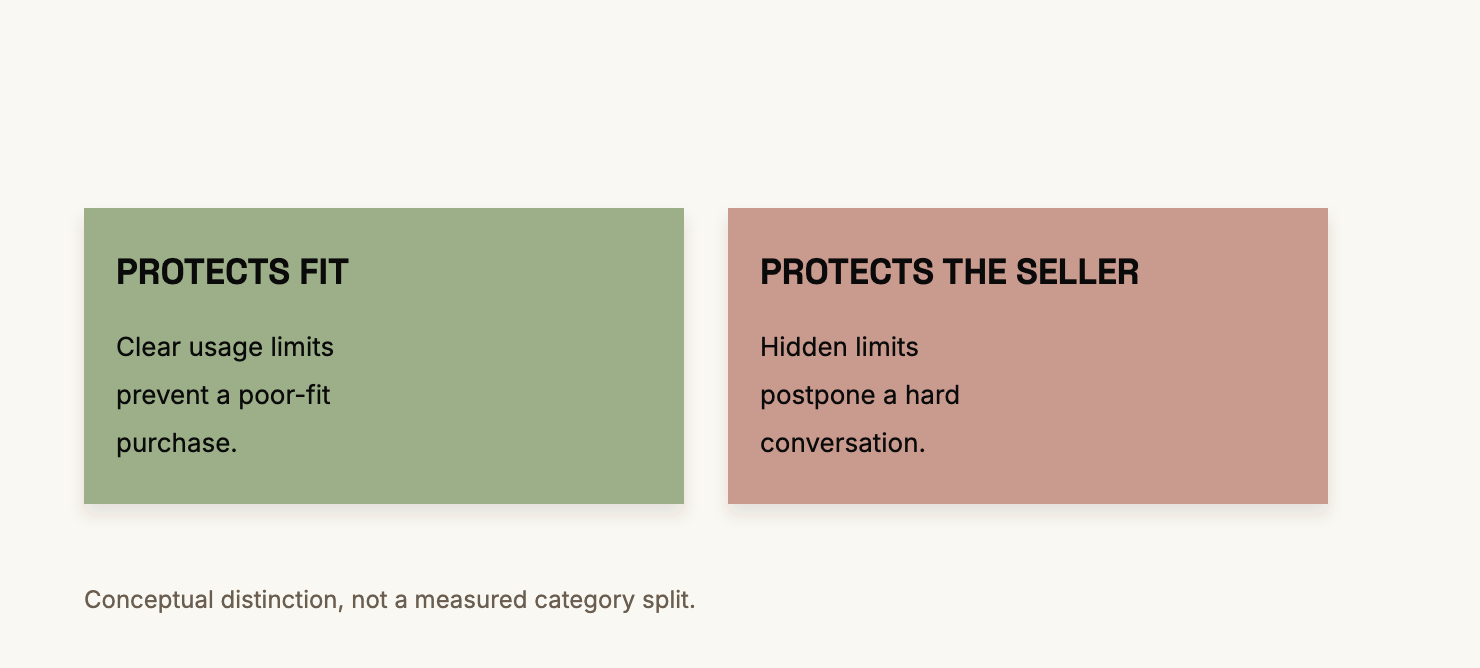
If the friction protects the buyer from a bad fit, keep it and explain it. If it protects you from a hard conversation, delete it.
Half of what I find on live pages is the second kind wearing the costume of the first.
A short audit you can run before you spend anything
Open the page a buyer reads hardest, usually pricing, usually the one you are most defensive about. Work down the list.
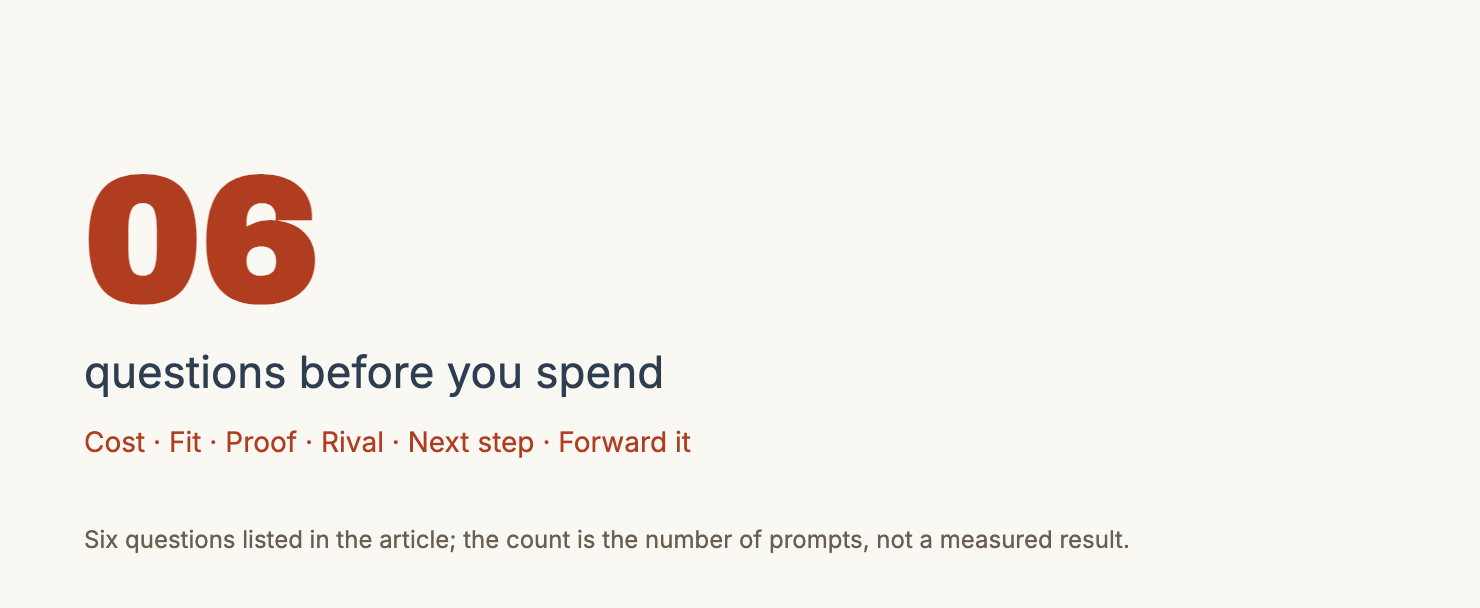
1. *Cost:* can a stranger estimate their own use? Their team, their volume, month three, not just your headline number.
2. *Fit:* does the page say who should not buy it? I have never found that sentence easy to write, which is why it is usually missing.
3. *Proof:* is the strongest evidence within scrolling distance of the ask, with a number and a source?
4. *Alternative:* name the rival a buyer is weighing. Are you anywhere near the answer?
5. *Next step:* is there one obvious action, described in words the buyer would use?
6. *Forwardability:* could someone send this page to a colleague and justify the decision without calling you?
Score each one of six as yes, no or unclear. The unclear answers are the useful ones, because unclear means a real buyer would also be uncertain and would just not tell you.
I did not build this list to sell consulting. I built it because we shipped a tool at the same address that automates the first pass, and a human still has to decide what to do with its output.
Who this is for
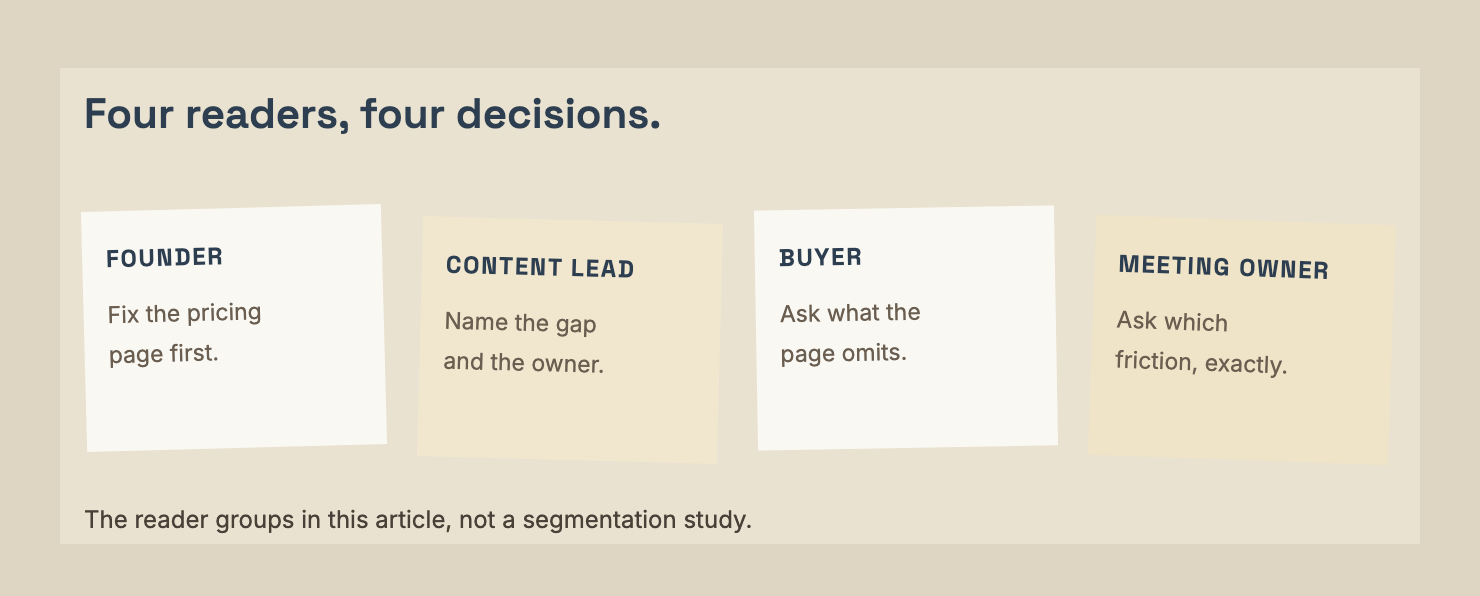
*Founders and product marketers with one page to fix.* Run the six questions on pricing first. That page decides more than the blog does. Pick a follow-up date and see whether buyers can answer the questions that were missing.
*Content leads defending a budget-cut.* The seven-item table gives you a way to name the work as gaps with owners rather than as opinions about wording. That is the version finance approves.
*Buyers comparing software this quarter.* Use the six questions as a shortlist filter. A vendor whose page will not let you price your own usage is telling you something about the renewal conversation.
*Anyone who has heard "reduce friction" in a meeting.* Ask which of the seven. If the answer is a shrug, the meeting produced a slogan.
A note on how confident we are
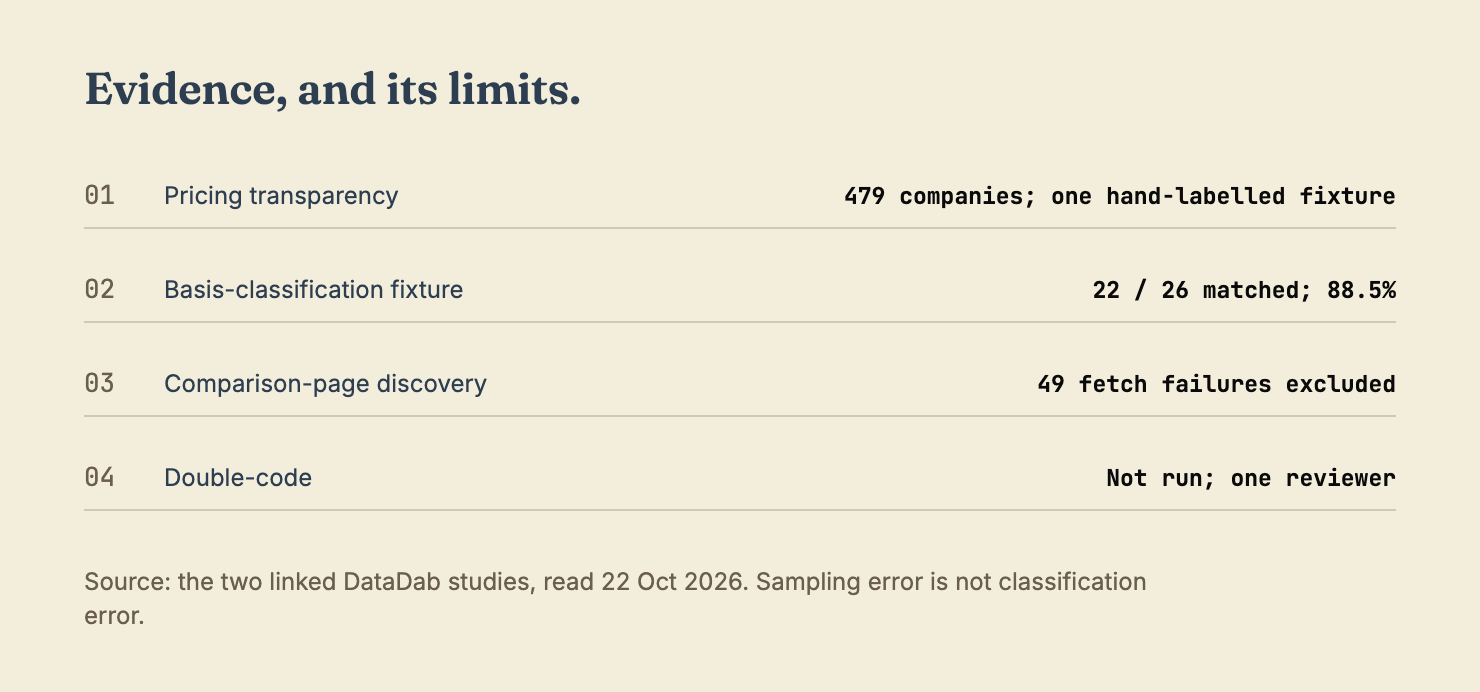
The pricing figure is 49% of 479 companies drawn from the Y Combinator dataset, so it is venture-backed software, not the market. The study's own fixture is the weak part: basis classification matched on 22 of 26 pages, 88.5%, below the 95% target we set ourselves, so the study tells readers to treat that split as indicative.
The comparison numbers come from titles and URLs classified by one reviewer, never by a second. In its accuracy sample, precision was 0.889 (16 of 18) and recall 0.727; the study says recall is bounded by its hand-built vendor dictionary. Discovery reads homepage links and sitemaps, so JavaScript-only navigation is missed, and 49 fetch failures were excluded rather than classified. Pages were counted, not read for accuracy.
The Google and analytics figures describe our own site over six months and one quarter. They say nothing about yours, and the definition of friction in this post is a working definition I have changed twice. The third version might be wrong as well.
What the seven items are based on is repetition, not measurement. They recur often enough to be worth a checklist. That is a weaker claim than a statistic, and I would rather state it plainly than dress it as one.
Wrap-up
Friction is not a mood. It is a missing fact at a specific step, and it is exactly as fixable as that makes it.
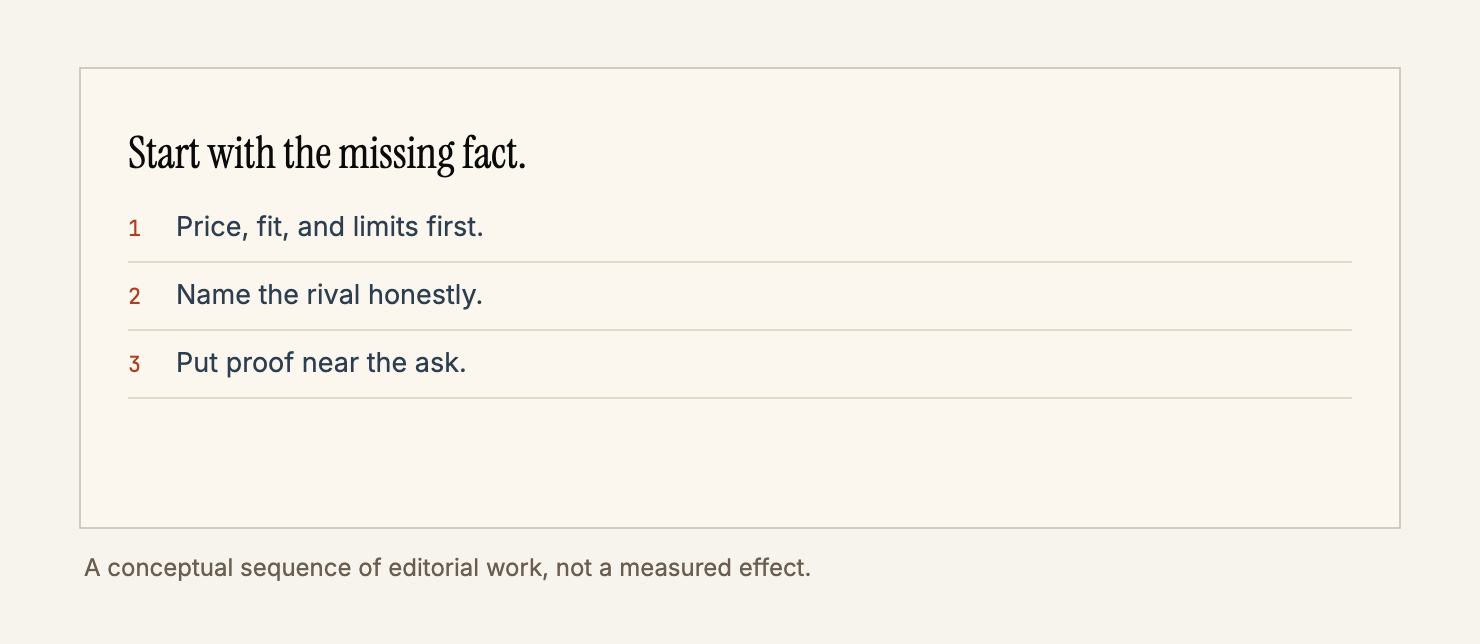
Start with the price, because half this market does not publish one and buyers notice. Then write the comparison, the honest one, the one where you lose something. Then move your proof next to the ask and put one instruction at the bottom.
If you want the mechanical pass first, scan the page a buyer is most likely to get stuck on, then fix the two items that made the shortlist. The order matters. Missing facts come before design opinions, and the buyer who leaves quietly is the one who never filed the complaint that would have told you.