

One impression a day, and almost every vendor hides it behind a sales call. Here is what a concierge migration actually is, and how to price it.
Somewhere in every procurement cycle, somebody asks whether the vendor will do the migration for them. The answer is usually yes, at a price that appears in a quote rather than on a pricing page.
That is the whole of what most people know about it, and it is why the option keeps getting misjudged.
It is either a free favour that delays the deal by six weeks, or an expensive service that is really a consulting bill with a different name.
Neither is quite right, and the difference matters when you are moving a system that holds your customer data.
What concierge migration actually is
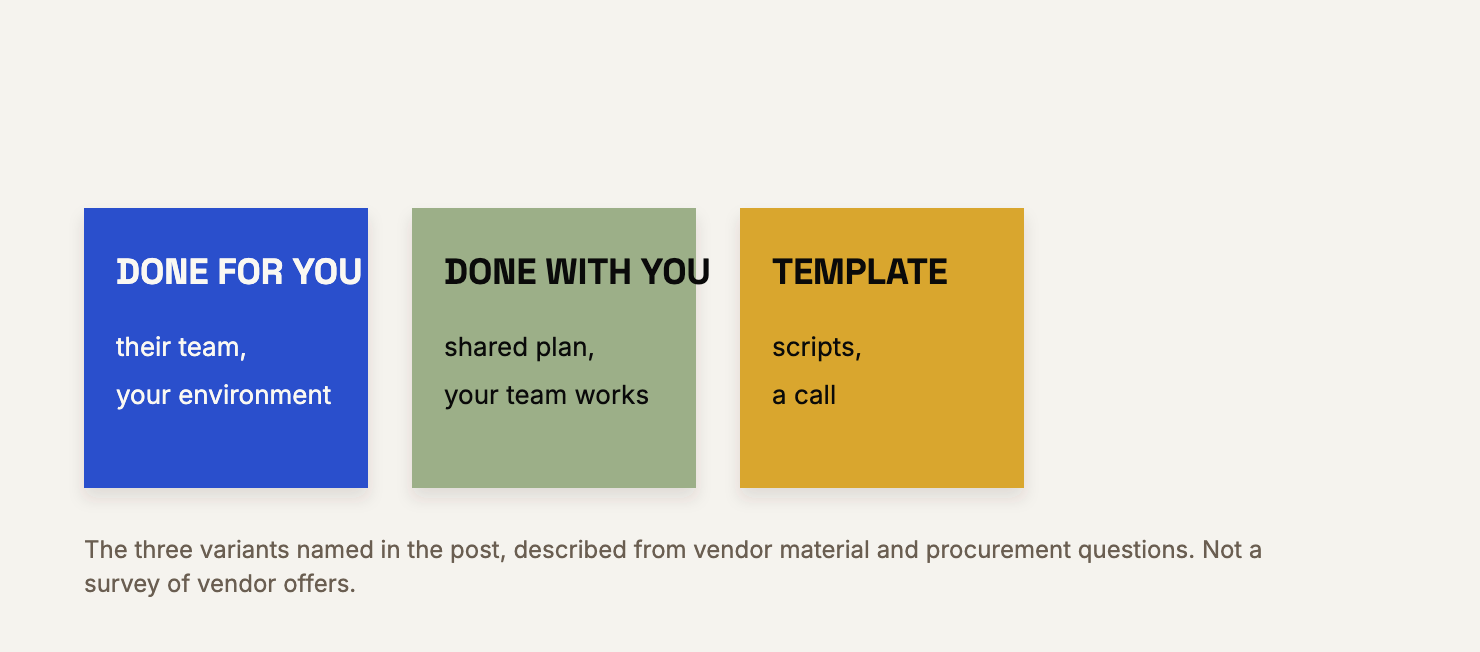
Three variants exist, and they are priced very differently because they are very different jobs.
*Done for you.* The vendor's team runs the migration inside your environment, on your schedule, with your approval at each step. You supply access and a contact. This is the version people mean when they say concierge, and it is the one that belongs in a quote.
*Done with you.* A shared plan where your team does the work and their specialist advises on the steps, the field mappings and the order. This is usually the cheapest way to get a good outcome, and the one most vendors will offer once you ask.
*Template and support.* You get the scripts, the mapping tables and a call to check your work. This is nearly always available, costs almost nothing, and is where a lot of self-serve migrations actually go.
Ask which one is being offered. A vendor saying "we do migrations" has answered nothing.
What it is worth, priced honestly
Migration services are rarely listed, so buyers price them by analogy, and the analogy is usually the worst one available.
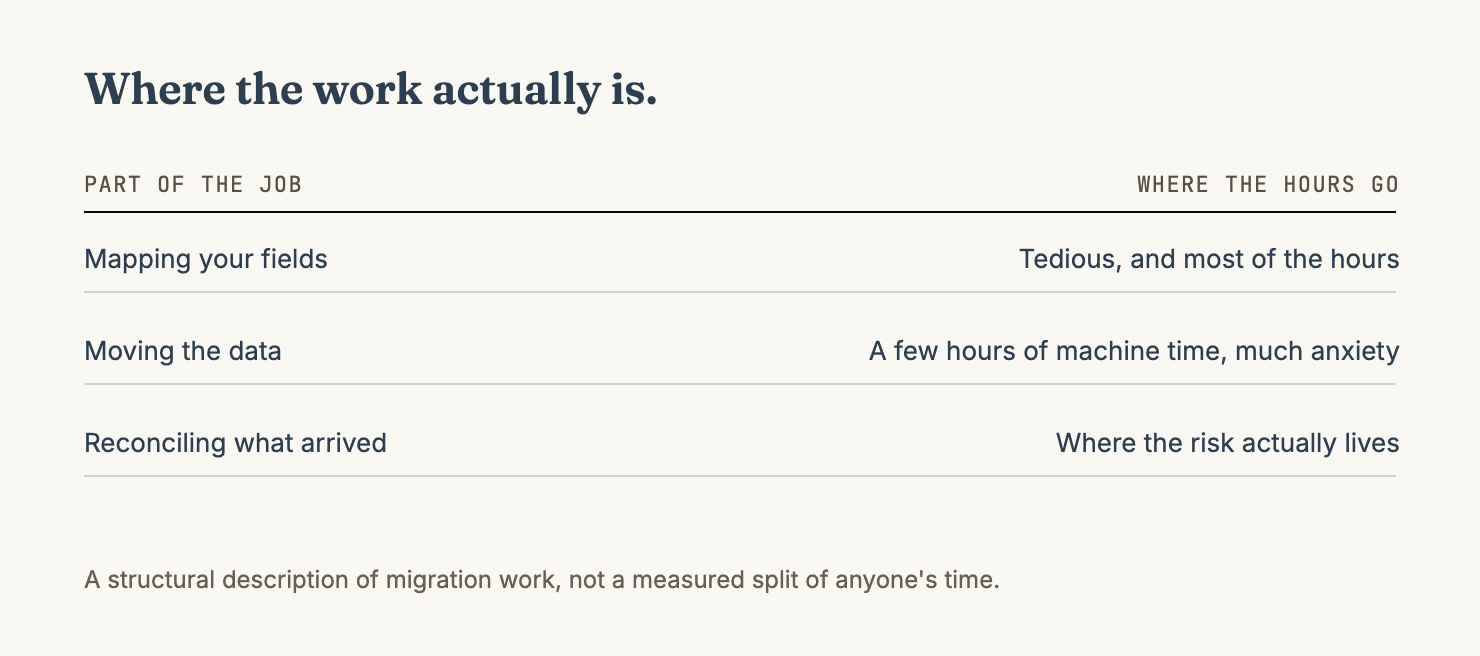
The honest way to price it is by the work, and the work is mostly three things. Mapping your fields to theirs, which is tedious and is where most of the hours go.
Moving the data itself, which is usually a few hours of machine time and a great deal of anxiety. And reconciling what arrives, which is where the actual risk lives.
That third one is the part most budgets leave out. Our pricing transparency study found 24% of 479 B2B software companies route every buyer to a sales conversation, so the buyer you are quoting for is often the first one to ask.
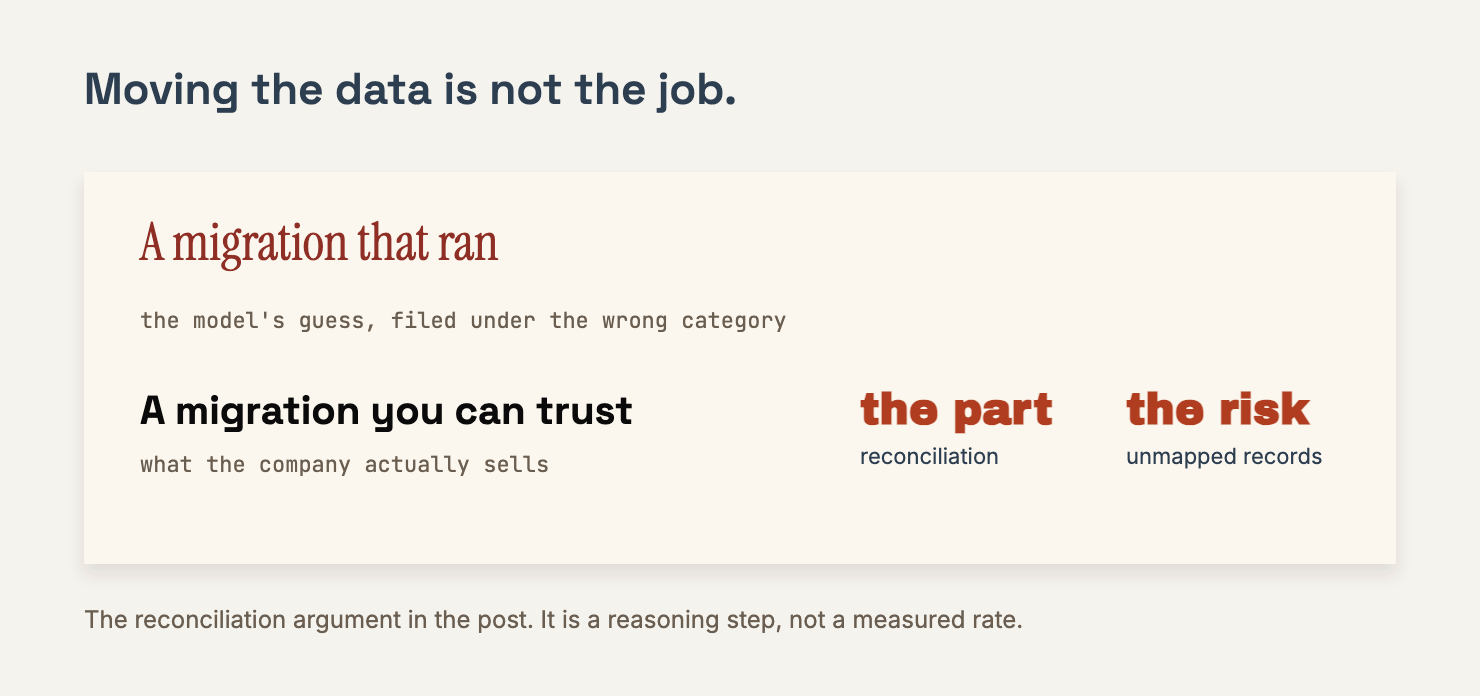
A migration that runs without errors and lands 4% of records in the wrong column is a worse outcome than one that stops on day two, because the second one gets noticed.
So a migration price that covers only the movement is a price for the visible part of the work.

The four questions that price it
*How many records, and how many fields per record?* The number of objects and the depth of each object is what determines the hours. A CRM with 400 custom fields on one record type is a different job from a CRM with 40 types and 12 fields each.
*What is the downtime tolerance?* A live system with no maintenance window cannot be migrated in one pass, and a vendor promising otherwise is either working around a constraint you have not told them about or planning to take the risk on your behalf.
*Who owns rollback?* If the data arrives wrong, who puts the old state back, and is that inside the price? A migration without a rollback plan is not a service, it is a bet.
*What happens to the records that do not map?* Every migration has them, and they are the ones that cause support tickets in month two. Ask what the vendor does with them, and whether the count is reported back to you.
Migration rarely breaks because the vendor's tooling is bad. It breaks because the record count was understated, the field depth was unknown, or nobody wrote down who owned the rollback.
All three of those are scope questions, and scope questions are answered before the work starts. That is why the four lines matter more than the hourly rate.
It is also why a buyer who gets a clean four-line quote can usually deliver the migration on time, and a buyer who gets a one-line number frequently cannot.
The difference is not the vendor's competence. It is the clarity of the agreement, and it is in your hands.
When it is a waste of money
This is the part a vendor will not write on their pricing page, so here it is.
If your data is small, clean and already in a shape their importer understands, a template will do it. Their importer exists because the common case is the easy one, and paying a person to do what a script does is a way of buying certainty you did not need.
If you are changing vendors for a reason other than the product, be careful. Migration cost is a real line in the comparison, and it can quietly decide a shortlist that the features did not.
Work out what you would pay in services if you migrated yourself, and ask for that as a quote. The answer tells you how much of the difference is the product.
And if the vendor will not tell you what the migration includes in writing, treat the price as unknown rather than as small.
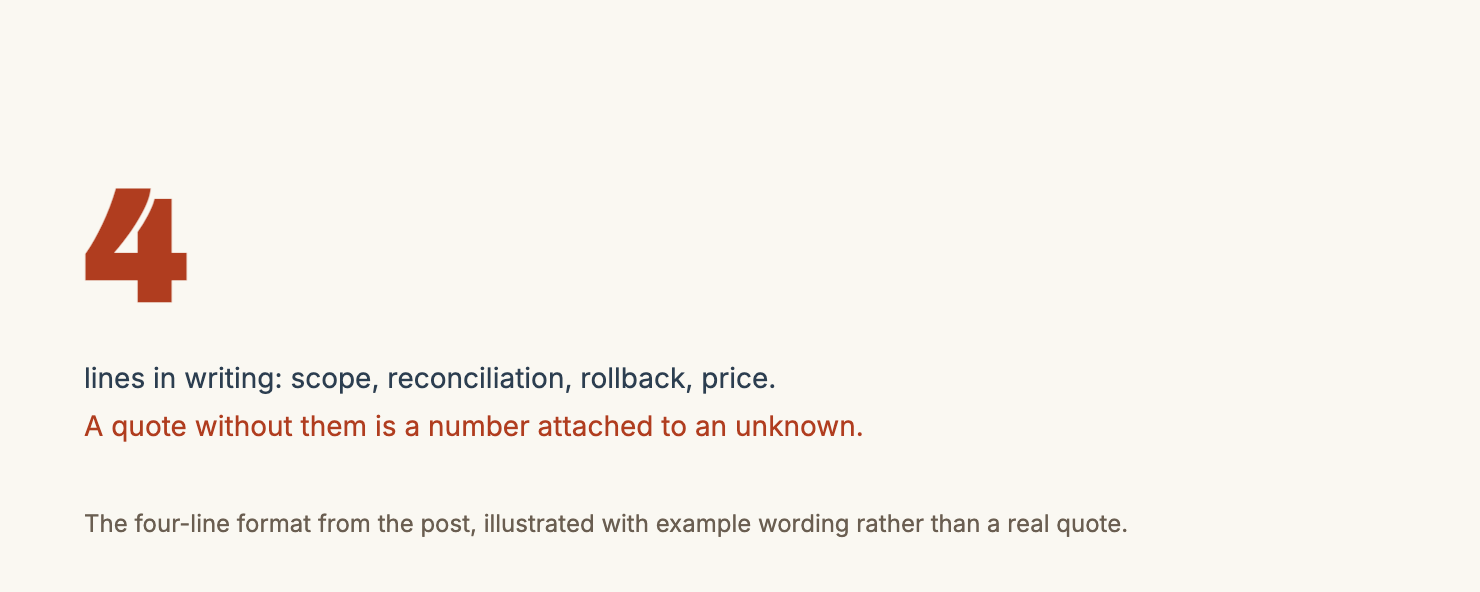
What four lines look like in a real quote
Here is the shape of what you are trying to get, written as an example. These are not real figures, and they are not a rate card.
They are the four lines you should find, or ask for, in every quote you get.
Scope. "Up to 50,000 records across CRM contacts, accounts, opportunities and activities, with up to 30 fields per record type. Custom objects, historical attachments and email bodies are out of scope and priced separately."
Reconciliation. "We report record counts in, records imported, records rejected and records unmapped, per object type, within two working days of the import.
Any unmapped records are returned in a file with the source row reference."
Rollback. "The full export of your source data, taken before we start, is retained for 30 days. If reconciliation fails on more than one per cent of records in any object type, we stop and restore from that export at our cost."
Price. "A fixed fee, quoted against the scope above. It changes if the record count or field depth changes, and we will tell you before we start, not after."
The point of the exercise is not the wording. It is that a quote without these four lines is a number attached to an unknown, and a quote with them can be compared against another vendor's quote with them, line for line, on the same page.
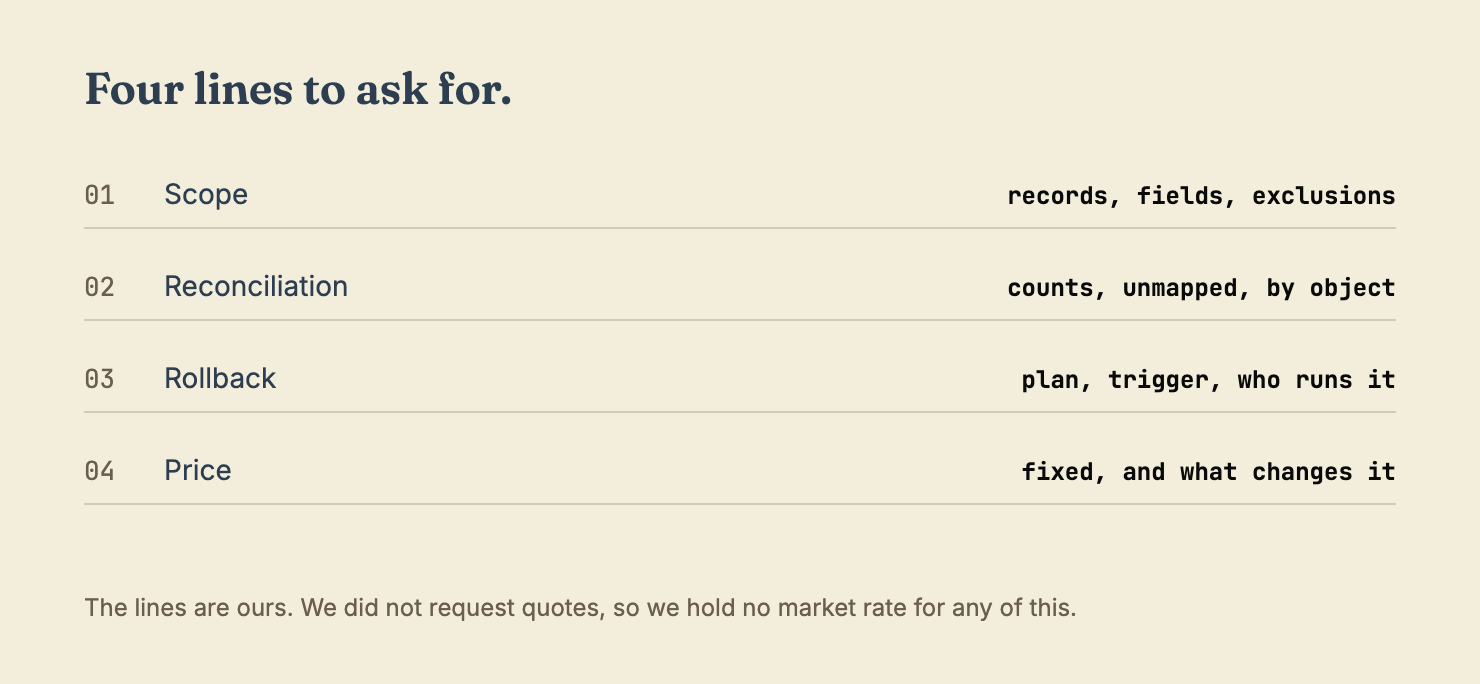
What to ask for in writing, line by line
Here is the shape of what you are trying to get, written as an example. These are not real figures and not a rate card.
They are the four lines you should find, or ask for, in every quote you get.
Scope: up to 50,000 records across CRM contacts, accounts, opportunities and activities, with up to 30 fields per record type. Custom objects, historical attachments and email bodies are out of scope and priced separately.
Reconciliation: we report records in, records imported, records rejected and records unmapped, per object type, within two working days of the import.
Unmapped records come back in a file with the source row reference.
Rollback: the full export of your source data, taken before we start, is retained for 30 days. If reconciliation fails on more than one per cent of records in any object type, we stop and restore from that export at our cost.
Price: a fixed fee, quoted against the scope above. It changes if the record count or field depth changes, and we will tell you before we start rather than after.
The point of the exercise is not the wording. It is that a quote without these four lines is a number attached to an unknown, and a quote with them can be compared against another vendor's quote with them, line for line, on the same page.
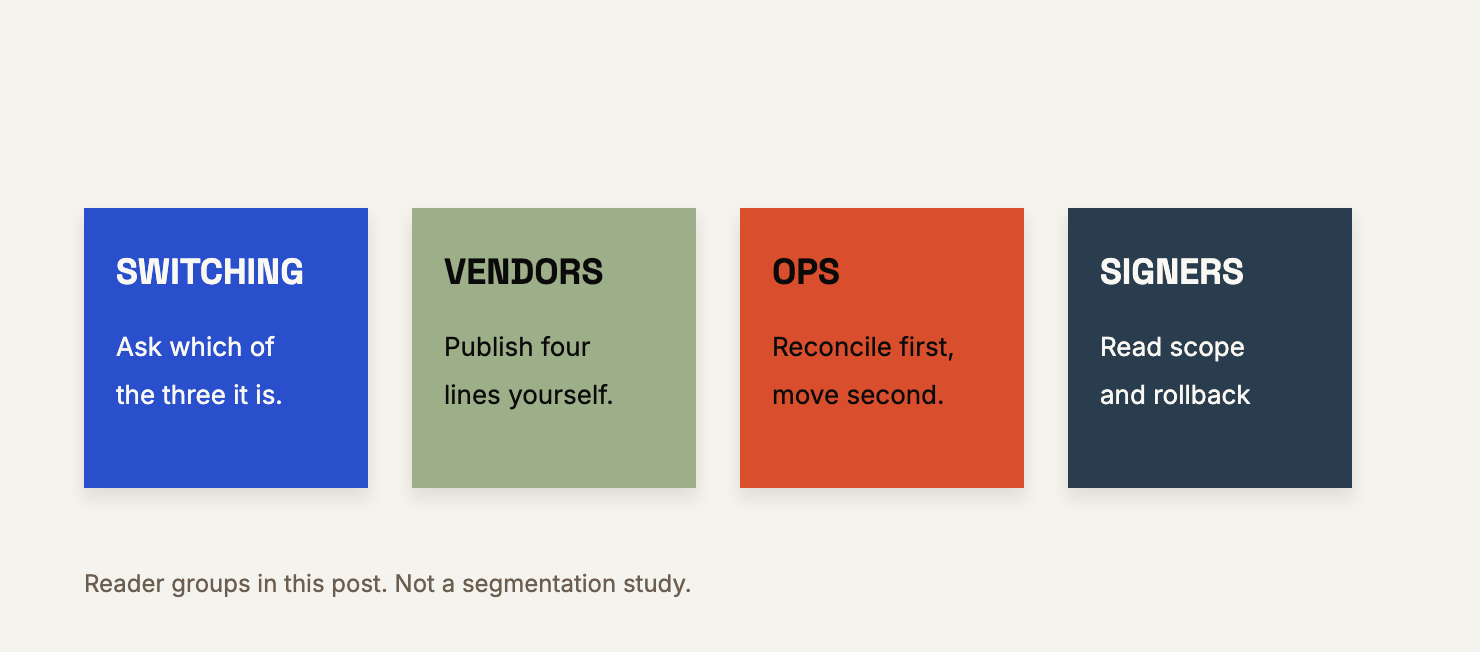
Who this is for
*Buyers switching systems this quarter.* Ask which of the three variants is being offered, and get the four lines in writing. That is the entire negotiation.
*Vendors who offer migration.* Publish the four lines on your pricing page. The vendors in this category that hide migration pricing are handing the decision to a procurement analyst who will assume the worst.
*Heads of ops who have been burned once.* If a migration landed wrong, the cause was almost never the movement. It was the reconciliation, and it was outside the scope of the quote.
*Teams about to sign a contract with a quoted migration fee.* Read the scope, and check that the rollback is in it. A fee that excludes the reversal is a fee for half a job.
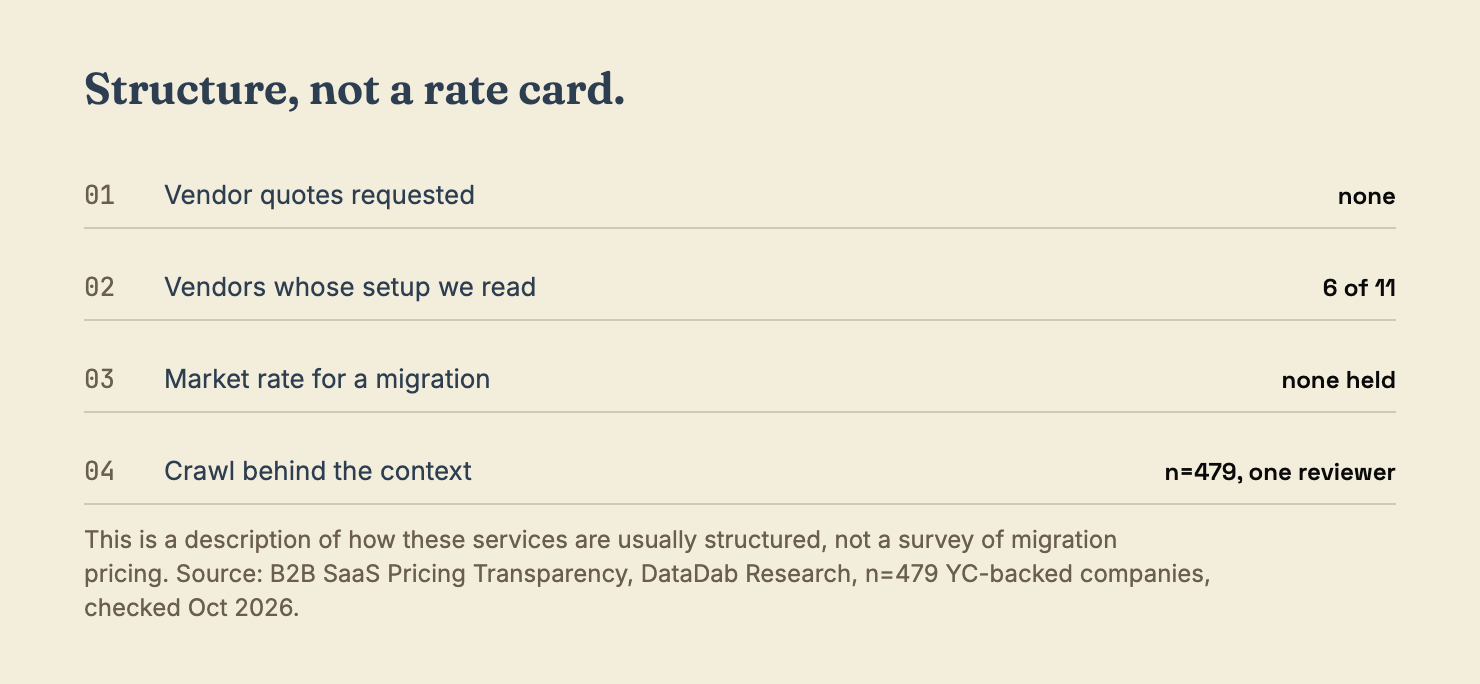
How confident we are
This is a description of how these services are usually structured, based on vendor material we have read and on what procurement questions tend to surface.
It is not a survey of migration pricing, and we did not request quotes from any vendor, so we hold no market rate for any of this.
The figures in our other work, the pricing transparency rate and the comparison publishing rate, come from a crawl of 479 YC-backed companies with one reviewer and no independent second coding.
They describe the market this advice sits inside.
The cost claims here are structural rather than numerical. Which is why the advice is four questions rather than a benchmark: a benchmark would be more useful and less honest, because the numbers change with the record count and we cannot model that for your data.
Wrap-up
Concierge migration is not a favour and it is not a trap. It is three different services, and the one you are being offered is usually the most expensive variant of a job that your own team could do with a template.
So ask which one it is, get the scope, the reconciliation, the rollback and the price in four lines of writing, and compare it against the other vendor the way you would compare a licence.
The cost of getting this wrong is not a surprise invoice. It is your records in the wrong column, discovered in month two, by somebody who did not know the migration was a decision.