Because not every funnel needs a $3,000/month sidekick with a flashy badge
Let’s be honest: HubSpot is like the Salesforce of inbound marketing. Sleek, powerful, and annoyingly ubiquitous. You’ll find it in pitch decks, Martech stacks, and salesy LinkedIn carousels touting “10X pipeline growth”. But scratch the surface and you’ll spot a few recurring themes - price creep, feature bloat, and that familiar cry from marketing ops: “We’re only using 20% of it!”
For leaner B2B SaaS teams - or just those who’d rather not pay enterprise prices for glorified email sequences and pop-up forms - there’s a world beyond HubSpot. A more focused, cost-effective, dare we say nimble world.
Let’s tour the neighbourhood.
Why People Start Eyeing the Exit
HubSpot’s glossy image starts to crack when you hit growth stage. You know the drill:
You start on the free plan, get charmed by the tidy CRM, and then—bam!—you’re staring down a $1,200/month quote just to unlock custom reports and A/B testing.
And while it does everything, it often does so in a “jack-of-all-trades, master-of-none” sort of way.
Here’s the shortlist of common complaints:
- Pricing Games: Features split across tiers like Hogwarts houses. Want one workflow condition? That’ll be Pro. Need multi-touch attribution? Enterprise.
- Workflow Complexity: Setting up sequences feels like defusing a bomb. One wrong click and suddenly your leads are stuck in limbo.
- Feature Sprawl: Do you really need web hosting, live chat, social scheduling and ticketing all in one place?
- B2B SaaS Misfit: It’s optimised for generalist use - not the kind of intent-heavy, multi-stakeholder sales process most B2B SaaS lives and dies by.
So what’s the plan? Simple: find something that does what you actually need, integrates well, and won’t have your CFO asking if you accidentally subscribed to HBO Max for leads.
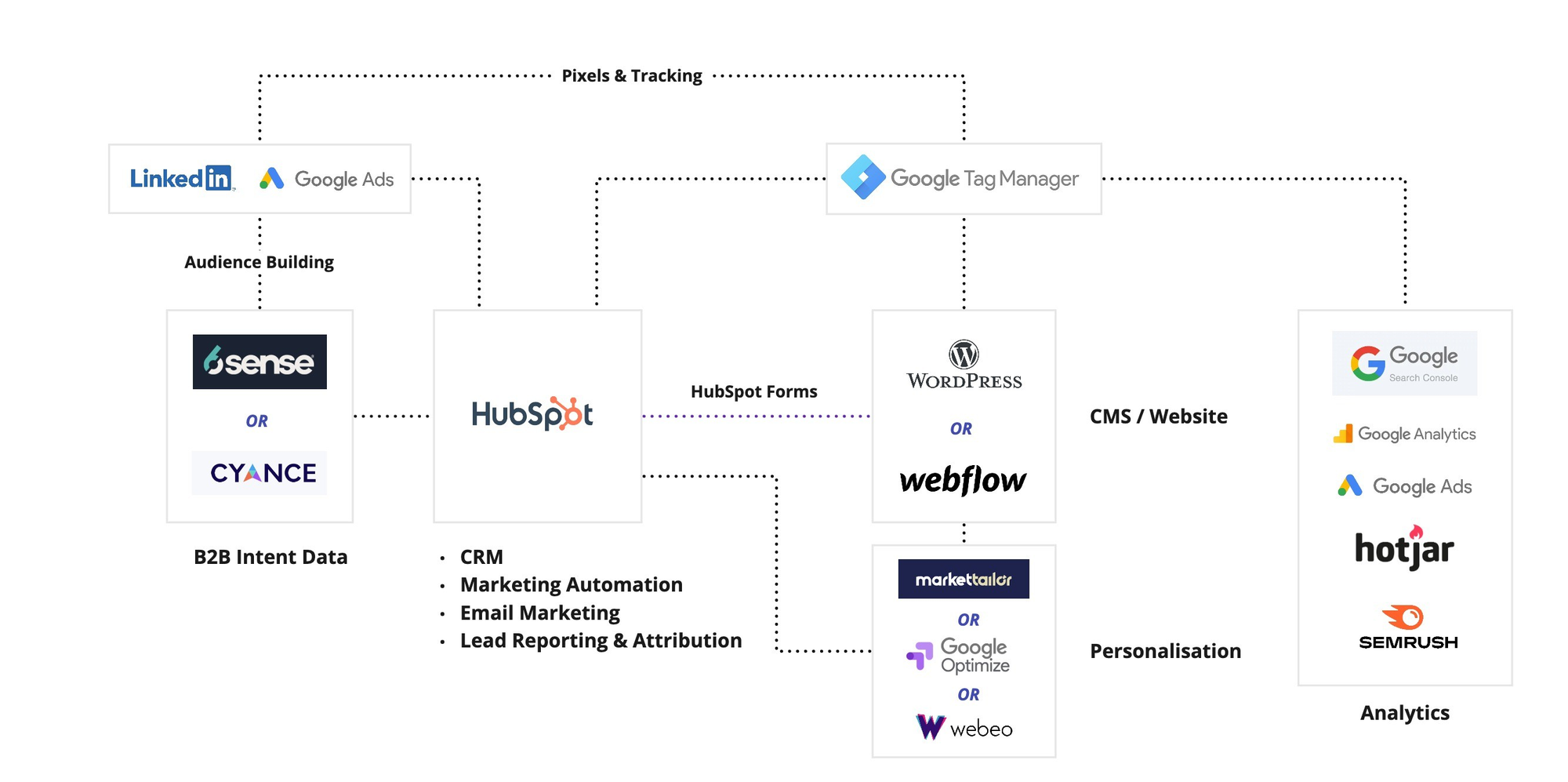
The CRM + Marketing Stack Remix
If you’re willing to break away from the "all-in-one" mythos, there’s magic in pairing best-in-breed tools. Like Lego blocks—only with fewer stubbed toes and more pipeline velocity.
Here’s how savvy B2B SaaS teams are remodelling their marketing automation stack:
- CRM → Something clean and sales-friendly (e.g. Pipedrive, Close, or even Salesforce if you must).
- Marketing Automation → Smart segmentation, nurturing flows, and attribution tracking.
- Analytics → Something that doesn’t require a PhD to build a funnel (e.g. Oribi or Mixpanel).
- Lead Capture → Landing pages, forms, chatbots—plug and play.
Now, onto the juicy part. Who replaces HubSpot without the heartburn?
The Top HubSpot Alternatives for B2B SaaS
1. ActiveCampaign
The email whisperer with grown-up automation chops
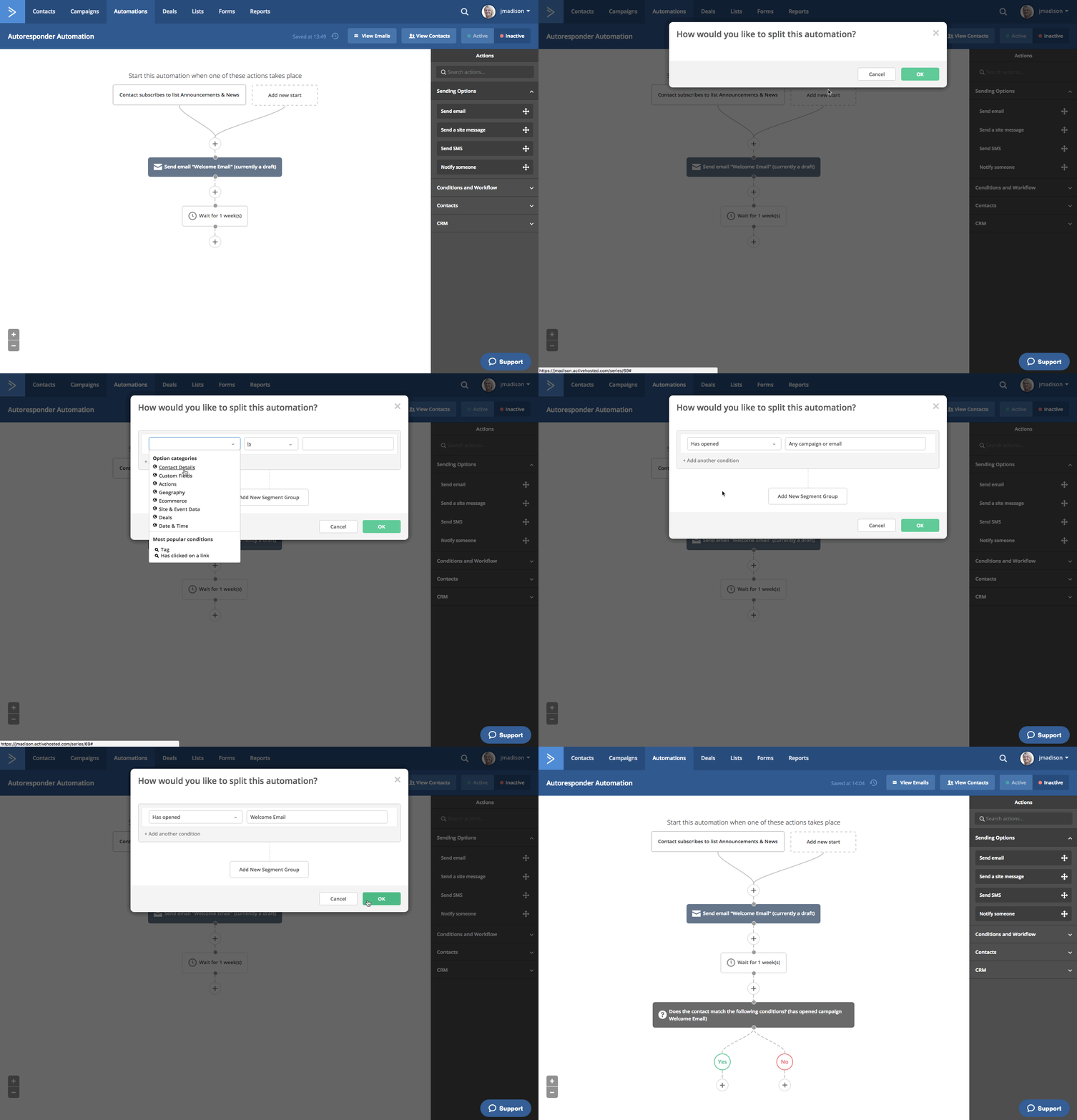
ActiveCampaign started life as an email tool, but it’s grown into a proper marketing automation system with advanced logic, behavioural triggers, lead scoring, and dynamic content that rivals HubSpot’s workflows—without the eye-watering cost.
Best for: Mid-stage SaaS with email-heavy nurtures, onboarding journeys, and CRM sync.
Pricing: Starts around $49/month. Enterprise gets you machine learning-powered win predictions (fancy).
What’s hot:
- Visual automation builder that doesn’t require incense or meditation to understand
- CRM and email tightly integrated (if you want it)
- Conditional content and deep segmentation
- Native integrations with Salesforce, Pipedrive, Calendly, etc.
What’s not:
- Reporting isn’t as sexy as HubSpot’s
- CRM is decent, but not sales-team-obsessed like Close or Pipedrive
2. Customer.io
For product-led SaaS teams that need behaviour-based everything
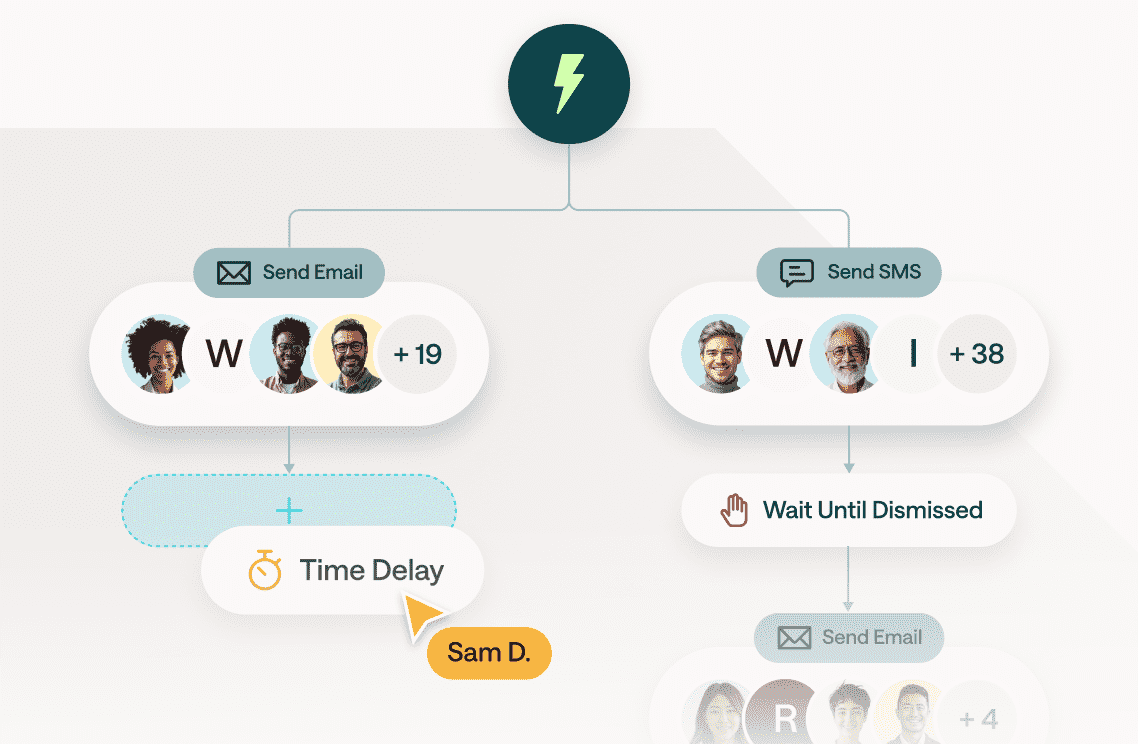
Customer.io lets you trigger campaigns based on what users do inside your app. Think onboarding emails when someone hits feature X, reactivation nudges when they go cold, or upsell nudges right after a usage milestone.
Best for: Product-led growth teams, freemium models, in-app engagement.
Pricing: Starts at $100/month for up to 5,000 profiles.
Why it slaps:
- Event-based workflows with real-time data ingestion
- A/B testing baked into every flow
- Lightweight but powerful interface
- Built for dev+marketing tag teams
Caveat: Requires some dev help to set up the event tracking (this ain’t Mailchimp).
3. Encharge
The no-code friend of SaaS marketers everywhere
A rising star, Encharge feels like if Customer.io and ConvertKit had a baby—with a focus on B2B SaaS automation journeys. It lets you design behaviour-based workflows, score leads, and sync data with your product and CRM.

Best for: Startups and mid-size SaaS teams that need agile automation with zero code.
Pricing: $59/month for 2,000 contacts and all core features.
Perks:
- Super visual workflow builder
- Zapier + native integrations galore
- Native Stripe and Segment support
- Built-in email editor (no switching tools)
Cons: Still maturing, so don’t expect Salesforce-level robustness.
4. Ortto (formerly Autopilot)
Visually brilliant and oddly satisfying to use
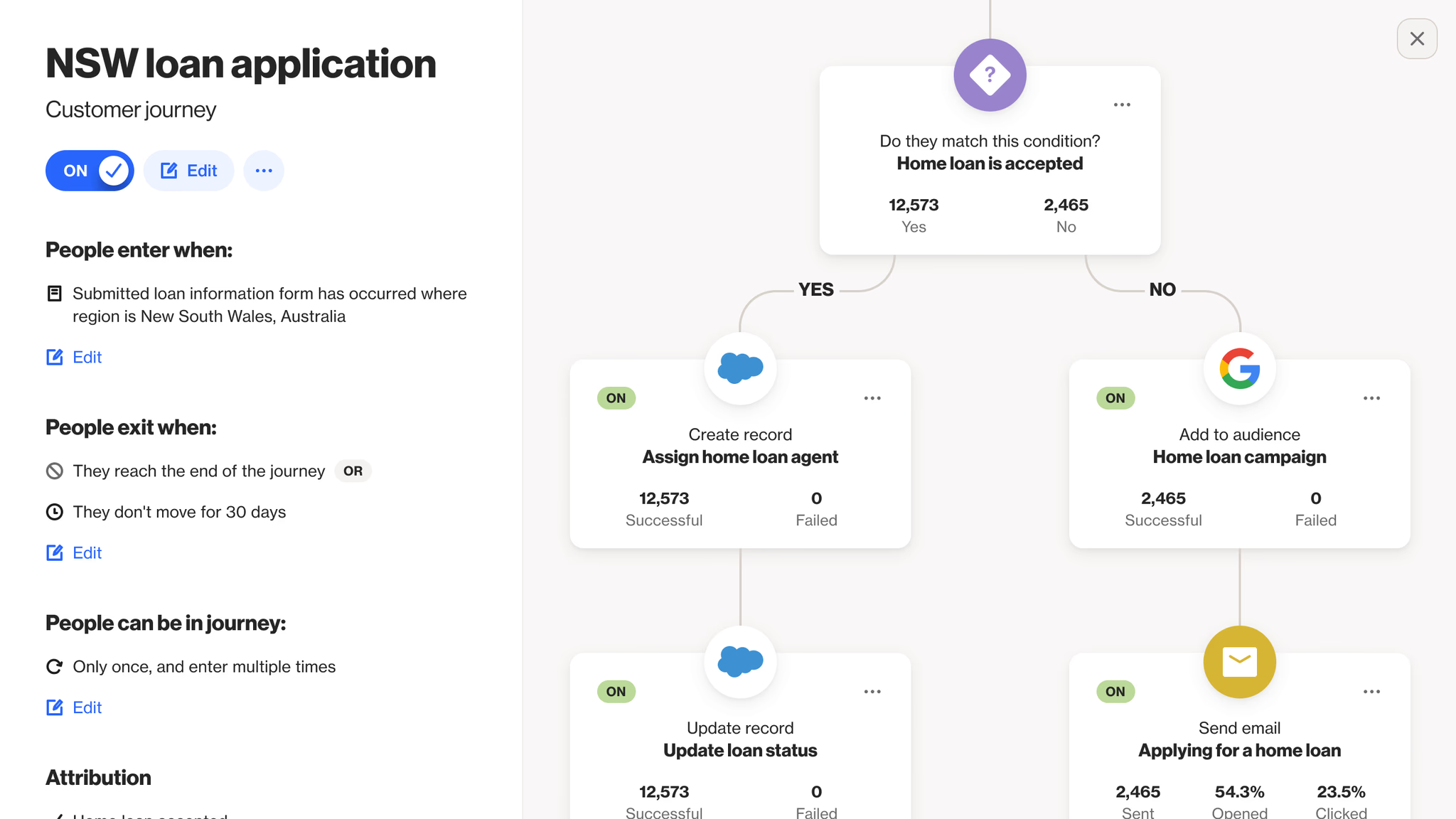
Ortto brings clarity to campaign planning with its “Journey Builder” - a visual map that makes complex automations look like child’s play. It combines analytics, CRM, and messaging into one clean interface.
Best for: Teams that want high visibility across the journey and tight analytics.
Pricing: Starts at $29/month (seriously).
Strengths:
- Drag-and-drop journey mapping is chef’s kiss
- Unified view of customer lifecycle
- Email, popups, forms, and ads all in one interface
- Nice native dashboards for growth metrics
Weaknesses:
- CRM is limited - best paired with a dedicated one
- Power users may feel boxed in on custom logic
5. Salesforce + Pardot (now Marketing Cloud Account Engagement)
The ‘we’ve got budget and a big sales team’ pick
Look, it’s if your sales team is already married to Salesforce, not light or cheap -, this combo gives you deep attribution, lead scoring, ABM, and campaign logic that syncs with your pipeline.
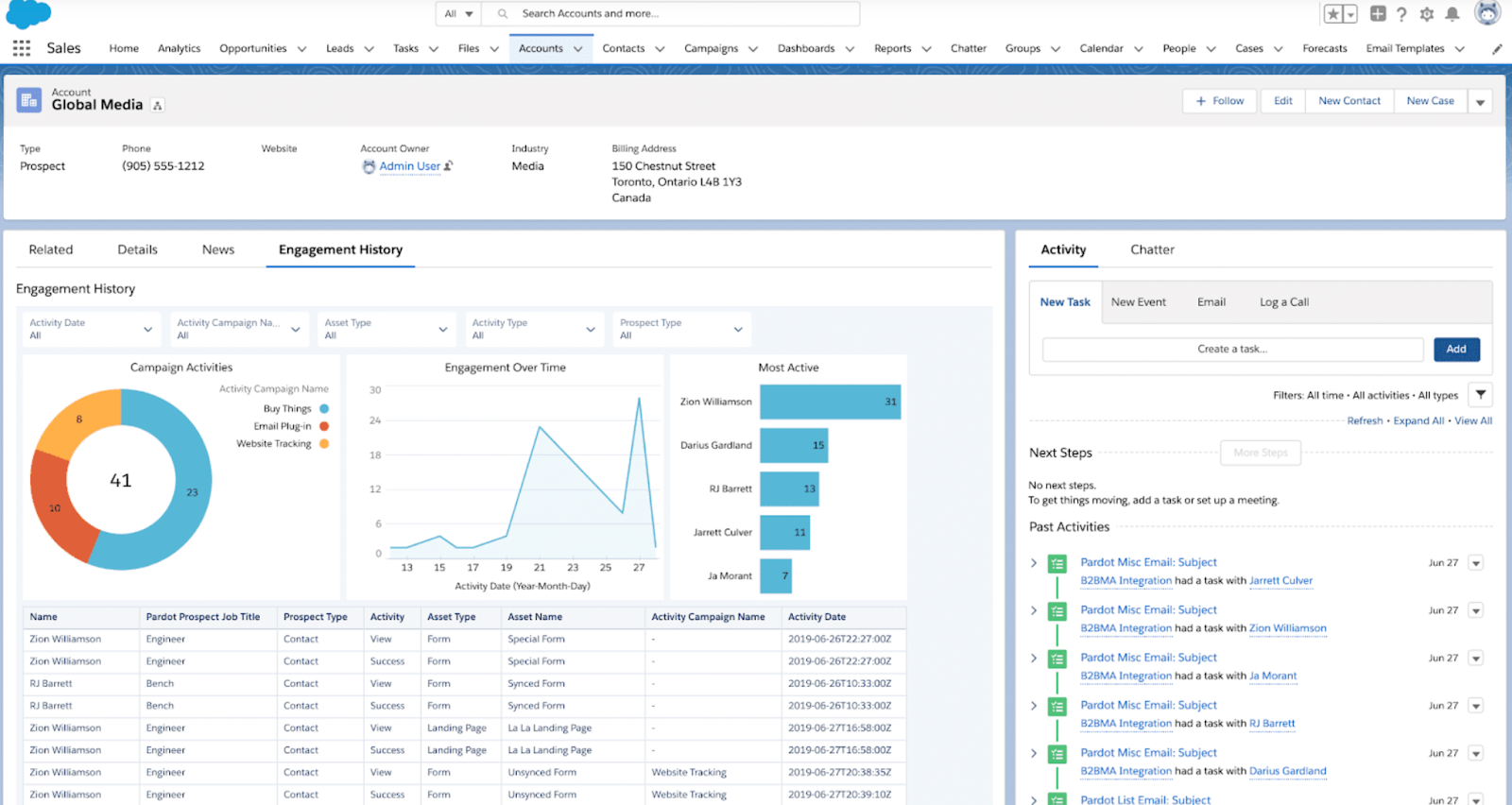
Best for: Mid to large B2B SaaS doing long-cycle, sales-led growth.
Pricing: Starts north of $1,250/month. (Gulp.)
Pros:
- Native Salesforce sync (obviously)
- Powerful segmentation and scoring
- Great for B2B ABM playbooks
- Suits complex buyer journeys
Cons:
- Expensive, clunky setup
- Overkill for lean SaaS teams
Honourable Mentions
Let’s not forget the rest of the gang - just because they don’t have prime billing doesn’t mean they can’t pull their weight.
- Mailchimp: Better for ecommerce but solid for basic nurturing. Surprisingly decent automation builder now.
- ConvertKit: Originally built for creators, now branching into SaaS. Great UI, strong tagging system.
- Drip: Like Mailchimp but cooler. Great visual flow builder and better ecomm/SaaS blend.
- MoEngage / CleverTap: More mobile/app-centric, good for push + in-app messages in PLG models.
The B2B SaaS Reality Check
There’s no perfect replacement for HubSpot because - brace yourself - it was never perfect to begin with. What matters is finding a stack that works for your motion:
- Sales-led? Focus on CRMs with sales-first DNA like Close or Pipedrive, then layer in lightweight automation like Encharge or ActiveCampaign.
- Product-led? Customer.io or Ortto gives you all the in-app behavioural triggers you need.
- Hybrid? Mix and match. Build a lean Frankenstack that does the job, without the HubSpot badge of honour.
Golden Rule: If you’re paying for things you’re not using, you’re not automating - you’re donating.
Scores on the Doors: HubSpot Alternatives Cheat Sheet
| Tool | Best For | Learning Curve | Pricing | CRM Quality | Standout Feature |
|---|---|---|---|---|---|
| ActiveCampaign | Email + CRM Journeys | Low | $ | Good | Segmentation + Visual Flows |
| Customer.io | Product Behaviour Flows | Medium | $$ | N/A | Event-Driven Messaging |
| Encharge | No-Code SaaS Flows | Low | $ | Decent | Stripe & Zapier Integration |
| Ortto | Visual Journey Maps | Low | $ | Light | Growth Analytics Dashboard |
| Salesforce + Pardot | Sales-Led Complex Cycles | High | $$$$ | Excellent | Deep Salesforce Sync |
Final Thoughts
HubSpot’s not bad - it’s just not everything. Especially if you’re running a lean SaaS machine where every dollar and every data point has to pull its weight. The good news? The market is bursting with smart, affordable, and actually-useful tools that don’t require annual contracts or five onboarding calls.
So, unhook from the all-in-one trap. Build the stack your team actually uses. And remember: the best automation is the one your intern doesn’t need three months to learn.
Need help auditing your stack or rethinking your marketing ops? Drop us a note - DataDab does SaaS content and automation without the fluff.
FAQ
1. Why would a B2B SaaS company look for alternatives to HubSpot? Many B2B SaaS teams outgrow HubSpot’s cost-to-value ratio, especially when they’re paying for features they rarely use. Others want more specialised tools that fit their product-led or sales-led motion without the bloat or tiered pricing trap.
2. Are there affordable alternatives to HubSpot that still offer robust automation? Yes. ActiveCampaign, Encharge, and Ortto all offer powerful automation capabilities at a fraction of the cost. These tools cover segmentation, behavioural triggers, and visual journey builders—without the premium price tag.
3. What’s the best alternative if our SaaS product relies on in-app behaviour to trigger messages? Customer.io is purpose-built for product-led growth, allowing you to trigger emails, SMS, and push notifications based on real-time user activity within your app. It’s ideal for onboarding, reactivation, and usage-driven nudges.
4. Can I replace HubSpot with multiple smaller tools instead of a single platform? Absolutely. Many SaaS teams are opting for a “Frankenstack” approach—using one tool for CRM (like Pipedrive), another for automation (like Encharge), and others for analytics or lead capture. It requires integration effort but can result in better fit and lower costs.
5. What’s a good HubSpot alternative that includes CRM features too? ActiveCampaign has a built-in CRM that integrates tightly with its automation features. While it’s not as sales-heavy as something like Close or Pipedrive, it’s a solid all-in-one option for small to mid-sized SaaS teams.
6. How do these alternatives compare in terms of ease of use? Tools like Encharge and Ortto are praised for their clean interfaces and drag-and-drop automation builders, making them beginner-friendly. Customer.io and Pardot have steeper learning curves but offer more depth for technical teams.
7. Do these tools support lead scoring and segmentation like HubSpot? Yes. ActiveCampaign, Customer.io, and Encharge all offer lead scoring and rich segmentation. Some also allow tagging and conditional flows based on user behaviour, form responses, or lifecycle stages.
8. What’s the best alternative for sales-led B2B SaaS companies? If your model involves demos, long sales cycles, and a dedicated SDR/AE team, pairing Salesforce or Pipedrive with ActiveCampaign or Pardot gives you strong pipeline visibility and customisable workflows.
9. Can I track attribution and campaign performance as I would in HubSpot? Tools like Ortto and ActiveCampaign include built-in analytics, while others like Customer.io require connecting to third-party tools or dashboards. For richer attribution modelling, you may want to pair these with Mixpanel, Oribi, or Segment.
10. How do I decide which HubSpot alternative is right for my team? Start by mapping your actual workflows—what needs automating, who’s using the tools, and where leads come from. Then pick based on motion (product-led vs. sales-led), technical skill available, and budget. A lean, well-integrated stack often beats a bulky “all-in-one” that no one fully uses.