

How to stop bleeding budget on acquisition and actually grow your B2B SaaS the smart way
Customer Acquisition Cost (CAC) has become the four-letter word of B2B SaaS boardrooms. Every founder has a war story. “We spent $200,000 on paid..got 34 demos, zero conversions.” Sound familiar? You're not alone. In an era where venture cash no longer flows like a frat party keg, CAC is the new killjoy. But here’s the twist: high CAC isn’t the disease. It’s a symptom - of leaky funnels, fuzzy ICPs, and messaging so generic it could’ve been written by a sleepy chatbot on Ambien.
So, instead of hacking away at the top of your funnel with LinkedIn Ads and cold emails that get ghosted harder than your high-school crush, let’s talk about actual optimisation. Smart strategies that recalibrate your GTM engine, cut waste, and nudge CAC back to reality..without sacrificing growth.
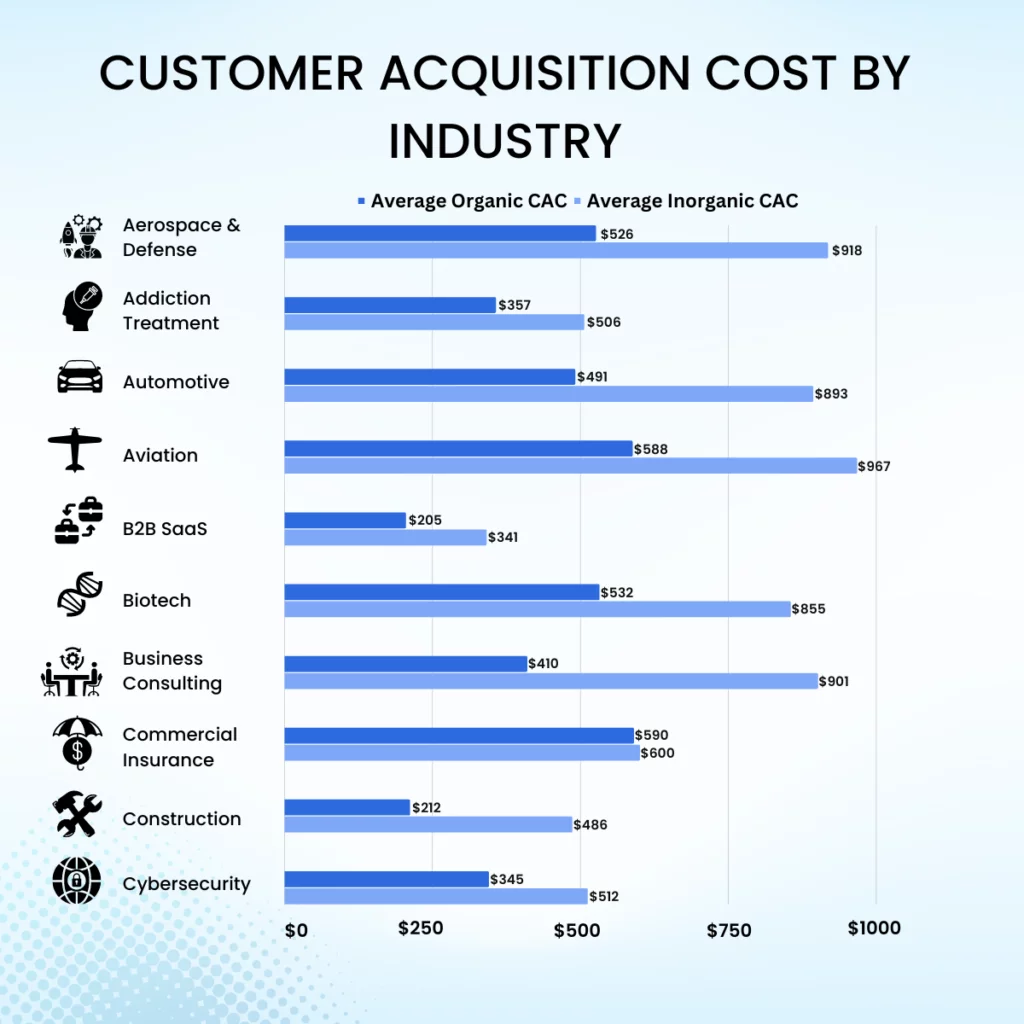
Reality Bites: Why CAC Is Creeping Up (and What You're Probably Ignoring)
There’s a perfectly logical reason your CAC is bloated. Multiple, actually. But most SaaS teams treat it like a Facebook relationship status: “It’s complicated.”
Let’s simplify.
First, channels that used to be cheap are now flooded. LinkedIn? CPMs through the roof. Google Ads? Still a punch in the wallet. Content marketing? Brilliant, but takes 6–12 months to show real ROI, assuming it doesn’t get buried under a pile of ChatGPT clones.
And then there’s your ICP. Be honest. Do you really know them? Or are you still targeting “mid-market decision makers in tech” (which translates to: everyone and no one)?
What’s worse, the messaging is often… pithyless. It says what your product does, not what it means for the buyer. There’s a Grand Canyon-sized gap between “Intelligent process automation” and “We help you claw back 3 hours a week to focus on high-stakes tasks.”
So before you try another CRO tool, maybe it’s time to rework the fundamentals.
In short:
High CAC isn’t always about being inefficient. It’s about being forgettable.

ICP, Meet MRI: Stop Guessing and Start Segmenting
If your Ideal Customer Profile is still defined by revenue band and team size, you’re basically playing darts with a spaghetti noodle. Time to sharpen the blade.
Get laser-specific with:
- Firmographics (industry, size, growth stage)
- Technographics (what tools they use)
- Behavioural triggers (recent funding, hiring sprees, tech migrations)
- Jobs-to-be-Done (what pain are they solving right now, not last year)
But here’s where the real gold lies: Value Density.
That’s right. Ask not who can buy your SaaS, but who will get the most value from it the fastest. These folks onboard quicker, churn less, and - best bit - often come from referrals.
Got historical data? Perfect. Run a quick win analysis:
- Which customers got ROI in <30 days?
- Which segments upgraded fastest?
- Which accounts referred others?
Now, focus only on these. Shrink your total addressable market if you must. You want a winnable market, not a fantasy league.
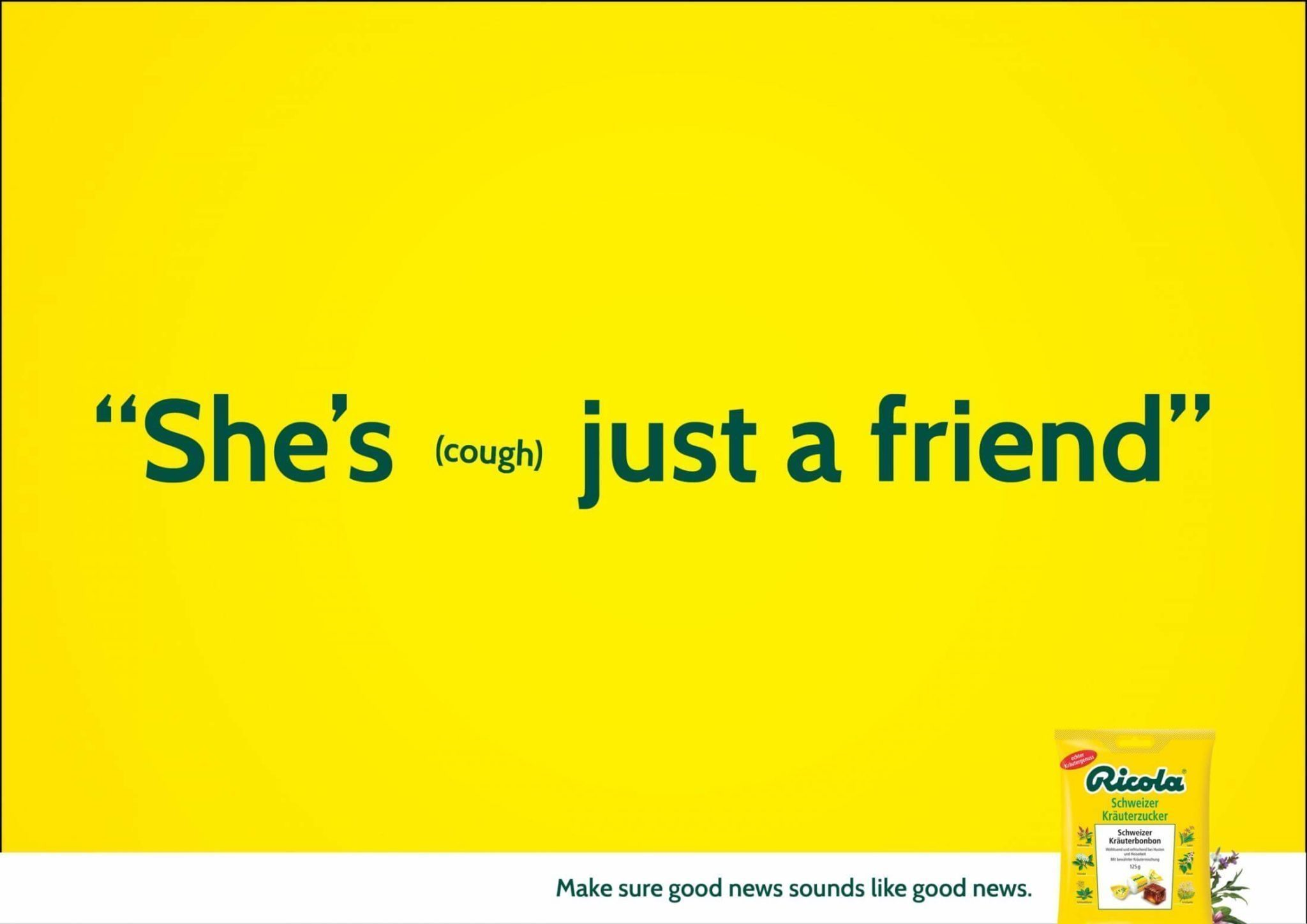
Your Messaging Probably Sucks (But It Doesn’t Have To)
Here’s a fun test. Show your homepage headline to someone outside your company. If they can’t explain what you do in 10 seconds without furrowing their brow, start over.
We’ve seen SaaS sites that proudly announce:
“Unlock the power of agile intelligence at scale.”
Cool story, bro. But what does that mean?
Try instead:
“Automate 80% of your monthly reporting with one click.”
Now we’re talking.
Your messaging should:
- Lead with pain relief, not product features
- Use verbs more than nouns (you’re doing things, not just describing them)
- Be specific about outcomes (not “better workflows,” but “shorter hiring cycles by 12 days”)
Quick wins:
- Replace your H1 with the #1 complaint from your best-fit customers
- Add proof near every promise (quotes, stats, visuals)
- Use side-by-side comparisons to call out the status quo (e.g., “Before vs After”)
When your messaging clicks, CAC drops - people convert faster. No need for a 7-email drip to explain what you do.
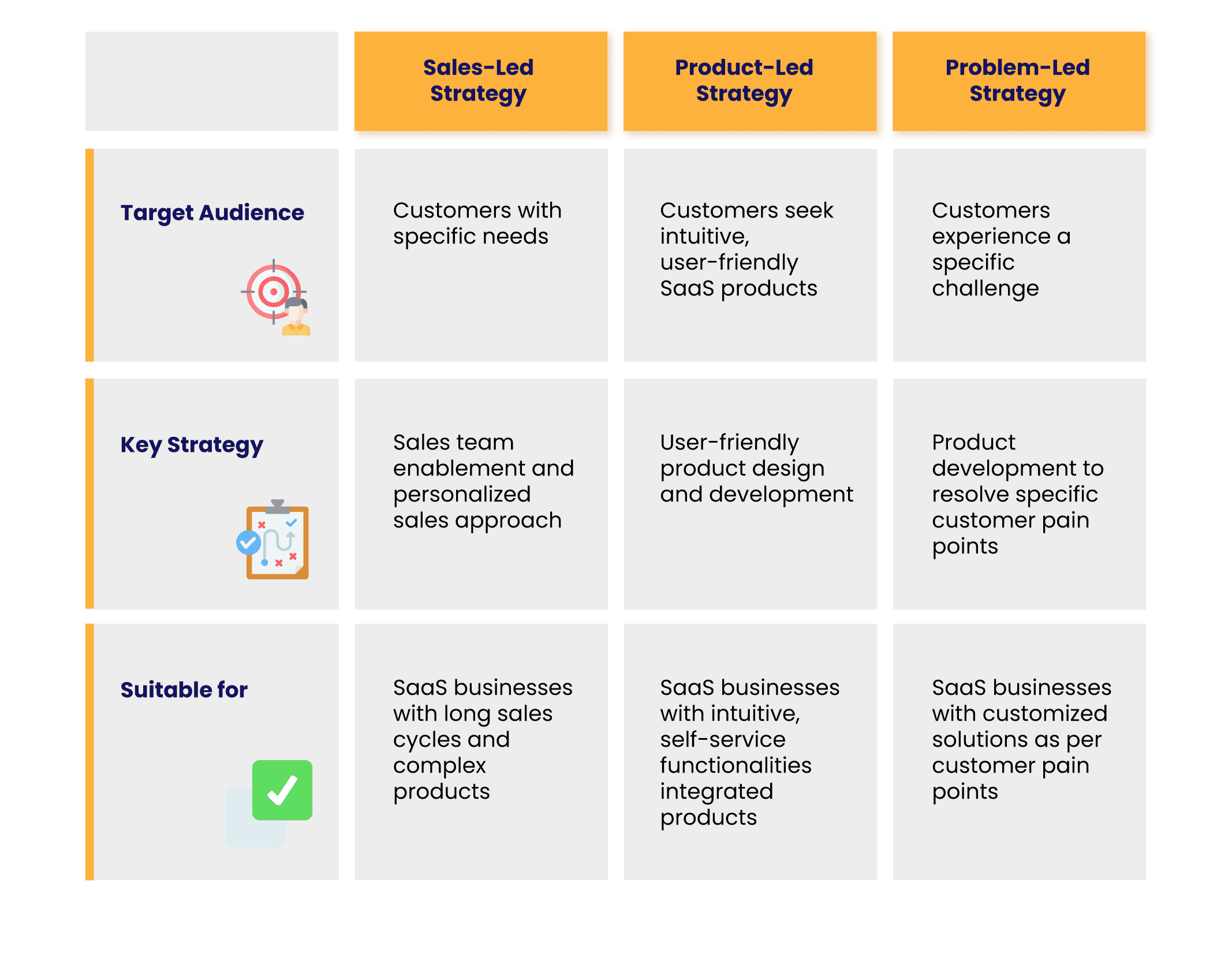
Ditch the Spray-and-Pray GTM: Focused Plays Win
Let’s talk tactics. More precisely, fewer tactics.
High CAC often stems from doing too many things half-heartedly. One week you’re on a cold outreach spree. Next, it’s a podcast launch. Then webinars. By Q3, you’re burnt out and blaming the market.
Instead, pick one or two high-use motions and optimise them ruthlessly. Here are a few to consider:
1. Partner-Led Growth
Have a complementary tool in your ecosystem? Run joint campaigns. A 2,000-person co-branded webinar > 20,000 impressions from your solo campaign.
2. Customer-Led Growth
Turn your happiest users into ambassadors. Incentivise reviews, referrals, and user-generated content. Set up a lightweight customer advisory board. (Zoom call + swag box = magic.)
3. Founder-Led Sales
Still early-stage? You are the best closer. Do outbound, sure - but make it surgical. 10 hyper-targeted emails per week. Personalised. Problem-focused. Not “Hi {FirstName}, we’re revolutionising X.”
4. Content That Converts, Not Just Ranks
Forget blog posts on “What is SaaS?” Focus on buying-stage content:
- ROI calculators
- Competitor comparisons
- Integrations how-tos
- Case studies (with numbers, not fluff)
A killer testimonial page will outrank 50 SEO blogs in impact.
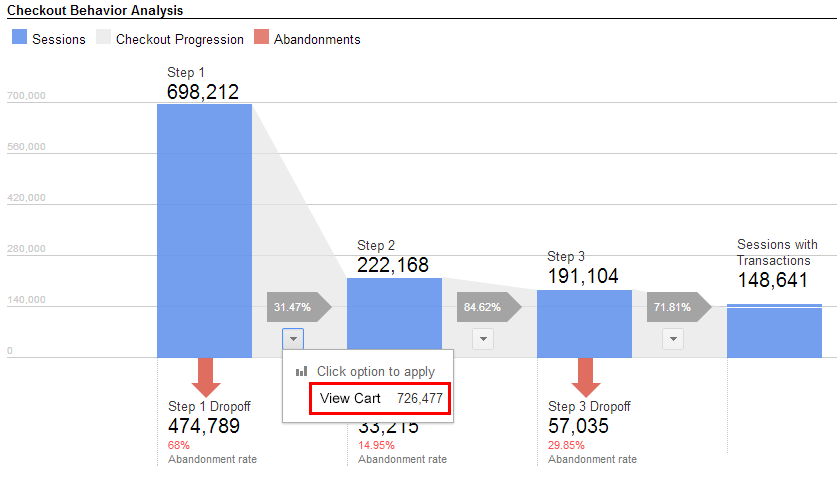
Fix the Funnel Leaks Before You Pour More In
You wouldn’t pour champagne into a cracked glass, right? Yet most SaaS teams keep pouring budget into top-of-funnel, hoping volume will outpace inefficiency.
Instead, optimise each funnel stage. Your CAC is an average - it hides sins.
Let’s break it down:
- Visitor to lead: Is your CTA clear? Are you gating the wrong content?
- Lead to demo: Is the hand-off smooth? Do reps know the buyer’s pain before the call?
- Demo to closed-won: Is your pitch tailored? Are you solving their problem, or doing a product tour?
And don’t forget post-sale:
- Onboarding friction = higher CAC. Because retention and referrals matter.
Pro tip: install a simple exit survey on demo drop-offs. You’ll spot messaging mismatches, unclear CTAs, or poor qualification in minutes.

Payback Period > CAC Alone
Here’s the dirty little secret: CAC isn’t inherently bad. What matters is how fast you earn it back.
Say your CAC is $3,000. If you break even in 2 months, no problem. If it takes 14, you’re underwater.
This is where pricing, retention, and expansion matter:
- Is your pricing model aligned with customer value?
- Are you upselling successfully at the 3- or 6-month mark?
- Do your users really use the core features after onboarding?
Shorten time-to-value. That alone can cut CAC perception in half.
Also, consider: Should you fire some channels? Or even fire some customers?
Yes, really. If they cost more to acquire than they’re worth, Marie Kondo them out of your funnel.
CAC Scorecard
| Factor | High CAC Indicator | Fix It With... |
|---|---|---|
| Fuzzy ICP | Low demo-to-close ratio | Value-based segmentation |
| Vague messaging | High bounce, low conversion | Outcome-driven copy, pain-first value |
| Too many GTM motions | Shallow impact across channels | Focused, surgical GTM plays |
| Funnel friction | Drop-offs before conversion | Journey mapping + clear CTAs |
| Long payback period | Revenue lags CAC by 6+ months | Pricing + onboarding + expansion paths |
Wrap-up
High CAC is not a death sentence. It’s a wake-up call. A prompt to stop brute-forcing growth and start fine-tuning your strategy. From better segmentation to sharper copy and tighter funnels, there are dozens of ways to trim the fat without starving your pipeline.
Because at the end of the day, acquisition should feel like a well-rehearsed play, not a Vegas gamble.
Want to get your CAC under control? Start by identifying your highest-value customers and build every funnel step around them. It's less sexy than throwing more money at ads - but infinitely more sustainable.
FAQ
1. What causes high CAC in B2B SaaS companies?
High CAC is usually the result of poorly targeted marketing, vague or undifferentiated messaging, too many low-conversion GTM experiments, and funnel friction. It’s not one big leak—it’s dozens of small ones that add up fast.
2. Is high CAC always bad?
Not necessarily. If your lifetime value (LTV) justifies it and your payback period is short (ideally under 12 months), a higher CAC can still be healthy. It's only problematic when acquisition spend doesn’t translate to scalable, sustainable revenue.
3. How do I calculate CAC accurately?
Divide total sales and marketing costs over a specific period (including salaries, tools, ad spend, etc.) by the number of new customers acquired in that same period. Don’t fudge it—include overheads and attribution tools if they’re part of the process.
4. What’s a good CAC to LTV ratio for B2B SaaS?
The golden benchmark is 1:3—meaning for every dollar spent to acquire a customer, you earn three in revenue over their lifetime. But early-stage companies might operate at 1:2 if churn is low and upsell potential is high.
5. How can better ICP targeting reduce CAC?
By narrowing your targeting to only those prospects who gain fast, high-value ROI from your product, you avoid wasting spend on unqualified leads. Better ICP = fewer but better prospects = faster sales cycles = lower CAC.
6. Can improving my website copy lower CAC?
Absolutely. Clear, pain-first, outcome-oriented messaging helps visitors immediately ‘get it’—which means higher conversion rates, fewer follow-ups, and less friction across your funnel. Vague fluff like “streamline your operations” won’t cut it.
7. Should I cut underperforming channels entirely?
Yes, if they consistently show poor ROI after multiple iterations. But assess why they’re underperforming first—bad targeting, irrelevant content, or timing issues can sometimes be fixed. Don’t ditch a channel just because it's not instant gratification.
8. How does payback period fit into CAC optimisation?
Payback period tells you how long it takes to earn back what you spent acquiring a customer. A short payback period (3–6 months) makes a higher CAC more palatable. If your CAC payback stretches beyond a year, you're likely burning cash inefficiently.
9. What’s the role of onboarding and expansion in CAC strategy?
CAC doesn't stop at conversion. If you retain and expand accounts well, your effective CAC shrinks over time. A smooth onboarding experience accelerates time-to-value and opens doors for upsells and referrals—key levers for improving CAC efficiency.
10. Which tools can help identify and fix high CAC problems?
Use analytics platforms like HockeyStack or Dreamdata for full-funnel visibility, MadKudu for lead scoring and prioritisation, and Wynter to test and optimise messaging. These help uncover drop-off points and sharpen targeting, improving your CAC performance end to end.