

Scaling your startup? Here’s how not to drown in dashboards and duct-taped integrations.
In the great SaaS startup hustle, there comes a moment when spreadsheets start resembling spaghetti, campaign tracking turns into cryptic runes, and your marketing team spends more time wrestling with tools than, you know, marketing. Congratulations - you’ve outgrown your toddler-tech stack.
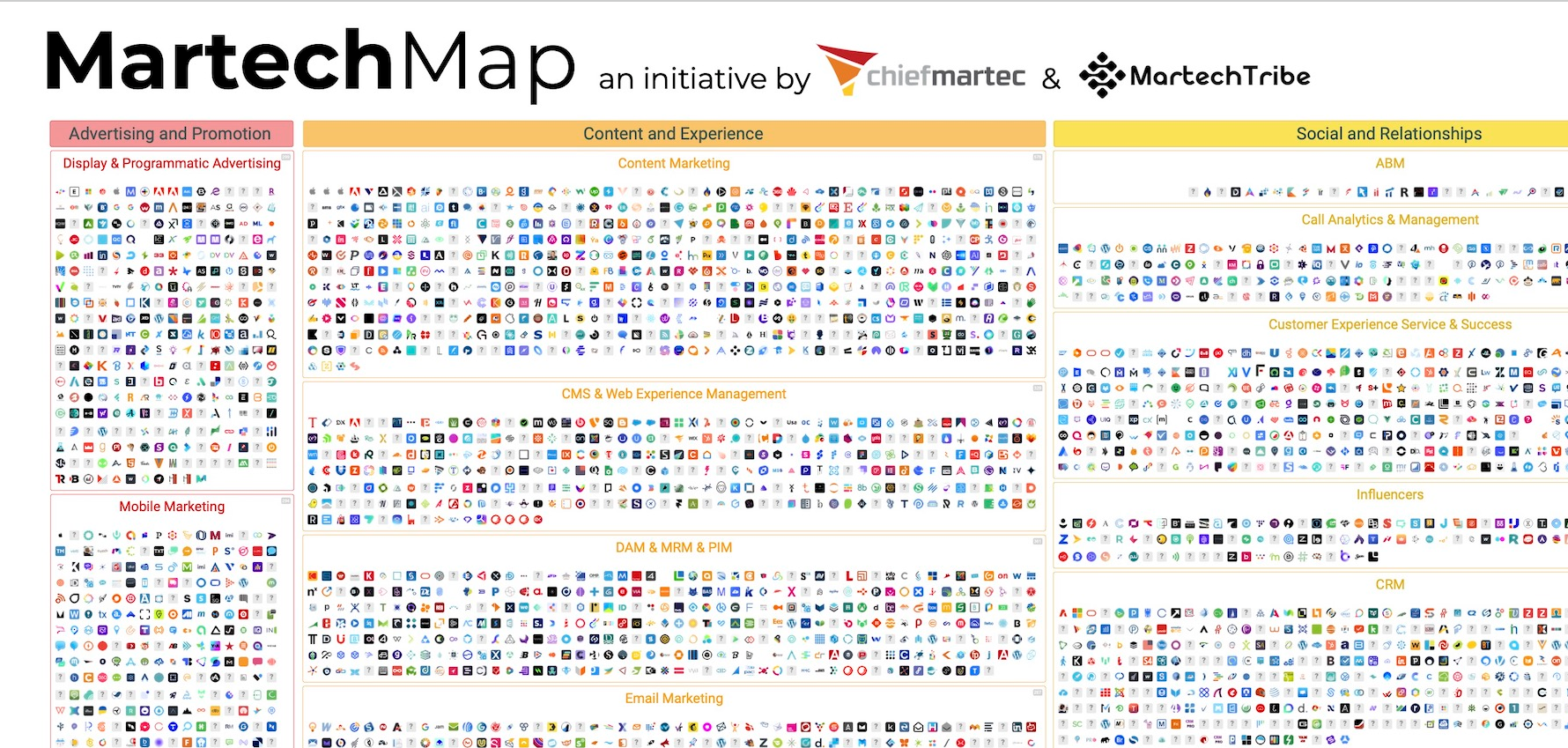
The problem? The modern marketing tech field is a glorious mess. Over 11,000 tools at last count. Every vendor promises "seamless" integration (spoiler: they lie), and even the most sophisticated CMOs have ended up with Frankenstacks that belong in a horror film, not a boardroom.
So how do you build a marketing tech stack that’s smart, scalable, and won’t need a full-time priest to exorcise bugs?
Let’s roll up our sleeves and break it down - minus the jargon, but with all the sass.
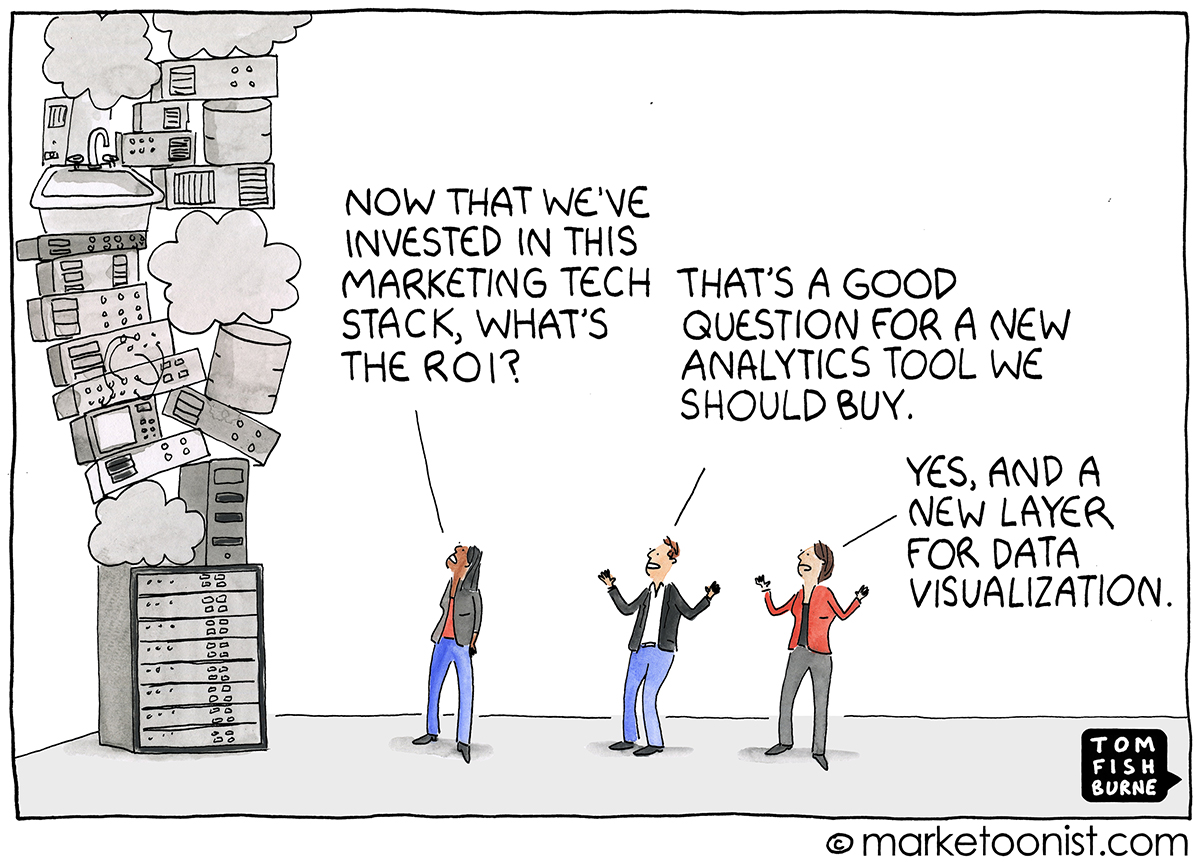
The Stack Isn’t the Strategy
Don’t start with the tools. Start with your business goals - or be forever lost in demo purgatory.
Before you even peek at a pricing page, ask yourself (and your team): What are we actually trying to achieve?
- Grow qualified pipeline? You’ll need precision targeting, lead scoring, and conversion tracking.
- Shorten sales cycles? Look at lifecycle nurturing, sales enablement, and strong CRM integration.
- Improve retention or expansion? You’re now in product-led marketing territory - think behavioural analytics and lifecycle messaging.
The danger is in chasing shinier tools without mapping them to your customer journey. You don’t need a "CDP" because Gartner says so - you need it if your ICP needs orchestration across platforms.
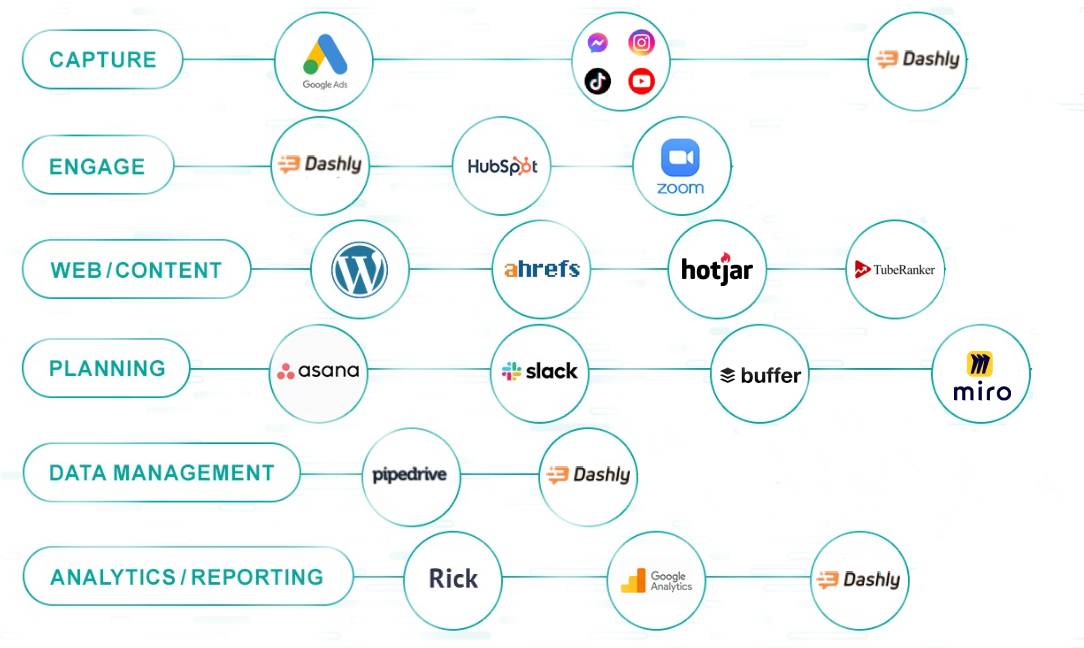
Phase 1: Your MVP Stack (When You're Still Scrappy)
Cheap, cheerful, and held together with Zapier duct tape.
At seed or pre-Series A, your focus is proving repeatable growth. That means lean systems that don't require an ops PhD to run.
Here’s your no-nonsense starter pack:
- CRM: HubSpot Starter or Pipedrive Easy to use, easy to track, and plays nicely with email and ad platforms.
- Marketing Automation: Mailchimp, Brevo, or ConvertKit Let’s be honest - you just need a way to send emails that don’t get you flagged as spam.
- Forms & Landing Pages: Typeform, Tally, or Unbounce Conversion-focused and customisable - because nobody fills out Google Forms unless it’s a wedding RSVP.
- Analytics: GA4 + Hotjar Know who’s visiting, what they’re doing, and where they rage-quit.
- Social & Content Management: Buffer or Hypefury Good enough for planning and scheduling. Don’t overthink it.
- Integrations: Zapier Your glue gun. Connects almost anything to almost everything.

Phase 2: The Scaling Stack (Series A–B and Beyond)
Now you’re cooking with gas - and segmentation, attribution, and ABM.
This is when things get fun. And terrifying. You’re generating serious leads, sales wants tighter alignment, and your investors want charts that go up and to the right.
🔧 Core Infrastructure
- CRM: HubSpot Pro, Salesforce, or Freshsales Salesforce is like IKEA furniture - it’s only useful after hours of assembly. HubSpot is smoother, but pricier as you grow.
- Marketing Automation: ActiveCampaign, Customer.io, or Marketo Choose based on complexity: Campaign logic, API flexibility, and multichannel support.
- Data Enrichment: Clearbit, Apollo.io, or ZoomInfo Lite Your SDRs shouldn’t have to stalk LinkedIn for job titles.
- Attribution & Analytics: Segment + Dreamdata or HockeyStack Google Analytics won’t tell you which webinar actually influenced the deal. These will.
- Customer Data Platform (CDP): Segment, RudderStack, or Freshpaint Optional - but bloody useful for stitching together behavioural data across tools.
- Personalisation / ABM: Mutiny, RollWorks, or Factors.ai Serve different content to a VP of Sales vs. a lonely intern. It’s 2025, after all.
- Product Analytics: Heap, Amplitude, or Mixpanel Know what users do after they sign up. Or don’t. Your churn will thank you.
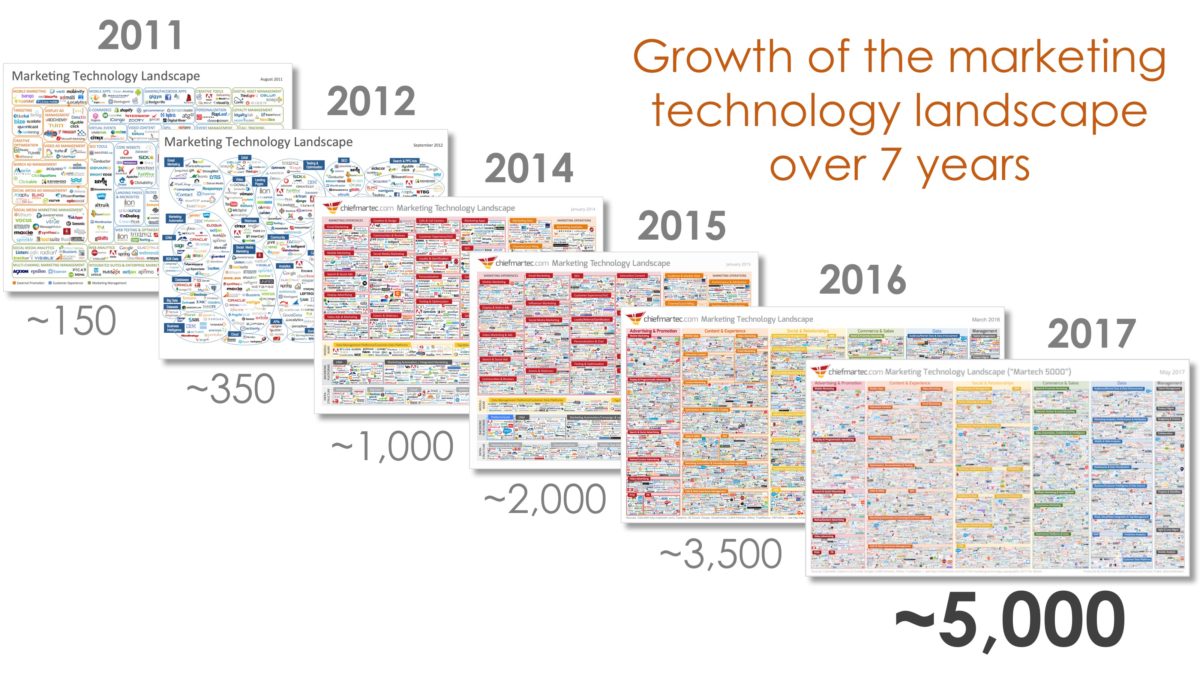
Reality Bites: Integration Overload & Tool Fatigue
When your tech stack turns into a tower of Babel.
Here’s where most teams fall apart: Too many tools, not enough connective tissue. The data lives in silos. Reporting’s a mess. Your team has 12 dashboards bookmarked and trusts exactly none of them.
If this sounds familiar, you’re not alone. According to a Blissfully study (yes, that’s their real name), the average mid-market SaaS company uses 120+ SaaS tools. That’s not a stack - it’s an intervention waiting to happen.
What To Do:
- Design a Source of Truth: Whether it’s your CRM, data warehouse, or a Notion doc - pick one.
- Define Integration Flow: What gets pushed where? When? By whom?
- Assign Tool Owners: Someone needs to own each platform. Not in theory - in practice.
- Audit Quarterly: Tools lose value. Prices creep up. Vendors get lazy. Keep them on their toes.
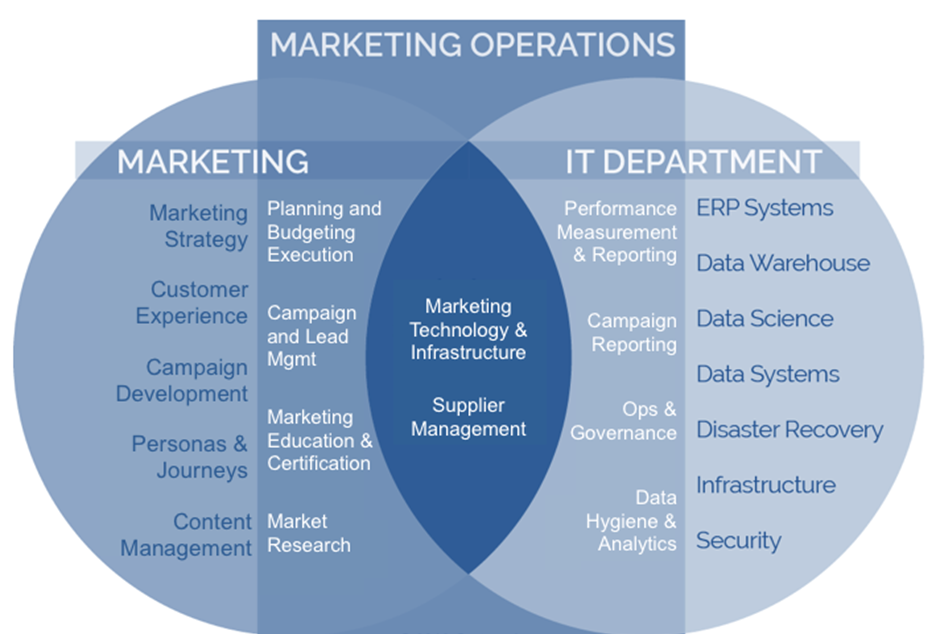
Building the Stack Team: Not Just a "Marketing Problem"
Ops, data, sales, and even finance - yes, everyone needs a say.
Your stack decisions ripple across the business. If marketing picks a tool that sales ignores or product doesn’t trust, it dies a lonely death. Worse, it becomes a silent source of bad data - and bad blood.
Here’s who you need at the table:
- Marketing Ops: To own logic, workflows, and naming conventions (aka sanity).
- Sales Ops: To ensure lead handoff doesn’t feel like a divorce.
- RevOps (if you’re lucky): To sit above the fray and ensure alignment.
- Finance: Because they will eventually ask, ‘Why are we paying $7,000 a month for this again?’
The Anti-Checklist: Avoiding Stack Bloat
Just because you can doesn’t mean you should.
Avoid these classic traps:
❌ Buying enterprise tools before you have enterprise problems
❌ Choosing based on integrations, not outcomes
❌ Believing vendor sales decks (they all show hockey sticks)
❌ Having three tools that send email and none that track attribution
❌ Running freemium tools with no idea who owns what
If you’ve got a tool that nobody logs into for a month, that’s not a feature - it’s bloat.

What a Winning Stack Might Look Like
Here’s a fictional - but functional - mid-stage SaaS marketing stack:
| Layer | Tool Example | Purpose |
|---|---|---|
| CRM | HubSpot Pro | Lead management & pipeline tracking |
| Automation | ActiveCampaign | Email, journeys, scoring |
| CDP / Integration | Segment | Event tracking and data routing |
| Attribution | Dreamdata | Multi-touch journey mapping |
| Product Analytics | Amplitude | In-app behaviour tracking |
| Enrichment | Clearbit | Firmographic and user enrichment |
| Landing Pages | Webflow + Typeform | Conversion and form capture |
| Paid Ad Management | LinkedIn + Google Ads | Awareness & acquisition |
| SEO & Content | Ahrefs + WordPress | Organic visibility and blog CMS |
| Personalisation | Mutiny | Website ABM and smart content |
| Social | Hypefury | Thought leadership scheduling |
| Reporting | Looker Studio + GA4 | Marketing performance dashboards |
You don’t need all of these. But you need to know why you might.
Wrap-up: Think Stack, Not Shiny
The best marketing stack isn’t the most expensive one - it’s the one your team actually uses to drive pipeline.
If we had to tattoo one takeaway on your team’s collective forearm, it’d be this: Choose tools for outcomes, not optics. A good demo means nothing if it takes 8 clicks to pull a report.
Get alignment. Get clarity. And for heaven’s sake, don’t let marketing ops become your unofficial IT department.
Want help making sense of your mess? We’ve helped SaaS teams go from stack chaos to clean growth engines. Let’s talk.
FAQ
1. What’s the biggest mistake B2B SaaS companies make when building their marketing tech stack?
Jumping into tool selection before defining strategy. Many teams rush to adopt whatever’s trending on LinkedIn or recommended by a peer, without clarifying their own objectives, processes, or customer journey. This leads to tool bloat, poor adoption, and fragmented data.
2. How do I know when it’s time to upgrade my stack?
When your existing tools can no longer support your goals without awkward workarounds. If reporting takes longer than executing campaigns, if leads get lost in handoff, or if your team’s building more Zapier hacks than messaging, it’s upgrade o’clock.
3. Should I prioritise integration capabilities when choosing tools?
Yes—but with a caveat. Integration is critical, but only if it supports your workflows and outcomes. A tight native integration is useful only if the data exchanged actually informs your decisions or automations. Prioritise integrations that simplify your data flows, not just tick a checkbox.
4. What’s the difference between a CDP, CRM, and marketing automation tool?
A CRM stores contact and deal information and is primarily used by sales. A marketing automation tool handles campaigns, workflows, and engagement. A CDP (Customer Data Platform) acts as the connective tissue, collecting behavioural data across sources and making it usable across tools for personalisation, segmentation, and analytics.
5. Can I build a marketing tech stack without hiring a full-time marketing ops person?
At early stages, yes—especially if you choose intuitive tools with decent documentation and community support. But as complexity grows, a dedicated marketing ops or RevOps hire becomes essential to ensure your stack doesn’t fall into disarray or become a bottleneck for campaigns.
6. How do I measure ROI on martech investments?
Track impact on key funnel metrics like lead velocity, conversion rate, pipeline attribution, and CAC. Also account for internal efficiencies—time saved on manual tasks, faster campaign execution, and improved alignment with sales. Tools that eliminate busywork or surface insights faster often pay off in productivity as much as revenue.
7. What’s the ideal number of tools in a mid-stage SaaS marketing stack?
There’s no perfect number, but typically 8 to 15 tools across categories like CRM, automation, analytics, content, and enrichment are manageable. More than that, and you risk spending more time managing tech than executing strategy—unless you have a solid ops layer.
8. How often should we review or audit our marketing stack?
At least quarterly. Marketing evolves quickly, tools change pricing or features, and new needs emerge. A quarterly audit helps you identify underused tools, eliminate redundancies, and renegotiate contracts. It also keeps your data infrastructure clean and your team accountable for tool usage.
9. Should we go for all-in-one platforms or best-of-breed tools?
Depends on your growth stage and team sophistication. All-in-ones like HubSpot can be great for simplicity and faster onboarding. But as you scale, best-of-breed tools typically offer more depth and customisation—assuming you have the resources to integrate and manage them properly.
10. What’s the one thing no one tells you about martech stacks?
The biggest risk isn’t choosing the wrong tool—it’s not using the right ones properly. Poor implementation, lack of internal ownership, and unclear processes will sink even the best tools. Adoption and usage matter more than features. A simple, well-used stack always beats a bloated, beautiful one gathering dust.