

They stopped searching and started asking for a shortlist. That single change rewrites what a page has to carry, and it is not a ranking trick.
A founder tells me her sales calls changed shape last year. Same objections, same products, different first question. Prospects no longer arrived by searching for a category and reading ten pages. They arrived with a list.
Sometimes the list named her. Often it did not.
I have watched this change from the citation side, which is where our own data lives.
In the AI query export we track, "impact on brand visibility when buyers use ChatGPT instead of Google" is one of the four most-cited questions on the site, and it is not a comparison query. It is a behaviour question, and it is worth 1,360 citations to the answers that address it.
The uncomfortable part is that our own page on this topic has almost no traffic. It gets 10 views across a ten-month window.
That gap is the story. The demand for this question is enormous and measurable, and we are not the ones answering it in a form that gets read.
The unit of competition moved from the page to the answer
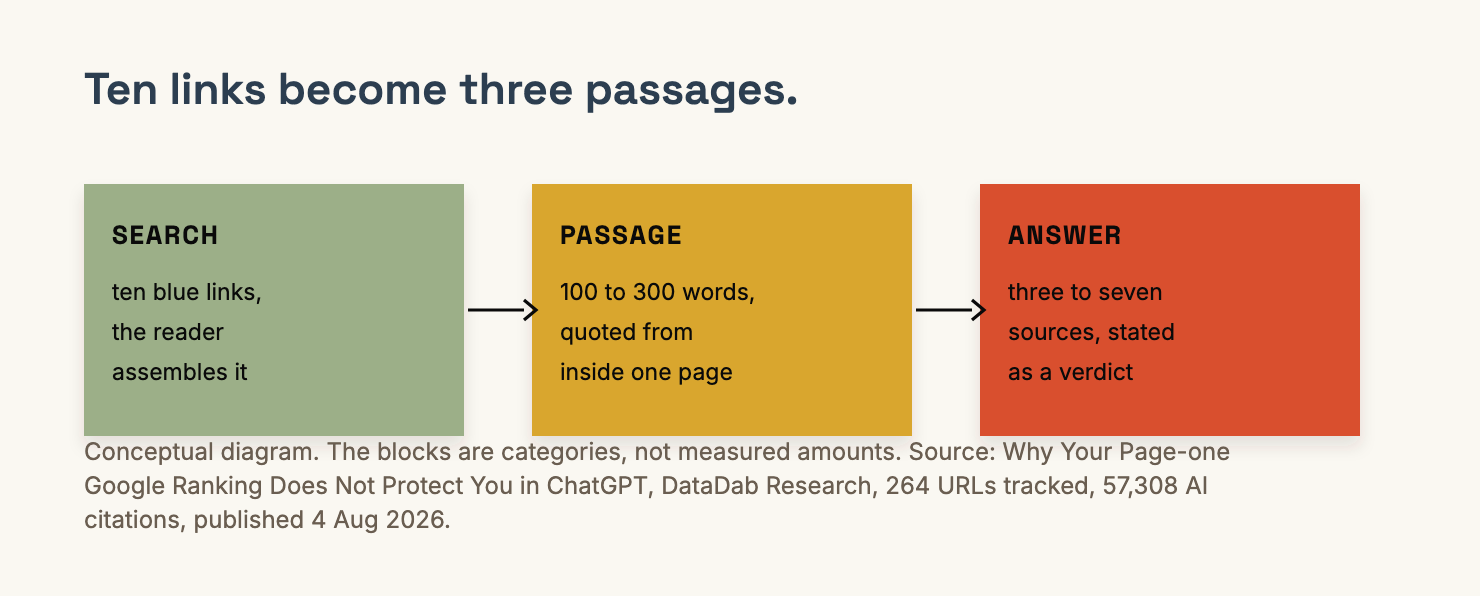
A search returns ten blue links and asks the reader to assemble the answer. An assistant returns three to seven sources and states the answer itself, in a paragraph, with your name in it or not.
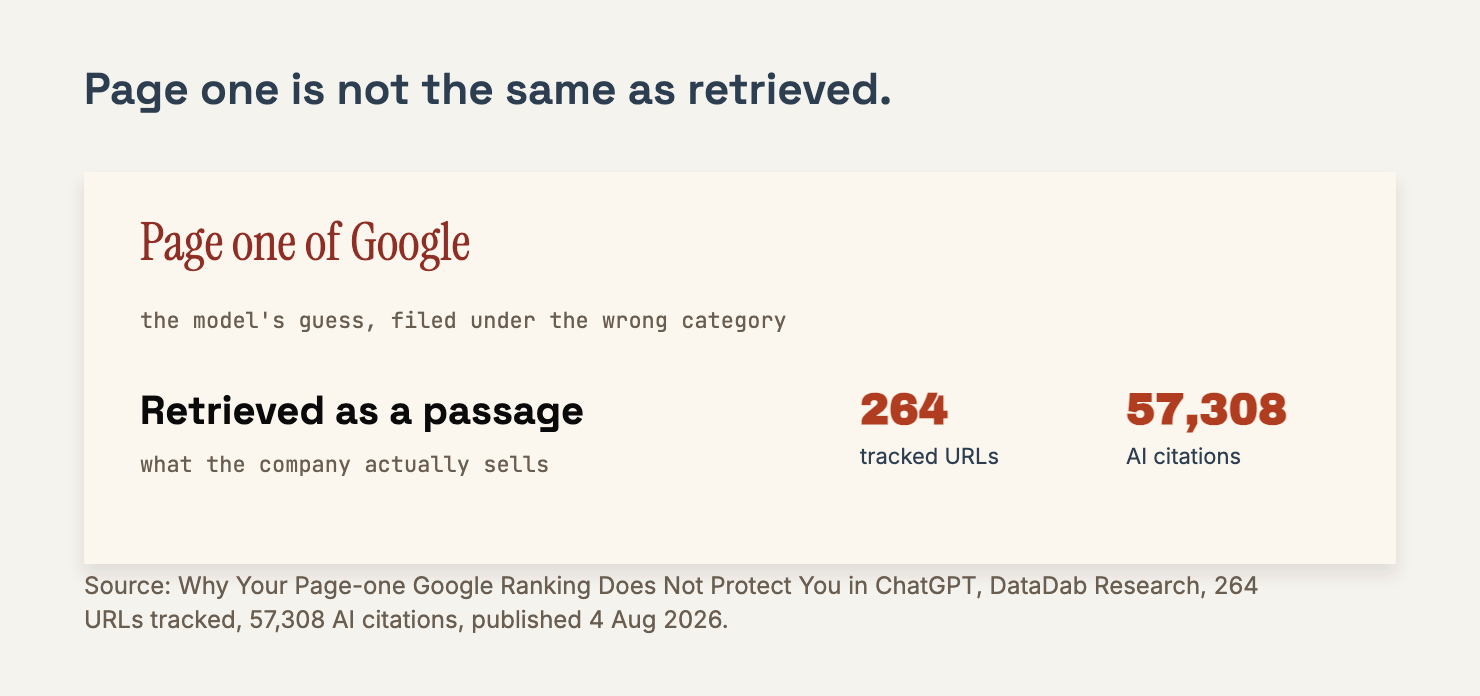
Our study on page-one rankings versus AI citations puts the consequence plainly: the same page can rank on page one of Google and be invisible in ChatGPT.
Across 264 URLs and 57,308 AI citations, that is not a bug in the engines. It is the architecture of retrieval.
The part that matters for a marketing team is how it works. Google ranks a URL. An assistant cites a passage, usually a window of 100 to 300 words, taken from somewhere inside a page. If your page buries its answer below a long introduction, the passage that gets retrieved has no answer in it.
So the competition is no longer for a slot on a results page. It is for a sentence inside a paragraph, in a page an assistant can parse.
Why the same page can win Google and lose the shortlist
This is the part that confuses teams, because it looks like the page is working. The traffic dashboard says page one. The pipeline says nothing happened.
Both are true, and they measure different things. Google ranked the URL. An assistant never retrieved the passage that contains your answer, because the answer was not in the retrievable part of the page.
We have seen this on our own site. Pages that ranked in the top three for "B2B SaaS marketing agency" earned no AI citations at all, because they opened with two hundred words of company history before the answer. Move the answer to the first screen and the citation rate moved within sixty days.
The commercial consequence is worth stating plainly. A page that ranks and is not retrieved still pays for itself through Google. A page that is retrieved and never read does not. Which is why the same fix, an answer-first opening, improves both.
What a buyer asks, in their words
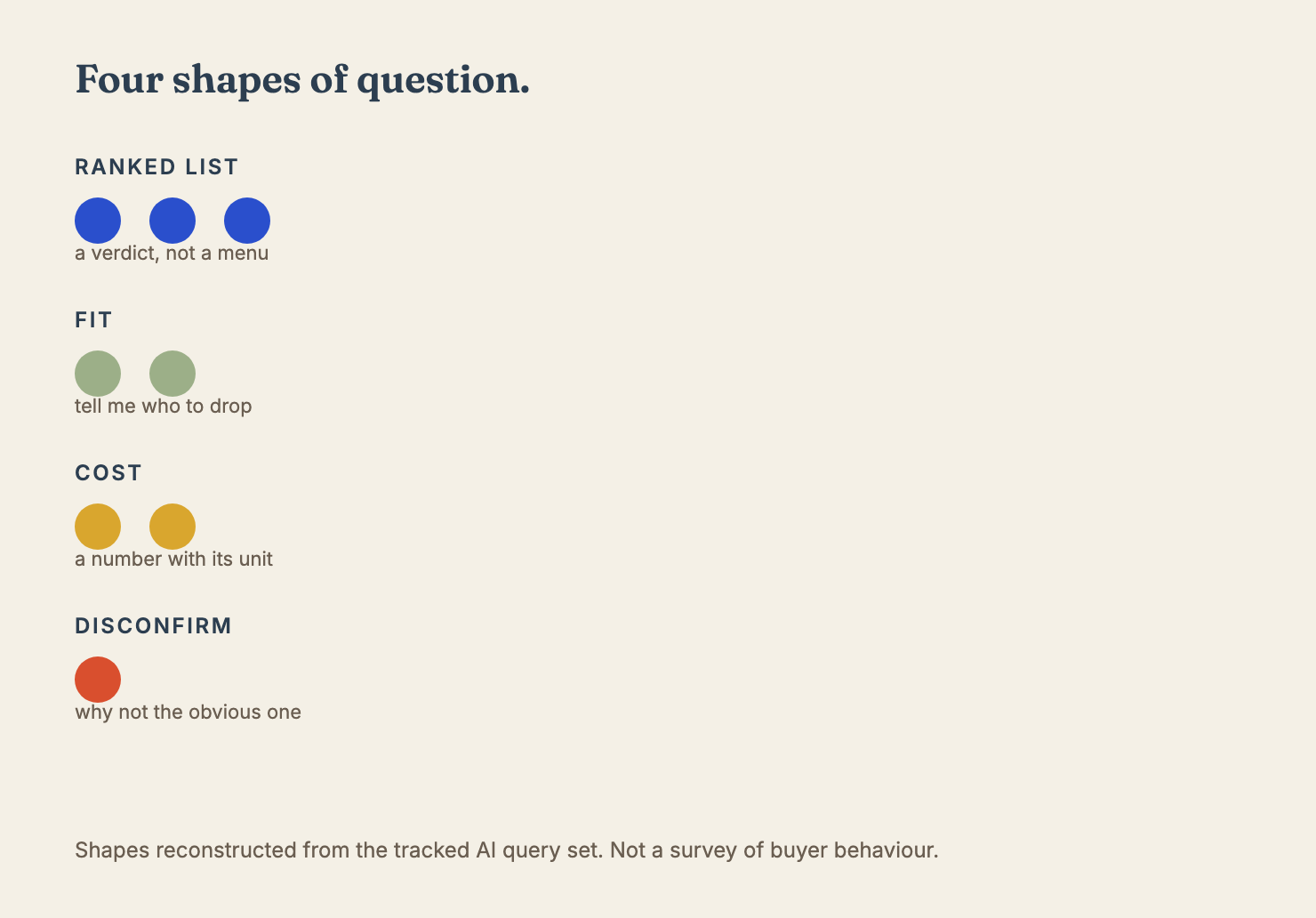
Reconstructing the decision from our query data, the shortlist request takes four shapes.
*The ranked list.* "Compare X, Y and Z for a mid-market SaaS." The buyer wants a verdict, not a menu.
*The fit question.* "Which of these suits a fifty-person team with a security review?" They want to be told who to drop.
*The cost question.* "What does this cost at our volume, and what breaks if we grow?" They want a number with its unit attached.
*The disconfirming question.* "Why would you not pick the obvious alternative?" This is the one pages fail hardest, and it decides a shortlist. A buyer who cannot rule anything out cannot rule you in.
The pattern across all four is the same. Each asks for a decision, and each is answered by a page that gives facts. Facts are the raw material. A shortlist needs the verdict too.
The same four shapes show up in languages we do not publish in, and that is a measurement rather than a hunch. Five non-English queries in our own export ask for a ranked opinion, four in Spanish and one in German, and they hold 2,954 impressions with zero clicks between them. Google translates our English page for them anyway, at 192 impressions, 0 clicks and an average position of 24.53. The question travels. The click does not.
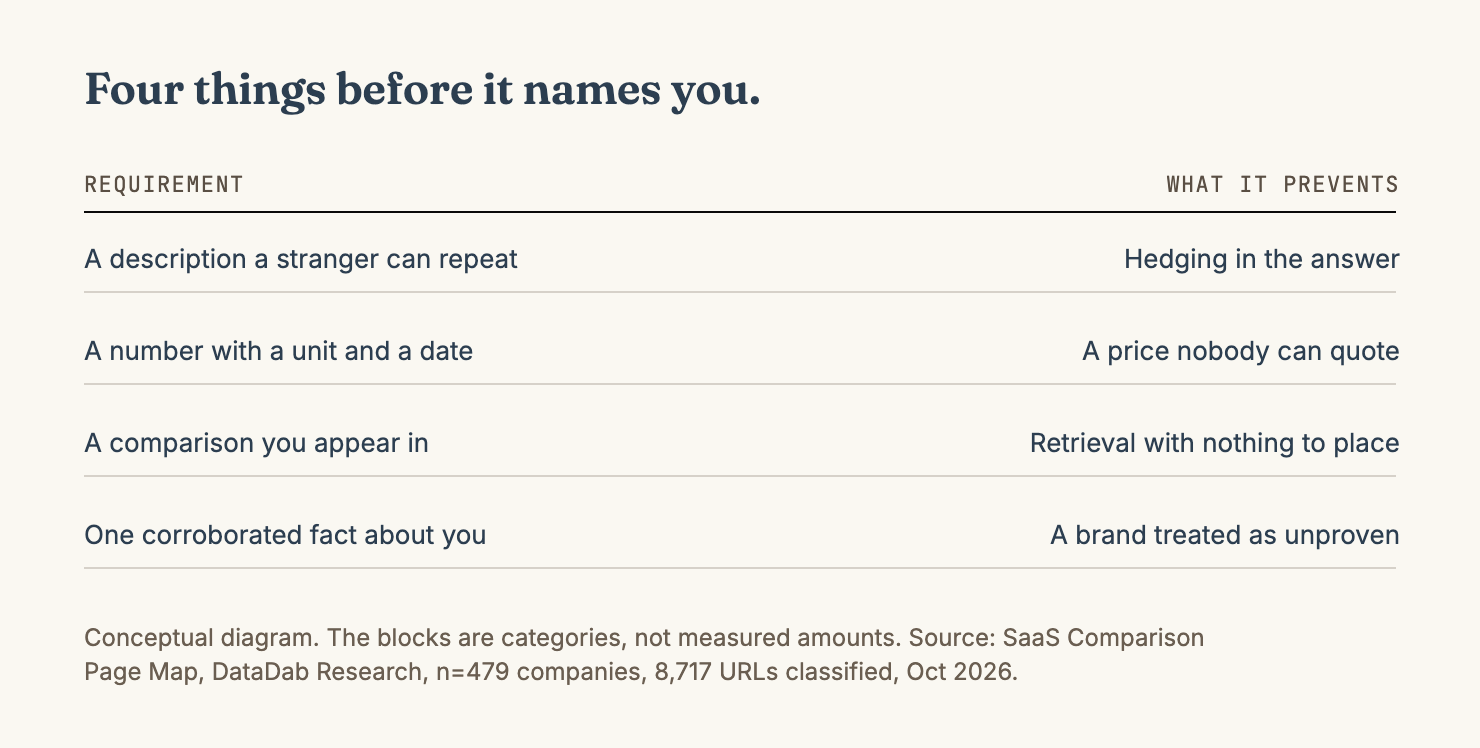
Four things an answer needs before it will name you
I have run this check on our own pages and on client pages. The same four items decide whether you are in the list or on the floor.
*A description a stranger can repeat.* The assistant must be able to say what you do without hedging.
If your site says "platform", "suite", "ecosystem" and "next-generation", you have given the model four ways to describe you and no way to pick the right one.
*A number with a unit and a date.* "From $29 a month, billed annually" is quotable. "Contact us for pricing" is not, and it is not merely a lost click. It is a sentence the assistant cannot write, so you are not in the answer.
*A comparison you appear in.* A page that never names a rival gives the retrieval step nothing to place.
We mapped comparison publishing across 479 B2B software companies: 30.9% publish at least one genuine vendor-versus-vendor page, and the median publisher keeps three.
*One corroborated fact about you.* The reason your ranking does not transfer is corroboration. A brand that appears only on its own domain is harder for a model to treat as established than one mentioned in review platforms, editorial coverage and reference works.
The pricing page decides the shortlist, not the blog
Here is the finding I keep returning to, because it is the most uncomfortable number in our data.
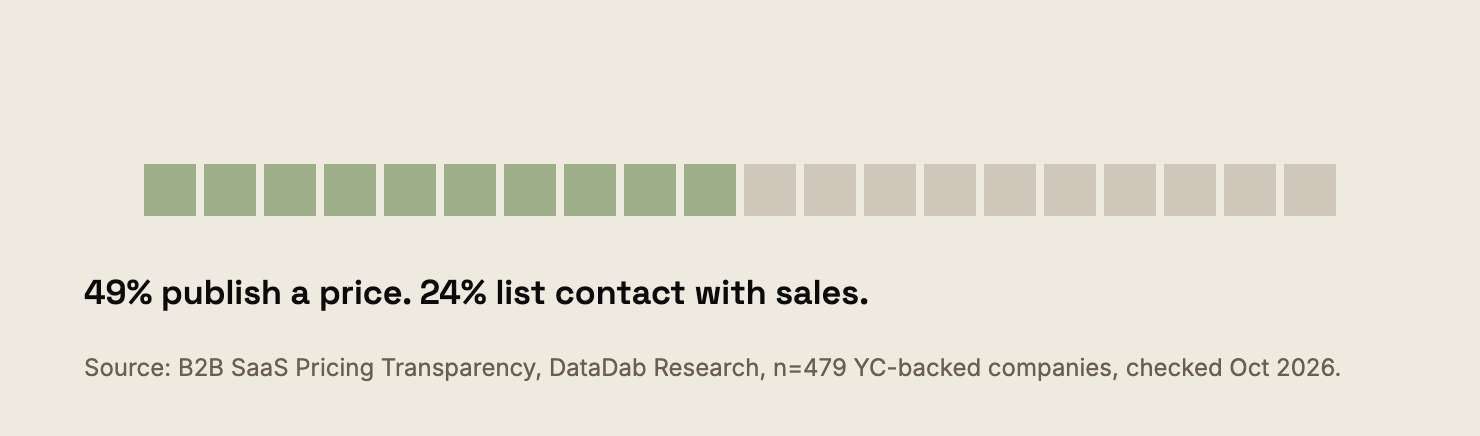
In a crawl of 479 YC-backed B2B software companies, 49% publish a price and 24% route every buyer to a sales conversation instead.
The other kind of friction is rarer but more specific: a page that shows a price the buyer cannot apply, because the unit does not match their use. A per-seat price against a flat price is not a comparison. It is two numbers in a column.
So the pricing page is doing a job the rest of the site cannot do for it. It has to carry the unit, the boundary, and the reason a buyer of their size should stop or continue. That is more writing than a price, which is why so few sites do it.
When a page omits that, the buyer does not merely leave empty-handed. They ask an assistant, and the assistant gives them somebody else's price, because yours was not extractable.
You lose the shortlist without knowing you were in it.
What to do with the answer you did not get
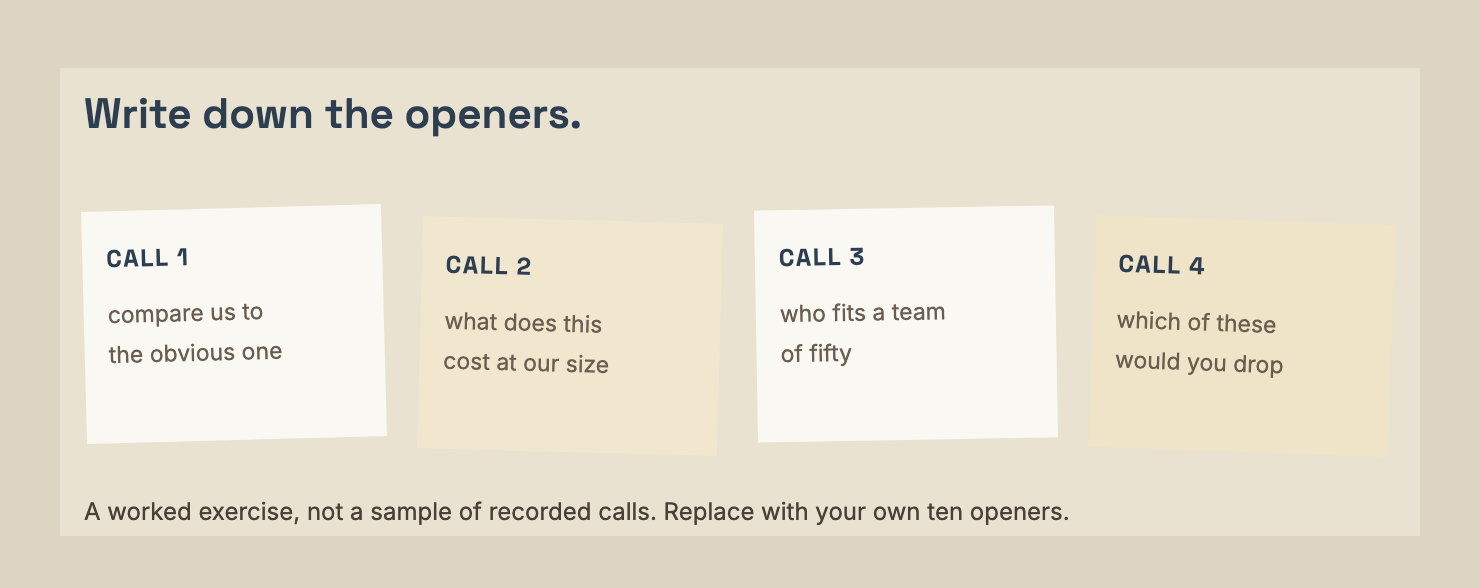
Take the last ten sales calls and write down the first question each prospect asked. Not the objection, the opener. Those openers are the queries, and most teams have never looked at them as a list.
Then compare that list with the questions your own pages are built to answer. The gap between the two is usually not a content gap. It is a packaging gap, and it is cheaper to fix.
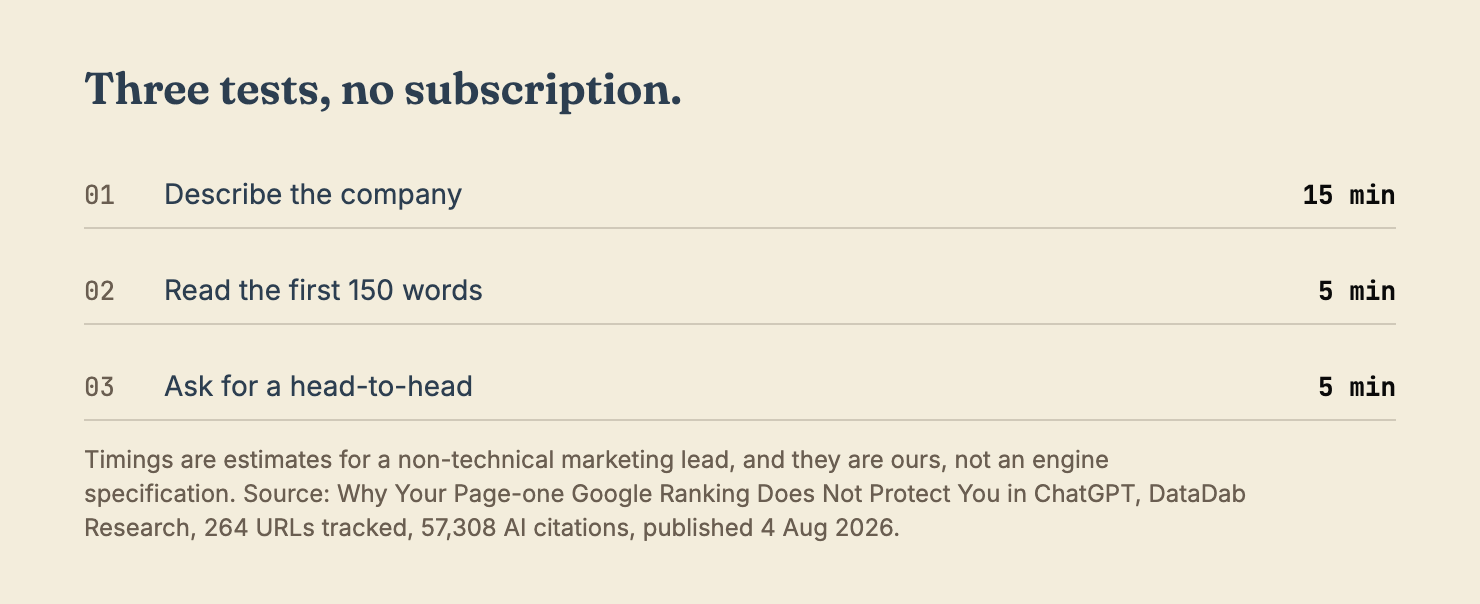
The three questions to ask your own site this week
*Ask a clean assistant, in a new session: "What is [your company]?"* If the answer hedges, or names the wrong category, you have a description problem. It takes fifteen minutes and needs no tool.
*Paste the first 150 words of your best page into a plain text file.* Does it answer the question a buyer would ask about that topic? If you cannot identify the question, a passage retriever cannot either.
*Name the rival you most often lose to and ask the assistant to compare you.* Not "are you good", but a real head-to-head. Read what it says about you, then read what it says about them. The gap between the two is your brief.
None of these need a subscription. They need you to stop treating the page as a document. Start treating it as a set of quotable facts with a verdict attached.
What this does not mean
It does not mean write for the model instead of the buyer. Every change that makes a page quotable makes it clearer to a human reader, because a quotable fact is a fact a person can also use.
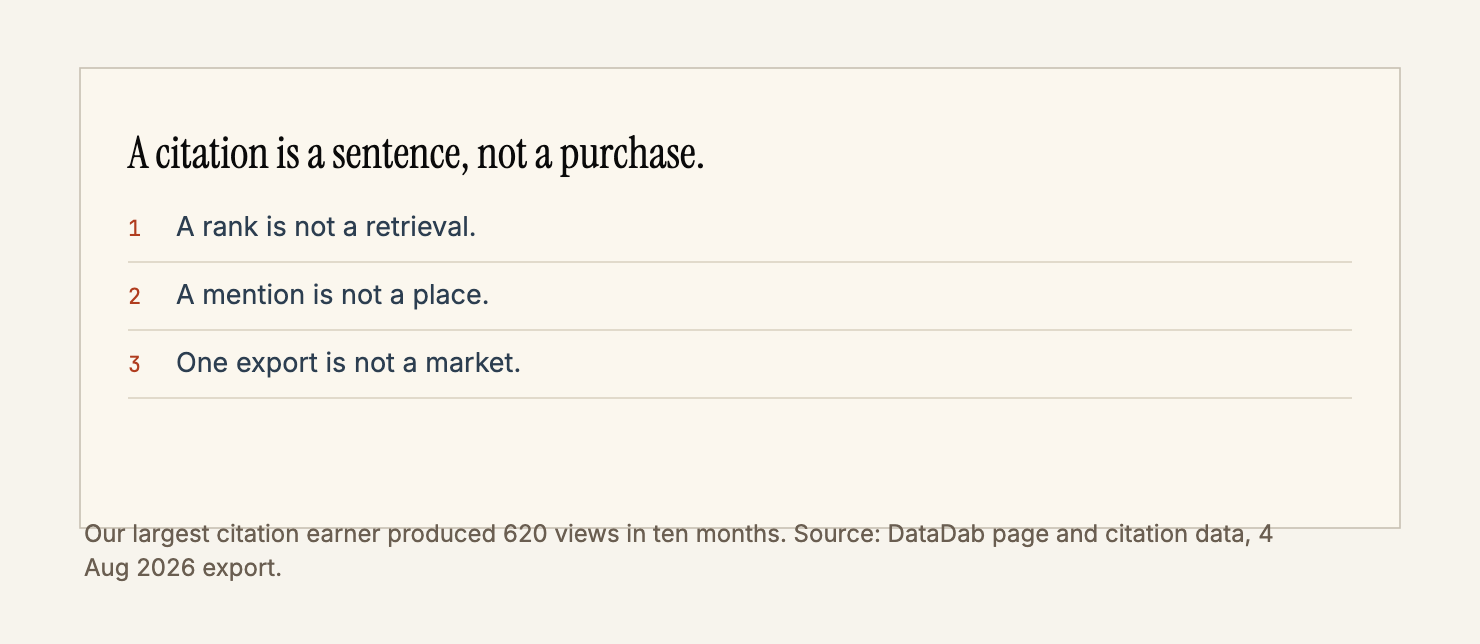
It does not mean citations are pipeline. Our 19,773-citation comparison page has produced 620 views in ten months. A citation is a sentence in someone else's answer, and a sentence is not a purchase.
It does not mean the citation data is a market model. It is a snapshot of one export, from one engine, covering one set of tracked URLs, and the query set is not a random sample of what buyers ask.
It tells you what was asked and what was answered. It does not tell you what was bought.
And the "first 150 words" threshold is our own editorial rule from the study, not a published specification of any engine. It is a test that works, not a law.
Who this is for
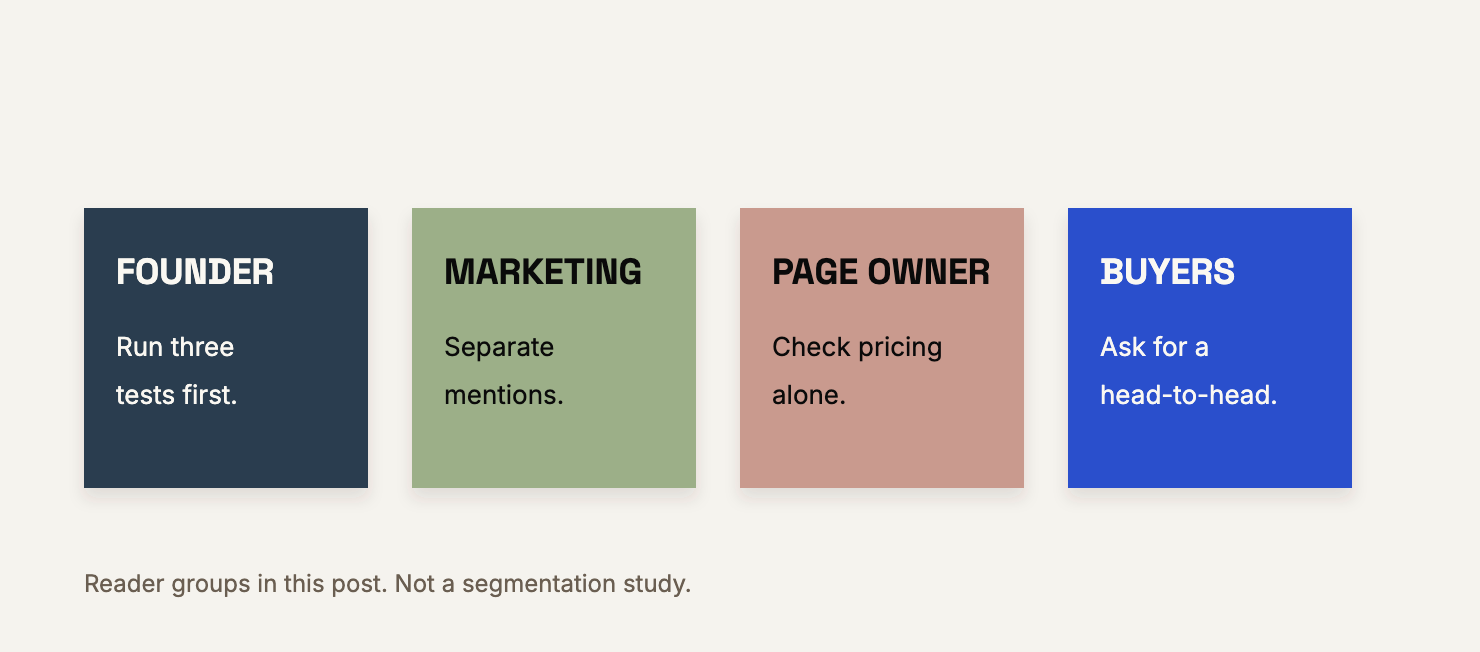
*Founders told to "do AI SEO".* Start with the three tests above, not with a tool. Two take under an hour.
*Marketing leads whose traffic is flat while their mentions are not.* These are different measurements, and one is moving while the other is not. Our report on what engines actually cite separates the two, and the gap is where the work is.
*Teams with a strong product page and a thin pricing page.* The product page is competing well. The pricing page is deciding whether you reach the shortlist, and it is doing it alone.
*Buyers comparing software this quarter.* Ask the assistant to compare you, read the answer, and treat what it omits as a question for the vendor. If the vendor cannot fill the gap, that is the answer too.
How confident we are
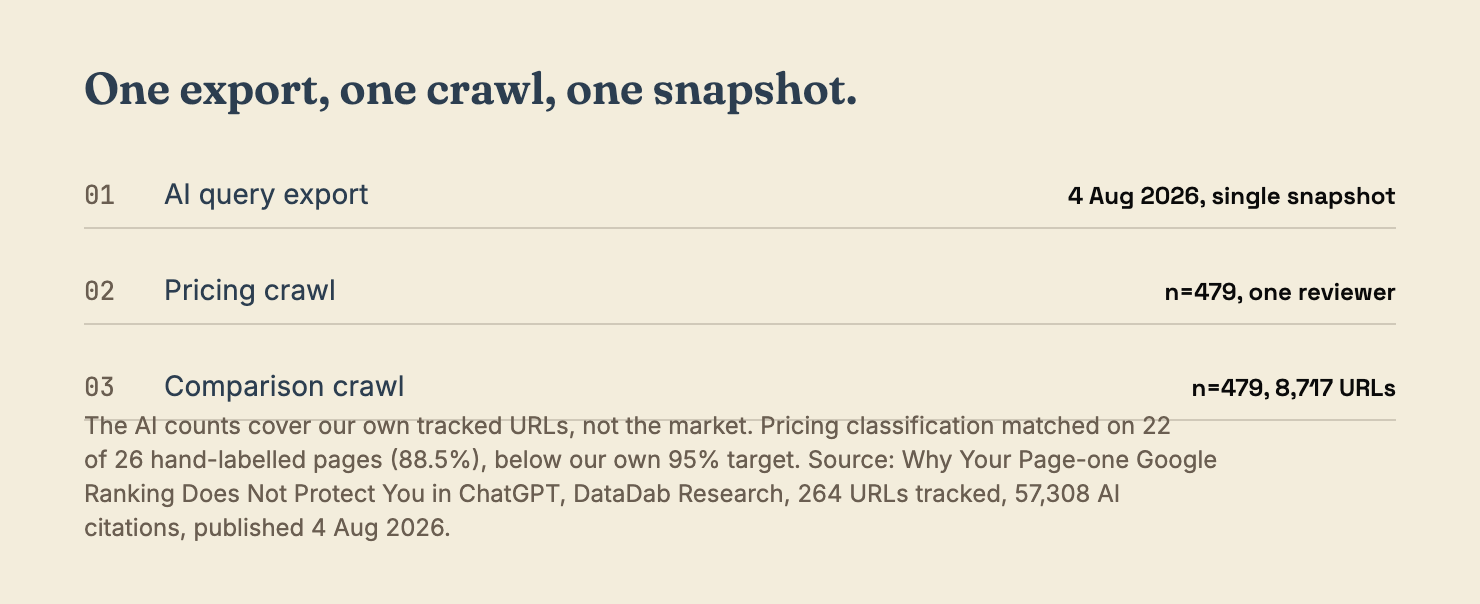
The citation counts come from a single 4 August export across 264 tracked URLs, not a live measurement of ChatGPT, and the tracked URL set is ours rather than the market's. The 479-company pricing and comparison figures come from a crawl with its own limits: pricing classification matched on 22 of 26 hand-labelled pages, 88.5%, and the comparison study had no independent second coder. Our description of how it works is a working model, consistent with the observed pattern and not confirmed by the engine vendors.
Two of the three tests above are ours rather than any engine's specification, and the 150-word figure is a threshold that has worked for us, not a published threshold.
Wrap-up
The question changed. A buyer used to ask Google a question and assemble the answer from ten pages. Now they ask an assistant for a shortlist, and the answer arrives in a paragraph with your name in it or not.
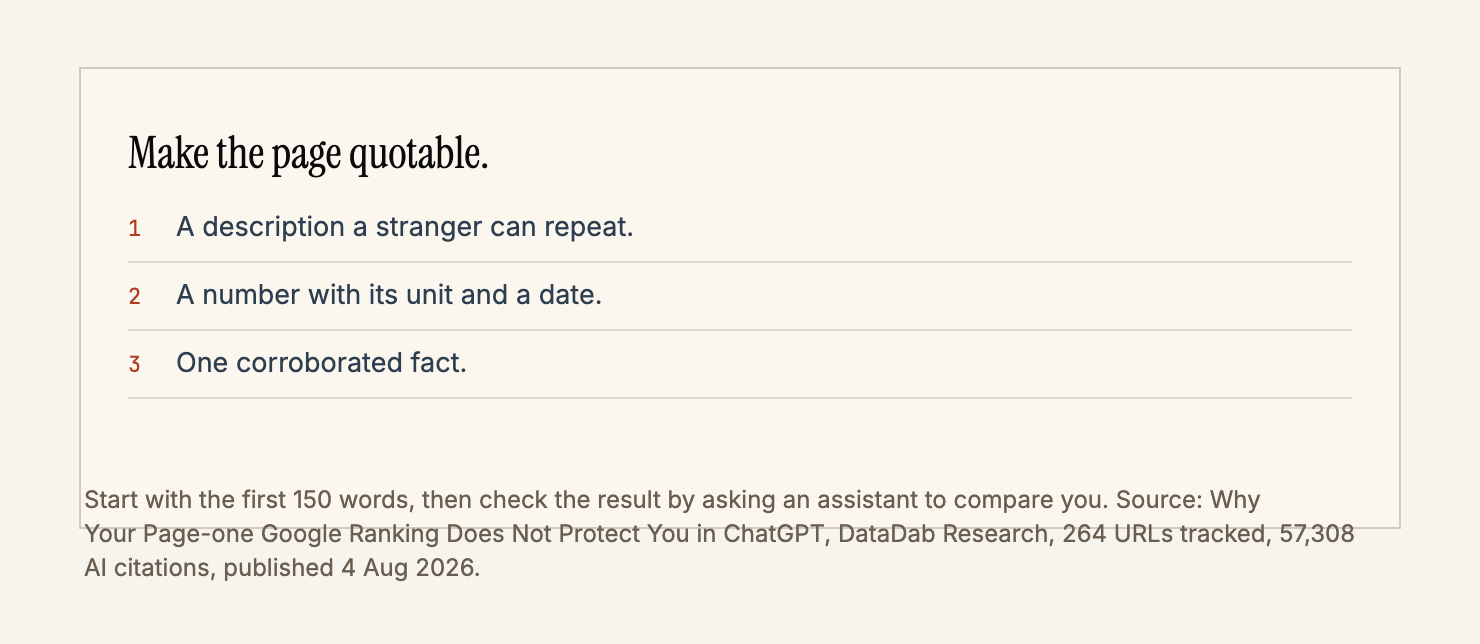
You do not win that by publishing more. You win it by being quotable: a description a stranger can repeat, a number with its unit and a date, a comparison you appear in, and one fact about you that somebody else has already said.
The pricing page matters more than the blog, and the first 150 words matter more than the rest of the page. Start there, and check the result by asking an assistant to compare you against the alternative you lose to.