

200 buyer prompts, 1,896 citations, 750 unique domains. The second-most-cited site in B2B software is a review platform, and the fifth is a tool most of us have never heard of.
Most advice about AI visibility is written as one discipline. It is at least two, because the engines do not read the same web.
We measured what Perplexity actually cites: 200 prompts across B2B software categories, 1,896 citations recorded, every prompt and every cited domain published so the whole thing can be re-run.
750 unique domains appeared. Not one query returned zero citations, and every answer carried between 6 and 10 structured citations, averaging 9.5.
That last number matters before any ranking. Perplexity is generous with sources, so being cited there is a wide door rather than a lottery.
Reddit is in a different league from everything else
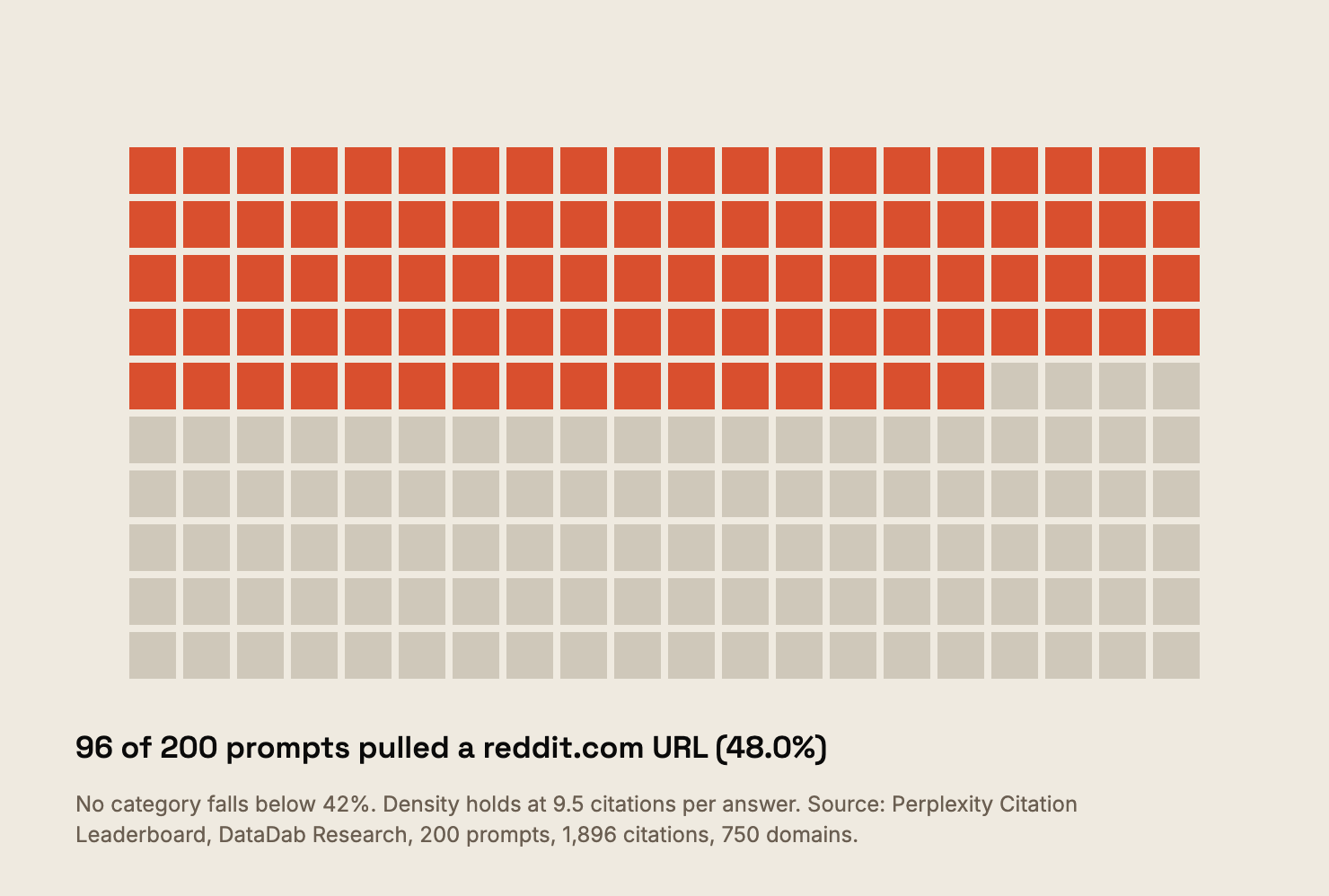
96 of the 200 prompts pulled at least one reddit.com URL. That is 48.0%, and it is #1 in CRM, email, project management, analytics and support.
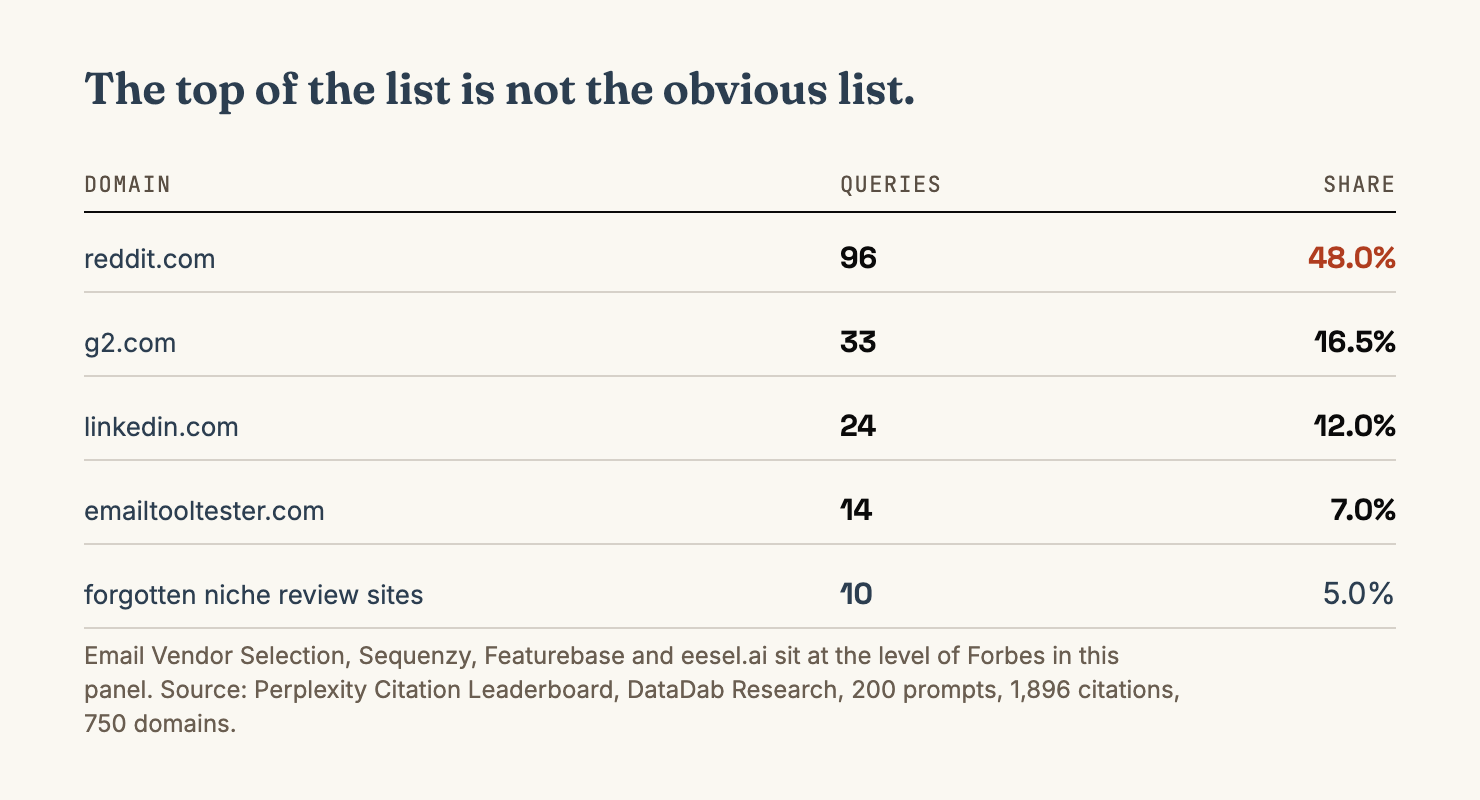
Set Reddit aside and the next entries tell you what this engine actually trusts: G2 at 33 queries (16.5%), LinkedIn at 24 (12.0%), then Zapier and a niche tool called Sequenzy tied at 17 (8.5% each), Featurebase and Monday.com at 16 (8.0%), Email Tool Tester at 14 (7.0%), Zendesk at 12 (6.0%).
The rate does not vary much by category. Project management is the most forum-heavy and email the least, and none of the slices drop below 42%.
In the CRM slice Reddit appears in 45.0% of queries, with 184 unique domains and 9.2 citations per answer.
Read that as a structural fact rather than a preference. Perplexity retrieves, and the most retrieved text about B2B software on the public web is people arguing about software in public.
If you need a single figure to argue with internally, the AI visibility statistics hub carries 16 of them, each with its source and a copy-paste citation block.
Half the top 25 are sites a buyer has never heard of
Count the ones that are not platforms: Email Tool Tester, Email Vendor Selection, Sequenzy, Featurebase, Kayako, Crisp, TrustRadius, SourceForge, eesel.ai, Rework's resource library.
Small, specific, unglamorous properties sit level with Forbes in this dataset. Forbes is at 10 queries; so is Email Vendor Selection.
That is the opportunity, and it is not a metaphor.
A page that answers one narrow buying question in a shape a retriever can use can enter the set on its own merits, in a category where the incumbent publications are not the default answer.
Size is not the ranking signal
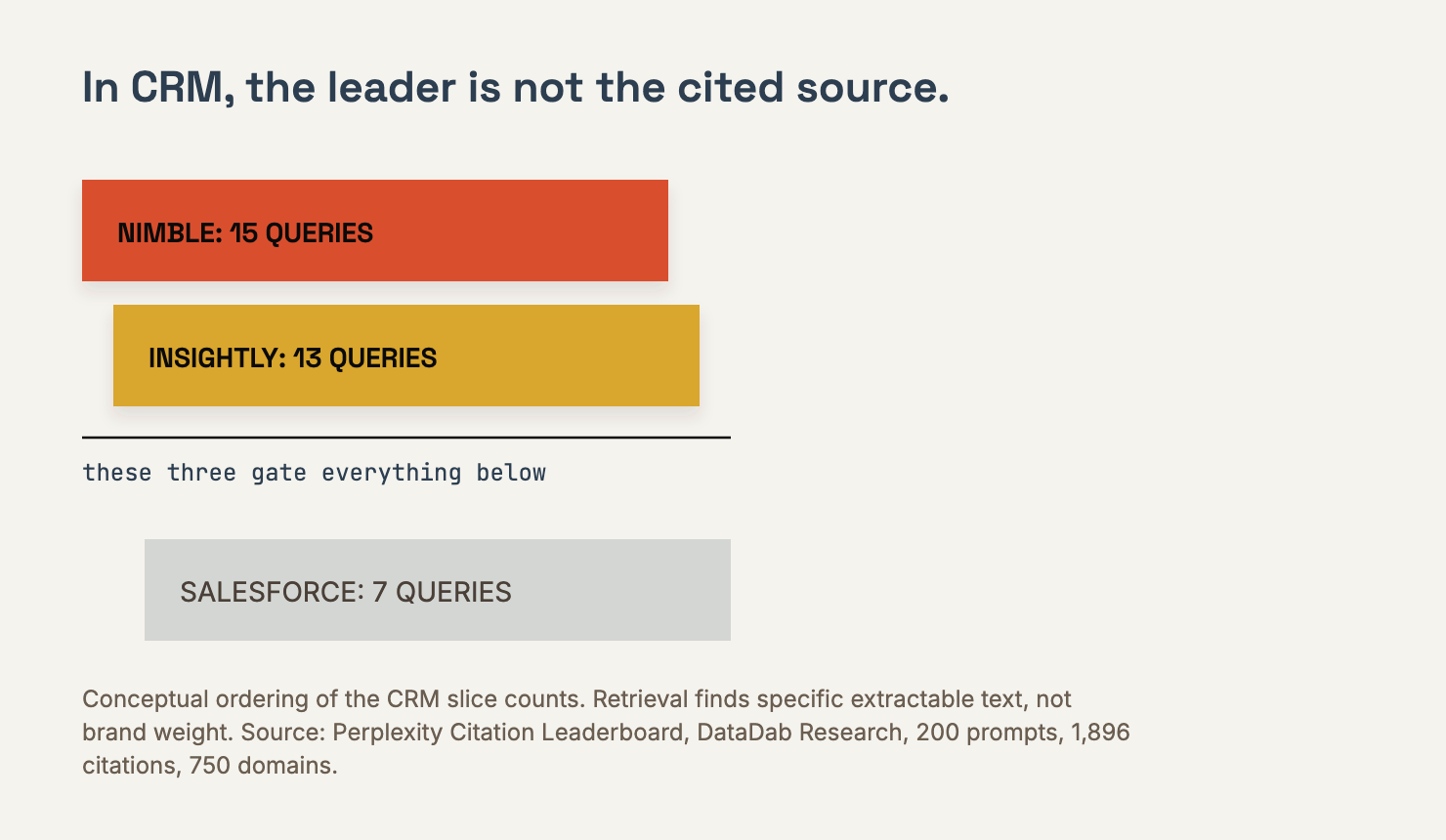
In the CRM set, Nimble is cited in 15 queries and Insightly in 13. Salesforce is cited in 7.
I want to be precise about what that does and does not say. It does not say buyers prefer Nimble.
It says retrieval finds extractable, specific, third-party text about Nimble more often than it finds text about Salesforce that answers the prompt.
The same pattern runs through the density numbers. Citations per query are stable across categories, so Perplexity is not starving one vertical of sources in favour of another.
What varies is who is available to cite.
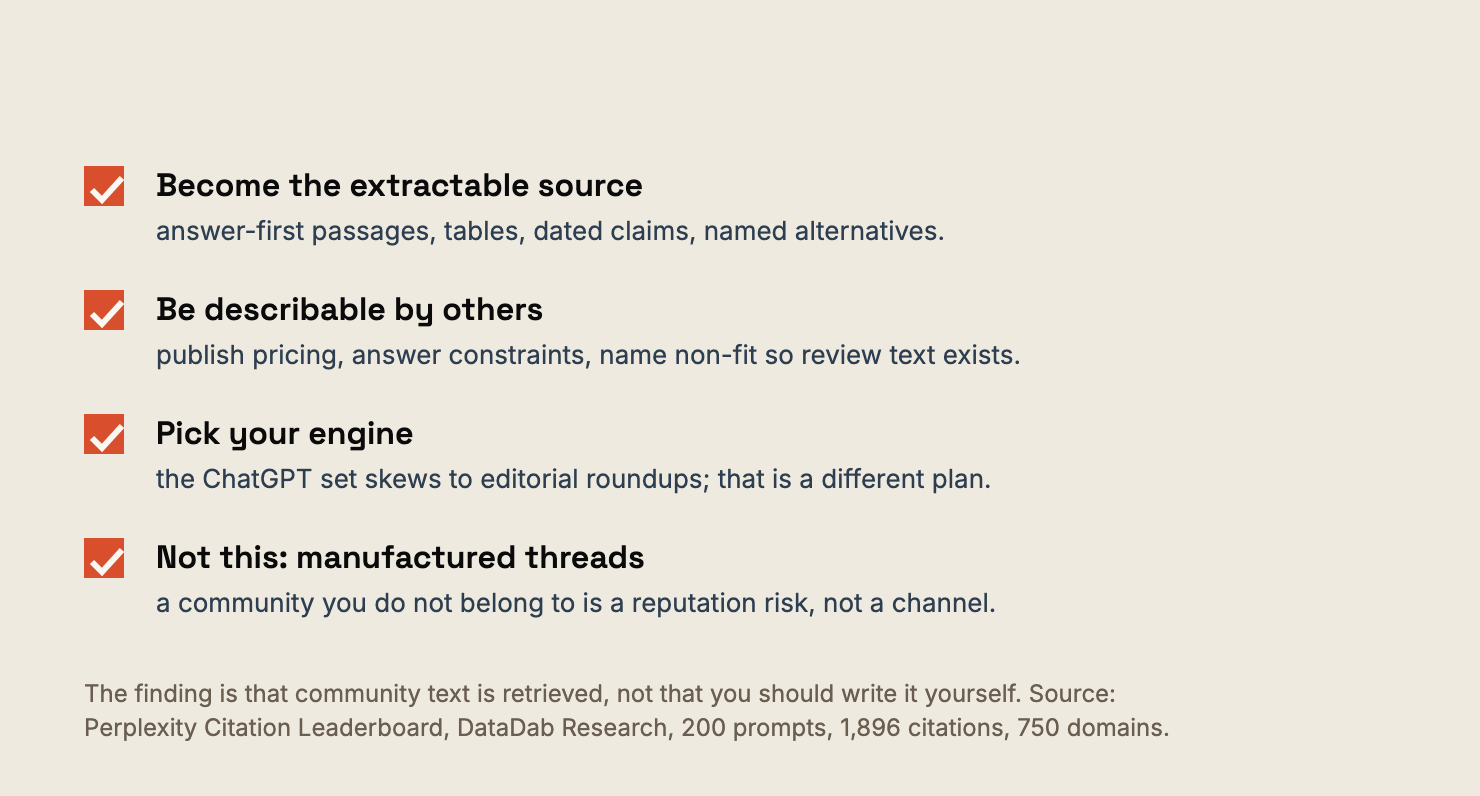
So what is the work, honestly
Not Reddit posting.
I have watched teams burn months on that and it is the wrong shape of effort for most vendors: you cannot manufacture a thread, and astroturfing a community that engines cite is how you get cited and discredited in the same answer.
Three things follow from the data instead.
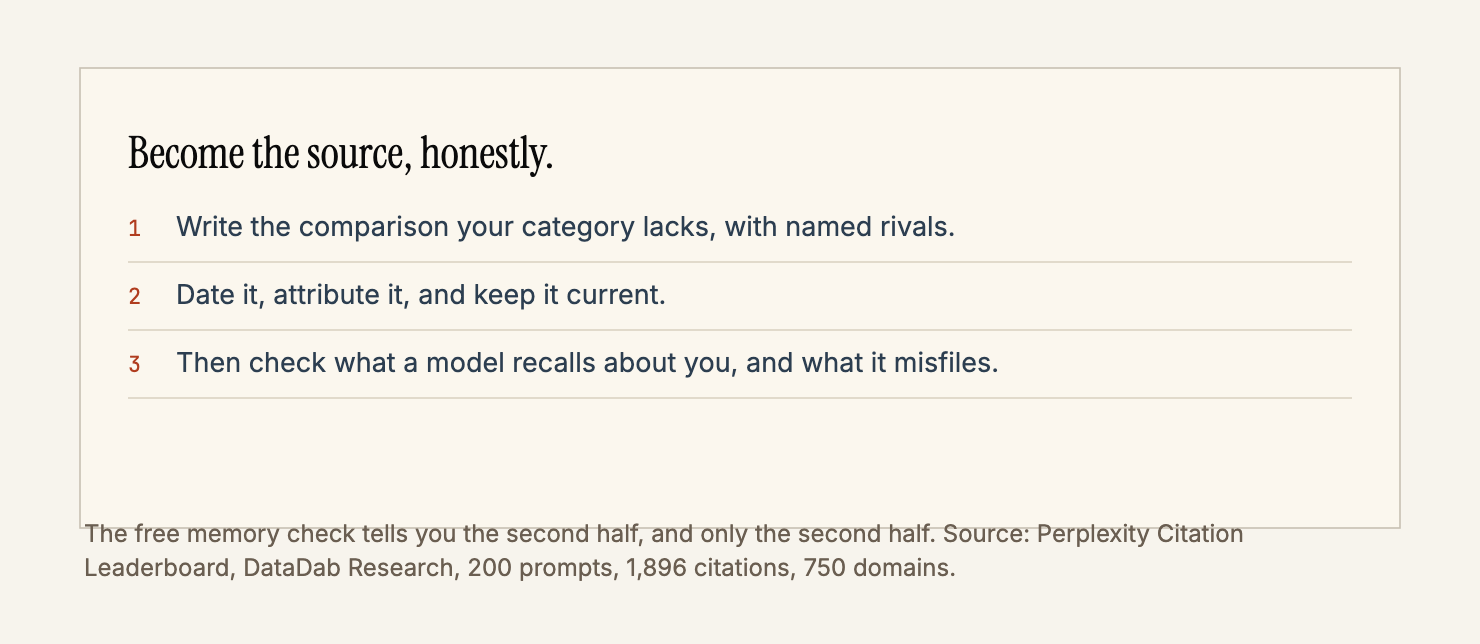
*Become the extractable source.* Comparison tables, dated claims, named alternatives, answer-first paragraphs. The engine is retrieving passages, so write passages.
*Get described by someone else.* G2, LinkedIn, niche review and testing sites and forums carry this dataset. Third-party text about you is a legible, honest, and slow channel. Earn it by being reviewable: publish pricing, answer constraints, name non-fit.
*Pick your engine.* If your buyers research on Perplexity, the source mix above is the map. If they research inside ChatGPT, the cited set skews toward editorial roundups with a year in the title, and the two plans are not the same plan.
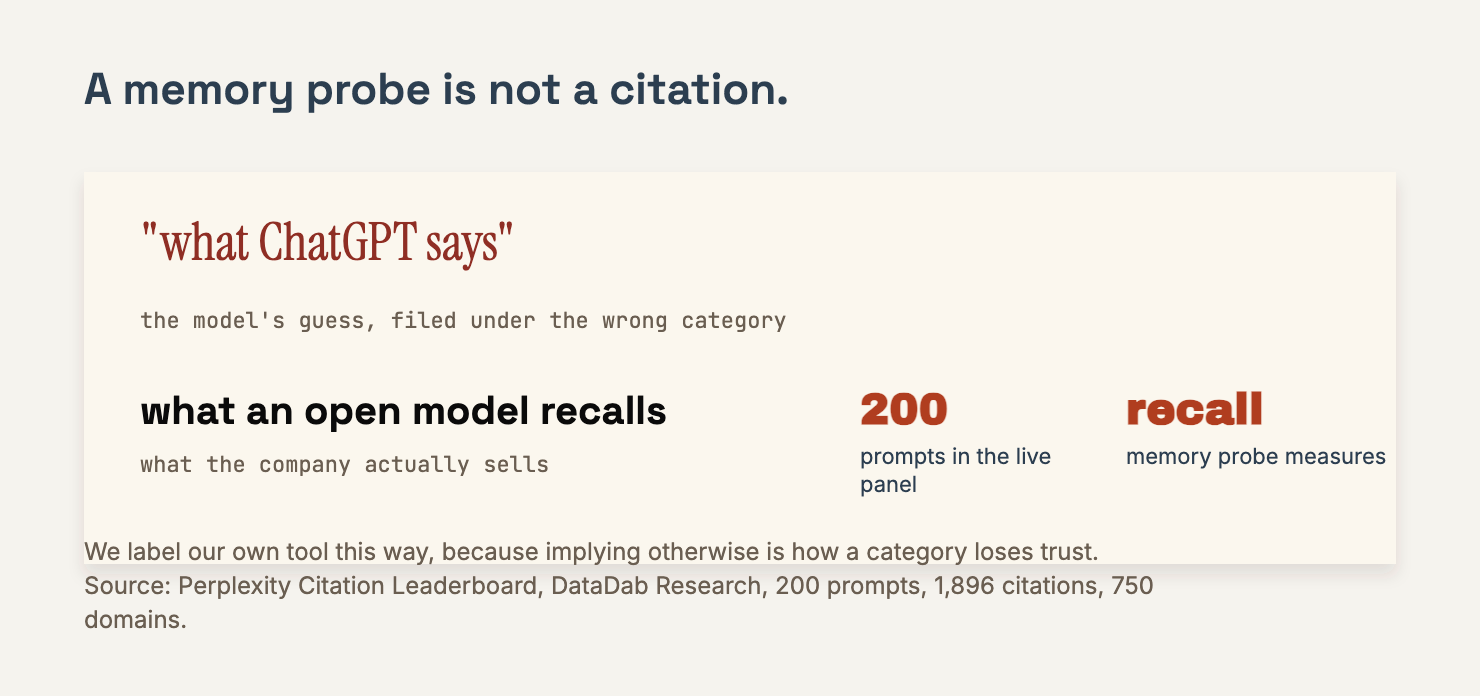
What a free check cannot tell you
We give away a model-memory probe on this site, and it does exactly what its name says: it asks open-weight models about your brand from what they were trained on.
It is not a Perplexity measurement. It is not live retrieval.
Nothing about that tool tells you what any answer engine cited today, and we label it that way on the page because the temptation to imply otherwise is the fastest way to lose the argument I am making here.
If you want the honest version of "where do we appear", run the prompts yourself, in a clean session, and write down the domain cited. That is what our 200 rows are for.
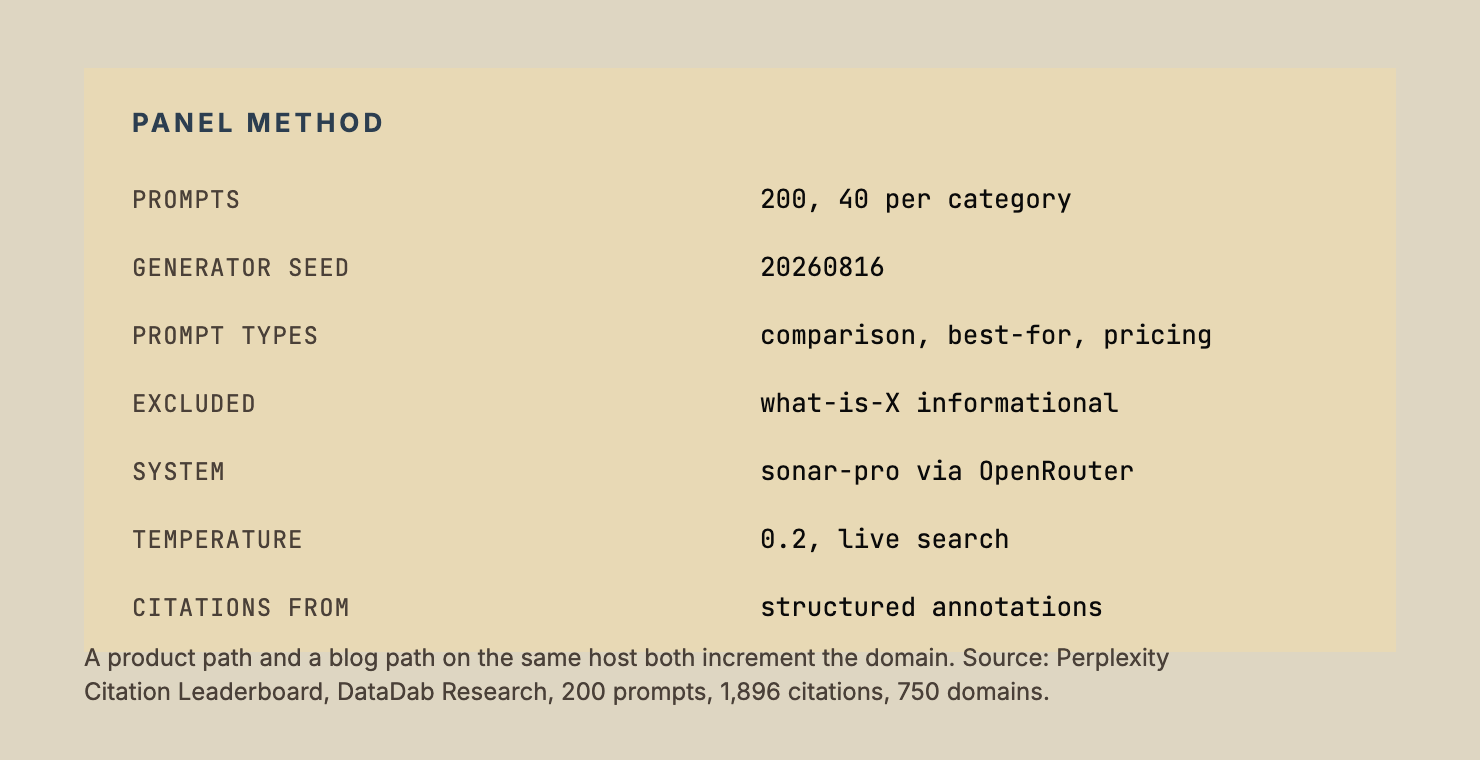
How the panel was built, so you can disagree with it
200 prompts, 40 per category, generated from a seeded generator so the exact list can be re-run. Decision-stage only: comparisons, alternatives, best-for, pricing and use-case questions. Informational "what is X" prompts were excluded on purpose, because they measure encyclopaedic recall rather than a buying decision.
Queries went to Perplexity through OpenRouter on sonar-pro at temperature 0.2, in live search mode. Citations came from the structured URL-citation annotations, not from links guessed out of the prose, and every full URL was recorded before the domain was normalised.
That last choice is why the counts behave. A product path and a blog path on the same host both increment the domain, which is what a buyer's attention does too. The overall table counts per-query presence; the category tables count raw annotations, so the two are not the same denominator and should never be averaged together.
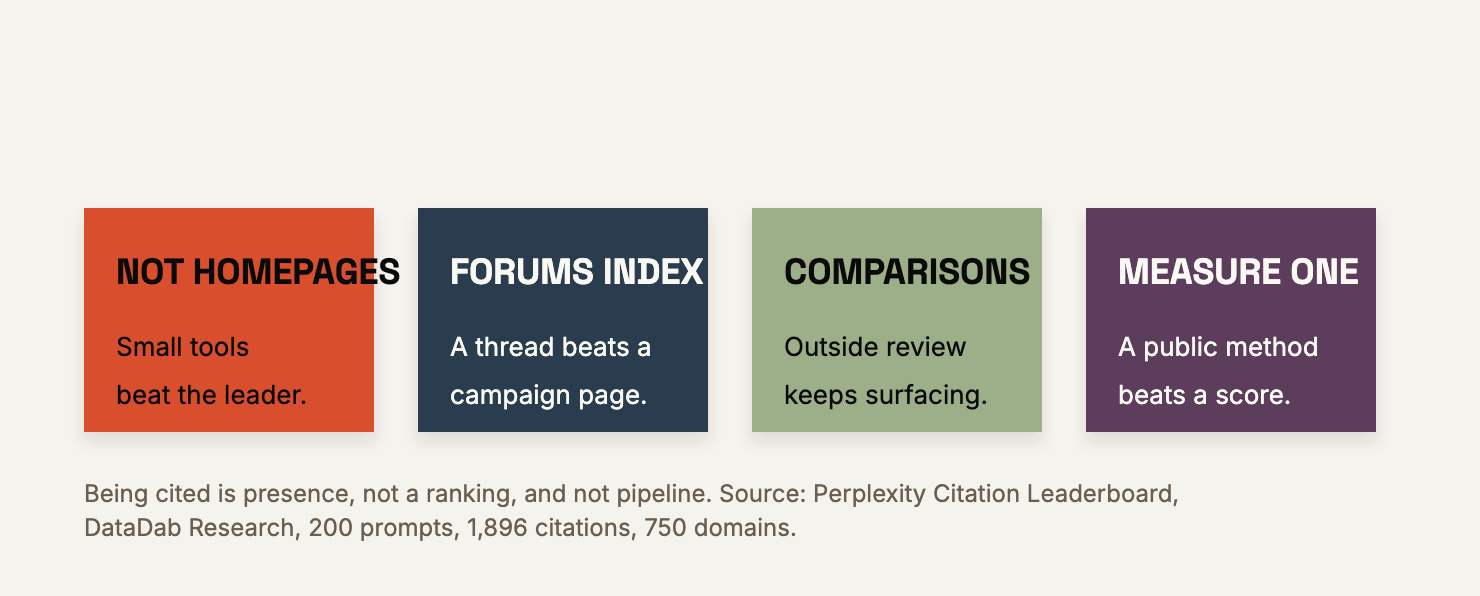
Four things to do with a leaderboard like this
*Stop treating your homepage as the prize.* In CRM two smaller tools out-cite Salesforce; in support, Help Scout leads Zendesk. Citation share is not brand awareness.
*Accept that forums are the current index.* Nearly half of these queries cite Reddit, which means a useful thread is more extractable today than a campaign landing page. That is a fact about retrieval, not an invitation to post about yourself.
*Own an honest comparison page.* G2, Capterra, TrustRadius, Email Tool Tester and The Digital Project Manager keep turning up. Independent comparison inventory is a page type, and it is available to be written well.
*Measure one engine properly.* A public, boring method beats a black-box score. All 200 prompts, their citation counts and the first eight domains per answer are published in the appendix, with the raw data available on request.
Two prompts, and what actually came back
The appendix prints the exact prompt and the first cited domains per answer, which is more useful than a ranking table. Two CRM rows make the point.
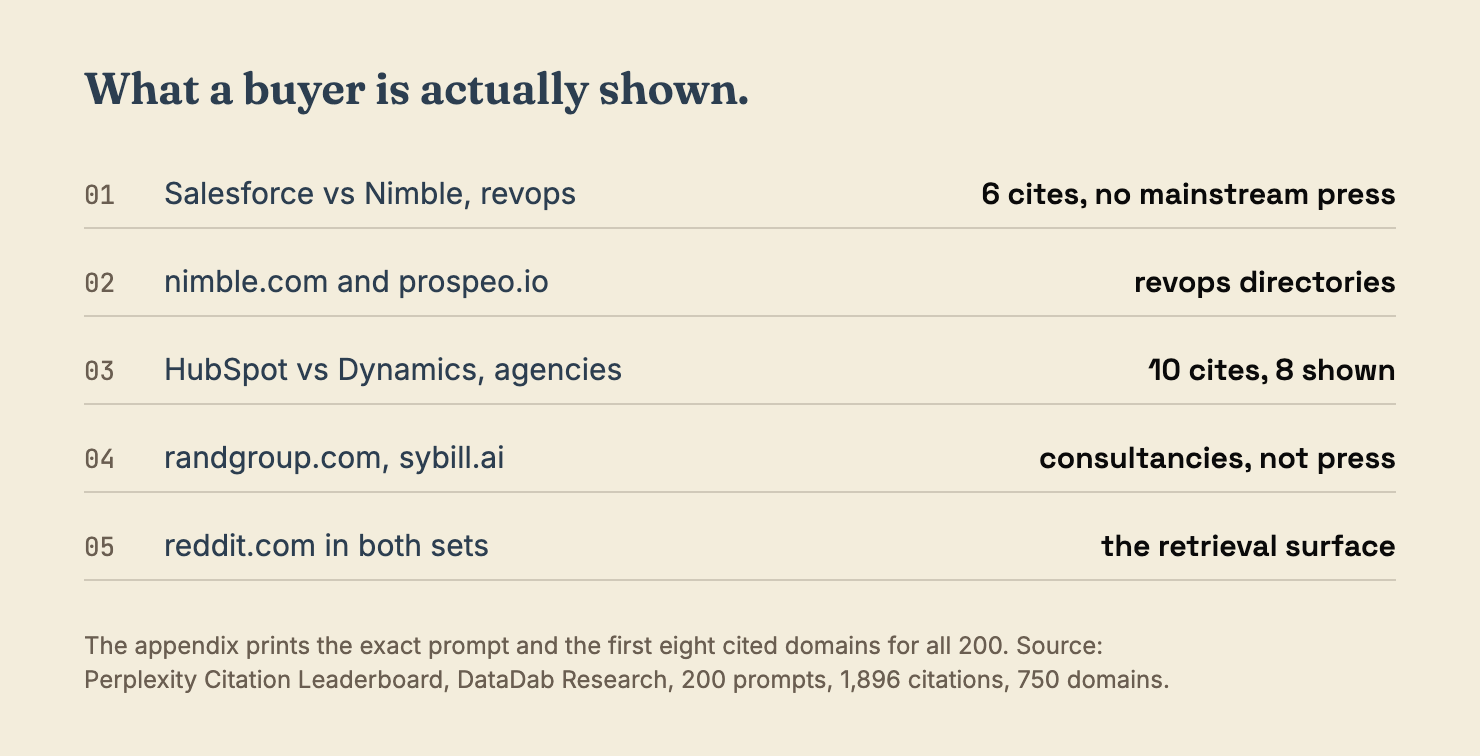
"Salesforce vs Nimble for revops-led teams" returned six citations: nimble.com, pipeline.zoominfo.com, prospeo.io, arisegtm.com, tripledart.com and revops.tools. Not one mainstream publication in the set.
"HubSpot vs Microsoft Dynamics 365 for agencies" returned ten: randgroup.com, reddit.com, hubspot.com, cargas.com, stacksync.com, sybill.ai, bakedwith.com and dynatechconsultancy.com, with more behind them. Six of those eight are consultancies and niche product sites.
Look at what a buyer is being shown: a revops tool directory, a handful of agencies, and a forum. That is the retrieval surface for a decision that costs real money, and it is not guarded by anyone's budget. It is guarded by whether someone wrote a page a retriever could use.
The category slices confirm the shape rather than contradicting it. Project management is the most forum-heavy and email the least, and no category falls below 42%. Density is stable across the board, so no vertical is starved of sources. What varies is who is available to be cited, which is the only thing a vendor controls.
Two rankings are reported separately on purpose: the overall table with Reddit included, and a second that sets Reddit aside, because a leaderboard that is 48% one domain is really a leaderboard of forums. Read both before you conclude anything about who leads a category.
One leaderboard is not a programme
This is the Perplexity slice, and it is deliberately alone. Later editions add other engines when their citation streams are readable, which is the honest way to say that some vendors publish a number for a signal they cannot observe.
That distinction is the reason the page is public. A score you cannot reproduce is a marketing asset for the tool that sells it, and a prompt list you can re-run is a measurement. If your reporting cannot say which of those it is, you are not running a visibility programme yet. You are renting an opinion.
Who this is for
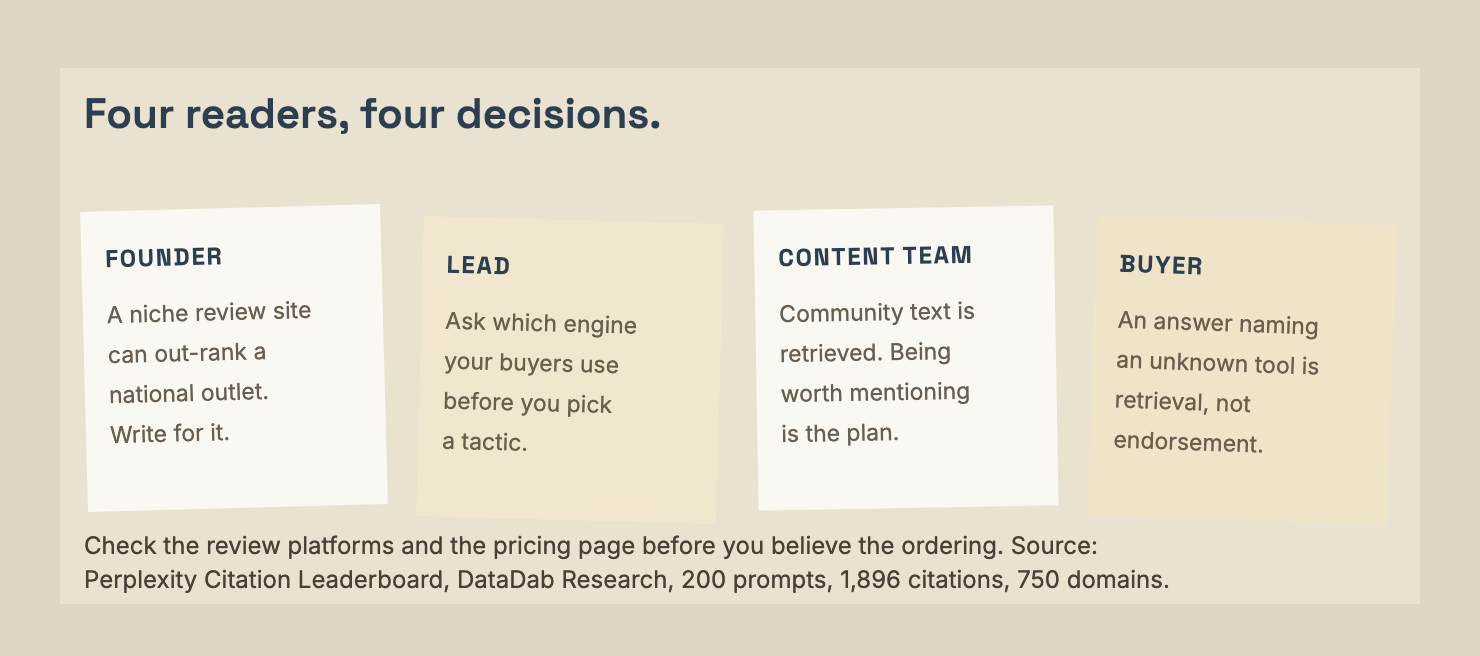
*Founders in a category where a niche review site ranks above Forbes:* write the page that site would cite, then make it easy to cite. Dated, tabular, sourced.
*Marketing leads choosing where to spend:* engine choice comes before tactic choice. Ask which engine your buyers use, and if the team does not know, that is your first measurement, not your first post.
*Content teams told to post in communities:* the finding is that community text is retrieved, not that you should manufacture it. Being worth mentioning is a different plan from mentioning yourself.
*Buyers:* when an answer names a tool you have never heard of, that is retrieval, not endorsement. Check the review platforms and the vendor's own pricing page before you believe the ordering.
A note on how confident we are
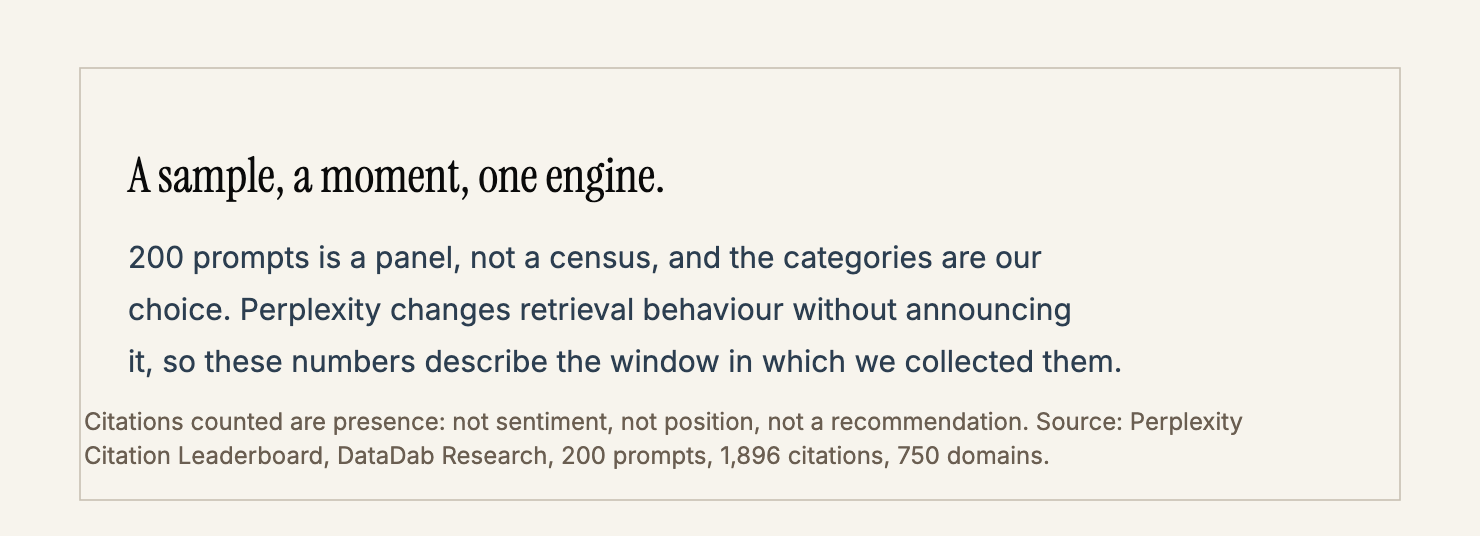
200 prompts is a sample, and the panel is ours: categories, phrasings and dates are choices that shape what gets cited. Re-run with a different prompt set and the ordering moves.
Perplexity changes retrieval behaviour without announcing it. These numbers describe the window in which we collected them, and the leaderboard page carries the prompts so anyone can check whether it still holds.
We counted citations and domains, not sentiment, position within the answer, or whether the cited page recommended the vendor. A citation is presence. It is not a ranking, and it is not pipeline.
The category slices run 40 queries each, so per-category rates are noisier than the headline. Read 45.0% in CRM as roughly 42-48% and do not build a plan on a two-point difference.
Wrap-up
48% of answers cite Reddit, 750 unique domains appear across 200 prompts, density is stable at 9.5 citations per answer, and a testing site few buyers have heard of ranks with Forbes.
The work is to become the extractable source and to be describable by third parties.
If you want a first look at what a model already says about you, run the memory check and remember what it is not measuring.