
Because the old playbooks didn’t account for AI writing the answers before your blog post even ranks
If you’re still running your 2019 SaaS growth plan like nothing’s changed, you might as well be faxing feature lists to prospects. The playbook has been rewritten, partly by AI, partly by Google’s latest SERP personality crisis, and partly by the fact that buyers now expect your product to solve their problems yesterday.
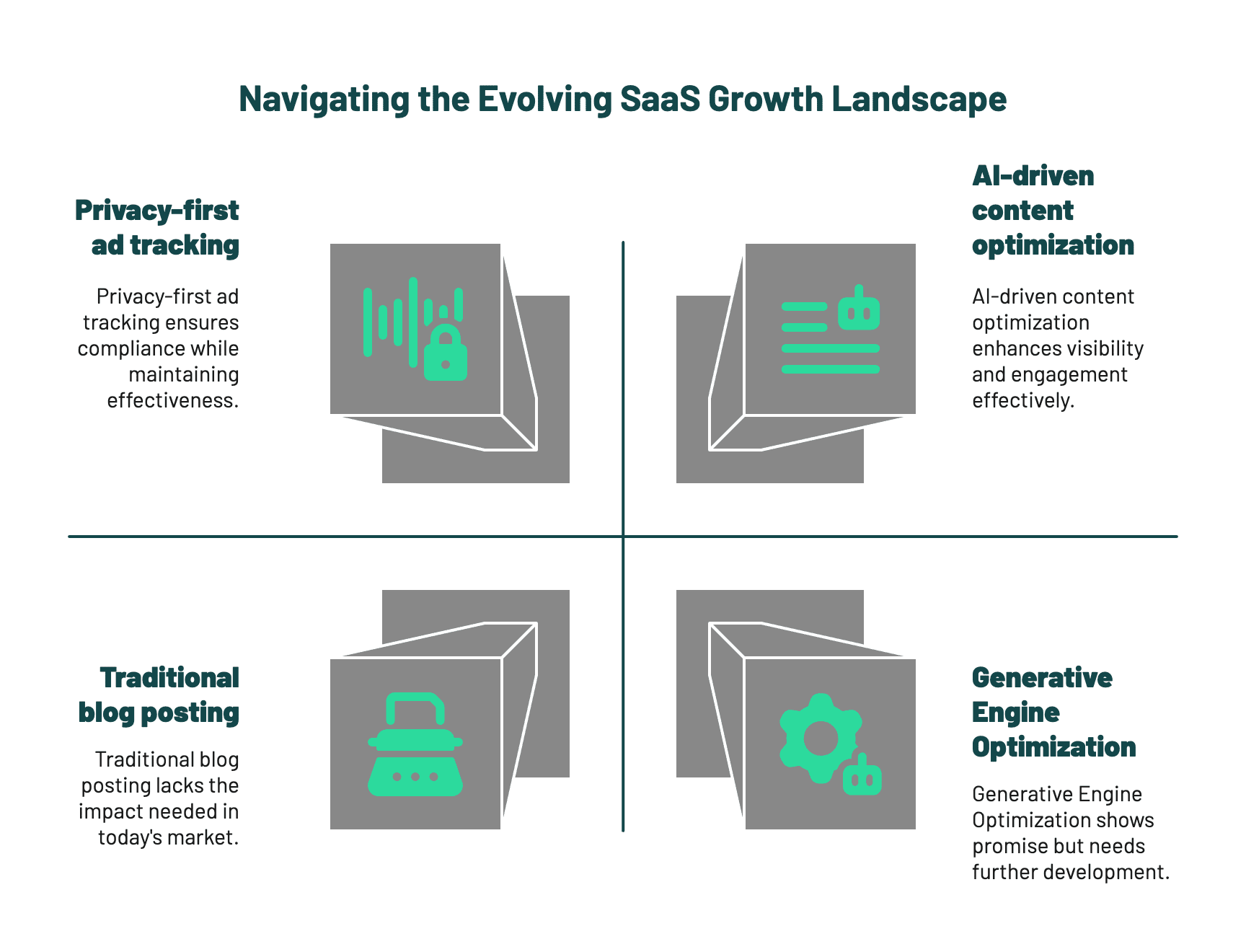
Gone are the days when ‘publish a blog post, wait for leads’ worked. Now you’re battling AEO (Answer Engine Optimization), GEO (Generative Engine Optimization), privacy - first ad tracking, and an inbox so clogged with ‘quick questions’ from SDRs that it’s become a passive-aggressive art form.
So, here it is - your 2025 B2B SaaS Growth Playbook. Not full of “synergy funnels” or “brand touchpoints” - just actual things you need to be doing if you don’t want to be quietly replaced by a competitor with better AI hygiene and a knack for getting cited by ChatGPT.
1. AEO and GEO: The New SEO (and no, they’re not optional)
Let’s be honest. SEO in 2025 is still breathing, but it’s been on the treadmill long enough to know it needs friends. Enter AEO (Answer Engine Optimization) and GEO (Generative Engine Optimization).
Why? Because your buyers aren’t just Googling - they’re asking Gemini, ChatGPT, Perplexity, Claude and a dozen niche AI assistants questions. And these assistants are pulling answers from the web in ways that make your classic meta description look like a Myspace bio.
Here’s how this changes the growth playbook:
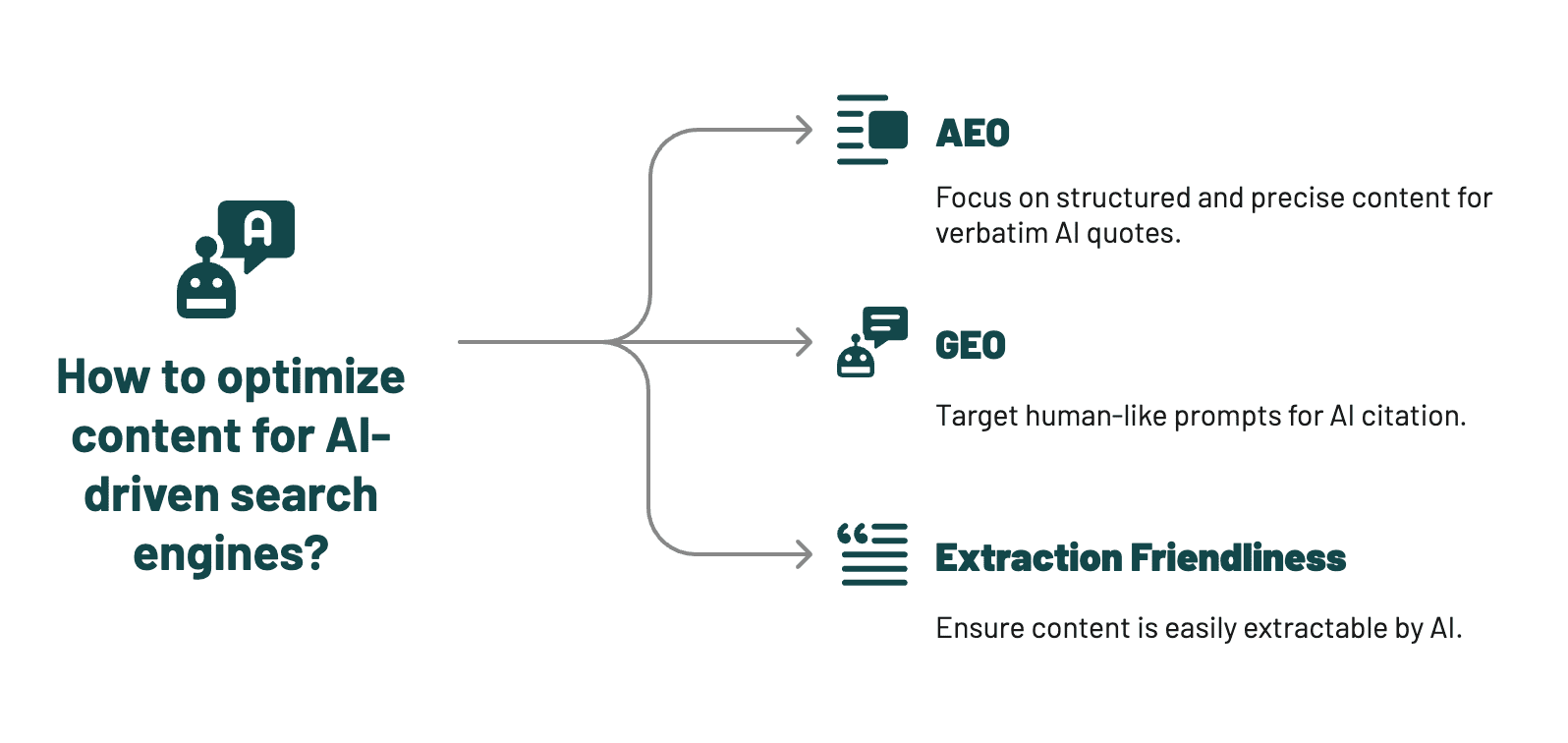
- AEO: Craft your content so it’s structured and precise enough for AI - driven answer engines to quote verbatim. That means crystal - clear FAQs, schema markup that doesn’t make developers cry, and content blocks that answer questions in 20–25 words without fluff.
- GEO: Target the prompts. Think like a human asking a chatbot, not like an SEO looking for a keyword. If the LLMs see your phrasing as ‘clean’ and complete, you’re more likely to be cited in their answers.
- Bonus: Write with ‘extraction friendliness’ in mind - one idea per paragraph, no wandering, and citations that look credible enough for AI to trust you over the Wikipedia zombies.
The smart SaaS teams are already building LLM citation maps to see which topics and queries their brand gets pulled into. This is your new backlink strategy, except the “links” live in someone’s AI response instead of a blogroll from 2008.
| Tactic | Description (AEO/GEO Lens) | Primary Growth Outcome | Why LLMs & Answer Engines Care |
|---|---|---|---|
| Structured FAQ Blocks | 20–25 word, direct answers to key buyer queries, marked up with FAQ schema. | Higher AI citation rate, faster decision-stage conversions. | Short, precise sentences are easy for AI to extract and quote. |
| Intent-Based Prompt Targeting | Research likely AI prompts, then create content mirroring that language. | Increased visibility in generative answers, more top-of-funnel awareness. | Matches user intent in AI queries, boosting inclusion odds. |
| Citation-Friendly Case Studies | Data-rich customer stories with specific, verifiable metrics. | Stronger credibility, higher trust-to-conversion ratio. | LLMs prefer citing sources with clear numbers and outcomes. |
| Localized Content Variants | Region-specific stats, compliance info, and examples. | Better geo-targeted search visibility, higher regional lead volume. | AI answers adapt to location, localized pages get preference. |
| Glossary & Definition Hubs | Clear, concise explanations of niche terms. | Authority positioning in industry-specific queries. | AI pulls from “definition-ready” sources for technical answers. |
| Public Dataset Contributions | Share proprietary stats in open-access formats. | Backlinks from research hubs, indirect brand mentions. | Open datasets feed into AI training corpora, increasing long-term visibility. |
| Comparative Feature Tables | Side-by-side competitor analysis in structured HTML. | Faster buyer decisions, reduced bounce. | Structured tables are easy for AI to parse and summarize. |
| Conversational Content Segments | Natural language Q&A sections matching real buyer speech. | Better alignment with AI “answer style”. | Improves semantic similarity with AI prompt phrasing. |
| Continuous Review Generation | Fresh, specific customer reviews published regularly. | Sustained trust signals, more inbound leads. | AI prioritizes recency and specificity in quoted testimonials. |
| Metrics-Rich Blog Intros | Put key stats and takeaways in the first 50 words. | Higher engagement, improved ranking in AI summaries. | Early numerical context increases extraction likelihood. |
2. Buyer Journey Compression: The ‘Four Tabs to Closed - Won’ Reality
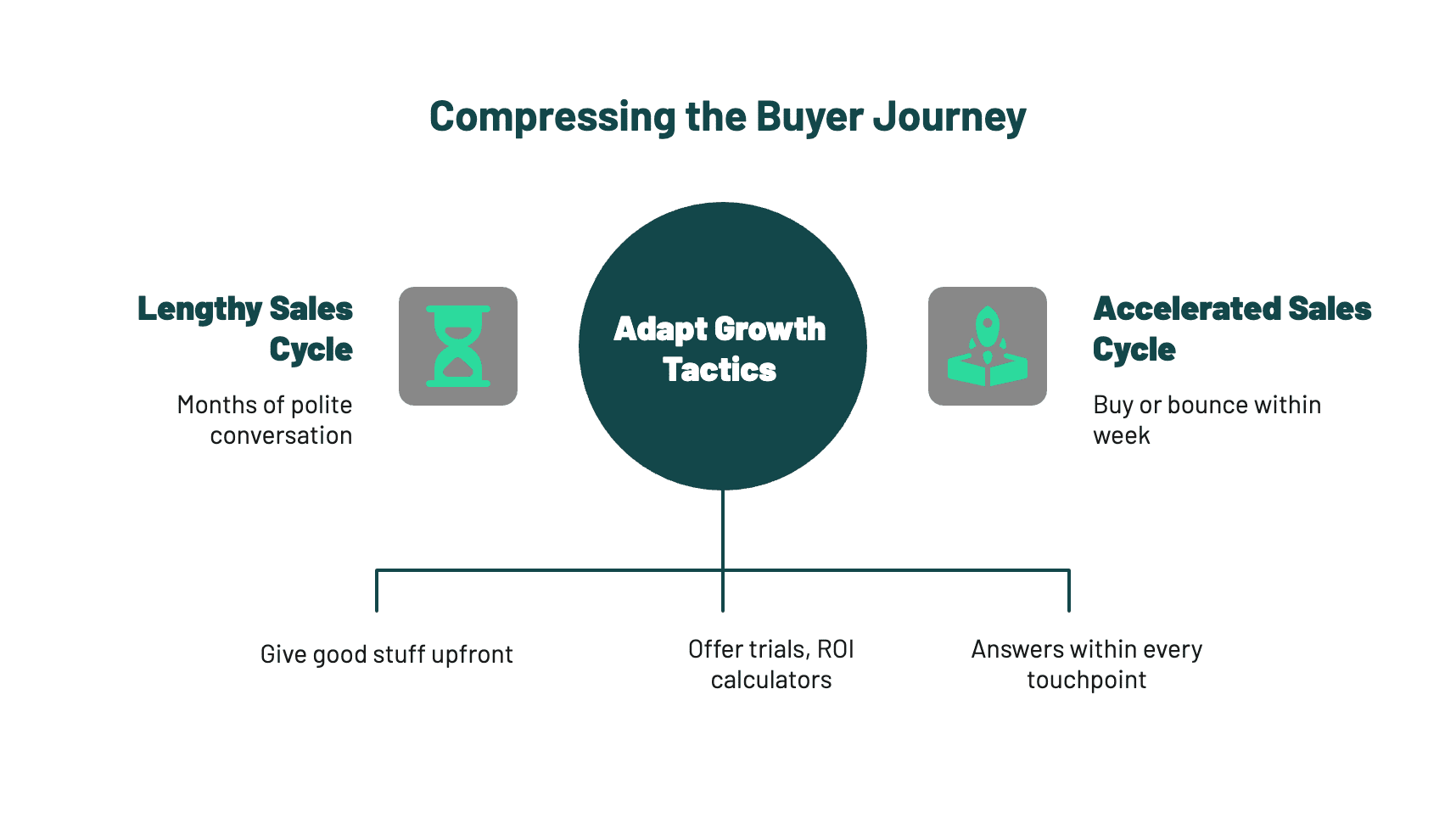
We used to think B2B SaaS buyers were like Victorian courtships - months of polite conversation, multiple dates (demos), and an eventual proposal (PO). Now? They binge your content, skim reviews, compare you to three competitors, and either buy or bounce within a week.
This is buyer journey compression, and it’s brutal.
What’s driving it:
- AI - assisted research: Prospects get feature comparisons, pricing, and case studies in under five minutes.
- Peer review saturation: Everyone has a G2 review, a TrustRadius badge, and a slightly too - chummy LinkedIn post about their ‘journey with Vendor X’.
- Economic pressure: CFOs want ROI in the first quarter, not “measurable uplift” in Year 2.
Your growth tactics must reflect this:
- Kill the gated 40 - page whitepaper as a ‘first touch’. Give them the good stuff before they even think of booking a call.
- Build micro - conversion paths - 15 - minute trials, ‘sandbox’ environments, instant ROI calculators.
- Ensure your AEO - ready answers are embedded in every touchpoint so they never leave your content to find the answer elsewhere.
If they need six meetings to get to “yes” in 2025, you’ve already lost.
3. Paid Acquisition Without Setting Fire to Budget
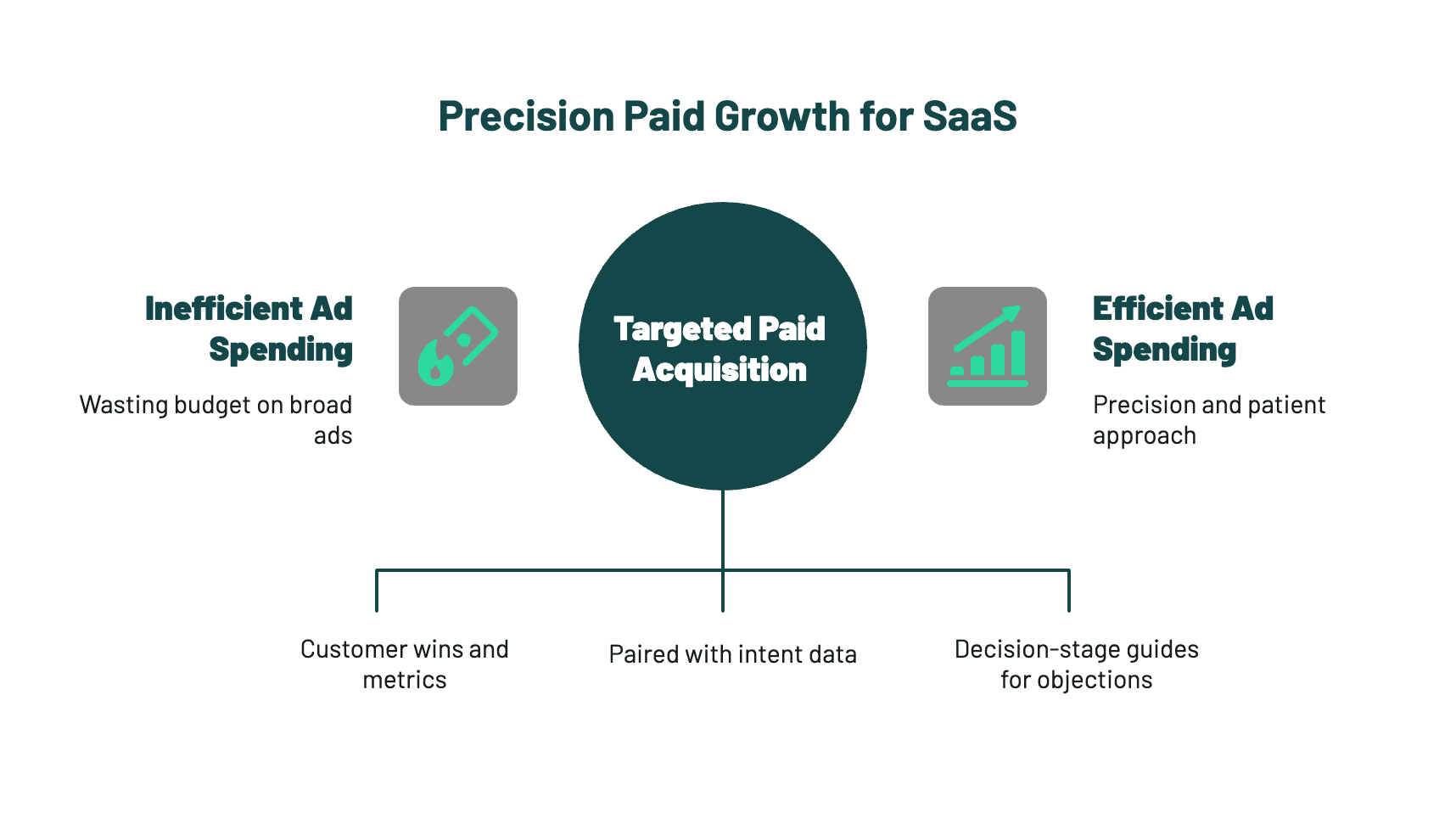
Yes, you still need paid ads. No, you don’t need to pour $50k/month into search just to feel “serious”. In 2025, paid growth for SaaS is all about precision and patience, not just throwing money at the pixel gods.
Here’s what’s actually working:
- Social proof ads: Short clips of customer wins and metrics (think “In 3 weeks, we cut report time from 9 hours to 30 minutes”). Works on LinkedIn, YouTube, and the inevitable AI - powered “B2B TikTok”.
- Programmatic B2B display: But only when paired with intent data. GEO tip: make ad copy answer an explicit ‘why you’ question so it can also appear in AI - ad search blends.
- Retargeting with substance: Instead of hammering them with “Book a demo!”, send them a decision - stage guide that answers their exact competitive objection.
And please, for the love of your CAC, stop running broad - match keyword ads for ‘CRM’ when you sell a niche revenue operations platform. That’s like buying Superbowl airtime to advertise your neighborhood bakery.
4. Customer - Led Growth: The Referrals, Reviews, and Retention Flywheel
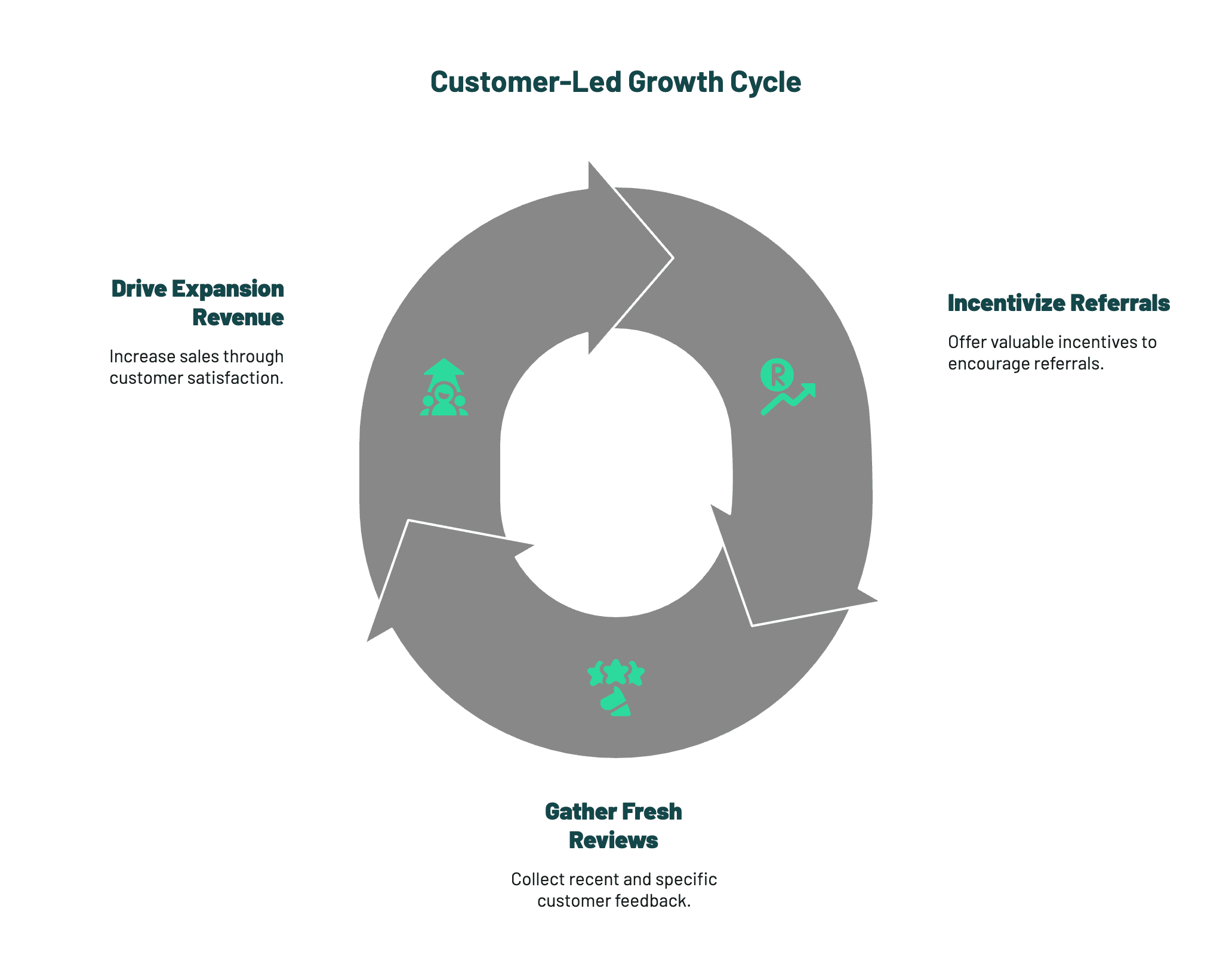
The B2B SaaS teams that are actually growing in 2025? They’ve stopped thinking of customers as ‘endpoints’ and started treating them as distribution channels.
- Referrals: Not the sad $25 Amazon voucher ones. Real incentives tied to your product’s value (extra seats, feature unlocks, co - marketing).
- Reviews that win AEO: Google and AI assistants prefer citing recent reviews, so a steady drip of fresh, specific customer feedback keeps you in the “trusted sources” list.
- Expansion revenue obsession: Happy customers buy more. Unhappy customers… write the kind of reviews you can’t put in a case study.
If you’re not mapping customer advocacy touchpoints into your growth plan, you’re effectively asking your marketing team to swim with a weight belt.
5. Content Ops That Don’t Collapse Under Their Own Weight
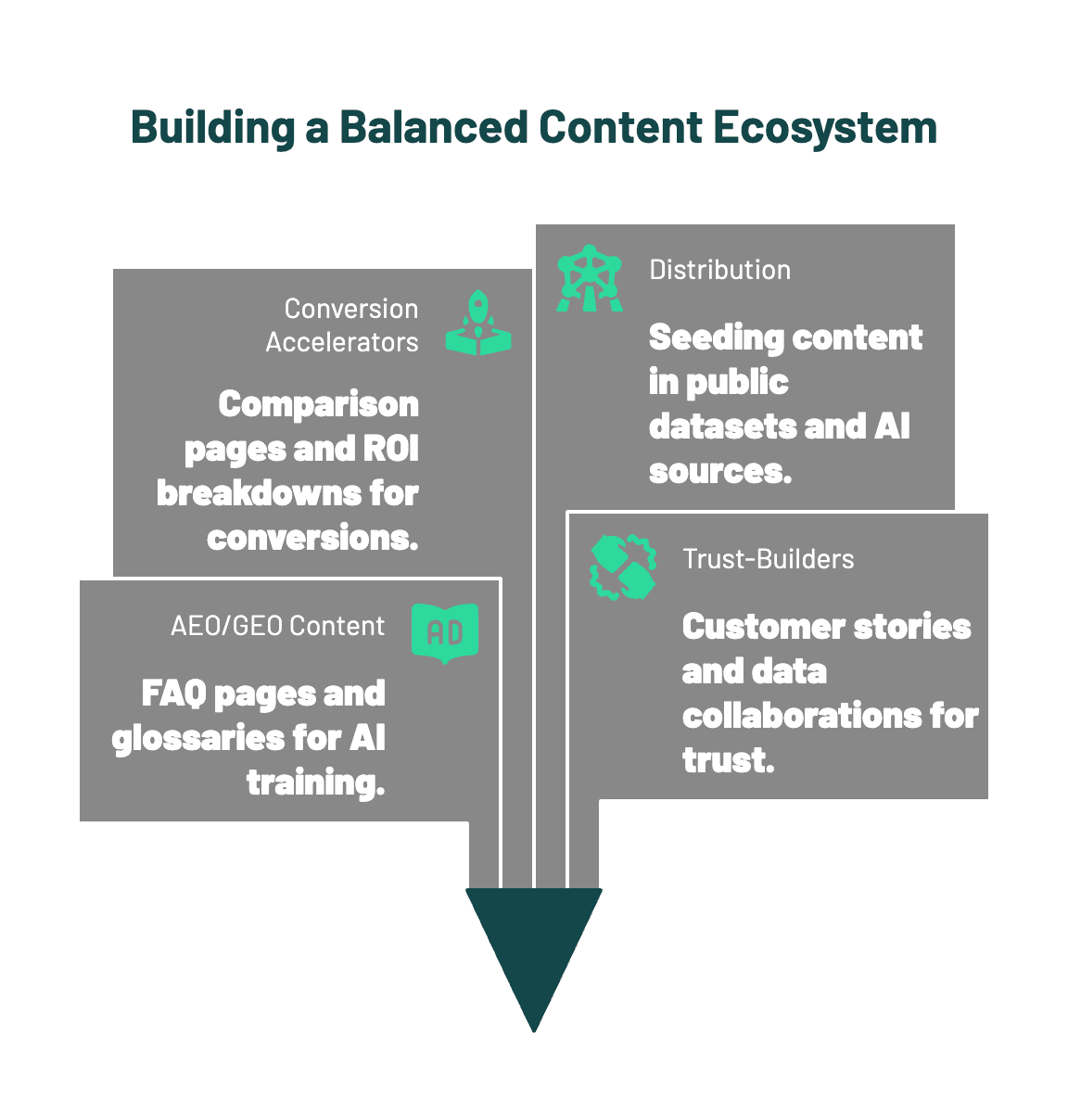
SaaS content in 2025 is not about “publishing more” - it’s about publishing the right mix and making it machine - and human - readable.
Your editorial calendar now needs three layers:
- AEO/GEO content - FAQ pages, definition hubs, and industry glossaries that feed AI.
- Trust - builders - customer stories, third - party data collaborations, benchmark reports.
- Conversion accelerators - comparison pages, ROI breakdowns, and competitor - alternative landing pages.
The real trick? Distribution. If you’re not seeding your AEO content in public datasets, community Q&As, and AI training - friendly sources, you’re missing the point. And yes, this means building relationships with niche publishers and structured data aggregators - the kind you ignored when you thought SEO was just about backlinks.
6. Geo - Targeting in the GEO Era
Here’s a spicy one: GEO doesn’t just mean Generative Engine Optimization - it’s also your cue to rethink geo - targeting for SaaS growth.
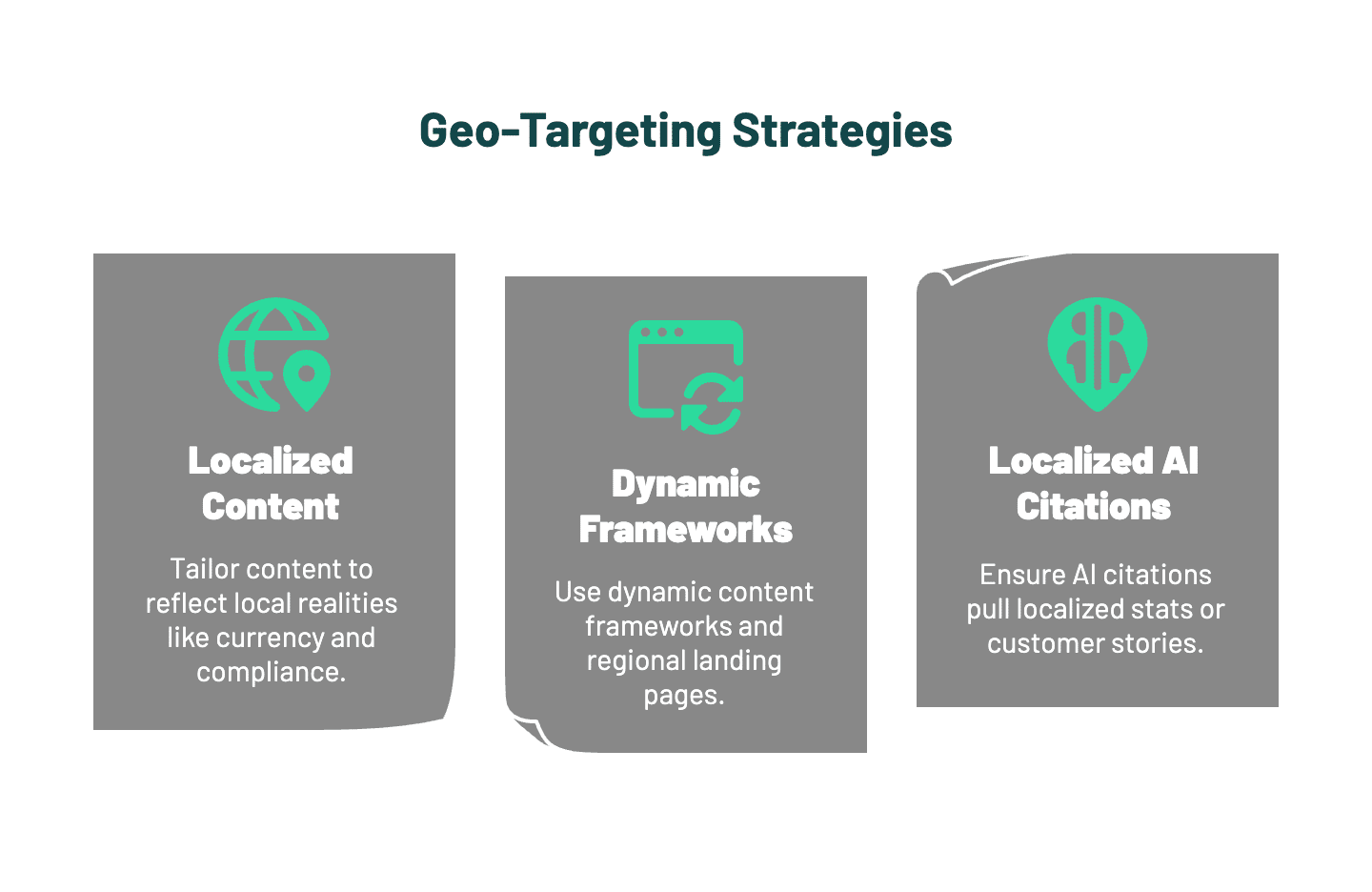
Because AI search is context - aware, “best project management tool” in Toronto will return a different answer than in Sydney. And if your content doesn’t reflect local realities (currency, integrations with regional tools, compliance rules), you’ll lose out to a smaller competitor who bothered.
This is where dynamic content frameworks and regional landing pages still matter. Bonus points if your AI citations pull localized stats or customer stories - nothing screams credibility like an LLM telling a Canadian user, “According to this Toronto - based SaaS provider…”
7. Metrics That Actually Matter (and the Ones You Can Ignore)
In 2025, your CMO doesn’t care how many MQLs you generated if they all came from a free eBook called The Future of Cloud Collaboration. The metrics that matter now are conversion velocity, net revenue retention (NRR), and AI - driven share of voice.
A few to track religiously:
- AI citation share: Percentage of relevant AI queries where your brand gets mentioned.
- Buyer journey length: From first click to contract - shorter is better if win rates hold.
- Expansion ARR: Because upselling is sexier than it sounds.
The rest? Vanity. If you need to hit a dashboard dopamine button, go play with your LinkedIn post impressions.
| Example AI/Answer Engine Query | Our Content Asset That Gets Cited | Why It Works (AEO/GEO Perspective) |
|---|---|---|
| "Best CRM for B2B SaaS startups in 2025" | “Best CRM for B2B SaaS Startups: 2025 Edition” comparison page with feature table and ROI metrics. | The query language matches our H1 title, structured table markup makes it easy for AI to summarize. |
| "What is net revenue retention and why does it matter?" | Glossary entry with 22-word definition, followed by metric impact chart. | Short, precise first sentence is AI-friendly, with supporting data for context. |
| "Top project management tools for Canadian tech companies" | Localized landing page showing Canadian case studies, CAD pricing, and local integrations. | AI picks region-aware content when answering location-specific queries. |
| "How to calculate CAC payback period" | Blog post with formula in the first paragraph, followed by a worked example in a table. | Formula is machine-readable, example gives AI a ready-made citation block. |
| "Alternatives to Asana for enterprise task management" | Competitor-alternative landing page with comparison table and pros/cons bullets. | Exact keyword match in title, HTML table format aids structured data extraction. |
| "Latest SaaS benchmarks for 2025" | Annual SaaS Benchmark Report with public dataset download. | AI models prefer citing fresh, data-backed sources over generic listicles. |
| "Is [YourProduct] SOC 2 compliant?" | Compliance FAQ section with one-sentence yes/no answer and link to full audit page. | Direct answer structure increases citation chance for binary queries. |
| "Best lead scoring model for B2B SaaS" | Lead scoring guide with labeled diagram and scoring matrix. | Diagram is described in alt text, matrix is structured for machine reading. |
Example AI Query → How Our Content Wins It
The Playbook Is Shorter, Sharper, and Smarter
The old growth plans were sprawling marathons. The 2025 version is a set of short, decisive sprints - many of which happen in AI environments you don’t fully control. AEO and GEO are not “nice to have” - they’re the baseline.
Yes, you’ll still need great positioning, an efficient funnel, and a product that actually solves a problem. But the winners in 2025 will be the ones who own their presence in both human and AI conversations - and do it before their competitors realise they’ve been quietly disappearing from the answers people trust.
Want your SaaS to show up in the right AI answers before your rivals even know it’s a thing? This is the year to get serious about AEO and GEO.
FAQ
1. What is the B2B SaaS Growth Playbook 2025?
It’s a strategic guide for scaling SaaS using AEO, GEO, AI - driven insights, and modern customer acquisition frameworks.
2. How does AEO help B2B SaaS growth?
AEO ensures your content is structured for AI answer engines, increasing brand visibility in automated search responses.
3. What is GEO in marketing?
GEO optimizes content for generative AI platforms, aligning language and structure with AI query patterns to boost citations.
4. Why is GEO important for SaaS in 2025?
Generative engines influence buyer research, and GEO makes your content more likely to appear in AI - generated recommendations.
5. How does buyer journey compression impact SaaS growth?
It shortens decision cycles, requiring faster, more direct value communication across every customer touchpoint.
6. What role does localization play in AEO/GEO?
Localized content improves AI’s regional relevance scoring, increasing citation rates for geo - specific queries and buyer needs.
7. How can SaaS teams track AI citation share?
Use AI query monitoring tools to measure how often your brand appears in relevant generative answers.
8. Which metrics matter most for B2B SaaS growth in 2025?
AI citation share, conversion velocity, and net revenue retention outshine vanity metrics like page views.
9. Can public datasets help with AEO and GEO?
Yes, open datasets feed AI training models, making your brand a trusted data source for future citations.
10. What’s the quickest AEO/GEO win for SaaS marketers?
Publish structured FAQ answers with schema markup, targeting high - intent buyer queries for your niche.