

The on-device AI shift just handed you the best argument against rented software you'll ever get. Most agencies haven't noticed yet.
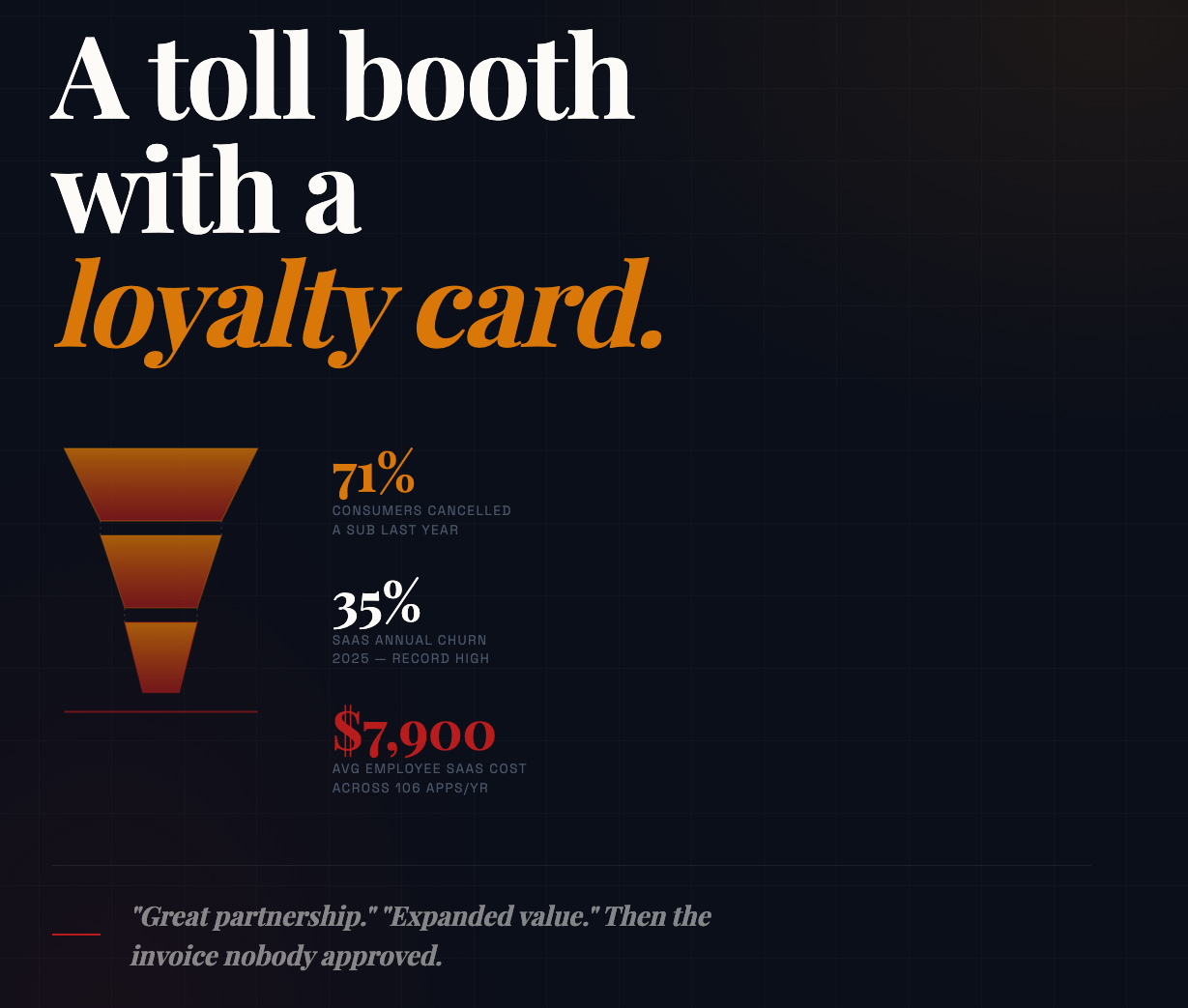
I've sat through enough vendor renewal calls to know the script by heart. The rep opens with "great partnership," segues into "expanded value," and somewhere in the middle drops a price increase that nobody asked for and everybody pays anyway. Because switching costs more than the increase. Because the data's locked in. Because some poor sod in finance forgot to flag the renewal date, and now it's auto-billed for another twelve months. This isn't a pricing model. It's a toll booth with a loyalty program bolted on.
And for years, that was just... how software worked. You rented it. You kept paying. The vendor kept the lights on, pushed updates, and you accepted the arrangement because the alternative - clunky desktop software you bought once and never touched again - looked worse by comparison.
That comparison is starting to flip. Quietly, and for a genuinely new reason this time.
The argument everyone's missing isn't economic, it's architectural
Most subscription-fatigue pieces - and there are a lot of them this year - make the consumer case. People are tired of paying for things forever. Fair enough. Forty-one percent of consumers already report subscription fatigue, and the trend pieces practically write themselves: too many recurring charges, too little patience, cue the inevitable "ownership is back" narrative.
That's not my argument. Mine is about where the compute actually happens.
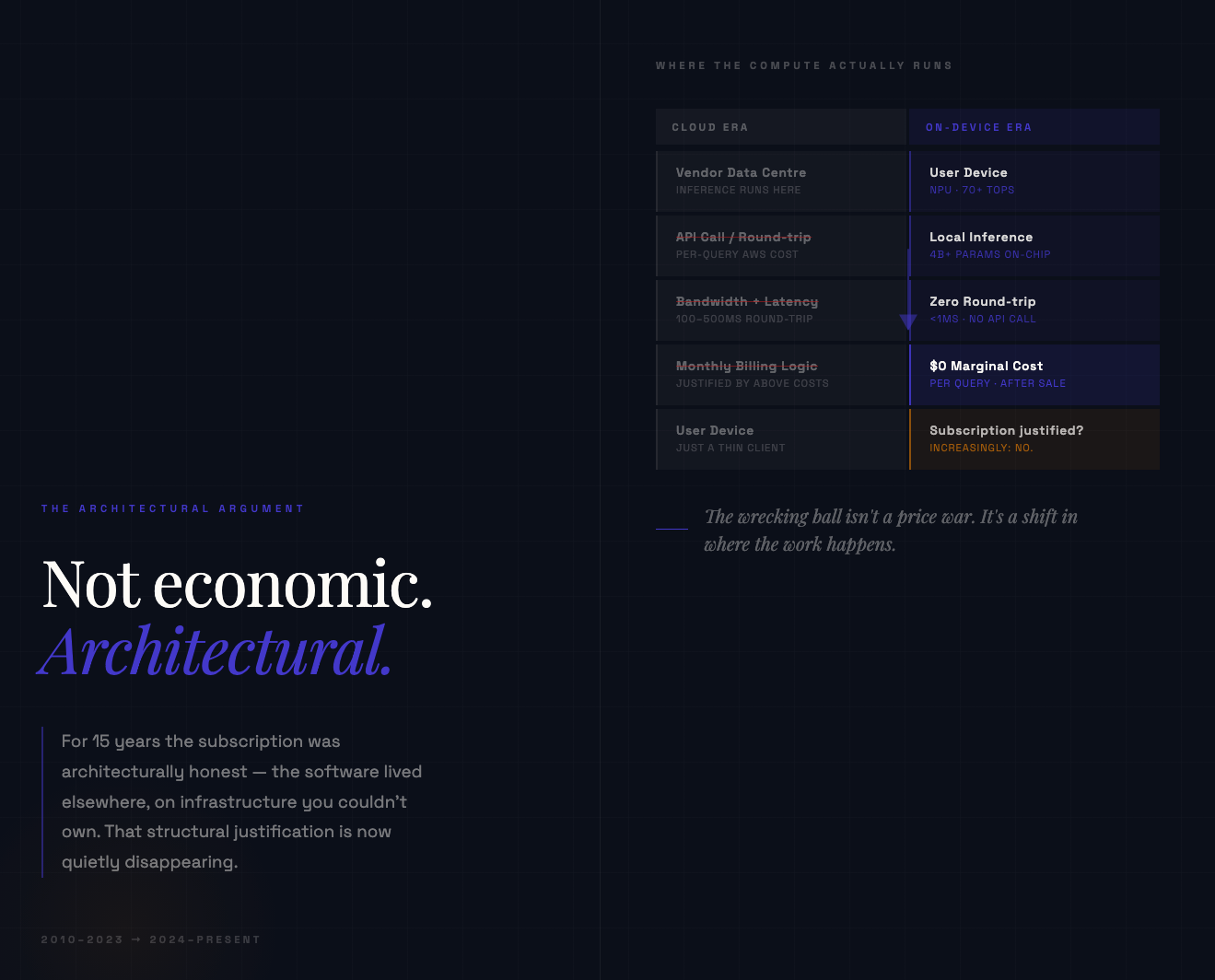
For the last fifteen years, subscription pricing made structural sense because the software genuinely lived somewhere else. Your CRM ran on someone else's servers. Your AI features called out to an API. You weren't paying for a static product - you were paying for continuous access to infrastructure you didn't own and couldn't replicate. The subscription wasn't just a pricing choice. It was a fair reflection of what was actually being delivered: ongoing compute, ongoing maintenance, ongoing bandwidth.
That logic is eroding, and on-device AI is the wrecking ball.
Running large language models on phones has moved from novelty to practical engineering in the space of about eighteen months. 2023 to 2025 saw what researchers are now calling the "intelligence explosion" era - NPUs delivering more than 70 TOPS, 8 to 24GB of unified memory, and models with four billion-plus parameters running locally at conversational speeds. Samsung's Galaxy S26 Ultra, announced this January, ships with a Snapdragon 8 Elite Gen 5 chipset delivering 39% faster on-device AI performance than its predecessor. Apple's unified memory architecture already lets MLX run operations across shared memory without data copies, which is the unglamorous engineering detail that makes local inference fast enough to feel instant.
None of this is speculative. It's shipping, right now, on devices people already own.
Why this actually matters for how software gets priced
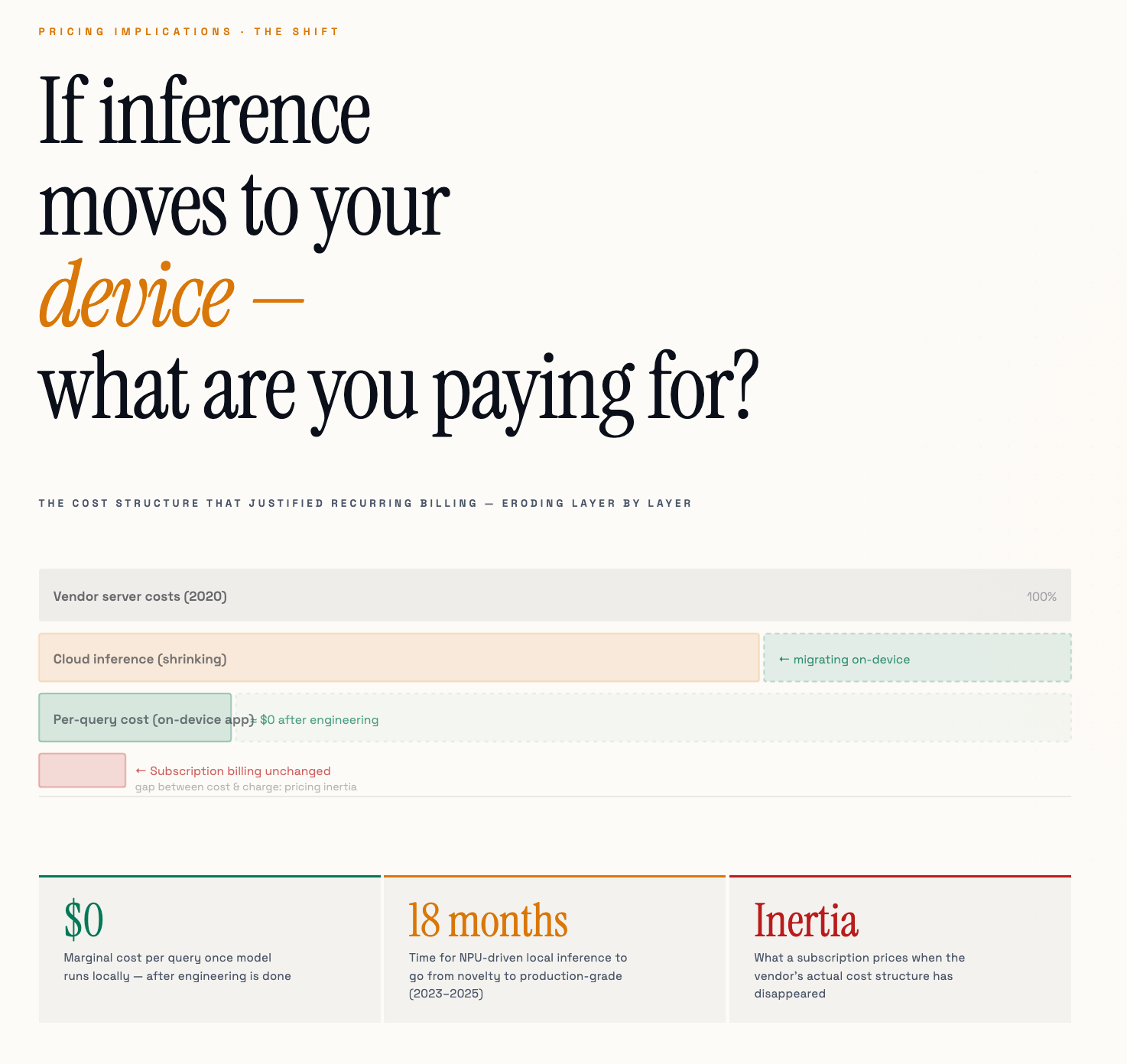
Here's the bit agencies and SaaS founders keep skipping past: if the model runs on the device, what exactly is the subscription paying for?
Not server time. Not API calls. Not the vendor's AWS bill. If inference happens locally, the ongoing cost structure that justified recurring billing in the first place has largely vanished. Industry researchers point to four reasons on-device processing is gaining ground - latency, since cloud round-trips add hundreds of milliseconds that break real-time experiences; privacy, since data that never leaves the device can't be breached; cost, since shifting inference to user hardware saves the vendor serving costs at scale; and availability, since local models work without a connection.
Read that third one again. The vendor saves money. That's the quiet part nobody says out loud in the pricing deck. On-device AI doesn't just improve the user's experience - it guts the cost justification for charging that user every single month.
I've watched a vertical SaaS company - a logistics scheduling tool, mid-market, decent retention - defend a subscription increase last year entirely on the grounds of "AI infrastructure costs." Fine, when the AI runs in their data centre. Less fine when, eighteen months from now, the same feature runs on the customer's own laptop using a quantised model that costs the vendor nothing per query. At that point the subscription isn't funding ongoing service. It's funding nothing. It's a habit dressed up as a business model.
That's not a hunch. It's where the unit economics are visibly heading, and the agencies still pitching "subscribe forever, because cloud" as the only sane pricing logic for AI features are about to have an awkward couple of years explaining themselves to clients who've done the maths.
Why it's about investors, not customers
Let's deal with the obvious objection, because it's a good one and I'm not going to pretend otherwise.
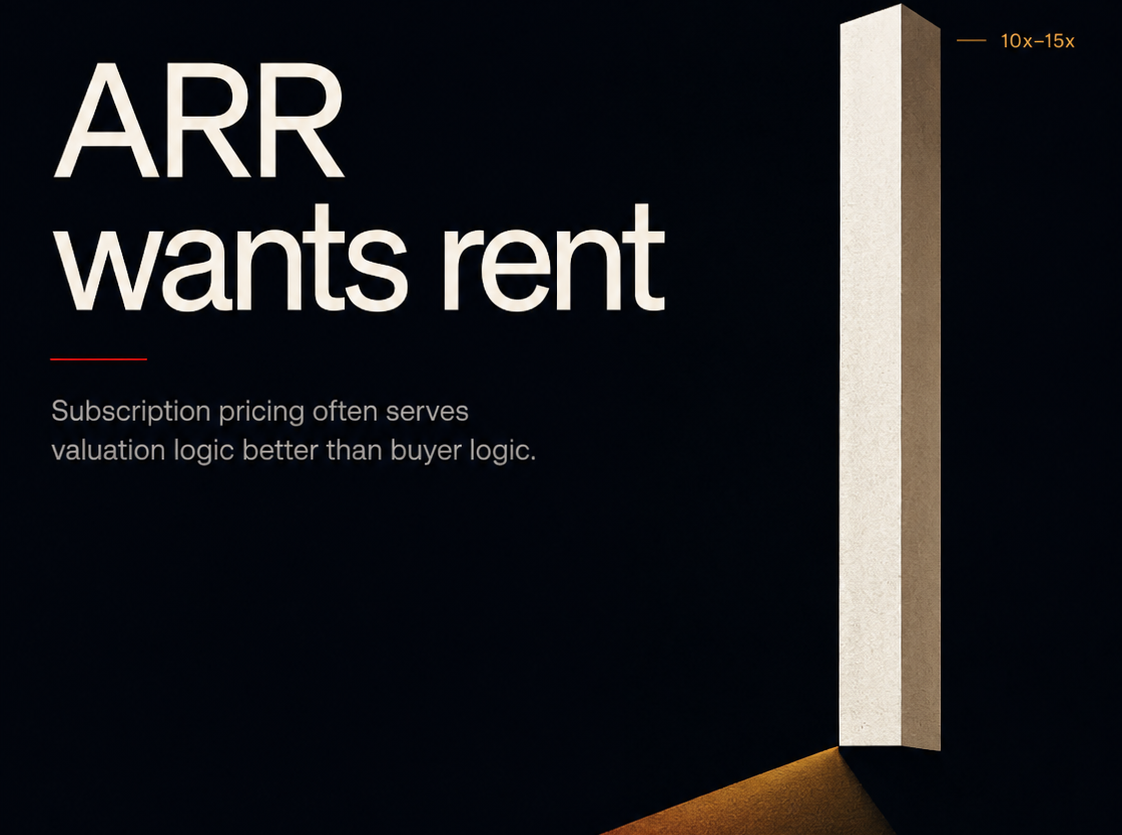
SaaS companies love subscriptions because subscriptions are catnip to investors. Investors pay a premium for ARR because it compounds - high-growth SaaS companies with strong net revenue retention can double existing customer revenue without adding a single new customer. ARR represents a stable, contractual baseline from which a company can grow, and revenue multiples are the market's external judgment of that baseline. Pure SaaS companies with recurring revenue command higher valuation multiples than traditional software companies relying on project-based or one-time license fees, purely because recurring revenue offers a stable, predictable cash flow.
This is the actual reason subscription pricing took over software, and it has almost nothing to do with what's good for the buyer. It's a financial engineering preference. A company doing $10 million in one-time sales gets valued like a services business. The same $10 million wrapped in a subscription wrapper gets valued in the 10x to 15x range depending on market size and growth opportunity. Same product. Same revenue. Wildly different multiple, because Sand Hill Road decided decades ago that "predictable" beats "owned" every time.
So when a vendor tells you subscription pricing is about "delivering continuous value," translate that honestly: it's about hitting the ARR number their cap table needs them to hit. The continuous value framing is the marketing department's job. The valuation multiple is the actual job.
I'm not saying that's irrational for the vendor. It's completely rational. A founder chasing a Series B isn't going to torch their multiple to make Amit happy. But "rational for the vendor's fundraising strategy" and "good for the buyer's actual problem" are two different sentences, and most pricing pages are written as if they're the same sentence. They're not. One is about you. The other is about their next round.
Where I have to be honest about the failure mode
Now, the bit I'd be a hypocrite to skip, because I built this whole argument on receipts and the receipts cut both ways.
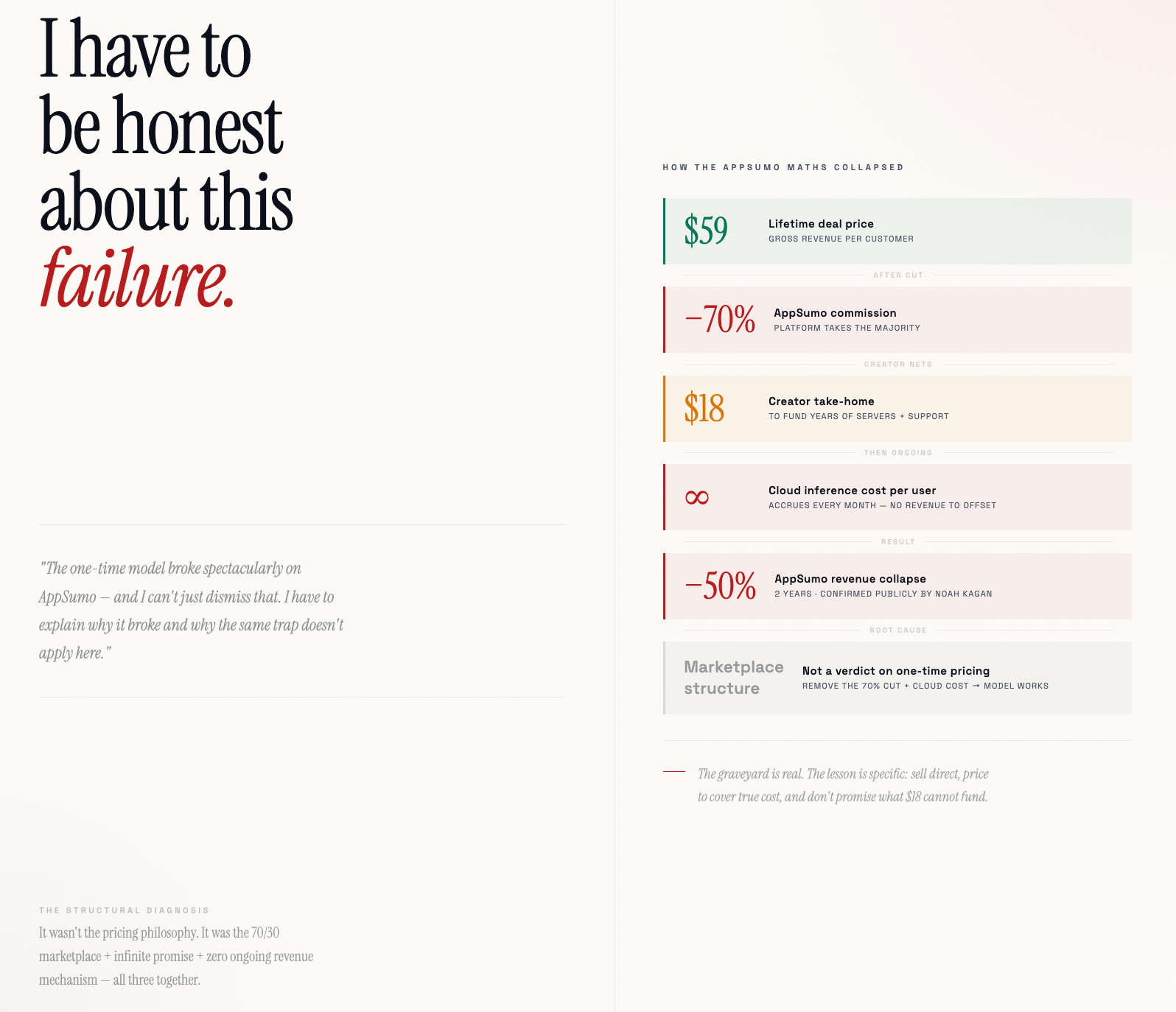
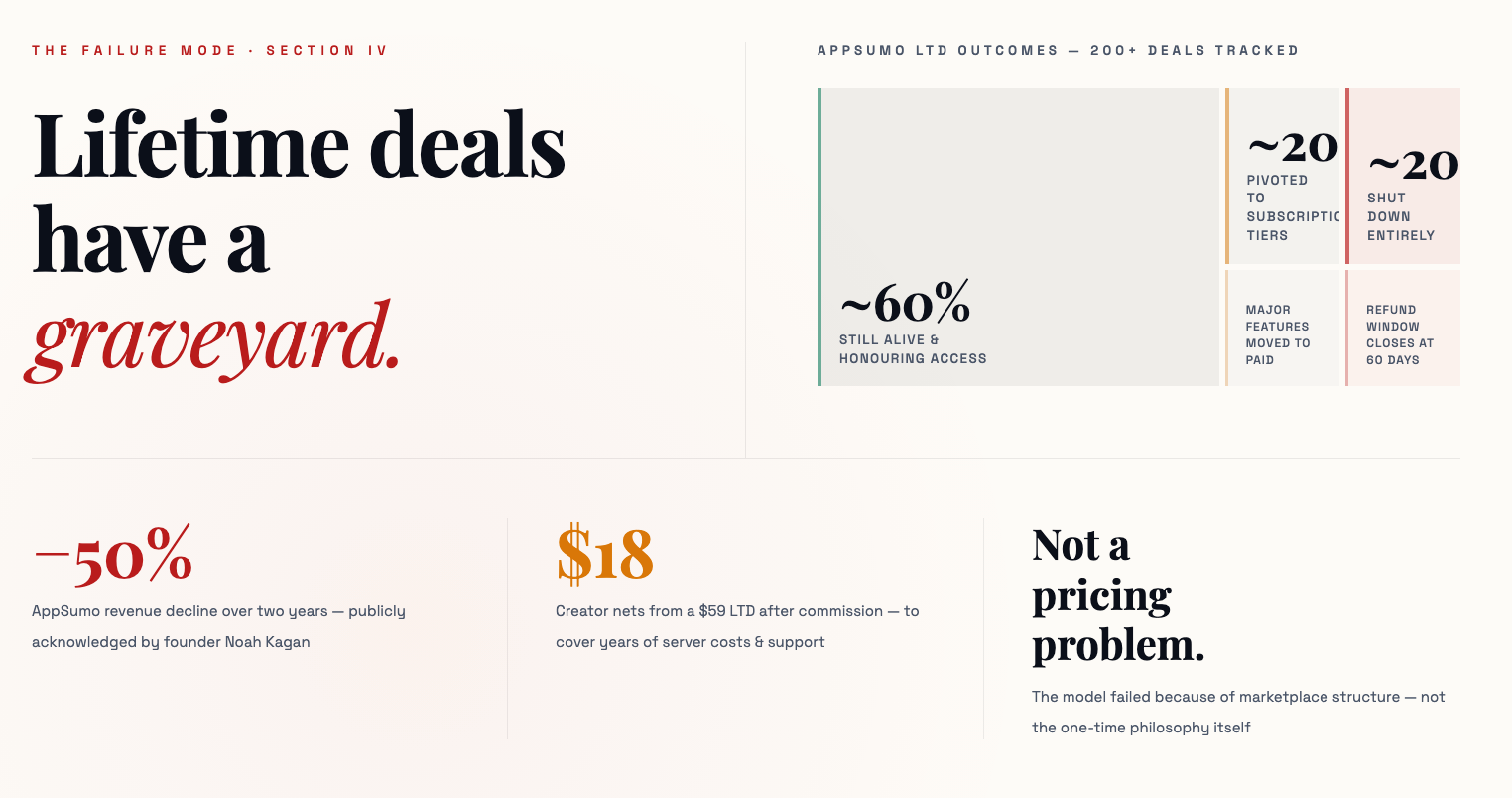
One-time and lifetime pricing has already been tried at scale, and it has a well-documented graveyard. AppSumo is the case study, and it's not flattering. Approximately 40% of AppSumo products shut down within three years, and once the 60-day refund window closes, buyers have no recourse if a product later discontinues. The mechanics of why are almost comically bad: a tool that usually sells for $39 a month might go for a $59 lifetime deal on AppSumo, and after AppSumo's 70% commission, the creator walks away with around $18 - which has to somehow cover years of server costs, feature updates, and support. AppSumo's own revenue reportedly crashed 50% as the lifetime deal model hit what one analysis called an existential crisis, with users losing access to over a hundred lifetime deals despite the platform's guarantees.
That's the model eating itself, not a rounding error.
And the sharpest critique I found wasn't from a subscription apologist - it was from someone who'd actually sold through the platform. A WordPress plugin founder who launched on AppSumo said publicly that she discontinued using the platform because the lifetime model proved financially unsustainable for ongoing product development and support. Buyers have also discovered that "lifetime" access sometimes excludes new updates, with major new features quietly pushed into separate paid tiers - the deal stays technically valid while losing practical value over time.
So if you're nodding along with my argument and thinking "great, let's just flip everything to lifetime deals," stop. That specific implementation was a marketplace problem, not a pricing-philosophy problem, and conflating the two is exactly how you end up defending a model that's already failed in public.
The AppSumo failure wasn't proof that one-time pricing doesn't work. It was proof that one-time pricing doesn't work when you sell it through a 70/30 marketplace split with no mechanism for ongoing revenue, then promise infinite future updates anyway. That's a Ponzi scheme with better UX copy, not a pricing model. The maths was broken from the first transaction - the vendor never had the money to honour the promise, and "lifetime" became a word doing far more work than it could carry.
What the on-device shift actually changes about that maths
Here's where the AI angle stops being a vibe and starts being the thing that fixes AppSumo's broken arithmetic.
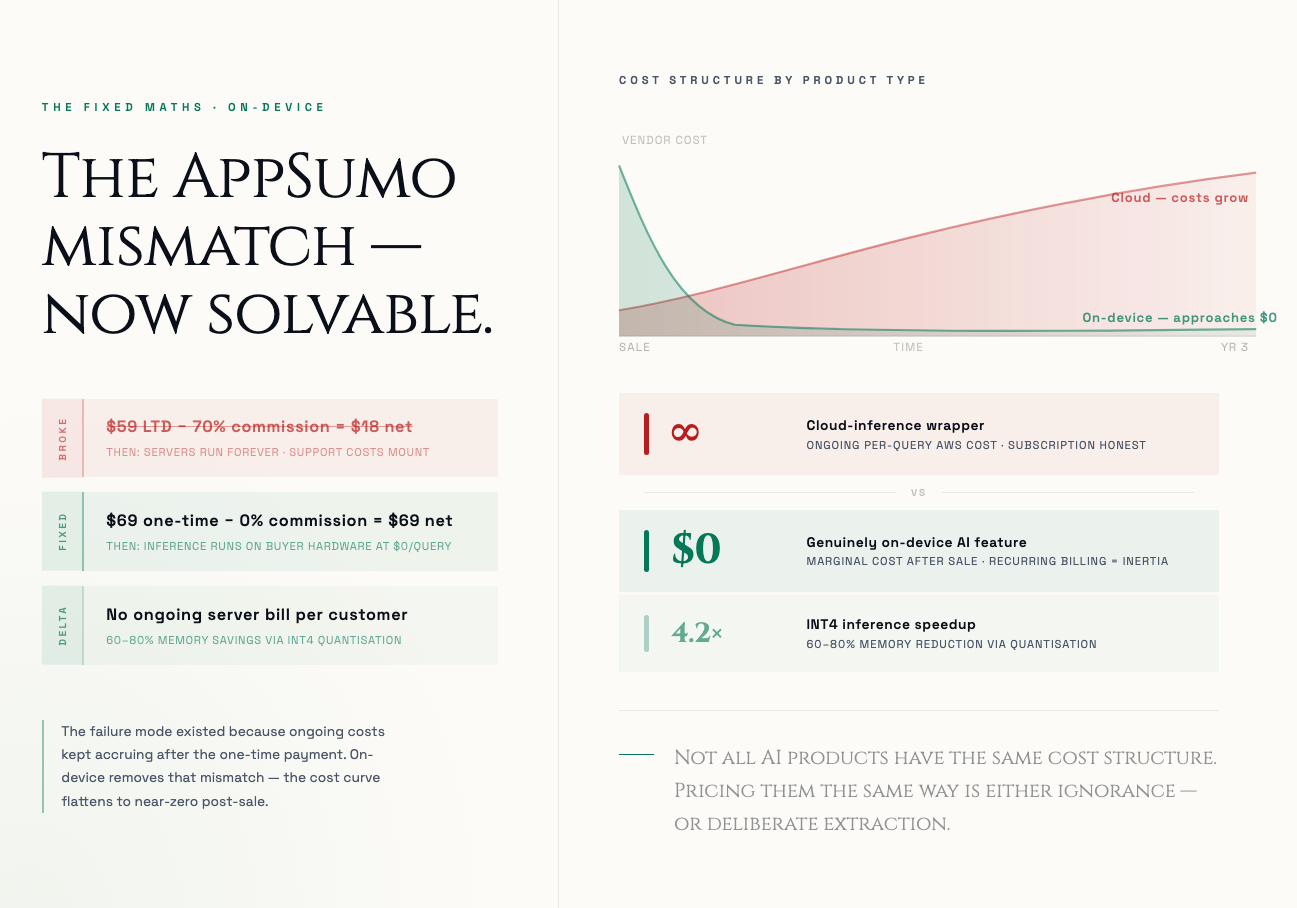
The AppSumo failure mode exists because ongoing costs kept accruing after the one-time payment - servers, support, hosting, the works - while revenue stopped. That mismatch is structural under a cloud-dependent product. It is not structural under a genuinely on-device product.
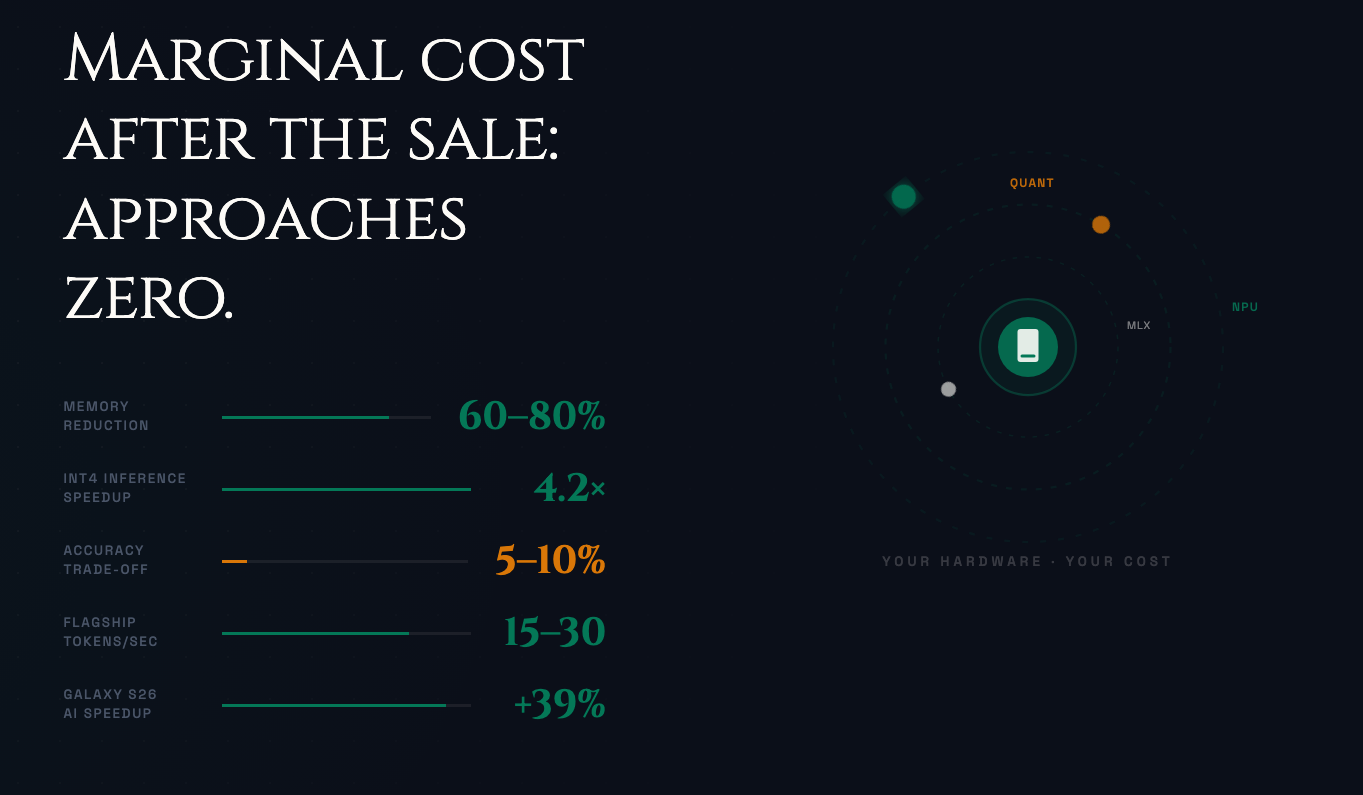
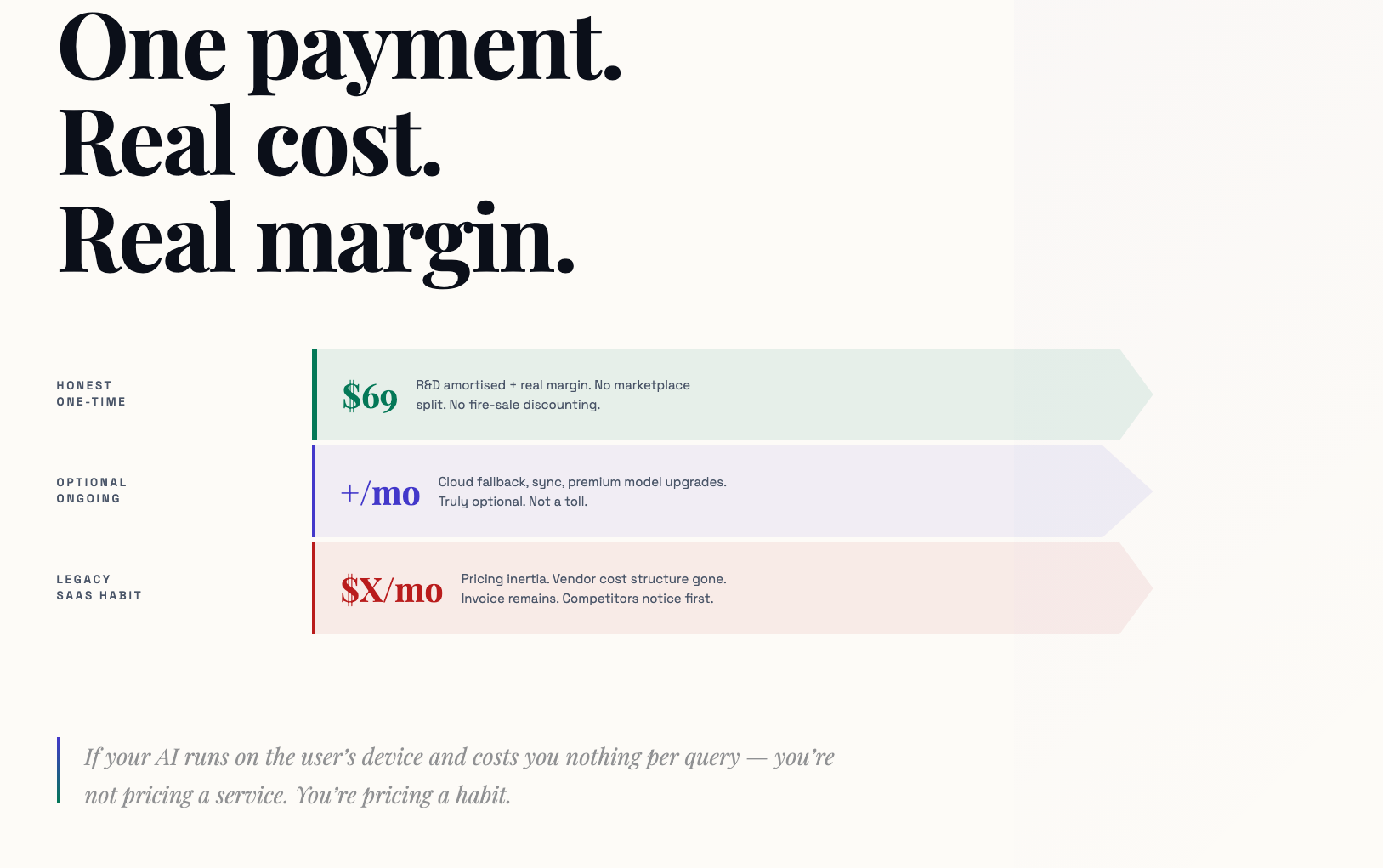
If your software runs locally - model included - your marginal cost per customer after the sale approaches zero. One payment of $69 replacing years of monthly billing isn't a gimmick when the product genuinely runs on the user's own hardware rather than your infrastructure, because you're not subsidising their usage with your AWS bill every time they open the app. Quantisation techniques now reduce memory usage by 60 to 80%, with INT4 delivering up to 4.2x faster inference compared to full precision, at an acceptable 5 to 10% accuracy drop for most local workflows. That's not a vendor cost centre anymore. That's a one-time engineering cost, amortised across however many units you sell, with no recurring server bill attached to each individual customer's daily use.
This is the distinction agencies keep missing when they reflexively defend recurring billing for "AI products." Not all AI products have the same cost structure. A cloud-inference wrapper around GPT-5 has genuine, real, ongoing per-query costs - subscription pricing is honest there, because the vendor is actually paying for your usage every month. A genuinely on-device AI feature does not have that cost structure. Pricing it the same way is either ignorance of your own infrastructure or a deliberate choice to extract recurring revenue for a service you're no longer meaningfully providing.
What this looks like in practice, not theory
A cybersecurity vendor selling to risk-averse CISOs has a real, defensible case for subscription pricing: threat intelligence is genuinely continuous, the database updates daily, and the vendor is doing real ongoing work to keep the product useful. Fine. Keep the subscription. Nobody's arguing payroll software should switch to lifetime licensing because tax rules change every year and someone has to keep updating the calculations.
But a writing assistant that runs a quantised 7B model entirely on-device, doing grammar checks and tone suggestions with zero API calls back to the vendor? That's not "continuous value." Modern phones already run six AI capabilities locally - text generation, image generation, vision - at 15 to 30 tokens per second on flagship devices, no cloud round-trip required. Charging that customer monthly, indefinitely, for a model that already lives on their device and costs you nothing per use, isn't pricing. It's nostalgia for a cost structure that no longer applies to your product.
The honest version of lifetime pricing - done properly, not AppSumo-style - looks like this: price the one-time payment to cover genuine R&D amortisation plus a real margin, not a fire-sale discount sold through a 70% commission marketplace. Offer an optional, clearly-scoped subscription for things that are genuinely ongoing - cloud fallback for harder queries, cross-device sync, premium model upgrades - and be explicit that the optional tier is optional, not a forced toll for continued access to features the customer already paid for once.
Where this is heading, whether agencies like it or not
The vendors who get hurt by this shift aren't the ones running real ongoing infrastructure. It's the ones who built a recurring billing habit on top of a cost structure that's quietly disappearing, and who are about to discover that the only thing recurring about their value proposition was the invoice.
I'd put moderate-to-high confidence on this: within three to five years, "runs entirely on your device, one payment, no subscription" becomes a genuine market differentiator for an entire category of consumer and prosumer software - not just a curiosity for privacy nerds. The CFOs cutting SaaS tools by the dozen this year aren't doing it because they suddenly discovered thrift. They're doing it because the average employee was costing the business $7,900 a year across 106 distinct apps, many overlapping, many barely used, and the question shifted from "what should we add next" to "what can we kill today". On-device AI gives them a credible reason to kill more of them, permanently, rather than just consolidating into a different recurring bill.
That's the bet I'd be making if I were advising a product team right now: not "subscriptions are dead," because plenty of software genuinely earns continuous billing through continuous service. The bet is narrower and sharper. If your AI feature runs on the user's device and costs you nothing per query after the engineering is done, your subscription isn't pricing a service anymore. It's pricing a habit you talked your customer into keeping. And habits, eventually, get audited.
Want to get ahead?
Before you touch your pricing page, run the actual cost audit: for every AI feature you bill recurringly, work out whether it's still hitting your servers per query or whether it's already quietly running client-side through your SDK's local inference path. If it's the latter and you're still charging monthly for it, you're not pricing infrastructure anymore - you're pricing inertia, and your competitors building genuinely local-first tools are about to make that very obvious to your customers before you do it yourself.