

If you're like me, you've spent countless hours looking for the perfect email marketing tool. I mean, it's an important decision, right? Email is still one of the most effective channels for connecting with your audience, driving sales, and growing your brand. But the tools out there? There are too many. And it's exhausting.
At DataDab, we've navigated this maze more times than I can count. Two platforms, in particular, seem to pop up in conversation often - Flodesk and Mailchimp. They both promise the moon: easy-to-use email builders, high deliverability, sleek automation workflows, and solid analytics. Yet they couldn't be more different, especially once you dig deeper.
The question is, which one is right for your business? Stick with me as I break it down - from the nuances that only marketers can truly appreciate, to some surprising revelations that could steer you towards one or the other.
First Impressions
Flodesk is like that new boutique in town. It’s trendy, elegant, and absolutely knows how to charm you. The first time I used it, I felt like I was designing art - not just an email. The focus is on aesthetic appeal, and every template feels polished enough for a high-fashion magazine.
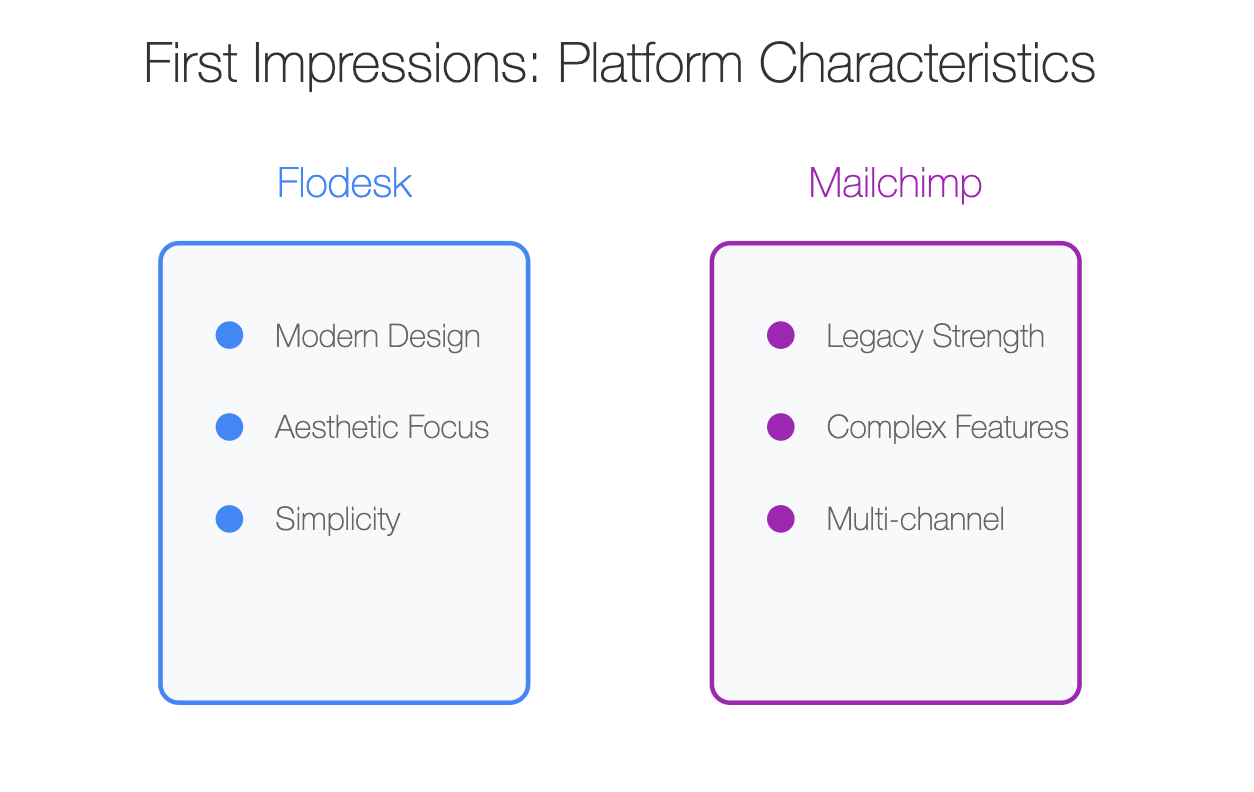
Mailchimp, on the other hand, is that department store you’ve been visiting for years. Reliable, stocked with everything you could ever need, but maybe lacking in the charm department. When you log in, you feel the history. Mailchimp has been around since 2001, after all. It's a tool that has evolved over decades - from a simple email platform into a complex, multi-channel marketing engine.
So, it starts with intention. If you need a sophisticated marketing tool that can handle segmentation, deep analytics, and cross-channel marketing, Mailchimp’s legacy strength can’t be ignored. Flodesk, however, aims to keep it pretty simple - and it’s winning hearts, especially in the creative community.
Interface and Usability
One thing I love about Flodesk is how straightforward it is. It’s intuitive and, in a way, "just works." You log in, you create a beautiful email in minutes, and boom - you’re sending it out. The interface was built with non-techies in mind. No steep learning curves or multiple layers of options that make you second-guess every click. Plus, its drag-and-drop editor is truly one of the best I've seen.
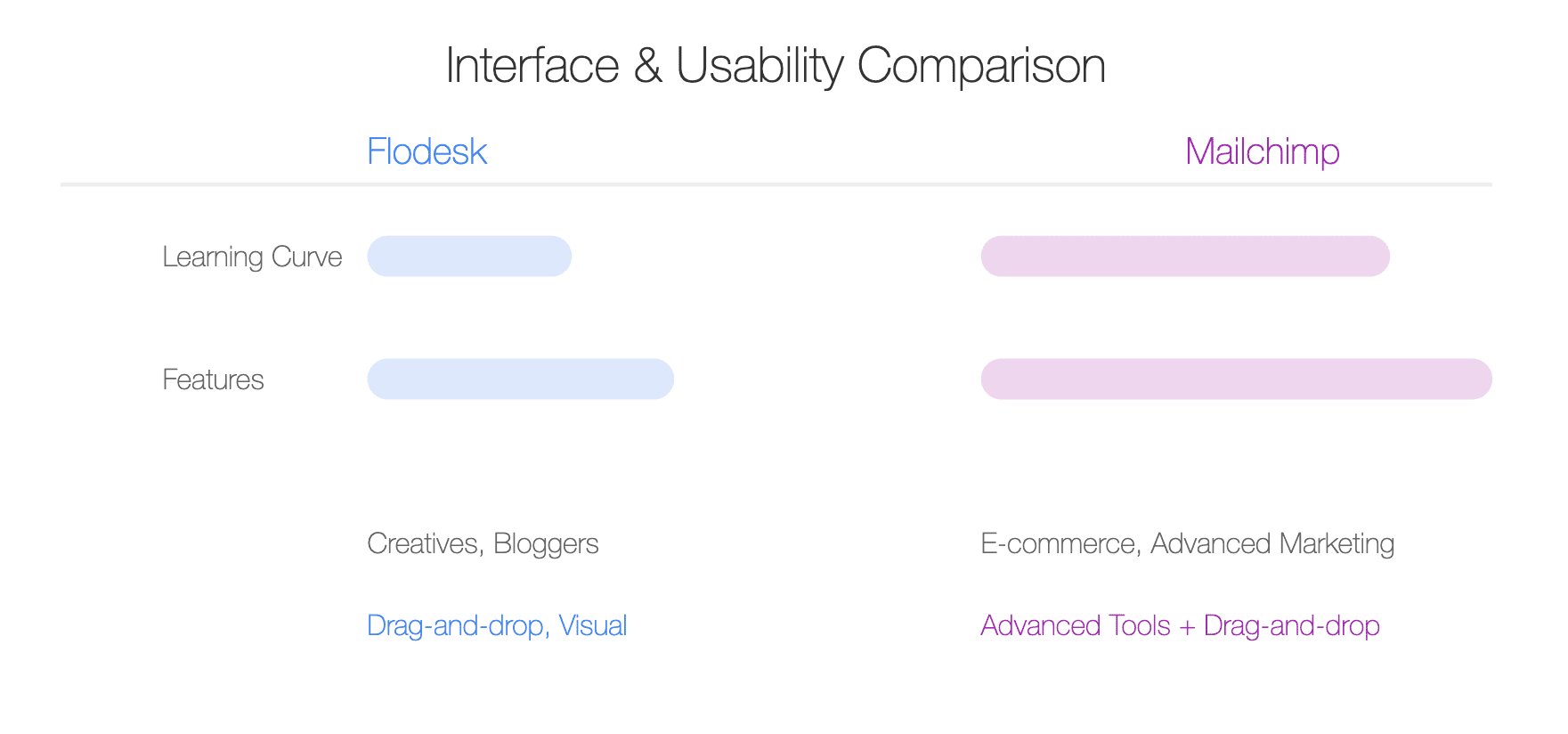
Mailchimp, by comparison, has a busier interface. With power comes complexity - you know the drill. You’ve got tabs for email, automations, A/B testing, audience insights, ads, postcards… the list goes on. As a marketing agency, we appreciate these features, but I wouldn’t call Mailchimp "easy" for everyone. If you’re new to email marketing, you might be a bit overwhelmed at first.
To put it simply:
| Platform | Best For | Learning Curve | Editor Type |
|---|---|---|---|
| Flodesk | Creatives, bloggers | Low | Drag-and-drop, highly visual |
| Mailchimp | E-commerce, advanced marketing | Medium to High | Drag-and-drop plus advanced tools |
Flodesk might appeal to you if you prioritize aesthetics and simplicity. It's a pure joy if you want to focus solely on crafting a beautiful email, without getting bogged down in numbers and configurations. Mailchimp, however, offers greater functionality but requires a bit more time - sometimes the price of power is extra complexity.
Automation & Workflows
Here’s the juicy part: automations. Any seasoned marketer knows the real power of email lies in automated sequences - the emails that reach out at exactly the right time with exactly the right message.
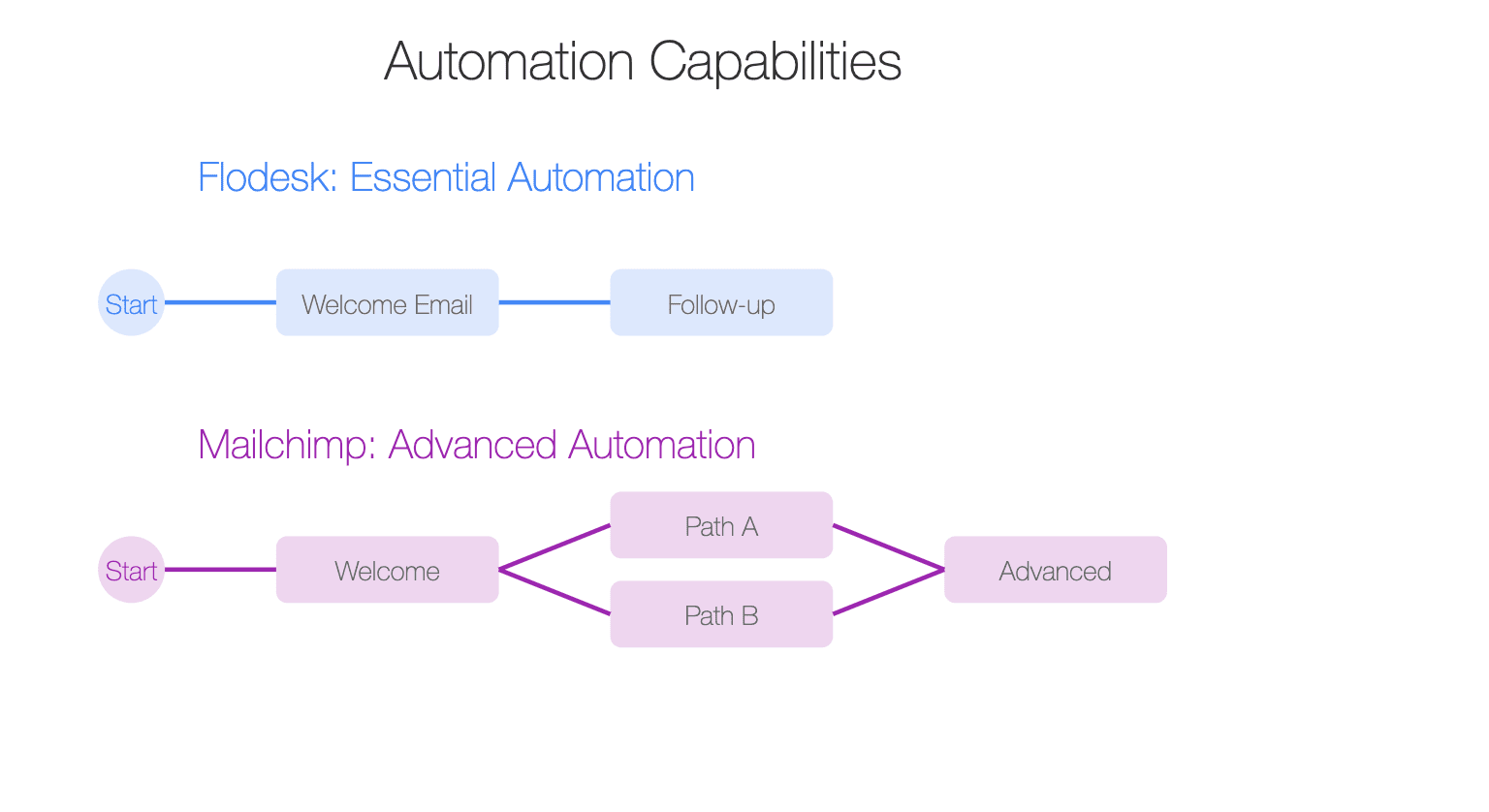
Flodesk keeps it simple. You create workflows, and they look beautiful - no surprise there. It offers essential triggers like “Subscriber Joins a List” or “Clicks a Link”. The visual layout makes it easy to understand and set up, but it does have its limits. Flodesk’s workflows are perfect for beginners, but they lack the granular control a veteran marketer may be itching for.
Mailchimp’s automations? Think of it like Swiss army knife. There’s an automation for everything - and I mean everything. Want to send personalized cart abandonment emails for your e-commerce site? Easy. Want an intricate sequence based on a subscriber's activity spanning months? Go for it. The flexibility Mailchimp offers is almost unmatched in the email marketing sphere, but you’ll have to put in the work to set it up. This level of automation requires some expertise and patience.
| Feature | Flodesk | Mailchimp |
|---|---|---|
| Visual Workflow Editor | Yes | Yes |
| Types of Triggers | Basic (Subscriber Joins, Clicks) | Advanced (Browsing Behavior, Purchases, Tags) |
| Granular Controls | Limited | High |
| Custom Branching Logic | No | Yes |
For example, we ran a campaign for a SaaS client where different segments received different educational sequences based on their activity - and then those segments branched off even further based on actions. With Mailchimp, we built it all - and it worked beautifully. It helped convert a lot of on-the-fence users. This is something Flodesk, in its current state, just wouldn’t be able to accommodate.
Templates and Customization
We can't talk about Flodesk without mentioning its templates. They’re honestly, aesthetically stunning. If you’re running a design studio, a lifestyle blog, or anything visually oriented, Flodesk’s templates will make your emails look professional and attention-grabbing - even if you have zero design experience.
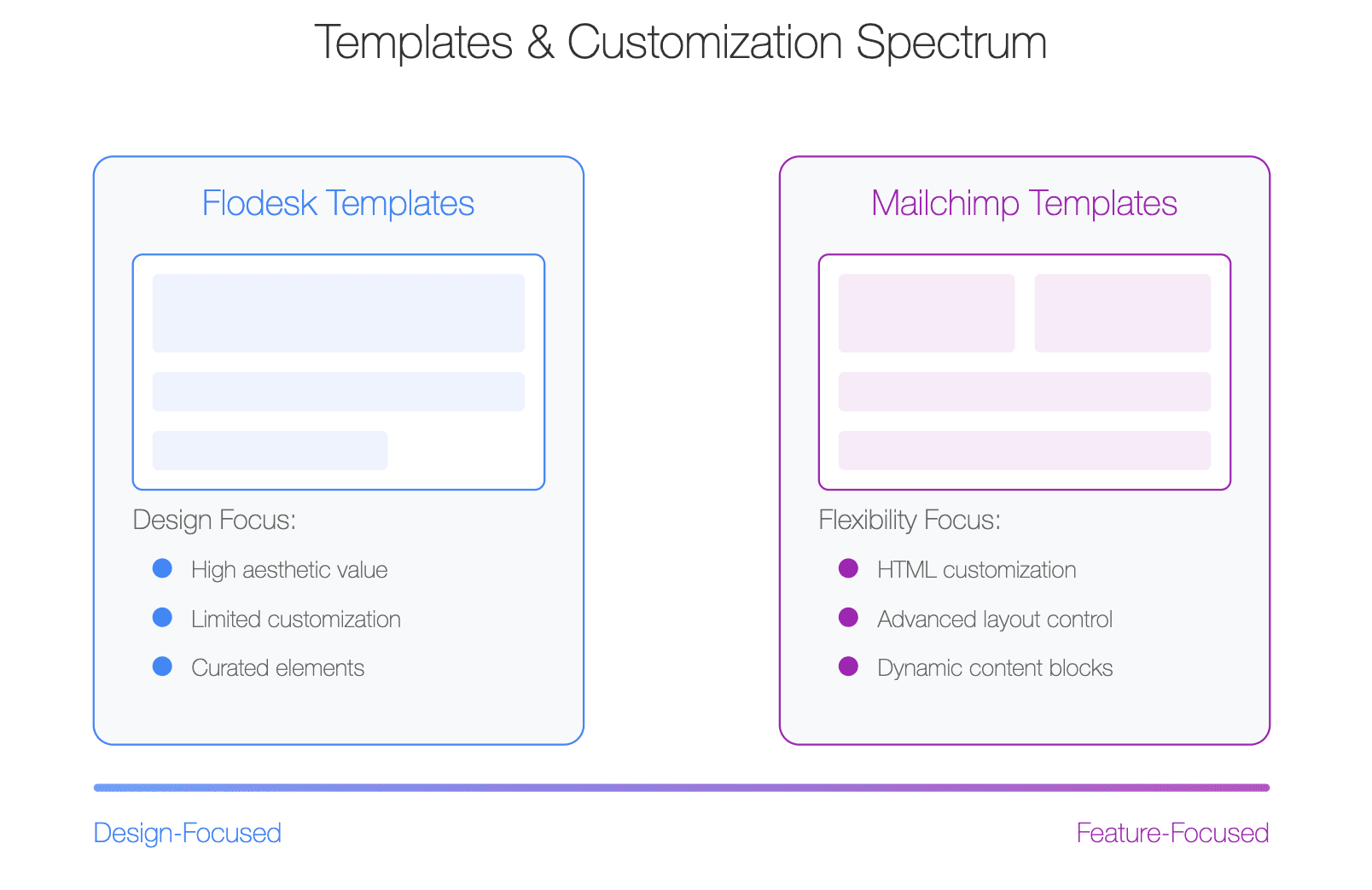
But - and this is a big but - you’re trading customization for beauty. Flodesk is set up in a way that helps you maintain visual consistency. While this works in favor of non-designers, it also means you’re a bit boxed in.
Mailchimp takes a different approach. It’s it’s versatile, not winning any beauty contests out-of-the-box. The templates range from basic to functional, with plenty of customization. Want to add unique blocks or experiment with HTML? No problem. Mailchimp has far more flexibility - something we value at DataDab, especially when we need to test different design ideas for clients.
| Feature | Flodesk | Mailchimp |
| Templates | Beautiful, curated, limited | Numerous, flexible, customizable |
| Customization | Low | High |
Deliverability
Now, all of the beauty, all of the workflows, and all the customization in the world mean nothing if your emails aren’t making it to inboxes. Deliverability is, ultimately, what drives the success of email campaigns.
Flodesk, despite its newness, has held up well in our tests. Their IPs are reputed to be solid, and our campaigns have consistently landed in inboxes - which is honestly the primary benchmark.
Mailchimp, of course, has been around long enough to establish credibility with ISPs. They also offer a lot of flexibility around authentication (like DKIM and SPF records) that Flodesk simply doesn’t - yet. In our experience, Mailchimp’s deliverability rates are excellent, especially for e-commerce clients and those with large lists.
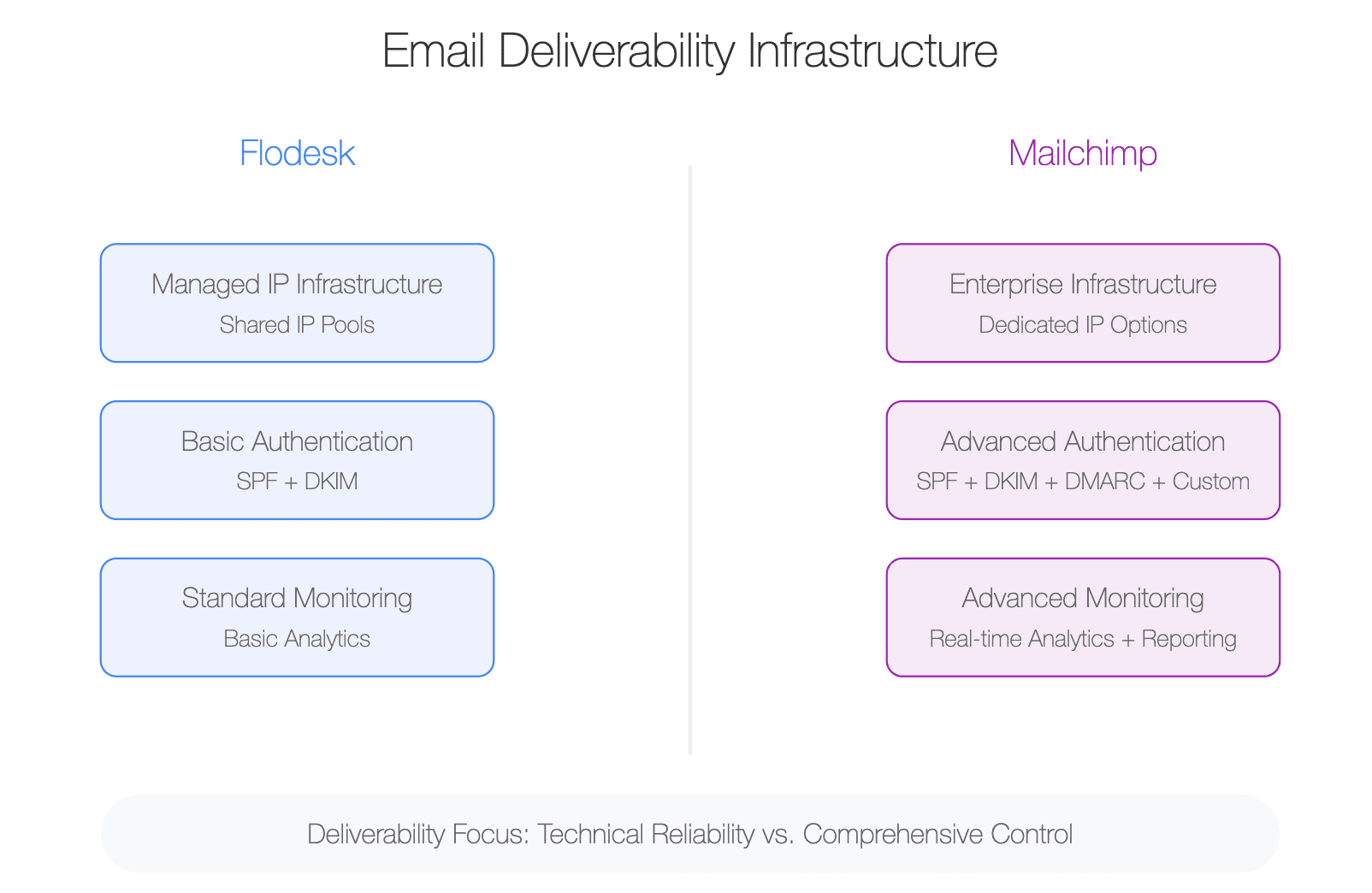
The bottom line? If inbox placement and maximizing deliverability rates are a priority - and they should be - Mailchimp’s edge in reliability is a key selling point, particularly for bigger campaigns where every decimal point matters.
Segmentation and Audience Targeting
Let’s get into segmentation. This is another area where the gap between these two tools widens.
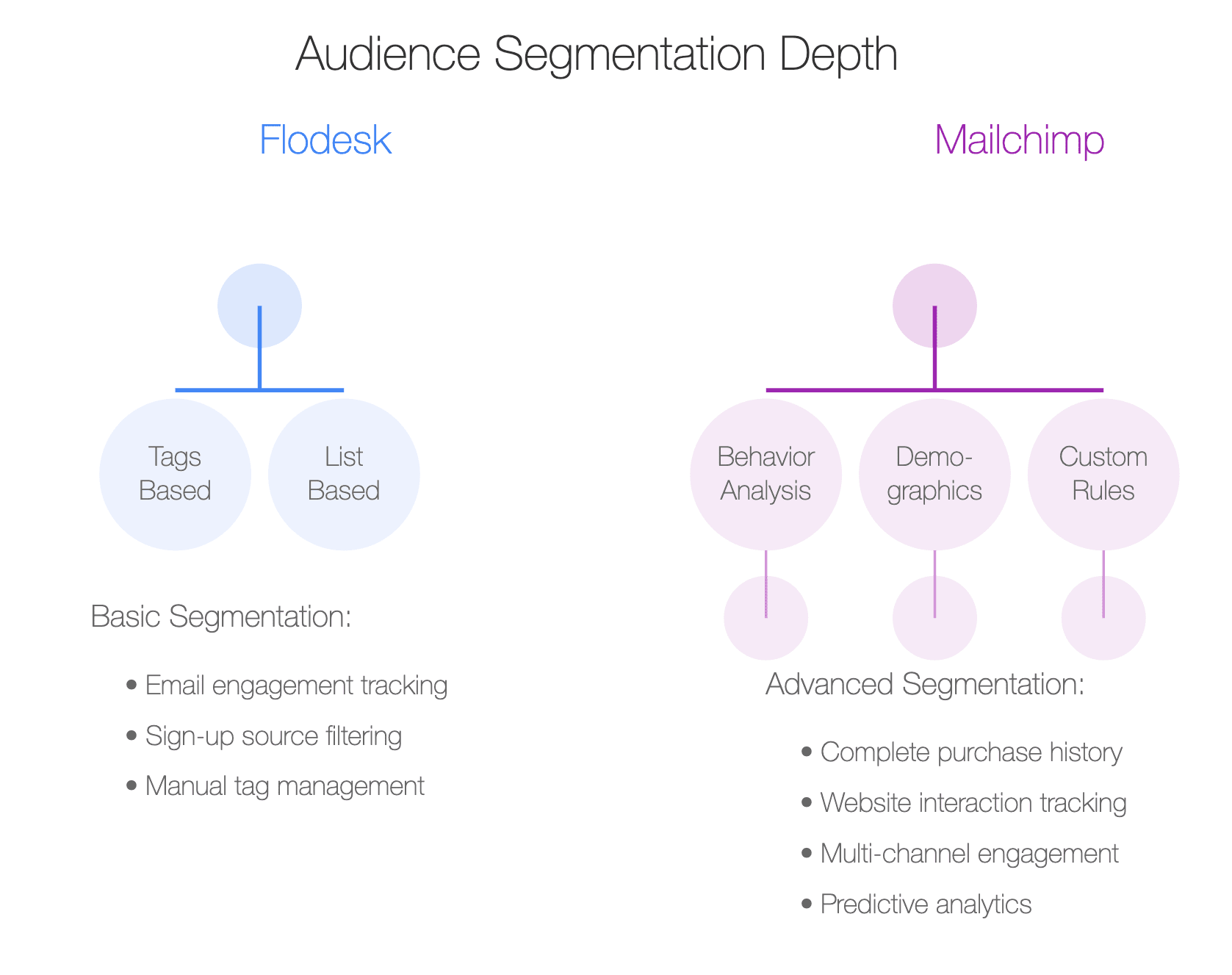
Mailchimp allows for deep, dynamic segmentation. You can slice and dice your audience by almost any metric you want: purchase history, engagement, location, and even complex criteria combining multiple behaviors. This means a level of personalization that translates directly into conversions.
Flodesk, by contrast, keeps segmentation fairly basic. You can categorize your audience by tags, and the basics are there, but you’re not going to get into any super advanced, behavior-based automation trees. It’s just not built for that.
When running targeted campaigns for clients, I can’t tell you how often we leverage deep segmentation. The ability to understand micro-segments - like frequent browsers who haven’t made a purchase in 90 days - has allowed us to build strategies that target high-value audience slices with the right offer, at the right time. Mailchimp nails this in a way Flodesk simply doesn’t, at least right now.
Pricing
Money talks. Flodesk is priced with simplicity in mind - a flat $38 per month, regardless of how many subscribers you have. For small to mid-sized businesses, especially those with growing lists, that’s an incredibly attractive proposition.
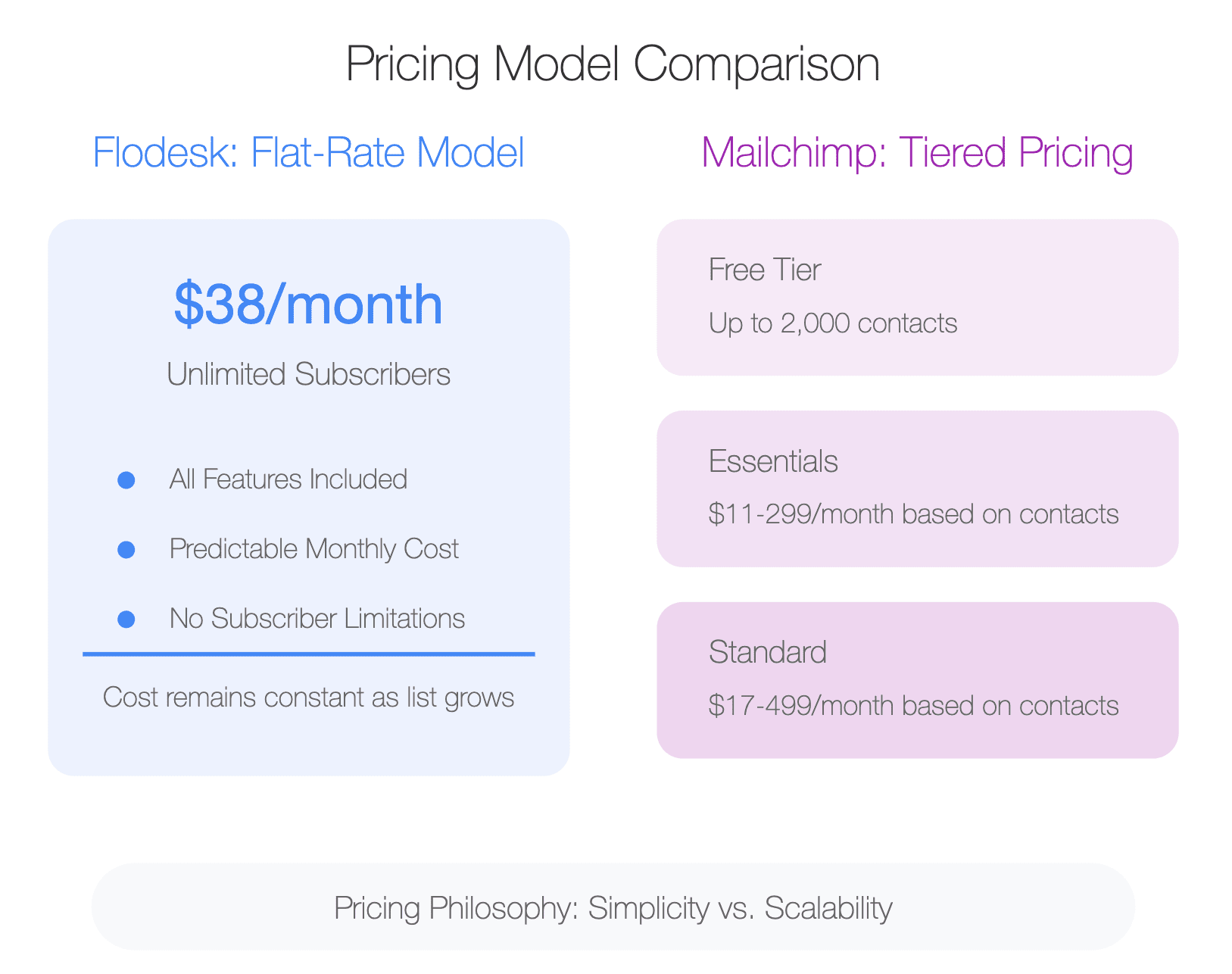
Mailchimp, however, has a tiered pricing model. For smaller lists, it can be affordable. But as you grow, the price grows fast - especially if you need some of the more advanced features. For established e-commerce brands, this isn’t necessarily a dealbreaker. But if you’re just starting out and have budget constraints, Mailchimp’s pricing can feel steep.
| Platform | Pricing Model | Who Benefits |
| Flodesk | Flat-rate ($38/month) | Growing businesses, creatives with limited budgets |
| Mailchimp | Tiered, usage-based | Larger brands, established businesses needing full features |
Integrations
Mailchimp shines here. It integrates with almost everything - Shopify, WooCommerce, Facebook Ads, Zapier, and countless CRM tools. It’s designed to be an all-encompassing marketing hub, and its integration capabilities reflect that. We leverage this flexibility at DataDab for multi-touch campaigns, linking CRM data to ad campaigns, and syncing actions across channels.
| Integration Type | Flodesk | Mailchimp |
|---|---|---|
| Shopify | Yes | Yes |
| WooCommerce | No | Yes |
| Facebook Ads | Limited | Yes |
| CRM Tools | Limited | Wide Range (e.g., Salesforce, HubSpot) |
| Zapier | Yes | Yes |
Flodesk, while improving, isn’t quite at the same level yet. It integrates with Shopify and Zapier, among others, but if you’re planning to run more complex marketing operations that require extensive integrations, Mailchimp is still the better bet.
Choosing the Right Fit
It all boils down to what you need from an email marketing tool. If you’re running a visually-driven brand - like a fashion boutique, creative agency, or personal blog - and simplicity is your primary goal, Flodesk will charm you. It’s affordable, easy, and makes your emails look gorgeous with minimal effort.
On the other hand, if you need a robust, feature-rich platform with deep segmentation, complex automation, and extensive integrations, Mailchimp is still tough to beat. It’s powerful but requires commitment. You get out of it what you put in.
At DataDab, we lean towards Mailchimp for clients with diverse needs and larger teams where growth demands advanced functionalities. But we’re also not blind to the charm of Flodesk, especially when clients value style, simplicity, and budget predictability.
Ultimately, it’s about finding what fits your brand, your style, and your growth ambitions. Hopefully, this deep dive helps you navigate that decision a little better.
Feel free to share your experiences with Flodesk, Mailchimp, or any other platforms you’ve used. The best tool is, after all, the one that makes your life easier.
FAQ
1. Which platform is easier to use for beginners?
Flodesk is generally easier for beginners due to its highly intuitive interface and minimal learning curve. The drag-and-drop editor is straightforward, allowing users to design stunning emails quickly. Mailchimp, on the other hand, offers more features and flexibility, but this can make the interface feel overwhelming for new users.
2. Does Mailchimp offer better automation features than Flodesk?
Yes, Mailchimp offers far superior automation capabilities compared to Flodesk. Mailchimp provides detailed automation options, allowing users to set up complex workflows based on user behavior, purchase history, and other criteria. Flodesk's automation features are simpler and geared more towards basic workflows.
3. How do Flodesk and Mailchimp compare in terms of pricing?
Flodesk has a flat-rate pricing model at $38 per month, which can be more economical for growing businesses or those with large subscriber bases. Mailchimp uses a tiered pricing model based on the number of subscribers and features, which can become expensive as your list grows or as you need advanced functionalities.
4. What are the major design differences between Flodesk and Mailchimp?
Flodesk stands out for its beautiful, curated email templates that are designed to be visually appealing, ideal for creatives or bloggers. Mailchimp's templates are more functional but provide extensive customization options. If you prioritize design elegance, Flodesk wins, while Mailchimp offers more flexibility in template customization.
5. Which platform offers better segmentation capabilities?
Mailchimp offers much better segmentation features, allowing users to create complex segments based on user actions, purchase history, and engagement levels. Flodesk’s segmentation is relatively basic, relying mostly on tags, and doesn’t allow for the deep audience analysis that Mailchimp provides.
6. Is Flodesk a good choice for e-commerce businesses?
Flodesk can be a good choice for visually-driven e-commerce brands that don’t require complex automation. However, Mailchimp is generally better suited for e-commerce due to its robust automation workflows, advanced segmentation, and extensive integrations with platforms like Shopify and WooCommerce.
7. How do the deliverability rates compare between Flodesk and Mailchimp?
Mailchimp has a strong reputation for high deliverability, supported by established relationships with ISPs and advanced features like DKIM and SPF authentication. Flodesk performs well for a newer platform, but it lacks some of the more advanced deliverability tools that Mailchimp provides, which can make a difference in inbox placement for large campaigns.
8. Which platform has more integration options?
Mailchimp has far more integration options compared to Flodesk. It integrates with a wide range of third-party platforms, including Shopify, WooCommerce, Facebook Ads, Zapier, and many CRM tools. Flodesk offers limited integrations, primarily through Zapier, making it less suitable for complex marketing ecosystems.
9. Can I do advanced A/B testing with both platforms?
No, advanced A/B testing is a feature that is more robust in Mailchimp. Mailchimp allows you to test subject lines, content, sending times, and more, making it an ideal choice for users who need in-depth testing capabilities. Flodesk does not currently offer advanced A/B testing features, limiting its usefulness for data-driven marketers.
10. What kind of businesses would benefit most from Flodesk vs Mailchimp?
Flodesk is ideal for visually-oriented businesses, creatives, bloggers, and smaller brands that prioritize ease of use and aesthetics. Mailchimp is better suited for e-commerce brands, SaaS companies, and established businesses that require extensive automation, deep segmentation, and complex integrations to manage their email marketing.