
Sales. Bold. Brutal. And, at times, beautifully simple. Imagine a world where every conversation, every email, and every pitch is guided by a clear, purpose-driven script. A world where winning isn’t left up to chance. It’s not magic. It’s strategy. In a marketplace where every word counts and every minute matters, you need a roadmap—one that doesn’t just guide your team but transforms potential into profit. Here at DataDab, our marketing consulting ethos is built on one simple truth: clarity breeds success. And that’s why we’re diving in headfirst to demystify and amplify the creation of a winning sales playbook.

We’re going to explore every angle: from understanding what a sales playbook really is, to the nuts and bolts of building one that not only resonates with your team but also aligns seamlessly with your marketing and product strategies. Along the way, we’ll share real-life case studies, actionable tips, and industry-specific insights that move beyond the obvious. You’ll encounter statistics that matter, quotes from industry experts, and even a few surprises.
Did you know that companies with well-defined sales playbooks have reported up to a 30% increase in win rates? Or that a structured sales process can reduce onboarding time for new hires by as much as 40%? These aren’t just numbers thrown around at conferences—they’re the hard truth behind what makes sales teams work better, faster, and more cohesively.

What Is a Sales Playbook?
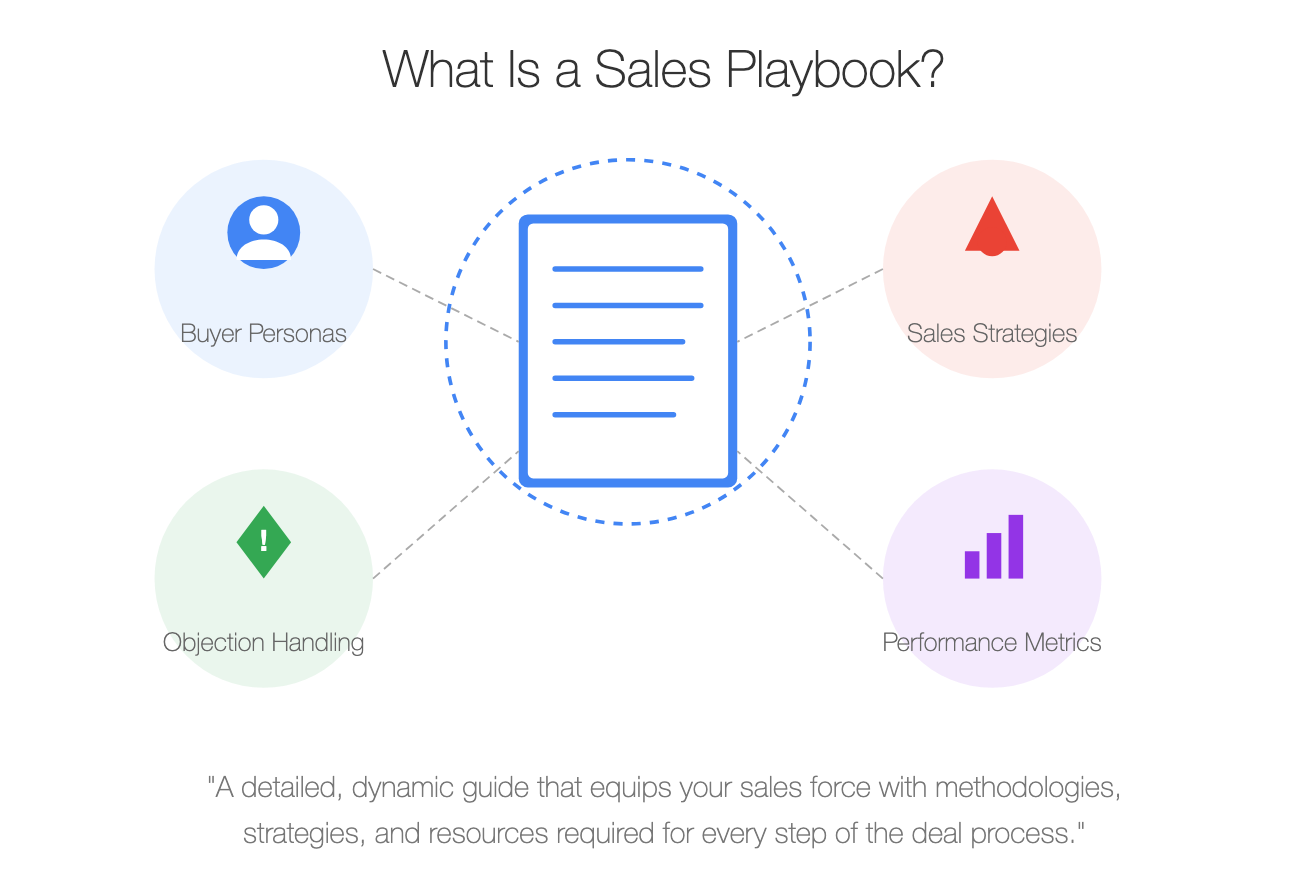
At its core, a sales playbook is a trusted companion—a detailed, dynamic guide that equips your sales force with the methodologies, strategies, and resources required for every step of the deal process. It’s the bible that standardizes best practices, mitigates variability, and ultimately drives consistency across your organization.
Defining the Sales Playbook
A sales playbook outlines every step necessary to convert a prospect into a customer. It’s not merely a collection of scripts and templates; it’s the embodiment of your company’s collective sales wisdom. Within its pages, you’ll find:
• Buyer Personas and Ideal Customer Profiles: Detailed descriptions of who you’re selling to, what their pain points are, and why your solution is the best fit. This isn’t a one-size-fits-all checklist; it’s a sophisticated segmentation strategy that underpins every outreach.
• Sales Strategies and Messaging: Tested frameworks and adaptable scripts that empower your sales team to deliver a clear, compelling narrative. From elevator pitches to comprehensive demo outlines, every element of your messaging is included.
• Objection Handling and Negotiation Tactics: Well-researched responses to common objections, along with negotiation levers that have been proven to work in the field.
• Performance Metrics and KPIs: Transparent and measurable criteria that help track the success of your sales efforts, from initial contact to closing the deal.
The Importance of a Sales Playbook
It’s more than just a document—it’s a dynamic tool that helps instill discipline, refine skills, and foster accountability. Consider these points:
- Consistency is Key: For multi-channel sales teams, consistency in communication and strategy across regions or segments is crucial. A playbook ensures that every conversation echoes the same value proposition and brand promise.
- Accelerated Onboarding: Sales playbooks reduce the learning curve. New hires can quickly get up to speed by referring to detailed processes and proven tactics, which accelerates time-to-productivity.
- Scalability: Once you have a playbook, replicating success across multiple geographies or customer segments becomes more efficient. There’s a clear, repeatable process that scales with your organization.
- Data-Driven Refinement: With clearly defined KPIs, sales managers can continuously monitor, test, and improve playbook components. Over time, what was once theoretical becomes a well-oiled machine defined by concrete successes and areas for improvement.
Numerous studies support the value of a sales playbook. For example, a report by Forrester Research indicates that companies formalizing their sales processes experience a significant uptick in conversion rates and a measurable improvement in customer satisfaction. When every member of your team operates from the same strategic blueprint, you’re guaranteed a level of predictability and performance that can’t be achieved with ad hoc methods.
But why should you, as a leader in marketing consulting with DataDab, care about all this? The answer is simple. In an era where buyers have more choices than ever, the margin for error is razor-thin. A well-constructed sales playbook isn’t just a competitive advantage; it’s a necessity for survival. It’s the difference between a missed opportunity and a record-breaking quarter.
Let’s now embark on a deeper dive. We’ll move from theory to practice as we explore the step-by-step process of building your very own sales playbook.
How to Build a Sales Playbook: A Step-by-Step Guide
Creating a sales playbook might seem daunting, but it’s about breaking the process into manageable, actionable steps. Every successful strategy begins with clear objectives and a roadmap. In this section, we dive deep into the creation process with detailed guidance based on the best practices honed by the industry’s top performers and refined through years of experience at DataDab.
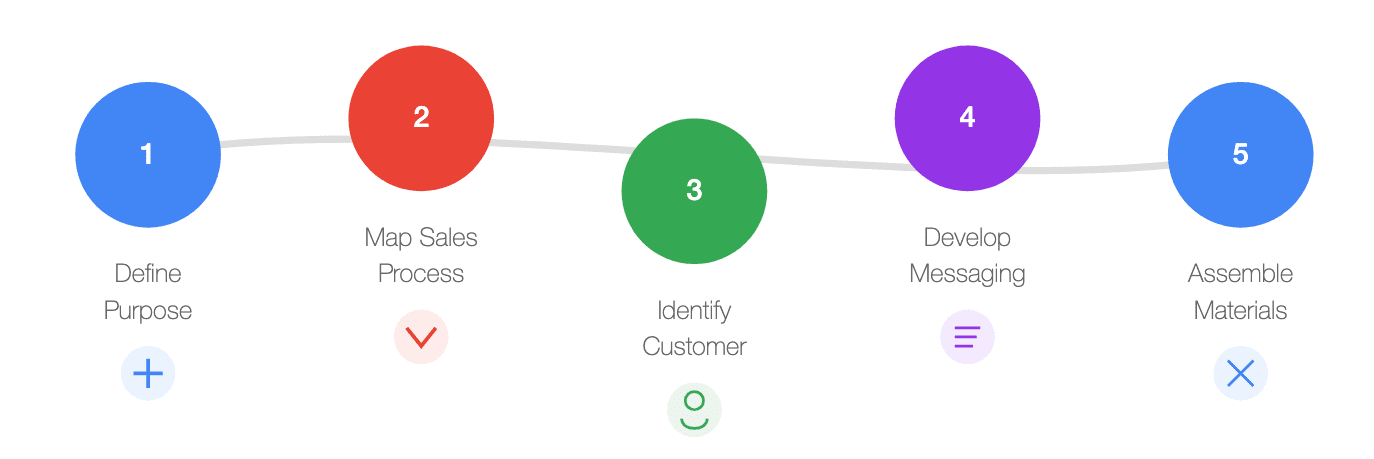
Step 1. Define Your Purpose and Set Clear Objectives
Before you draft a single line, ask yourself: Why am I building this playbook? The purpose could vary from reducing the sales cycle length, improving onboarding processes, or even increasing overall conversion rates. Clarify these goals. Short, sharp objectives like, “Increase win rate by 25% in Q3” can be incredibly motivating and focus your team on achieving tangible results.
Remember: A playbook without a defined purpose is like a ship without a compass. Use industry benchmarks and internal analytics to set realistic targets. According to research from Sales Management Association, companies that align their playbook objectives with clear, measurable outcomes see a 20-30% improvement in performance metrics within the first year of implementation.
Step 2. Map Out Your Sales Process
Break down the sales cycle into distinct stages—from prospecting to closing the deal. List each step and describe what success looks like at every point. For instance, in the prospecting phase, specify the methods: cold calling, email outreach, and LinkedIn networking. Define what constitutes a “qualified lead” versus a “prospect” or “opportunity.”
Here, simplicity is your friend. Use flowcharts and diagrams to represent stages. This visual aid not only helps in understanding but also in communicating the process structure across the team. As a DataDab strategist, you know that clarity in process design is directly linked to higher team adoption rates.
Step 3. Identify Your Ideal Customer and Build Buyer Personas
Your sales playbook is only as good as the audience it targets. Take a deep dive into your customer data. This involves:
• Segmenting your market based on firmographics, demographics, behavior, and technographic data.
• Building detailed buyer personas that highlight specific challenges, goals, and preferences. Include quotes from customer interviews, purchase history snapshots, and feedback collected from previous interactions.
A well-documented persona should answer: Who are they? What are their pain points? What drives their purchasing decisions? And how can you uniquely solve their problems? For instance, a thriving e-commerce client might reveal that over 60% of their revenue comes from repeat business—a nuance that can shape your upselling strategy.
Step 4. Develop Your Messaging and Value Proposition
Your messaging is your pitch amplified through every interaction. Begin with a compelling elevator pitch that succinctly conveys your unique value proposition. Does your solution save time, reduce errors, or inspire innovation? Craft clear, benefit-oriented messaging that addresses these points head-on.
Break your messaging into:
• Core value messaging, which is consistent across all channels.
• Scenario-specific messaging that adjusts based on industry type, persona, and stage of the sales funnel.
It’s essential to include scripts for common scenarios—be it an introductory call, a product demo, or handling objections. At DataDab, we advocate for a conversational yet persuasive tone that speaks directly to the customer’s needs. It’s about sparking a dialogue, not delivering a monologue.
Step 5. Assemble Sales Materials and Templates
No playbook is complete without a repository of ready-to-use sales materials. This should include:
• Email templates and call scripts.
• Presentation decks that outline product benefits.
• Case studies, testimonials, and proof-of-concepts that showcase success stories.
Each piece should be easily accessible and regularly updated to reflect the latest market trends and product innovations. Remember, a dynamic playbook is a living document that grows along with your organization.
Step 6. Set Clear KPIs and Metrics
How do you know your sales playbook is working? Define key performance indicators (KPIs) at every stage of your sales cycle. These may include conversion rates, average deal sizes, sales cycle durations, and customer acquisition costs. Use both qualitative feedback and quantitative data to continuously hone your strategy.
For example, one notable study by the Harvard Business Review found that monitoring and implementing dynamic adjustments based on performance metrics can lead to a 15% increase in revenue within six months. Incorporate dashboards and regular review meetings into your playbook to maintain accountability and momentum.
Step 7. Develop a Training and Onboarding Program
A playbook isn’t effective if it gathers dust on a shelf. It needs to be integrated into every facet of your team’s development. Develop training modules, role-playing exercises, and orientation materials that are aligned with your sales process. The goal is to ensure everyone—from rookies to veterans—internalizes the playbook’s best practices.
At DataDab, we’ve seen firsthand that incorporating periodic training sessions and live coaching can reduce ramp-up times by 40%. Combine in-person workshops with digital learning tools to cater to different learning styles and keep your team engaging and informed.
Step 8. Choose a User-Friendly Format
Your playbook must be accessible. Whether it’s a digital version hosted on a collaboration platform or a printed binder for face-to-face meetings, simplicity is key. Use clear headings, intuitive navigation, and visual aids such as infographics and flowcharts. The easier it is to digest, the more likely it is to be used daily by your team.
Step 9. Establish a Process for Continuous Improvement
The market changes fast. What works today might be obsolete tomorrow. Establish a feedback loop that allows your team to contribute to the playbook’s evolution. Schedule regular updates based on team feedback, customer insights, and competitive analysis. A quarterly review session often sparks innovative tweaks that keep your playbook relevant and highly effective.
Components of an Effective Sales Playbook
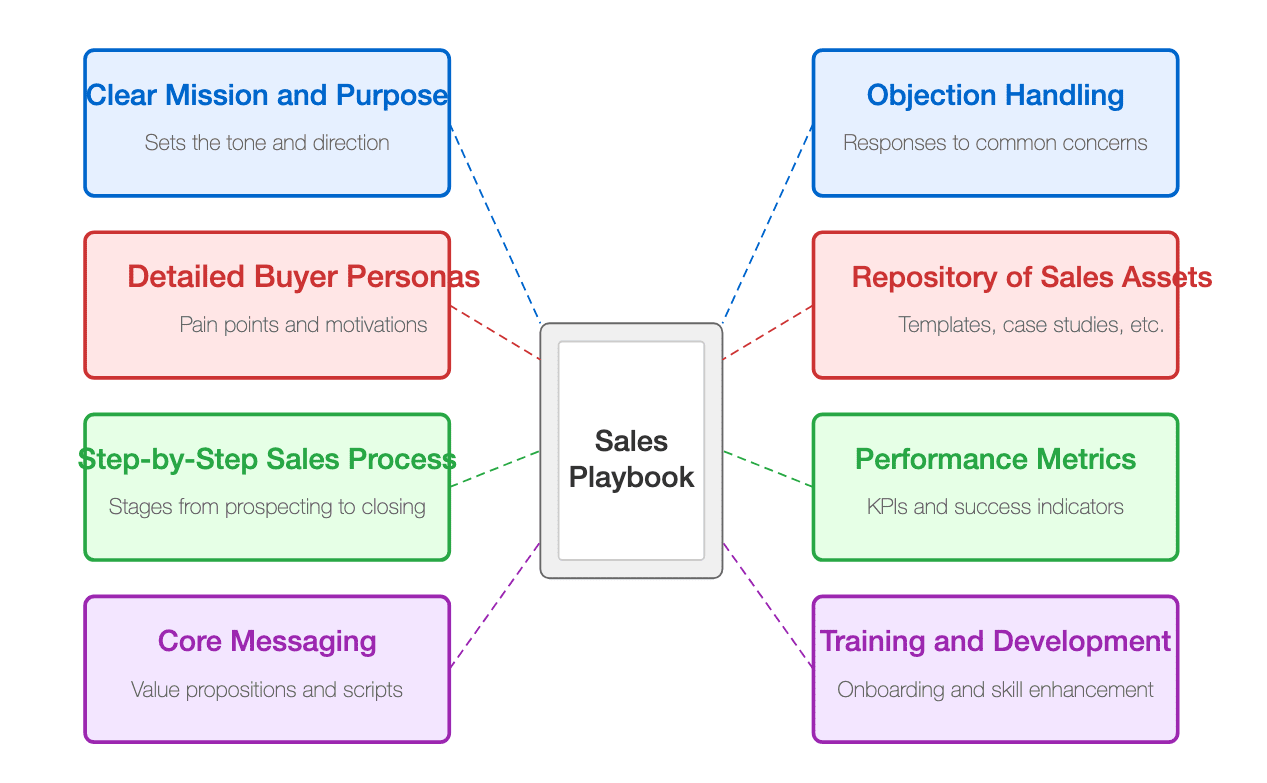
A powerful sales playbook is built on several core components that work together to provide direction, inspiration, and actionable strategies. Each element should be meticulously crafted, ensuring that the overall document is informative, and engaging and easy to navigate.
| Component | Description | Impact/Benefit |
|---|---|---|
| Buyer Personas | Detailed profiles outlining ideal customer demographics and behavior | Enables targeted messaging and customized outreach |
| Sales Process | Clearly defined stages from prospecting to closing | Provides consistency, clarity, and a repeatable framework |
| Messaging and Value Proposition | Articulates unique benefits and key selling points | Builds trust; drives engagement and higher conversion rates |
| Objection Handling | Scripts and strategies for managing common sales objections | Enhances credibility; increases win rates |
| Sales Resources | Collection of templates, case studies, and collateral | Empowers sales teams with proven materials; saves time |
| Performance Metrics | Defined KPIs and tracking dashboards | Facilitates data-driven decision-making and continuous refinement |
| Training and Development | Ongoing training modules, role-playing, and onboarding support | Accelerates ramp-up and ensures consistent skill enhancement |
Clear Mission and Purpose
Begin your playbook with a concise statement of purpose. Explain why the playbook exists. Is it to increase efficiency? To scale best practices across multiple teams? A clear mission sets the tone and gives every user a tangible reason to embrace the document. For example, you might say, “Our mission is to empower every team member to close deals with confidence, integrity, and precision.”
Detailed Buyer Personas
Revisit the insights from your market research. Include comprehensive buyer personas documented down to the last nuance. This section should outline demographic details, pain points, challenges, and buying motivations. Use real quotes from customer interviews. The more detailed your personas, the better your sales team can tailor their approach for maximum impact.
Step-by-Step Sales Process
Outline every stage of your sales cycle in a logical, sequential manner. From prospecting to closing, each stage should include actionable steps, key activities, benchmark criteria, and decision points. Use visuals—such as diagrams and flowcharts—to illustrate the process. This section is the backbone of your playbook, ensuring that every team member understands their role in transforming leads into customers.
Core Messaging and Value Propositions
Dedicate a section to your brand’s voice and messaging. It should include:
• A compelling elevator pitch
• Detailed product benefits
• Scripts for different scenarios (initial contact, product demo, follow-up)
• Common objections and pre-formulated responses
It’s essential to keep the messaging adaptable. For example, tailor the language to suit different buyer personas or market segments, ensuring that the message resonates regardless of who is reading it.
Objection Handling and Negotiation Tips
Include a dedicated section on addressing common objections. Whether it’s price concerns, competitor comparisons, or feature limitations, your playbook should provide transparent, empathetic responses. Include negotiation tips that empower your team to transform objections into opportunities and build trust through informed dialogue. These sections might feature quotes from sales veterans or data such as, “According to a recent study by Gartner, effective objection handling can boost conversion rates by up to 18%.”
Repository of Sales Assets
Your sales team needs quick access to proven assets. Create a centralized repository for:
• Email templates
• Proposal examples
• Presentation slides
• Case studies and testimonials
This is where you incorporate all the dynamic resources your team might need. For maximum efficiency, make sure these materials are updated frequently to reflect the latest successes and customer feedback.
Performance Metrics and KPIs
Detail the key performance indicators that matter most to your organization. Each metric should be clearly defined: What is a “win”? How do you measure sales cycle efficiency? What thresholds indicate success versus the need for improvement? Set up dashboards and schedules for reviewing these metrics. Emphasize that these numbers are targets, and indicators that help refine the overall strategy.
Training and Development
No playbook is fully effective without continuous learning. Include detailed training materials, role-play scenarios, onboarding checklists, and even certification modules if necessary. Showcase success stories from team members who have significantly improved their performance by following the playbook’s guidelines.
Feedback and Revision Process
The market is fluid, and so should be your playbook. Document a clear process for collecting feedback from the sales team and outline how often the playbook will be reviewed. This iterative process ensures that the playbook remains a living document, evolving as the company grows and market conditions change.
Sales Playbook: Examples and Case Studies
Real-world examples breathe life into theory. They provide tangible proof of concept and serve as an inspiration for how your own playbook can drive results.
HubSpot’s Playbook: Personalization Meets Process
Consider HubSpot. Their playbook is a masterclass in personalization fused with structured process. HubSpot’s approach centers on detailed buyer personas and a clearly mapped-out customer journey. Their playbook includes:
• Customized email sequences tailored to different buyer stages
• Objection handling guides based on real customer feedback
• Regular updates driven by performance analytics
HubSpot’s success isn’t accidental. Internal reports indicate that after the introduction of their formalized sales playbook, their conversion rates soared by nearly 25% within a year. Their emphasis on data-driven personalization has become a gold standard in the industry.
Salesforce: Integrating Multichannel Strategies
Salesforce is another sterling example. Their sales playbook integrates diverse strategies across multiple channels. Whether it’s face-to-face meetings or digital outreach, Salesforce ensures that:
• Every interaction is consistent with the overarching strategy.
• Real-time data analytics inform the approach.
• Training modules enable ongoing skill development.
After implementing their integrated playbook, Salesforce reported a dramatic reduction in sales cycle length, while simultaneously increasing overall customer satisfaction scores. Their method demonstrates that a well-coordinated, multi-dimensional approach can create a more interconnected and efficient sales ecosystem.
LinkedIn and the Rise of Social Selling
LinkedIn’s playbook takes a unique approach by integrating social selling techniques. Leveraging its own platform, LinkedIn gears its playbook around:
• Building authentic personal brands among sales reps.
• Leveraging the Social Selling Index (SSI) to measure engagement and outreach.
• Utilizing rich content and thought leadership to nurture relationships.
In this digital age, LinkedIn’s social selling tactics have led to a significant increase in lead quality. Sales reps using these strategies have seen engagement rates improve by over 30%, proving that modern sales techniques must evolve in tandem with the digital landscape.
Small-to-Medium Enterprises: Tailoring the Playbook
Not every company operates like a tech giant. For SMBs, the playbook can be game-changing as well. Take, for instance, a regional software company that revamped its sales playbook to include:
• Streamlined sales processes designed specifically for local markets.
• Customizable email templates that reflect regional nuances.
• Localized success stories that resonate with community values.
After rolling out this tailored playbook, the company saw a 15% boost in lead conversion and a marked improvement in customer retention. This case study perfectly encapsulates how even smaller organizations can harness the power of a strategic, data-backed playbook.
Lessons from the Field
The central lesson underlying all these examples is clear: a sales playbook is not a static document. It’s a continuously evolving resource that adapts to market trends, customer feedback, and internal performance metrics. Whether you’re part of a global corporation or a budding startup, the strategic insights embedded in a well-designed playbook will empower your team to achieve extraordinary results.
Downloadable Sales Playbook Templates
One of the best ways to kickstart your sales playbook journey is to leverage existing templates. Free, downloadable templates serve as a solid foundation on which you can build a unique, company-specific guide. Here are a few recommendations to get started:
Template Resources
For a visually appealing and highly customizable starting point, check out Free Sales Playbook Templates by Visme. Their templates allow you to apply your own brand colors, fonts, and logos, as well as incorporate data visualizations. If you’re looking for a sales playbook framework that emphasizes alignment and consistency, visit the Sales Playbook Template | Free Download from Sales Enablement Collective. For a comprehensive resource that explains best practices as you build your playbook, explore Dialpad’s guide along with their free resource at Dialpad’s Free Sales Playbook Template.
For a more dynamic and AI-enhanced approach, consider Tome’s AI-Powered Sales Playbook Template, which offers helpful customization tips along with visual storytelling elements. You can also find customizable templates over at Taskade’s Sales Playbook if you’re interested in an online collaborative option. For tried and tested formats that have helped many organizations streamline their processes, visit SmartPlaybooks’ Templates. Finally, for an interactive, professional design that you can personalize and download as a high-quality PDF, take a look at Flipsnack’s Professional Sales Playbook Template.
Customizing Templates for Your Organization
Even the best templates need a personal touch. Begin by integrating your company’s brand elements—logos, color schemes, and fonts. Then tailor the content to reflect your unique market position. Ask yourself:
• What sets my company apart?
• How do our customers define success?
• What unique challenges do we face in our industry?
Integrate internal data, market research, and real feedback into the template. The goal is to ensure the final playbook is a copy-paste of existing resources, and a tailored, actionable guide that resonates with your team and drives results.
DataDab’s own experience in marketing consulting reinforces this approach. By leveraging customizable templates and infusing them with nuanced, industry-specific insights, our clients have seen remarkable improvements in both team performance and overall sales outcomes.
Making It Accessible
In today’s fast-paced business environment, accessibility is paramount. Host your playbook on a centralized repository or digital platform that supports regular updates and version control. Cloud-based solutions like Google Drive, SharePoint, or specialized sales enablement platforms ensure that every team member has the most current version at their fingertips.
Best Practices for Updating and Maintaining Your Playbook
A sales playbook is not a one-and-done document. It must evolve in response to new challenges, customer feedback, and market trends. Here’s how to keep your playbook in top shape:
Regular Review Cycles
Schedule periodic review sessions—quarterly or biannually—to assess and update the content. These reviews should involve sales reps, managers, and even members of the marketing and product teams. Use concrete data from performance metrics to justify changes.
Gather Continuous Feedback
Establish channels for your team to provide input. Work with surveys, one-on-one feedback sessions, and focus groups. Ask questions such as, “What part of the playbook is most useful?” or “Where do you encounter roadblocks?” This iterative feedback ensures that the playbook remains practical and relevant.
Monitor Emerging Trends
Stay abreast of the latest trends in sales etiquette, technology, and buyer behavior. Incorporate relevant statistics from reputable sources such as Gartner, Forrester, and HubSpot. For example, integrating insights about AI-driven sales tools has become vital as modern technologies reshape customer interactions.
Use Data to Drive Change
Leverage your performance dashboards to identify what’s working and what isn’t. If a particular approach consistently yields higher conversion rates, highlight and standardize it within the playbook. Conversely, if certain tactics no longer deliver results, remove or revamp them. Data-driven maintenance is key.
Foster a Culture of Ownership
Make it everyone’s business. Encourage sales reps to contribute updates and suggest improvements. When your team feels a sense of ownership over the playbook, adoption rates soar and the document becomes a living embodiment of your enterprise’s collective wisdom.
Aligning Your Sales Playbook with Marketing and Product Teams
A siloed approach is a surefire way to stifle growth. In today’s interconnected marketplace, success hinges on clear, consistent collaboration across departments. Your sales playbook should not exist in isolation—it needs to align seamlessly with your marketing and product strategies.
Shared Goals and Unified Messaging
Establish common objectives that all teams are working toward. This could be a shared focus on customer acquisition, revenue growth, or specific market segments. Unified messaging across sales, marketing, and product can solidify your brand’s identity and ensure that every customer interaction reinforces your value proposition.
At DataDab, we work closely with cross-functional teams to develop integrated strategies. For instance, the marketing team might launch a new campaign highlighting a product’s unique benefits. The sales playbook then details how to address related customer questions and objections, ensuring that the messaging remains consistent and persuasive.
Cross-Departmental Workshops
Regular workshops or strategy sessions can break down barriers and cultivate mutual understanding. Invite representatives from sales, marketing, and product development to review the playbook, share insights, and propose updates. Such collaborative sessions often uncover hidden synergies and foster a culture of continuous improvement.
Shared Data and Analytics
Data doesn’t lie. When teams share insights from their respective analytics, the entire organization can polish its strategy. Sales metrics, campaign performance data, and product usage statistics should be interwoven to provide a holistic view of customer engagement. Tools like CRM integrations and unified dashboards facilitate this cross-pollination of ideas and ensure that every update to the playbook is informed by real-world performance.
Measuring the Impact of Your Sales Playbook
How do we know that our playbook is more than just a document gathering dust? Measurement is key. In this section, we’ll explore the metrics, KPIs, and qualitative indicators that reveal the true impact of your sales playbook.
| Metric | Definition | Benchmarks/Targets | Insight/Strategy |
|---|---|---|---|
| Win Rate | Percentage of deals closed vs. total opportunities | Aim for a 20-30% increase post-playbook adoption | Higher win rates indicate effective, standardized strategies |
| Sales Cycle Duration | Time taken to convert a prospect into a customer | Target a 15-20% reduction with process improvements | Shorter cycles reflect operational efficiency |
| Average Deal Size | Average revenue generated per sale | Increase through better qualification and upselling tactics | Higher averages suggest enhanced value delivery |
| Onboarding Time | Time required for new hires to reach full productivity | Potentially reduce by up to 40% | Faster ramp-up supports scalable growth and cost efficiency |
| Customer Retention | Percentage of customers who return or stay engaged | Aim for high retention rates through consistent service | Improved retention signals strong ongoing value and satisfaction |
Quantitative Metrics
• Win Rate:
A fundamental metric that measures the percentage of deals closed versus total opportunities. A well-structured playbook can boost win rates by offering consistent messaging and proven tactics.
• Sales Cycle Duration:
The time it takes to convert a prospect into a customer. Shortened sales cycles, often by 15-20%, reflect streamlined processes and effective tactics.
• Average Deal Size:
Evaluate whether the playbook supports higher-value deals through better qualification, improved objection handling, and stronger negotiation strategies.
• Onboarding Time:
Measure the time new sales reps take to become fully productive. An effective playbook can cut onboarding time dramatically, sometimes by as much as 40%.
Data from multiple sources, including insights from the Sales Management Association, reinforce the notion that a rigorously maintained playbook is directly correlated with enhanced performance metrics.
Qualitative Feedback
Numbers are critical, but so is the voice of your team. Use surveys, focus groups, and one-on-one coaching sessions to gather feedback on:
• The clarity and usability of the playbook. • Which sections are most helpful. • Areas that need further explanation or updates.
This qualitative data, when paired with your quantitative KPIs, provides a comprehensive picture of the playbook’s effectiveness.
Setting up a Review Framework
Develop a routine review protocol. For example, host monthly mini-reviews for immediate feedback and quarterly in-depth analysis sessions. Leverage technology to create dynamic dashboards that display real-time updates on performance metrics. The end goal is to create a feedback loop that continuously improves the playbook while ensuring it remains closely aligned with shifting market realities.
Common Mistakes in Sales Playbook Creation
Even the best-intentioned playbooks can falter without careful planning. Here we address the most common missteps—and how to avoid them.
| Common Mistake | Consequence | Mitigation Tactic | Expected Outcome |
|---|---|---|---|
| Undefined Objectives | Lack of direction and measurable success | Set clear, measurable goals aligned with business KPIs | Focused strategy with aligned team efforts |
| Overcomplicating the Playbook | Excessive detail overwhelms users, leading to low adoption | Simplify language and design clear, visual layouts | Improved usability and higher adoption rates |
| Ignoring Team Feedback | Outdated tactics and low morale among sales reps | Establish regular feedback loops and update sessions | Continuous improvement and enhanced team engagement |
| Stale Content | Playbook becomes obsolete, missing market trends | Schedule periodic reviews and incorporate new insights | Dynamic, relevant content that maintains competitive edge |
Lack of a Clear Objective
Without clearly defined goals, a playbook can quickly become a hodgepodge of ideas with no actionable direction. Establishing and communicating clear objectives is non-negotiable.
Overcomplicating the Process
Clarity trumps complexity. In an era where speed matters, overly detailed documentation may overwhelm your team rather than assist them. Focus on actionable, digestible steps rather than exhaustive detail.
Ignoring Team Input
The people on the front lines—the sales reps—know what works and what doesn’t. Failing to incorporate their insights can result in a playbook that feels detached from reality. Build in regular intervals for team feedback and make adjustments accordingly.
One-Size-Fits-All Approach
Different roles and markets often require unique approaches. A generic playbook that does not account for these variations can lead to inefficiencies and missed opportunities. Customize tactics for different customer segments and sales scenarios.
Infrequent Updates
A playbook that isn’t continuously refined becomes obsolete quickly. The market and technology are in constant flux, and so should your strategies be. A stagnant playbook is a recipe for declining performance.
Insufficient Training and Adoption
Even the most brilliant playbook fails without proper training. Ensure that every team member understands the content and is held accountable for its implementation through targeted training and follow-up.
Future Trends in Sales Enablement and Playbooks
We are standing on the cusp of a new era in sales. Technology, data, and changing buyer behaviors are reshaping how we approach sales enablement. Here’s a glimpse into what the future holds.
AI-Driven Sales Strategies
Artificial intelligence is no longer just a buzzword—it’s becoming an integral part of the sales process. Machine learning algorithms now help predict buying patterns, personalize outreach, and even offer real-time coaching based on live interactions. In the near future, expect your playbook to integrate AI-driven insights that dynamically adjust tactics on the fly.
Real-Time Data and Adaptive Playbooks
Static documents are giving way to adaptive systems that update in real time. Imagine a digital playbook that automatically adjusts recommendations based on current KPI performance, competitor activity, and changing market trends. This “living playbook” concept will not only streamline decision-making but also enhance responsiveness to new challenges.
The Rise of Digital Sales Rooms
Digital sales rooms are emerging as centralized hubs where personalized content, live analytics, and interactive tools converge. These platforms will further blur the lines between traditional sales collateral and immersive, real-time digital engagement environments.
Increased Emphasis on Buyer Enablement
Modern buyers expect a sales pitch, and an enabling experience. Rather than being sold to, buyers want to be educated and guided through the decision-making process. Future playbooks will include robust buyer enablement frameworks, integrating comprehensive product information, interactive demos, and resource libraries.
Hyper-Personalization
Generic messaging is a relic of the past. Advanced marketing analytics now allow for hyper-personalized campaigns tailored to individual buyer profiles. Sales playbooks of the future will include micro-targeted messaging, adaptive content strategies, and curated outreach tactics designed to resonate on a deeply personal level.
Collaborative Ecosystems
As the convergence of sales, marketing, and product becomes even tighter, expect an increased focus on collaboration. Future sales playbooks will feature interlinked workflows that empower cross-departmental collaboration, ensuring that every interaction is backed by a unified, comprehensive strategy.
Final Thoughts
The journey to creating a winning sales playbook is a marathon, not a sprint. It requires precision, passion, and an unyielding focus on continuous improvement. From the initial spark of an idea to the ongoing evolution of strategies, every element of your playbook has the potential to transform your sales operations.
This guide has taken you through the foundational elements—from defining your buyer personas, mapping your sales cycle, to integrating state-of-the-art technology. It has provided an in-depth look at real-world examples, detailed methodologies, and common pitfalls to avoid. Moreover, it has showcased the importance of aligning your playbook with the broader organizational strategy, ensuring that sales, marketing, and product teams work as one cohesive unit.
In a world where every contact, every conversation, and every decision matters, having a comprehensive, data-driven, and dynamic sales playbook is not just an option—it’s a competitive necessity. Our hope is that this guide serves as a roadmap to empower your sales team, boost your conversion rates, and ultimately, drive your organization’s success.
Thank you for joining us on this deep dive into building a winning sales playbook. Embrace the insights, test new strategies relentlessly, and remember: the best playbooks are those that evolve with you. At DataDab, we’re proud to partner with visionary companies that dare to dream big and execute even bigger. Let this guide be your first step toward a future where every sales interaction is a strategic win.
FAQ
1. What is a sales playbook and why is it important?
A sales playbook is a comprehensive guide that standardizes your sales process by outlining strategies, messaging, buyer personas, and step-by-step procedures to convert prospects into customers. Its importance lies in the ability to create consistency, reduce onboarding time, and ensure that every member of your team has clear, actionable steps to follow. Companies that implement sales playbooks often see measurable improvements in win rates and overall productivity, making it an essential tool in today’s competitive marketplace.
2. How do I start building a sales playbook?
The first step is to clearly define the purpose and goals of your playbook. This means identifying key performance indicators, understanding your target audience through detailed buyer personas, and mapping your entire sales journey. Begin with a brainstorming session that involves key stakeholders from sales, marketing, and product teams to ensure that every perspective is captured. By laying a solid foundation, you set the stage for a playbook that is both strategic and practical.
3. How should I structure my sales playbook for maximum impact?
A well-structured sales playbook typically starts with an introduction to your company’s mission and the playbook’s objectives. It then delves into detailed sections on buyer personas, the step-by-step sales process, tailored messaging, objection handling techniques, and a repository of sales assets such as templates and case studies. The structure should be intuitive and easy to navigate so that team members can quickly find the information they need, ensuring that the playbook acts as a reliable daily tool rather than a rarely revisited document.
4. How can I ensure that my sales playbook aligns with marketing and product strategies?
Alignment is achieved by establishing shared objectives and maintaining a constant flow of communication between departments. Engage sales, marketing, and product teams in collaborative sessions where everyone contributes insights about customer needs and market trends. When the messaging and strategies are consistent across all teams, your sales playbook becomes a central document that not only drives sales but also reinforces brand identity and ensures that every customer interaction is coherent and meaningful.
5. What are the key components that should be included in a sales playbook?
A robust sales playbook should include a clear mission statement, detailed buyer personas, a well-defined sales process, tailored messaging and value propositions, objection handling strategies, and a repository of sales assets. It should also have clearly defined performance metrics and regular training components. Together, these elements provide a holistic guide that enables your sales team to operate with confidence and deliver consistent, measurable results.
6. How do I measure the effectiveness of my sales playbook?
The effectiveness of a sales playbook can be gauged using both quantitative and qualitative metrics. Track KPIs such as win rates, sales cycle duration, average deal size, and onboarding time reductions to quantify improvements. In addition, gather feedback from your sales team through regular debrief sessions and surveys. When you combine hard data with personal insights, you get a complete picture of how well your playbook is performing and where you may need to adjust your strategy.
7. What common mistakes should I avoid when creating a sales playbook?
One common mistake is failing to set clear objectives, which can lead to a playbook that lacks direction. Overcomplicating the document with unnecessary detail can overwhelm your team, while ignoring feedback from frontline salespeople can make your playbook less practical. It is also important to avoid a one-size-fits-all approach; instead, tailor your playbook to address specific market segments and buyer personas. Regular updates are essential to keep the document relevant in a fast-changing market.
8. How can downloadable sales playbook templates assist in the creation process?
Downloadable templates provide a proven structure and format that saves considerable time in the initial drafting phase. They offer a foundation that you can customize with your own insights, branding, and data. By starting with a template, you benefit from established best practices and design elements that have worked well in other organizations, which you can then refine to accurately reflect your unique sales strategy and market dynamics.
9. How do I foster continuous improvement in my sales playbook?
Continuous improvement is built on a foundation of regular reviews and team feedback. Schedule periodic revisits of your playbook to incorporate new data, address emerging market trends, and refine existing strategies based on performance metrics. Encouraging an environment where every team member feels responsible for suggesting improvements helps ensure that your playbook evolves alongside the market and remains a living, breathing resource.
10. What role does training play in ensuring the success of a sales playbook?
Training is the critical link between having a detailed playbook and achieving measurable sales success. Regular training sessions, role-playing exercises, and live coaching ensure that your team not only understands the playbook but also implements its strategies effectively. By integrating continuous learning and personalized feedback, firms are able to significantly reduce onboarding times and boost the overall adoption and performance of the sales playbook over time.