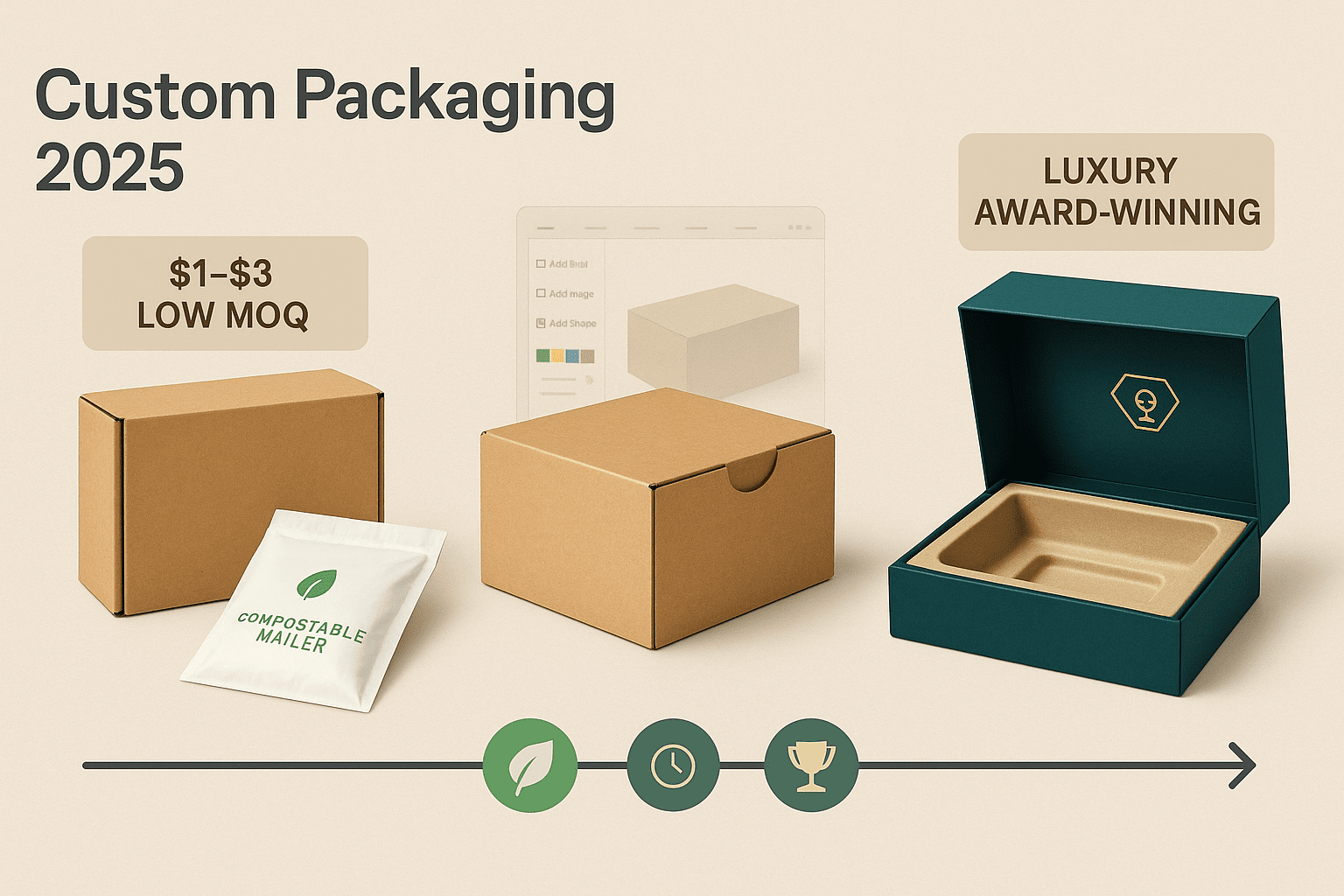
Packaging can make or break a sale—89 percent of shoppers in a 2024 survey said it sways their purchase decision. Legislators are taking note: in December 2024, the European Union provisionally agreed that every package sold in the bloc must be recyclable by 2030. To help you stay ahead, we benchmarked unit prices, minimum order quantities, and verified eco-labels across 40-plus vendors to surface the nine best custom packaging companies for 2025—from $1-a-box disruptors like Arka to award-winning luxury studios such as Zenpack.
How we chose these companies
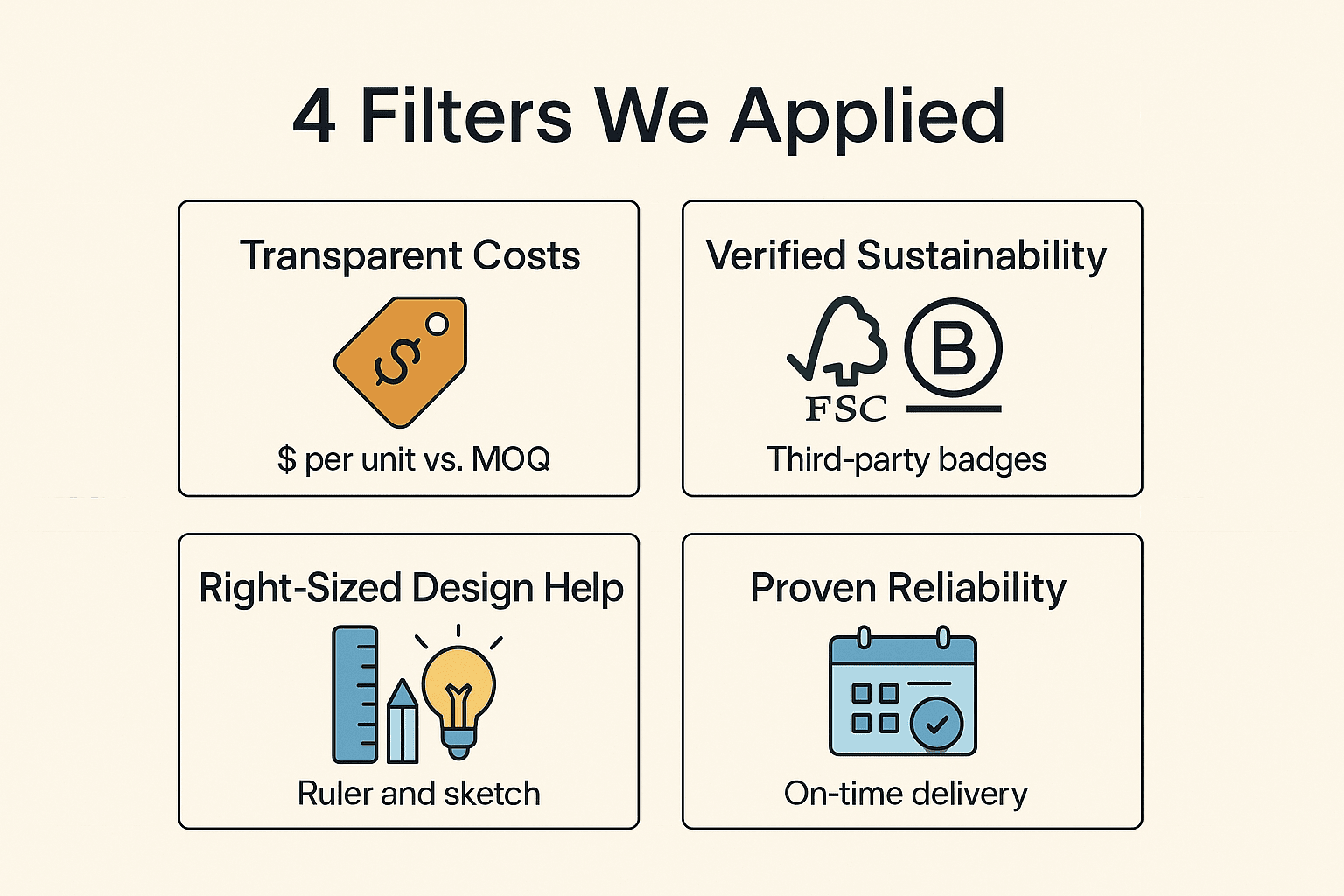
We started with 42 packaging suppliers and applied four filters to separate facts from fluff.
- Transparent costs. We shortlisted vendors that publish unit prices, minimum order quantities (MOQs), and setup fees. Industry guides show MOQs can range from 25 units for digital printers to 1 000 units for offset runs Winpack Printing, so we looked for partners across that spectrum.
- Verified sustainability. We favored companies with third-party badges such as FSC, B Corp, or ASTM-certified compostability, and those that disclose recycled-content percentages.
- Right-sized design help. Some brands only need a drag-and-drop 3-D editor; others want engineers who build shock-proof inserts. Our picks cover both ends.
- Proven reliability. We reviewed client feedback, case studies, and average lead times to confirm each provider can ship on schedule.
Finally, we grouped the winners into budget-friendly partners, eco innovators, and premium full-service teams so you can jump straight to the tier that matches your brand’s goals. For example, the custom luxury packaging provider Zenpack pairs award-winning design with molded-pulp engineering that slashes shipping weight.
Zenpack: one brief, every detail handled
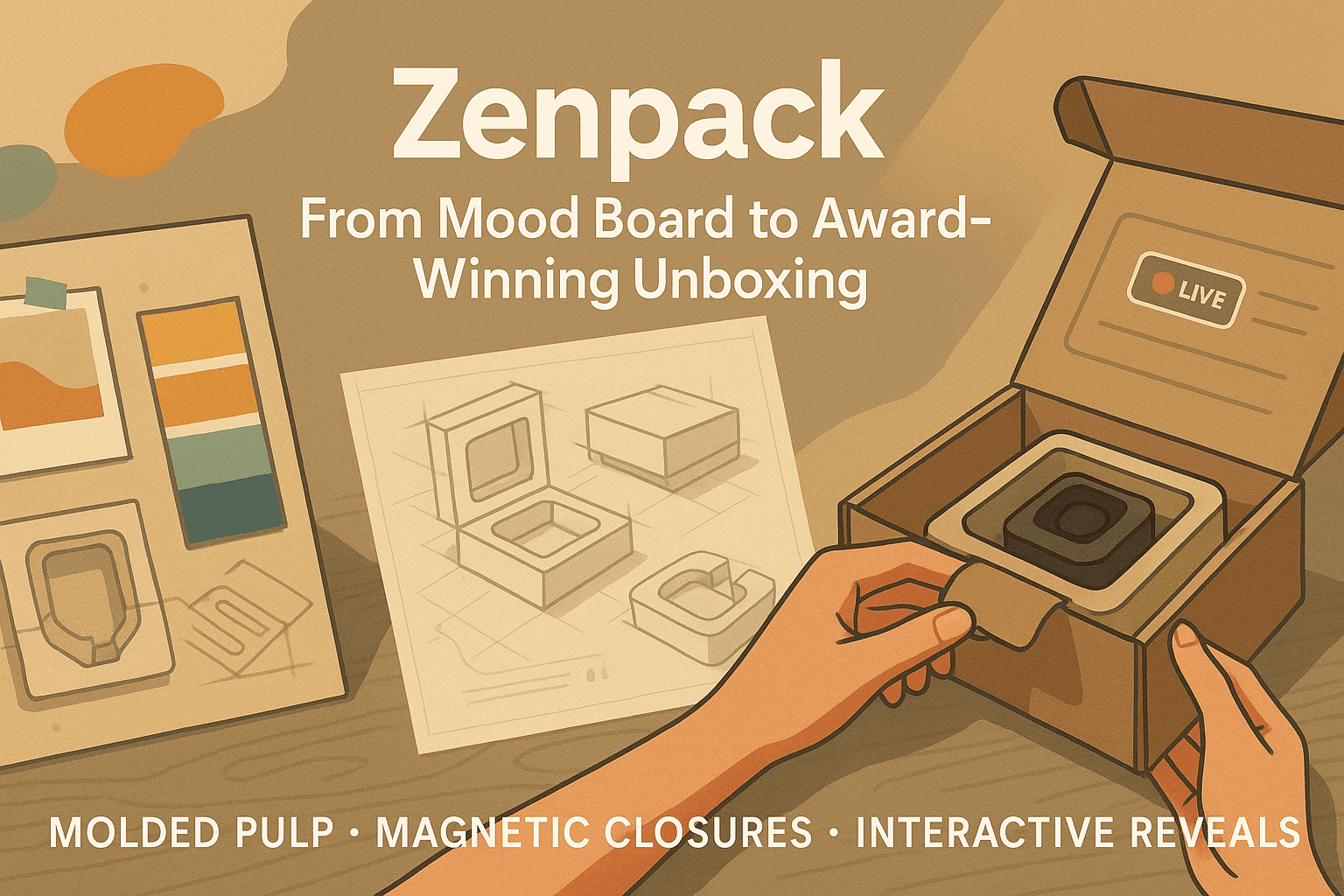
Hand Zenpack a mood board in the morning and you will review structural sketches the same day, thanks to an in-house studio of industrial designers, engineers, and print producers. Those sketches evolve into molded-pulp inserts, magnetic closures, and interactive reveals that turn unboxing into social content.
Proof sits on the trophy shelf. Zenpack’s all-paper Opal Tadpole Camera package took third place at the 2024 Dieline Awards and earned a Pentawards medal for a molded-pulp tray that hides cables. Other recent wins include an iF Gold for BIGFACE Coffee and a Pentawards Silver for the IRL Cube experience.
Sustainability threads through every brief. Engineers replace EPS foam with molded pulp or recycled ocean-bound plastic, and the team specifies soy or algae inks without muting Pantone targets. Prototype kits arrive in 2–3 weeks, giving marketing teams time to photograph, drop-test, and secure approvals before mass production.
U.S Continental Packaging: one vision, every package perfected
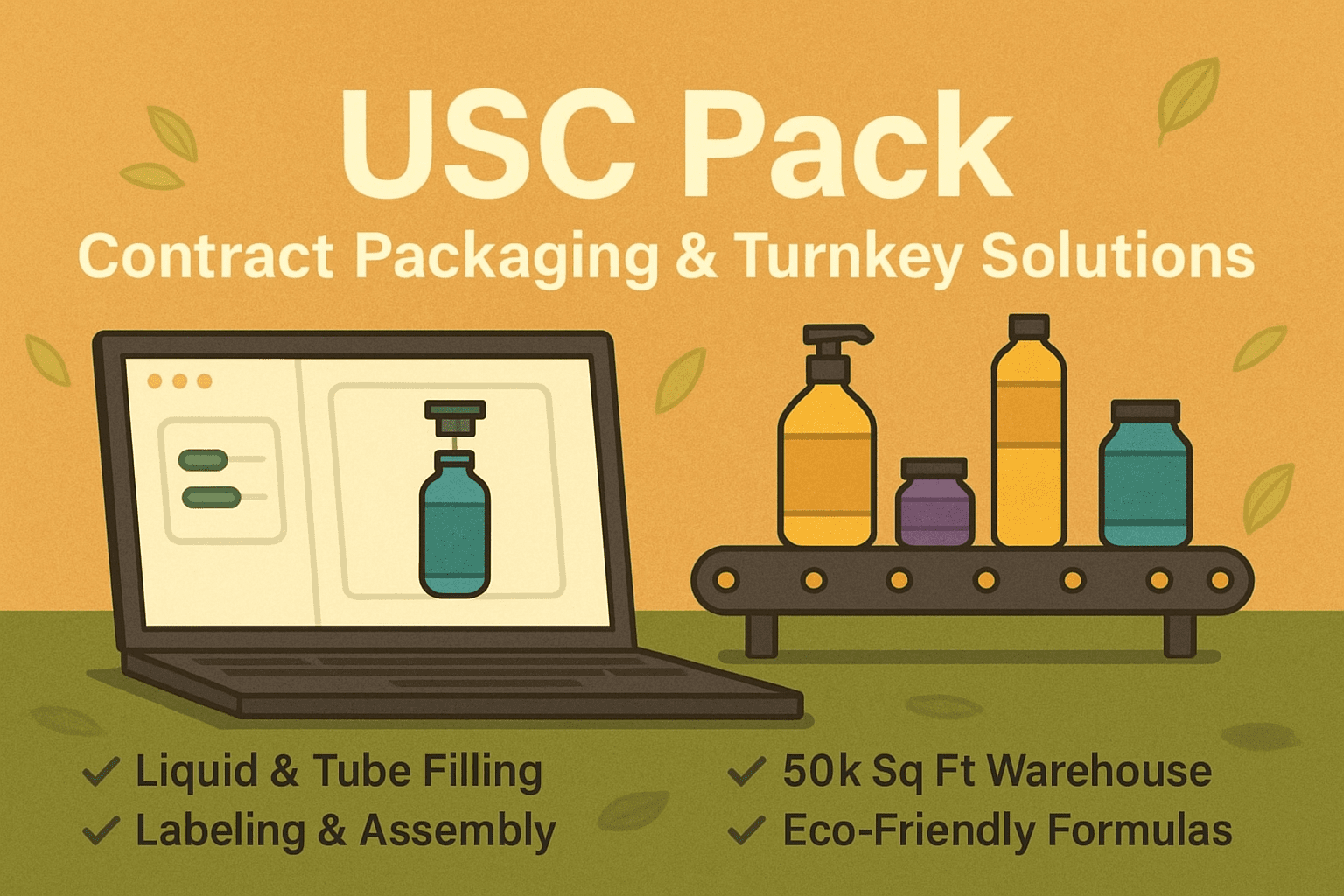
Hand U.S Continental Packaging a brand vision in the morning and by evening you’ll see it translated into structural packaging concepts, thanks to a vertically integrated team of packaging engineers, designers, and production experts. From CAD prototypes to high-end finishing, USC Pack ensures every detail—whether rigid boxes, corrugated mailers, or retail-ready displays—fits seamlessly into brand storytelling and customer experience.
Proof is on display across industries. USC Pack has delivered award-winning packaging solutions for consumer electronics, food & beverage, beauty, and subscription boxes. Their collaborations span from sleek retail launches to large-scale e-commerce rollouts, where custom inserts, protective structures, and premium print finishes turn functional packaging into brand equity.
Sustainability is not an afterthought—it’s baked into the process. The team actively replaces virgin plastics with recycled paper, biodegradable films, or molded pulp, while offering soy-based inks and water-based coatings without compromising print vibrancy. Rapid prototyping, typically within 2–3 weeks, gives marketing and operations teams time to test, photograph, and refine before scaling to full production runs.
Arka: low minimums without the bargain-bin look
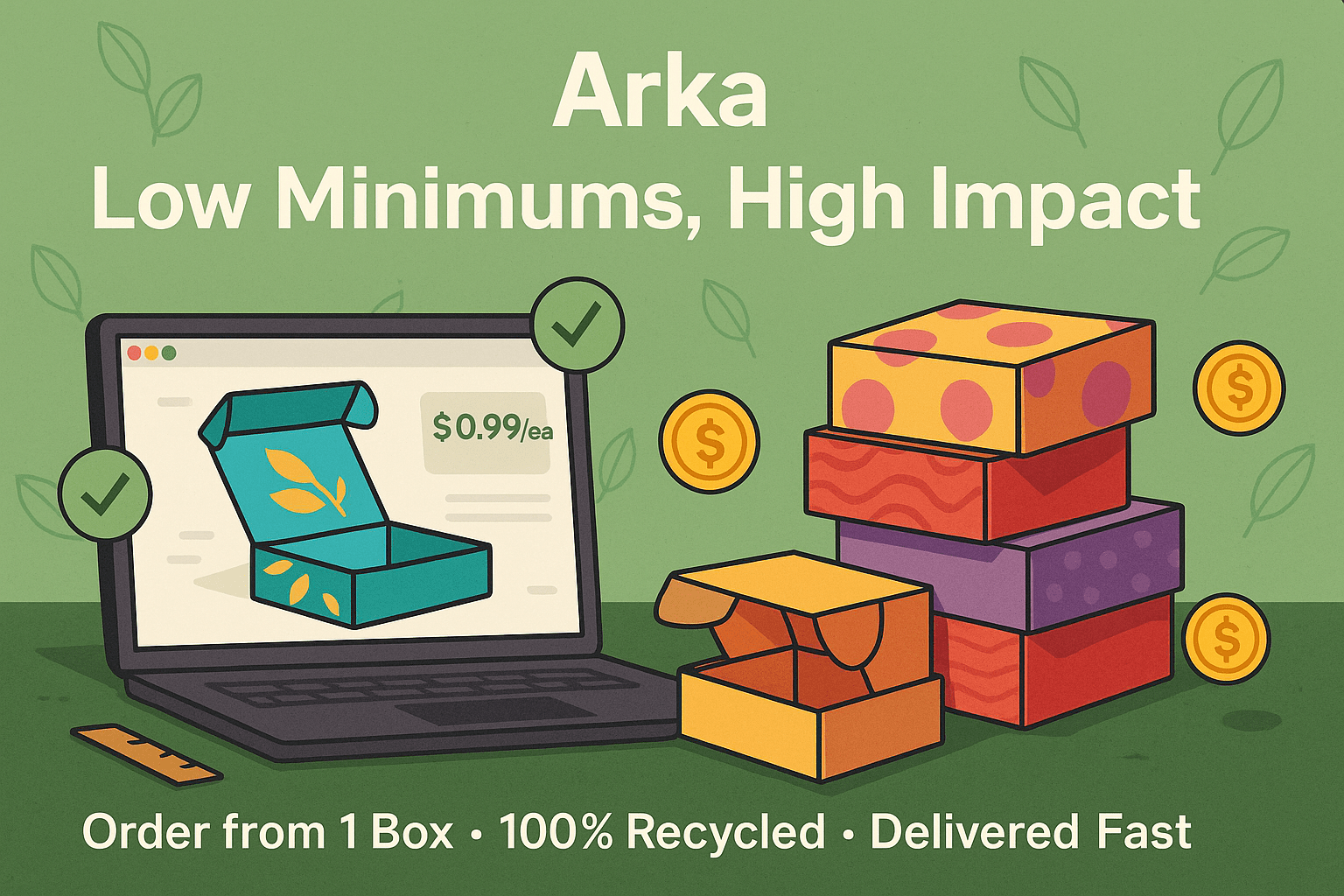
If you’re running a side-hustle or testing a limited drop, Arka lets you go small without looking cheap. You can order just one branded mailer box—or start a 25-unit test run that keeps costs near $0.99 for standard sizes. That flexibility keeps inventory lean and frees cash for ads or product tweaks.
Low volume doesn’t mean low impact. Arka prints on FSC-certified, 100 percent recycled cardboard and offers compostable poly mailers from $0.20 each, so even your first shipment aligns with tightening recyclability rules.
The browser-based 3-D editor shows real-time pricing, and typical production takes 7–10 business days, fast enough for flash sales yet polished enough for unboxing videos. For brands that need professional, custom packaging for small businesses on a tight timeline, Arka delivers speed, simplicity, and sustainability in a single click.
Packlane: design in 3-D, order in ones
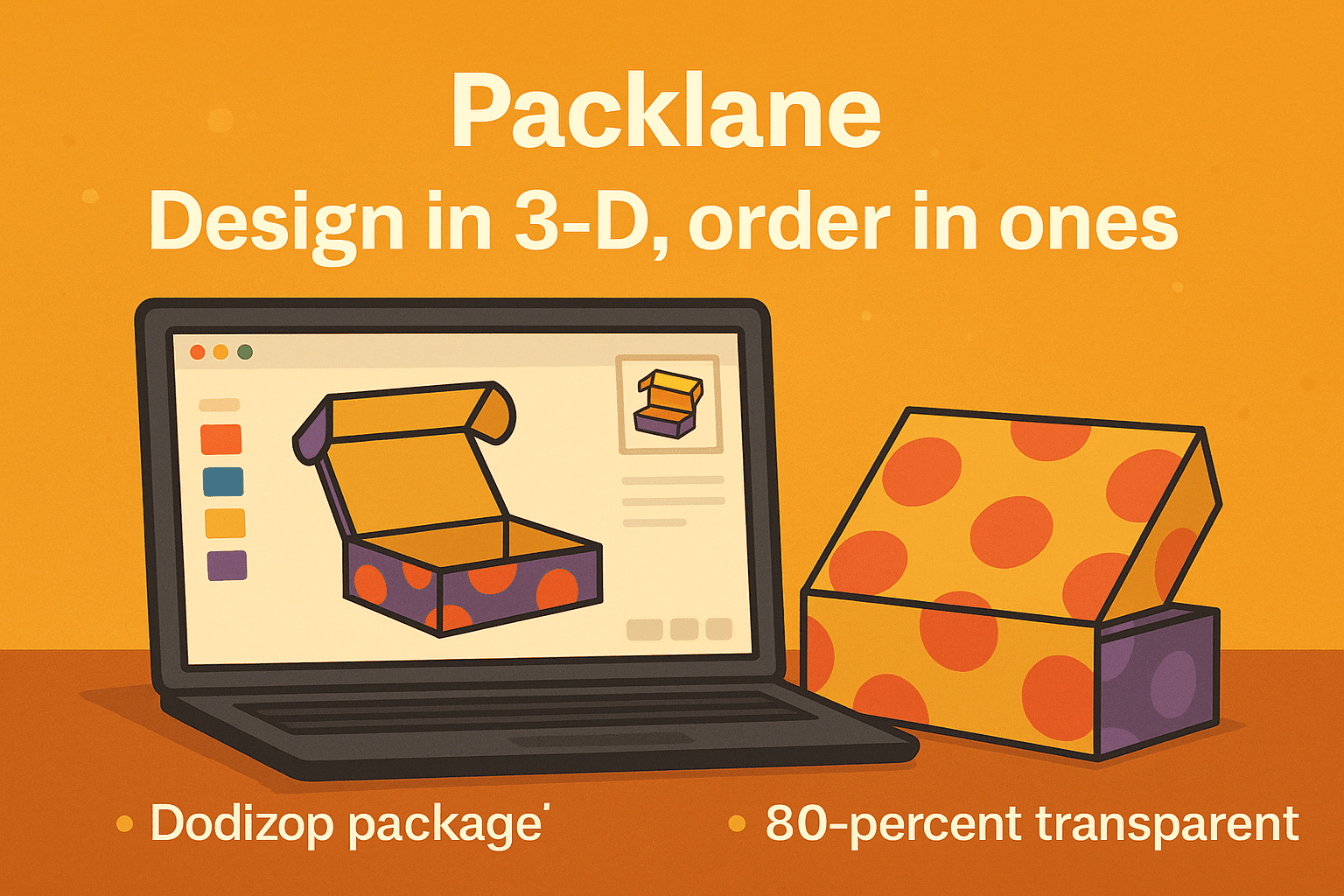
Packlane turns packaging into a click-and-cart moment. Drop your artwork into the browser editor, spin a full-color 3-D preview, and watch live pricing as you tweak dimensions.
There’s no minimum order; the site lets you buy a single box. A standard 6 × 6-inch mailer costs $3.26 each at 250 units and drops as volume climbs. That transparency helps growing brands iterate packaging alongside product updates instead of locking into a huge run.
Sustainability comes standard. All corrugated materials are sourced in North America, and the Econoflex line is 100 percent recycled, recyclable, and offered at a 1-box MOQ.
Typical production turnaround is 7–10 business days, so samples land quickly and feedback loops stay short. If you want creative control without a sales call, Packlane lets you design, price, and check out in the time it takes to refill your coffee.
EcoEnclose: 100-percent recycled, 100-percent transparent
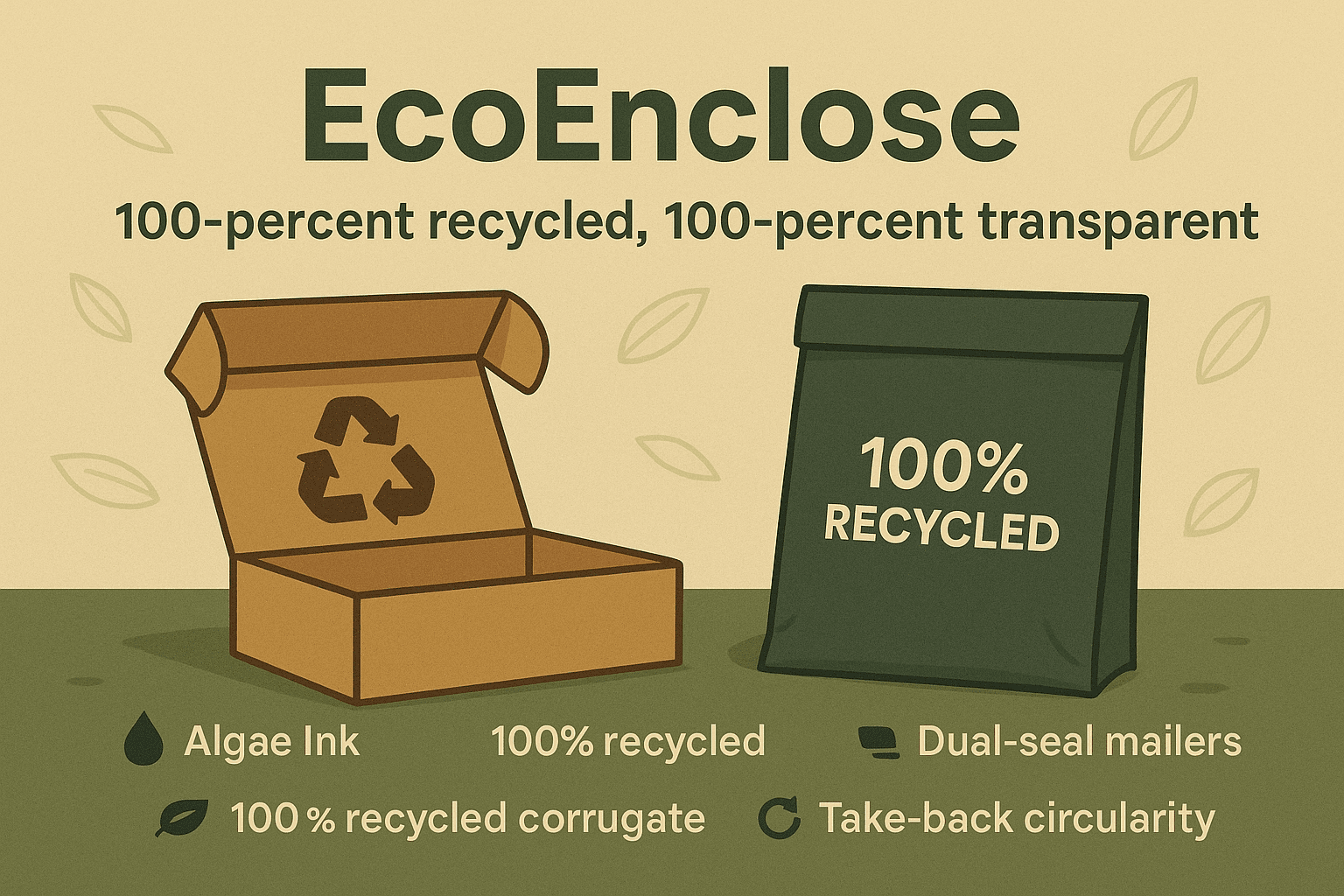
EcoEnclose treats packaging like a living lab. Every SKU lists the exact post-consumer percentage, ink type, and end-of-life path, so you never guess how “green” it really is.
- Materials. The core shipping box is 100 percent recycled corrugate and can be printed in Algae Ink, a black pigment that sequesters more carbon than it emits.
- Mailers. The flagship poly mailer is made from 100 percent recycled LDPE with a dual-seal strip plus a take-back program, letting customers return used film for responsible recycling.
- Circularity. Used sticker liners, tapes, and bubble mailers qualify for similar return streams, turning waste into fresh stock and closing the loop promised in your sustainability report.
Pricing sits a few cents above virgin cardboard, but lighter, right-sized designs often cut carrier surcharges, balancing the total cost. Add free life-cycle guides and live consultations, and EcoEnclose feels less like a vendor and more like a plug-and-play sustainability department for eco-friendly recycled shipping boxes.
Packhelp: click-to-ship eco platform for global brands
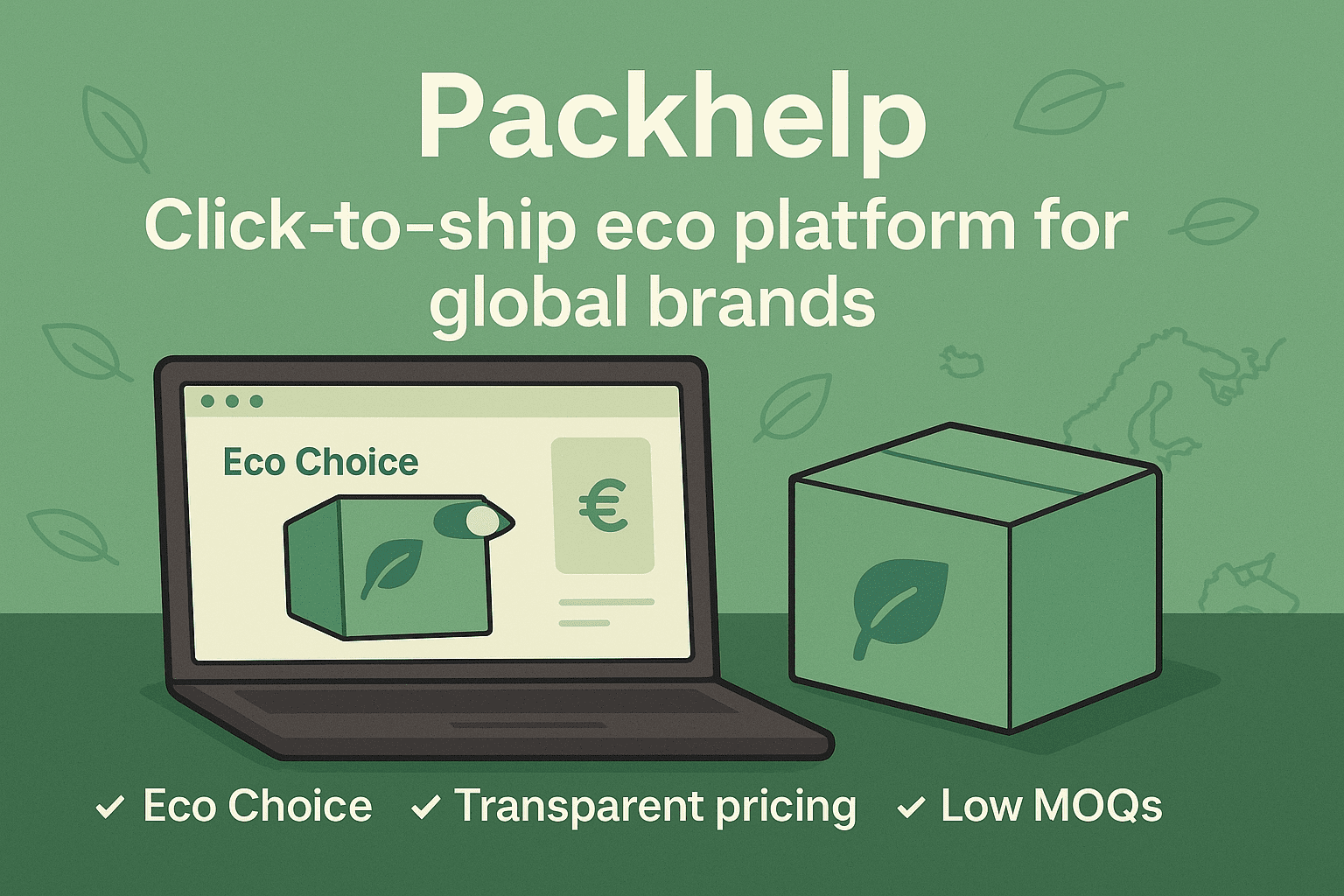
Packhelp pairs a polished online editor with a built-in green filter. Turn on Eco Choice and the catalog narrows to boxes carrying FSC or PEFC certification, at least 60 percent recycled fiber, and plastic-free finishes.
- Transparent pricing. Instant quotes display in euros, pounds, or dollars at live exchange rates. A custom 200 × 150 × 80 mm mailer costs €2.05 each at 100 units and drops below €1 at 1 000 units (price simulation, September 2025).
- Low MOQs. Most product lines start at 30 pieces; boxes with adhesive strips begin at 100.
- Distributed manufacturing. Plants in Poland, Germany, and Spain cut intra-EU transit times to 5–7 working days after approval, while U.S. brands often choose Packhelp for forms like hexagonal tubes and slide-drawer cartons.
By combining a self-serve 3-D editor, verified eco materials, and small starting volumes, Packhelp turns eco-friendly custom packaging in Europe into a ten-minute checkout.
PakFactory: global scale with atelier-level detail
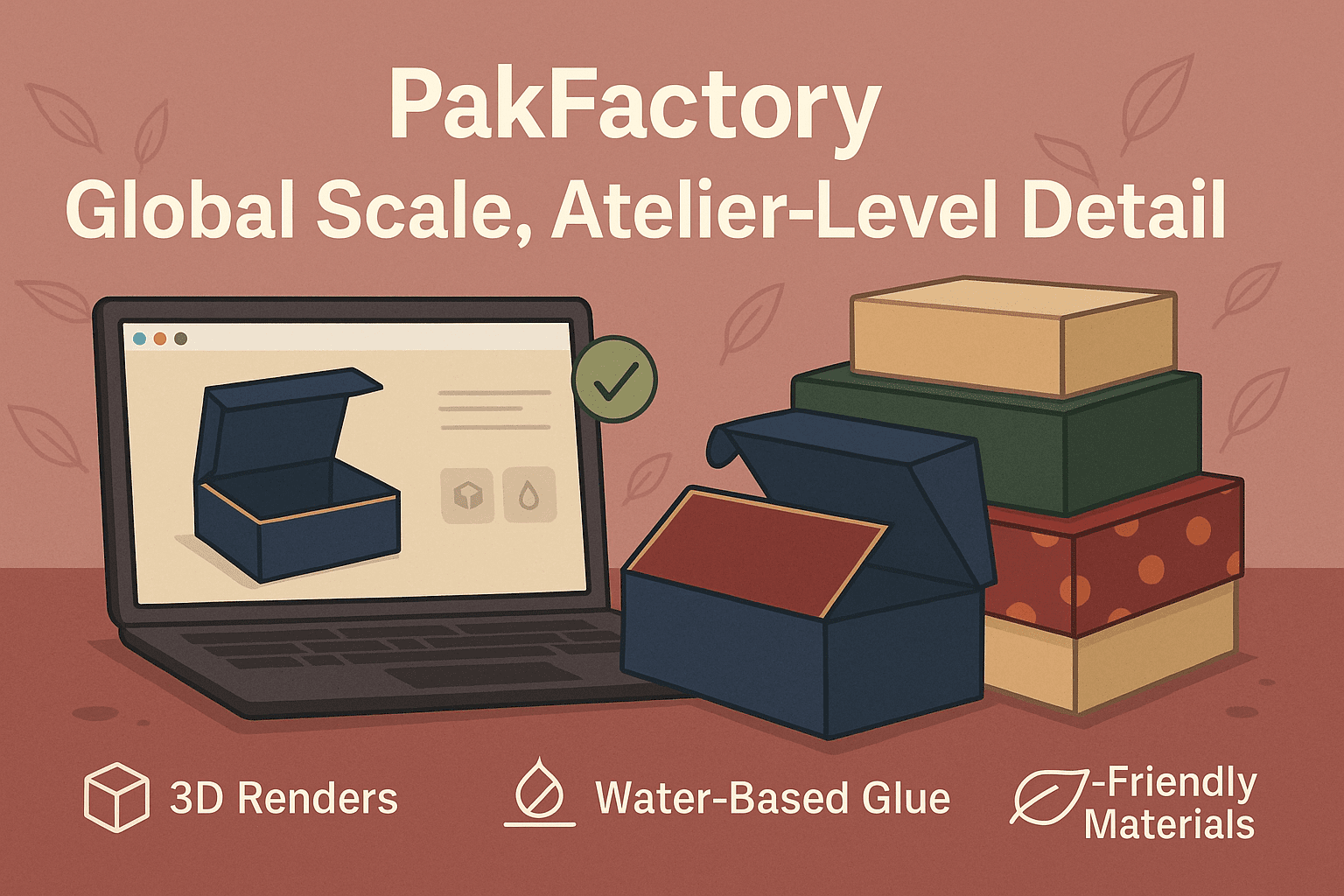
Need 20 000 linen-wrapped rigid boxes with rose-gold foil and identical color on every lid? PakFactory taps a network of more than 50 certified plants across North America and Asia and backs it up with on-site press checks for color accuracy.
- Speed. Engineers draft dielines within 48 hours, share 3-D renders, and can overnight unprinted “white” samples for drop tests. Standard production spans 10–30 business days, depending on complexity.
- Cost curve. Pricing starts in the premium tier; rigid gift boxes often exceed $4 per unit under 1 000 pieces, but the rate drops sharply with bulk, and volume discounts apply to every order size.
- Eco options. Recycled greyboard cores, water-based glues, and plastic-free windows appear on every quote form, helping you hit sustainability targets without rewriting the brief.
For cosmetic launches, limited-edition tech, or influencer kits that demand couture-level detail at factory scale, this luxury rigid box manufacturer supplies the global muscle and careful finish needed to deliver on time.
Packaging pricing models: what to watch before you sign
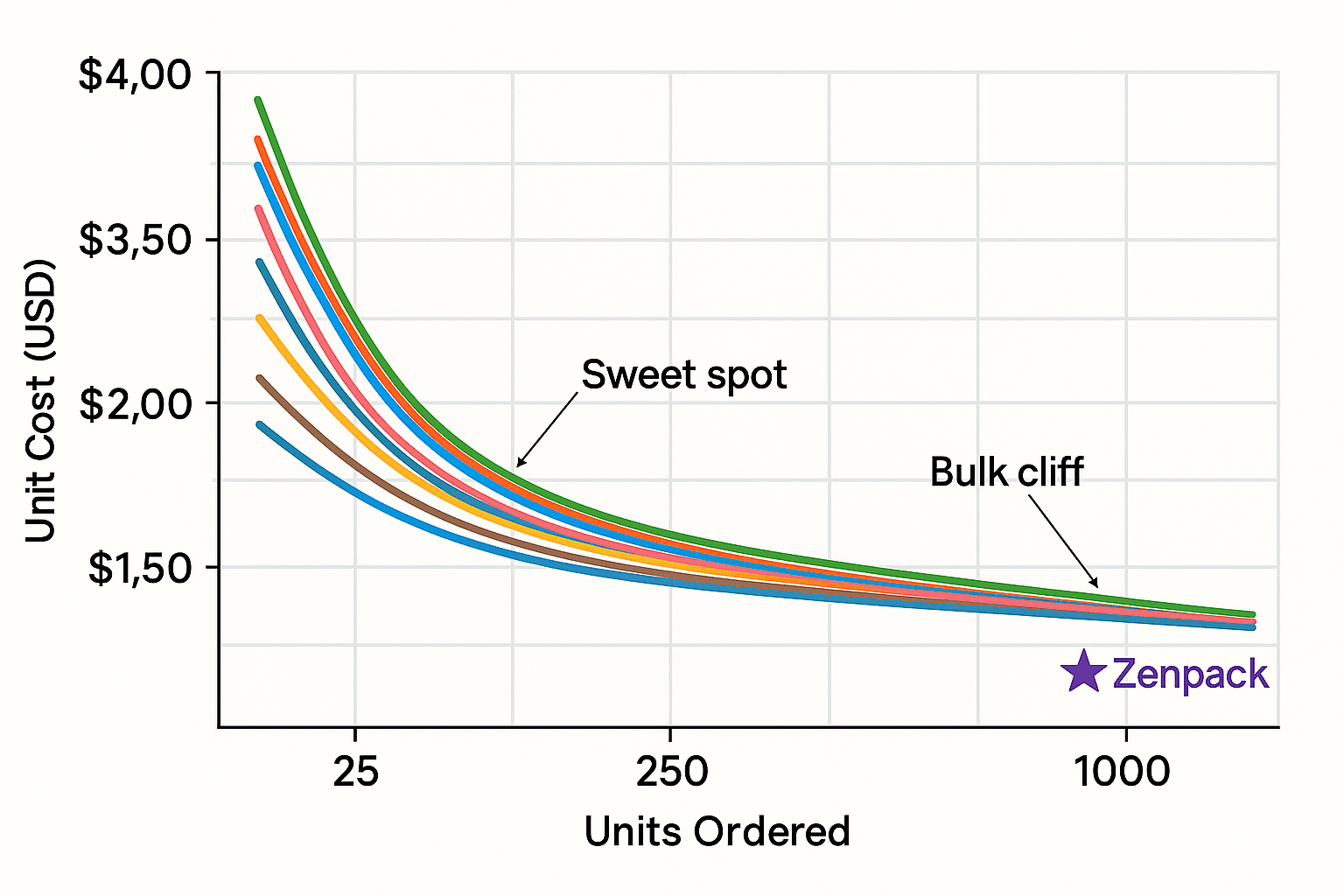
Packaging quotes can feel like airline fares: base price in bold, extra fees tucked into the fine print. Keep an eye on three levers before you approve a PO. For a deeper look at how those fees intersect with production schedules, see this breakdown of custom packaging partner costs and lead times.
- Volume tiers. Low-MOQ platforms such as Arka charge about $1.00 per mailer at 25 units but drop to roughly $0.60 at 250 (September 2025 price simulator). Ask every vendor for a five-point price curve and plot it against your sales forecast; doubling quantity often costs pennies, not dollars.
- Setup costs. Premium partners may bundle structural engineering and offset plates into a one-time fee of $300–$600, while budget printers roll that into a higher per-unit rate. One-off fees make sense for long-running designs; pay-as-you-go works for seasonal artwork.
- Material upgrades. Switching from virgin corrugate to 100 percent recycled board or compostable film typically adds 5–15 percent to unit cost, but lighter, right-sized designs can shave similar percentages off dimensional-weight charges.
Brands see the squeeze coming: 83 percent of packaging buyers expect prices to rise in 2025 and are already tweaking designs to soften the blow.
Sustainability certifications and green innovations
Eco claims only hold water when a third party signs off. The Forest Stewardship Council (FSC) logo confirms that paper comes from responsibly managed forests, a detail customs officials and eco-minded shoppers more expect.
For plastics, check for ASTM D6400 in the United States or EN 13432 in the European Union. Both standards certify that a package will fully compost in industrial conditions. EcoEnclose and Packhelp list the exact standard number in product specs, saving you a compliance detour.
Carbon counts, too. Full-service luxury custom packaging design agency Zenpack replaces EPS foam with molded pulp or recycled ocean-bound plastic inserts, slashing single-use plastic waste without sacrificing unboxing drama—best practices that pair perfectly with eco-friendly marketing campaigns aimed at conscious consumers.
Finally, closed-loop programs turn used packaging into new feedstock. EarthPack collects kraft bags through retail partners, while EcoEnclose runs a mail-back scheme for spent poly mailers and shipping labels, feeding the recovered resin into new film runs. The result is a circularity story your marketing team can share without the risk of greenwashing.
If your packaging includes tote bags, straps, or kitted merch, swivel snap hooks offer a durable, reusable fastening option in multiple sizes and finishes—an easy way to add perceived value and functionality to premium unboxing
2025 packaging material and design trends
- Minimalist kraft takes center stage. Brands are ditching neon gradients for uncoated kraft with a single hit of soy ink. Beyond the pared-back vibe, uncoated board is 15–20 percent cheaper to print than flood-coated CMYK, and the mono-material format glides through curbside recycling streams.
- Smart packaging goes mainstream. The global NFC-enabled packaging market reached USD 5.1 billion in 2024 and is projected to hit USD 19.2 billion by 2034 (14.1 percent CAGR). Luxury players such as Zenpack already embed NFC tags under logo patches so one tap launches a how-to video or authenticity check, eliminating extra inserts.
- Bio-based cushions scale up. Mycelium inserts from firms like Ecovative use 90 percent less energy and up to 80 percent less water than molded EPS foam while weighing roughly one-third as much, trimming freight costs accordingly. Seaweed films from startups in the U.K. and Indonesia are replacing bubble wrap for lightweight apparel and cosmetics.
- Luxury demand accelerates. Analysts project the global luxury-packaging segment will climb from USD 16.8 billion in 2023 to USD 24.2 billion by 2032, pressuring even budget printers to stock foil-ready recycled board and water-based varnishes.
- Right-sizing becomes software-driven. AI nesting tools help brands remove up to 25 percent of “air” from e-commerce boxes, cutting containerboard tonnage and carbon in one click. California’s SB 54 and the EU’s forthcoming Packaging and Packaging Waste Regulation are accelerating adoption by taxing excess material.
Net result: 2025’s standout packaging looks lighter on shelves, heavier on storytelling, and fully aligned with the circular economy consumers expect.
Conclusion
The custom-packaging field in 2025 offers solutions for every budget and sustainability target—from one-box MOQs to award-winning luxury kits. By focusing on transparent pricing, verified eco credentials, and right-sized design support, the nine companies profiled here provide reliable pathways to packaging that protects both your product and your brand story.