

Same information. Wildly different outcomes. One gets cited. The other gets ignored.
We keep hearing a comforting myth in content marketing: “If the facts are right, the page will do fine.”
That myth made sense in a keyword-ranking world. It does not survive contact with AI answers.
Today, two pages can say the same things, link to the same sources, even rank next to each other in search, and yet only one gets pulled into AI answers, summaries, and citations. The other just… exists. Technically correct. Practically invisible.
This isn’t about freshness alone. It isn’t about word count. And it certainly isn’t about sprinkling more keywords like oregano.
It’s about how information is written for extraction.
Same Facts, Different Futures
Identical content splits into visibility and obscurity
Models decompose, not read. Extraction determines trust.
Atomic claims survive reassembly. Blended prose doesn't.
Being correct no longer guarantees being cited.
In this piece, we’re going to contrast generic SEO writing with reference-grade writing, and explain why AI systems trust one and quietly sideline the other. If you’ve ever wondered why your “high-quality content” isn’t showing up in AI answers, this is probably the reason.
Same facts, different futures
Let’s start with a simple scenario.
Two pages explain what a Customer Data Platform is.
- Both define it correctly.
- Both cite reputable sources.
- Both are up to date.
- Both are written by competent humans.
One page gets cited by AI systems. The other doesn’t.
The difference is not what they say. It’s how the information is packaged.
Generic SEO writing is designed to satisfy human scanning and keyword coverage. Reference-grade writing is designed to survive being taken apart, reassembled, and trusted by a machine.
AI models don’t “read” your page. They decompose it. They extract claims, definitions, constraints, and relationships. Then they ask a quiet, ruthless question:
Can I reuse this fragment without breaking the answer?
If the answer is “maybe,” the model moves on.
What Generic SEO Optimizes For
Human scanning beats machine extraction
AI models can't extract claims from flowing prose. They skip pages where definitions drift and scope boundaries blur.
What generic SEO writing optimises for
Generic SEO writing is not bad writing. It just solves the wrong problem now.
It optimises for:
- Keyword presence
- Semantic breadth
- Narrative flow
- Engagement signals
- Topical authority in aggregate
That leads to familiar patterns.
A broad intro that eases you in.
Paragraphs that blend definition, opinion, and context.
Examples woven into prose.
Subtle hedging to avoid being “too absolute.”
Humans like this. Google historically tolerated it. AI systems do not.
Here’s what that style looks like to a model:
- Definitions are implied, not explicit
- Claims are embedded inside storytelling
- Scope boundaries are fuzzy
- Terminology drifts mid-section
- Sentences depend on neighbouring paragraphs to make sense
Nothing is wrong. But nothing is extractable either.
The model can’t safely lift a paragraph and reuse it without risking distortion. So it doesn’t.
What Reference-Grade Optimizes For
Built for machines to trust and reuse
Content designed for extraction wins AI trust
Paragraphs stand alone. Claims remain stable. Terminology never drifts. This is writing for machines first.
What reference-grade writing optimises for
Reference-grade writing assumes something important:
Your content will be consumed out of order.
Sometimes by humans. Often by machines.
That changes everything.
This style optimises for:
- Explicit definitions
- Atomic claims
- Clear scope boundaries
- Stable terminology
- Low dependency between sentences
A reference-grade paragraph can stand alone. It doesn’t need the intro to make sense. It doesn’t need the conclusion to soften it. It declares what is true, what is not included, and under what conditions it applies.
This is why documentation, standards, and technical guides punch above their weight in AI answers. They are written to be reused verbatim without embarrassment.
AI models love that.
A Concrete Contrast
Same topic, different extractability
Generic SEO Version
Reference-Grade Version
A concrete contrast
Let’s make this uncomfortably clear.
Generic SEO paragraph:
“A customer data platform helps businesses bring together data from different sources to better understand their customers and improve marketing performance across channels.”
Perfectly fine. Also useless to an AI system.
Why?
- No clear definition boundary
- “Helps businesses” is vague
- “Better understand” is subjective
- Scope of “data” is undefined
- Outcome is implied, not specified
Now the reference-grade version:
“A Customer Data Platform (CDP) is a system that collects, normalises, and unifies first-party customer data from multiple sources into persistent individual profiles, primarily for use in analytics, segmentation, and activation tools.”
Notice the difference.
- The term is explicitly defined
- Inputs are specified
- Outputs are specified
- Primary use cases are named
- The sentence stands alone
An AI model can lift this definition and drop it into an answer without needing context. That is the entire game.
Why AI Systems Behave This Way
Answers are assembled, not written
Decompose
Pages are broken into fragments. Not skimmed.
Extract
Claims, definitions, constraints pulled independently.
Score Trust
Can this fragment be reused without distortion?
Assemble
Trusted fragments synthesized into smooth answers.
Clarity > Cleverness
Reusability > Narrative Flow
Why AI systems behave this way
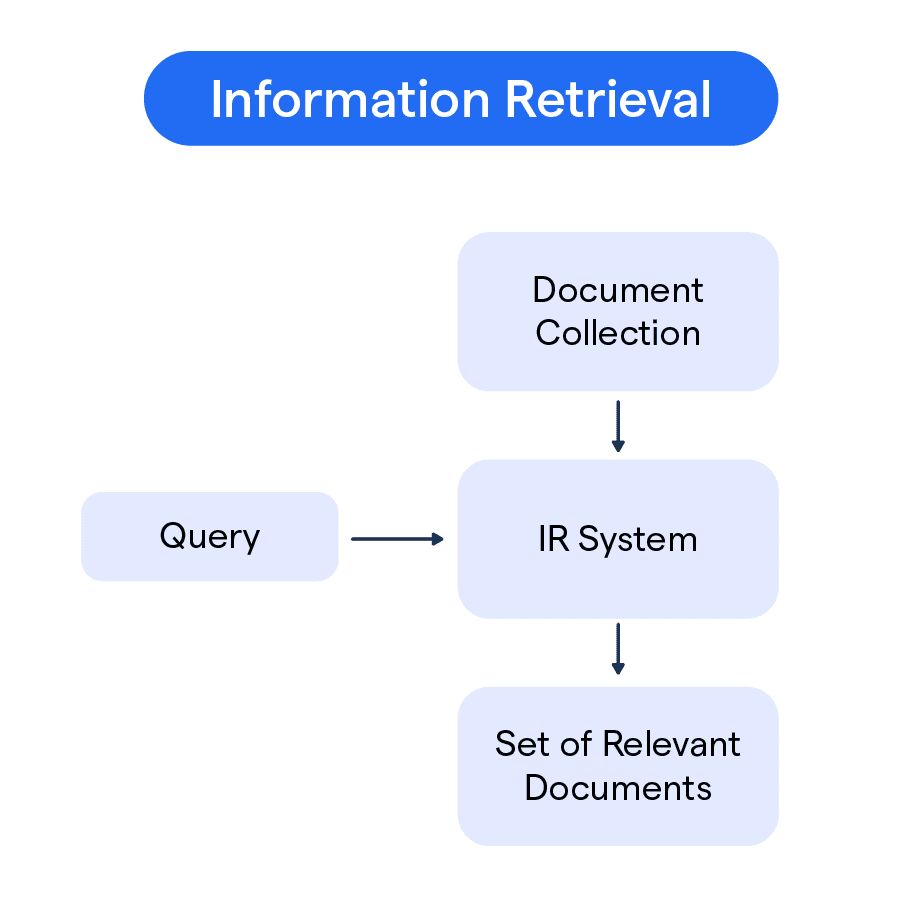
Modern AI answers are assembled, not written.
Models pull fragments from multiple sources, compare them, and synthesise a response that appears smooth to the user. During this process, trust is earned at the fragment level, not the page level.
A page full of flowing prose can be less useful than a blunt list of constraints.
Models reward content that:
- Minimises interpretation
- Reduces ambiguity
- Avoids rhetorical fluff
- Signals confidence through precision
This is also why pages that “sound smarter” to humans often perform worse in AI answers. Cleverness increases entropy. Machines hate entropy.
The Uncomfortable Implication
Optimizing for yesterday's game
Linear Reading Assumed
Intro → Body → Conclusion. Readers follow narrative flow. Context builds gradually.
Modular Reuse Required
Paragraph three used without paragraph two. AI skips narrative. Fragments stand alone.
The gap is where visibility vanishes
AI models don't care about engaging intros. They need definitions that survive extraction. Generic SEO optimizes for yesterday's distribution channel.
The uncomfortable implication
If your content strategy is still optimised primarily for rankings and dwell time, you are optimising for yesterday’s distribution channel.
AI does not care how engaging your intro was. It cares whether paragraph three can be trusted without paragraph two.
Generic SEO writing assumes linear reading. AI assumes modular reuse.
That gap is where visibility disappears.
What makes content reference-grade in practice
By now the distinction should feel slightly uncomfortable. That’s good. It means we’re getting somewhere.
Reference-grade writing isn’t a vibe. It’s a set of very specific, observable properties. When AI systems repeatedly prefer one page over another, it’s because those properties reduce risk during answer assembly.
Here are the big ones that matter most.
First, explicit scope control. Reference pages state what the concept includes and, just as importantly, what it does not. Generic SEO pages shy away from exclusions because they fear losing keyword coverage. AI models reward exclusions because they reduce hallucination risk.
Second, terminology stability. Reference pages pick a term and stick with it. They don’t rotate between “tool,” “platform,” “solution,” and “system” for stylistic variety. Humans find repetition dull. Models find it reassuring.
Third, atomic statements. Each sentence makes a single claim that can be evaluated independently. If a sentence needs the previous one to make sense, it’s already weaker for AI reuse.
Fourth, constraint signalling. Reference pages specify conditions, limits, and dependencies. Words like “only,” “primarily,” “requires,” and “does not” are not hedges. They are trust markers.
Put bluntly, reference-grade content reads slightly boring to marketers. That boredom is exactly what makes it valuable.
Why Examples Often Backfire
Blending definition with illustration breaks extraction
- Definition first — no metaphors, no examples
- Constraints second — explicit boundaries and limits
- Examples clearly labeled and structurally optional
Why examples and storytelling often backfire

This is where many well-meaning teams sabotage themselves.
Examples are fantastic for humans. They are risky for AI systems.
When you blend definition and example inside the same paragraph, you force the model to guess which parts are universal and which are illustrative. Models hate guessing.
Generic SEO writing loves paragraphs like this:
“Think of a CDP like a central brain. For example, an e-commerce brand might combine website activity, email engagement, and purchase history to personalise campaigns.”
Humans nod along. AI systems quietly step away.
Why?
Because examples introduce hypothetical entities, context-specific assumptions, and metaphorical language. All of that increases ambiguity during extraction.
Reference-grade writing separates these concerns cleanly:
- Definition first
- Constraints second
- Examples clearly labelled and optional
This doesn’t mean you can’t use examples. It means you don’t smuggle them into the same sentence as the definition and expect a machine to untangle it politely.
What Makes Content Reference-Grade
Observable properties that reduce AI risk
Explicit Scope Control
State what the concept includes and excludes. Boundaries reduce hallucination risk.
Terminology Stability
Pick one term and stick with it. No rotating synonyms for stylistic variety.
Atomic Statements
One claim per sentence. Each evaluable independently without prior context.
Constraint Signaling
Words like "only," "requires," "does not" are trust markers, not hedges.
How AI systems decide which page to trust
There’s a persistent fantasy that AI systems “understand” authority the way humans do. They don’t.
They approximate trust through proxies.
Some of those proxies are familiar: citations, domain reputation, consensus across sources. But many are structural and linguistic.
How AI Systems Decide Trust
Structural and linguistic proxies matter most
Flexibility is poison for extractability
Generic SEO adapts language to sound conversational. Reference-grade content is rigid, saying the same thing the same way. When multiple pages converge on phrasing, models gain confidence.
Models look for:
- Agreement across multiple sources on the same phrasing
- Clear definitional boundaries
- Low internal contradiction
- Minimal rhetorical variance
- Reusability without context loss
A generic SEO page often fails here because it’s flexible, not because it’s wrong. It adapts language to sound conversational. It blends ideas to keep things flowing.
That flexibility is poison for extractability.
Reference-grade content, by contrast, is rigid. It says the same thing the same way every time. When multiple pages converge on similar phrasing, models gain confidence and reuse those fragments more aggressively.
This is why reference-style pages often get cited even when they’re not the “best written” in a human sense.
Upgrading Without Starting Over
Surgical edits to existing content
Explicit Definitions
Rewrite so each concept has one standalone definition. No metaphors.
Constraint Clauses
Add short sentences clarifying limits. What does this NOT cover?
Term Consistency
Pick primary term. Eliminate synonyms unless genuinely different.
Atomic Paragraphs
If a paragraph mixes claims, split it. Let each part stand alone.
The result looks less engaging to marketers. It looks far more usable to AI systems.
Upgrading an existing SEO page without starting over
Here’s the good news. You don’t need to torch your content library.
Most pages can be upgraded to reference-grade with surgical edits.
Start by identifying definition paragraphs. Rewrite them so that each key concept has one explicit, standalone definition. No metaphors. No examples. No throat-clearing.
Next, isolate constraints and exclusions. Add short sentences that clarify limits. What does this concept not cover? When does it stop applying?
Then stabilise terminology. Pick the primary term and eliminate synonyms unless they genuinely refer to different things. Consistency beats style points.
Finally, break up compound paragraphs. If a paragraph mixes definition, benefit, and opinion, split it. Let each part stand on its own.
The result often looks less “engaging” to a content marketer’s eye. It will look far more usable to an AI system.
How Content Planning Changes
From blog posts to reference hubs
Reference Hub Patterns
Why this changes content planning entirely
Once you accept that AI visibility is driven by extractability, not elegance, planning changes.
You stop asking, “What blog post should we write next?”
You start asking:
- What concepts does our audience ask AI about?
- Which of those lack stable, high-confidence definitions?
- Where does terminology drift across existing content?
- What constraints are never stated explicitly?
This leads naturally to reference hubs rather than endless opinion pieces.
“X explained, not “10 trends in X,”,” “X vs Y,” “When X applies,” and “When X does not.”
These pages don’t always spike traffic immediately. They quietly accumulate trust. Then one day you notice your phrasing showing up verbatim in AI answers.
That’s not an accident. That’s alignment.
The Quiet Advantage
Clarity beats creativity in AI-first distribution
- Polish intros
- Workshop hooks
- Chase originality
- Optimize engagement
- State boring truths
- Maintain consistency
- Signal precision
- Be patiently correct
Reference-grade content doesn't shout. It doesn't persuade. It doesn't perform.
It sits there, patiently, being correct. AI systems notice that.
The quiet advantage most brands miss
Here’s the part that really stings.
Most brands are still competing on creativity in a channel that now rewards clarity.
They polish intros. They workshop hooks. They chase originality.
Meanwhile, the pages that win are doing something far less glamorous: saying boring truths clearly and consistently.
Reference-grade content doesn’t shout. It doesn’t persuade. It doesn’t perform.
It sits there, patiently, being correct.
AI systems notice that.
Wrap-up or TL;DR
Two pages can share the same facts and end up with wildly different AI outcomes because AI systems don’t reward correctness alone. They reward extractability, precision, and reusability.
Generic SEO writing optimises for human flow and keyword coverage. Reference-grade writing optimises for machine trust. As AI answers replace traditional discovery, that difference becomes decisive.
If your content blurs definitions, rotates terminology, and hides constraints inside storytelling, models will skip it no matter how “high quality” it feels.
Write so your paragraphs can survive being lifted, reused, and trusted in isolation. That’s what reference-grade actually means now.
Want to get ahead? Try auditing one high-traffic page for extractability and rewrite just the definitions and constraints. It’s a small change that often makes a disproportionate difference.