

Why AI doesn’t care about your hot takes and what to publish instead
Warm up first.
For the past decade, B2B marketing has been obsessed with sounding clever. Thought leadership everywhere. Opinions everywhere. Everyone “challenging assumptions”, “sparking conversations”, and “adding their voice to the discourse”. Lovely stuff. Very LinkedIn.
Then AI arrived and quietly ruined the party.
Because AI does not cite confidence. It does not reward vibes. It does not care that your founder has strong feelings about “where the industry is headed”. When ChatGPT, Perplexity, or Google’s AI Overviews pull answers, they reach for something far more boring and far more valuable: reference material.
Definitions.
Clear processes.
Comparisons with boundaries.
Explicit constraints.
This is uncomfortable news for anyone whose content strategy depends on charisma. It is excellent news for anyone willing to do the unglamorous work of being precise.
This piece is about why “thought leadership” is becoming invisible to machines, why reference material keeps getting surfaced, and how to convert opinionated content into assets that both humans and AI actually use.
Thought leadership was built for people not machines

Thought leadership made sense in a pre-AI distribution world.
You published an opinion.
People reacted to it emotionally.
The algorithm rewarded engagement.
Your brand got remembered.
That loop relied on human behaviour. Agreement, disagreement, outrage, applause. It worked because platforms optimised for reactions, not retrieval.
AI works on a completely different logic.
Large language models are not asking, “Is this insightful?”
They are asking, “Can I safely reuse this?”
When an AI system constructs an answer, it is looking for content that can be:
- Quoted without reinterpretation
- Extracted without context loss
- Compared against other sources
- Constrained enough to not hallucinate
Most thought leadership fails all four tests.
Consider the typical post:
“In our experience, most companies underestimate the importance of data culture.”
There is nothing technically wrong with that sentence. But from an AI’s point of view, it is useless. No definition of data culture. No scope. No boundary. No explanation of “most”. No reason to trust it over another similar sentence written by someone else.
AI does not want your experience. It wants shared, reusable structure.
Thought leadership is expressive.
Reference material is functional.
And machines only reward the second.
Why AI citation logic punishes opinions
When AI systems cite sources, they are not making editorial judgements. They are doing risk management.
Every extracted sentence increases the chance of being wrong. To reduce that risk, models prefer content that signals certainty through structure, not confidence.
What does that look like in practice?
AI citation systems overweight content that includes:
- Explicit definitions
- Step-by-step processes
- Side-by-side comparisons
- Clear inclusion and exclusion criteria
- Terminology used consistently across the page
They underweight content that includes:
- Opinions without grounding
- Vague generalisations
- Rhetorical questions
- Story-driven insights with no abstraction
- Personality-forward writing without structure
This is why your beautifully written essay on “the future of marketing” gets ignored, while a dry explainer titled “What Is Customer Data Unification?” keeps showing up in answers.
The second one is safer to quote.
It is also easier to break into components. A definition block. A benefits section. A limitations paragraph. Each piece can be lifted independently.
Opinion content resists disassembly.
Reference content invites it.
This is not a quality judgement. It is a mechanical one.
If you want to be cited, you have to write like something that expects to be quoted.
Reference material wins because it is boring in the right way
Let’s say the quiet part out loud.
Reference material is not exciting.
It does not try to provoke.
It does not try to persuade.
It does not try to sound clever.
It tries to be correct.
That is precisely why it wins.

A reference-grade article answers questions that start with:
- What is X?
- How does X work?
- When should X be used?
- When should it not be used?
- How does X compare to Y?
Most thought leadership avoids these questions because they feel basic. Basic does not perform well on social feeds. Basic feels beneath senior people.
AI does not have an ego problem.
AI thrives on basic questions answered precisely.
A founder opinion piece might generate debate. A reference article generates reuse. The second one compounds.
This is why we are seeing a strange reversal in content value. The posts that once felt “top of funnel” are now the most durable assets on a site. Meanwhile, hot takes age like milk.
Reference material does three things exceptionally well:
- It creates a shared vocabulary.
- It establishes boundaries around a concept.
- It reduces ambiguity for downstream usage.
All three are gold for machines.
They are also quietly excellent for buyers who are tired of being talked at.
The hidden flaw in most B2B opinion posts
Here is the structural problem most opinion content has.
It assumes the reader already understands the domain.
Thought leadership often skips definitions on purpose. It jumps straight into interpretation. That makes it feel advanced. It also makes it impossible to extract.
If your article relies on shared context that only exists in the reader’s head, AI cannot safely reuse it.
For example:
“Activation is where most teams fall apart.”
What does activation mean here? Product activation? Sales activation? Marketing activation? Customer activation? The author knows. The reader might infer. The AI refuses to guess.
Reference material does not skip that step. It slows down.
“In product-led growth, activation refers to the first moment a user experiences the core value of the product.”
That sentence is dull. It is also highly reusable.
This is the tradeoff most B2B teams have to confront. Do you want to sound advanced, or do you want to be referenced?
Right now, AI rewards the second so aggressively that the first barely registers.
How to convert opinion posts into reference material
Let’s get concrete.
You do not need to delete your opinionated content. You need to refactor it. Think of this less as “rewriting” and more as turning a monologue into a manual.
Most opinion posts already contain the raw ingredients for reference material. They just hide them behind attitude.
Here is the basic conversion move:
- Extract the claim
- Define the terms
- Add boundaries
- Separate observation from instruction
An opinion post says, “Teams fail because they don’t think systemically.”
A reference-grade version asks, “What does systemic thinking mean in this context, and how does its absence show up in practice?”
That single shift changes how the content behaves.
The goal is not to remove your point of view. It is to make your point of view legible without you being present to explain it.
If someone else, human or machine, can reuse your explanation without distortion, you are on the right track.
The four upgrades every opinion post needs
When we audit B2B blogs that are heavy on thought leadership and light on citations, the same gaps show up every time. Fixing them turns commentary into reference material.
There are four upgrades that matter most.
First, definitions before opinions.
If a concept matters enough to argue about, it matters enough to define. Put the definition early. Make it explicit. Avoid metaphors.
Second, scope statements.
Say who the idea applies to and who it does not. Industry, company size, maturity stage, technical context. Ambiguity kills reuse.
Third, process visibility.
If you believe something works, explain how it works step by step. Not a case study. A mechanism.
Fourth, constraints and failure modes.
This is the most skipped and most valuable part. When does the idea break? What assumptions does it rely on? AI loves content that admits limits.
Most opinion posts only do one of these, if that. Reference material does all four by default.
Notice how none of this asks you to be less opinionated. It asks you to be more precise.
Precision scales. Attitude does not.
A practical before and after example
Let’s take a very normal B2B hot take.
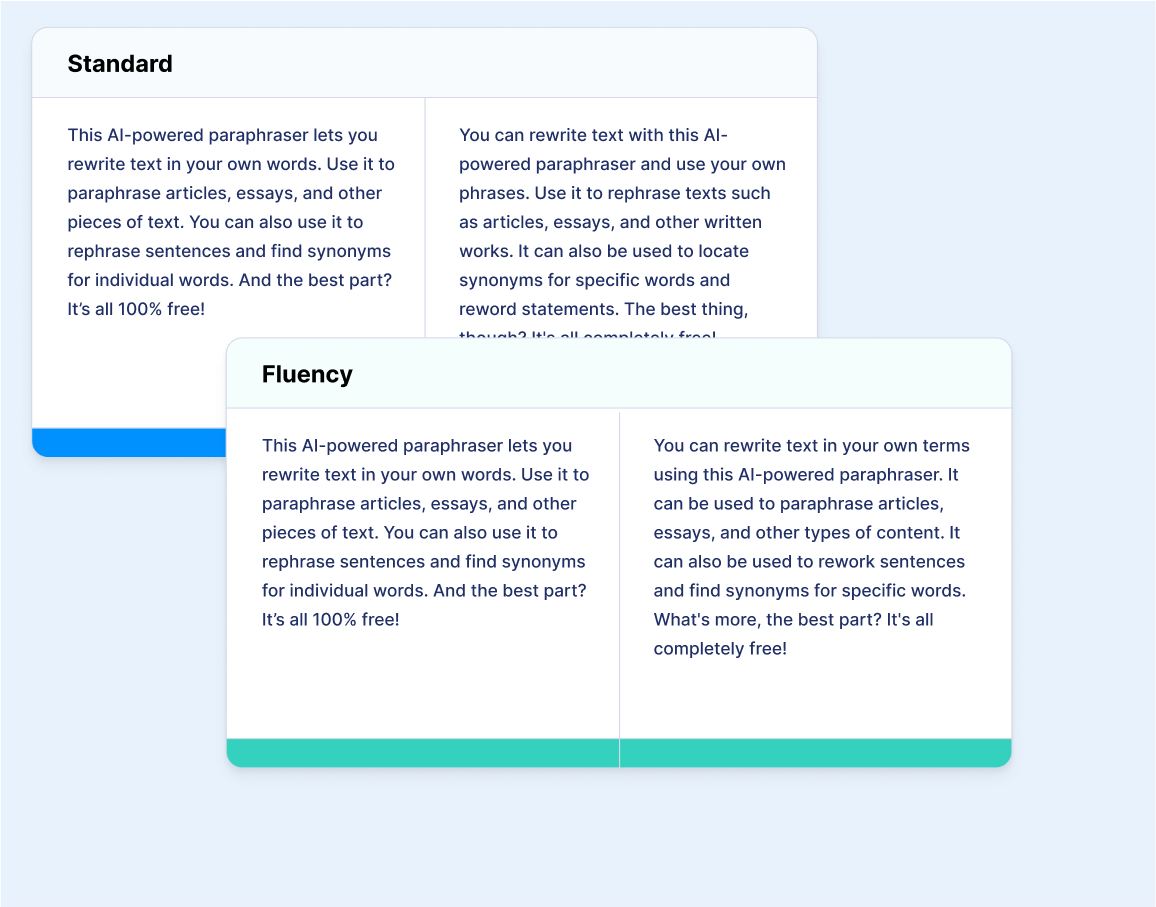
Before (opinion):
“Most SaaS content strategies fail because they chase keywords instead of clarity.”
That sentence performs well on LinkedIn. It gets nods. It gets comments. It gets zero citations.
Now watch what happens when you refactor it.
After (reference-grade):
“In SaaS marketing, a keyword-first content strategy prioritises search volume metrics over conceptual clarity. This approach often fails when buyers are researching unfamiliar categories, because keyword-optimised pages do not define terms, explain processes, or compare alternatives in a way that reduces decision uncertainty.”
Same belief. Same point of view. Completely different behaviour.
The second version introduces definitions, context, and mechanism. An AI can lift that paragraph into an answer about SaaS content strategy failure modes without needing the rest of the article.
That is the standard you are aiming for.
If a paragraph cannot stand alone without you, it is still thought leadership.
Why comparison tables beat clever prose
If there is one format AI systems consistently favour, it is comparison.
Tables. Lists. Clear contrasts.
Thought leadership avoids comparisons because they feel reductive. Reference material embraces them because they reduce ambiguity.
Compare:
“PLG is fundamentally different from sales-led growth.”
Versus:
“Product-led growth differs from sales-led growth across three dimensions: primary acquisition channel, moment of value delivery, and role of human intervention.”
The second sentence invites a table. The table invites reuse.
Comparison forces you to articulate criteria. Criteria force you to be specific. Specificity is citation-friendly.
Whenever your content includes words like “better”, “worse”, “different”, or “more important”, stop and ask yourself: compared to what, and on which axis?
If you do not answer that explicitly, AI will ignore the statement entirely.
Where most teams still get this wrong
At this point, many teams nod along and still fail to change anything.
Why?
Because they try to sprinkle reference elements into opinion posts instead of committing to a different content intent.
They add a definition box at the top. Maybe a list halfway down. The core structure remains expressive, not instructional.
Reference material is not an SEO tactic. It is a publishing decision.
It means writing with the assumption that:
- The reader might land on any section first
- The reader might not know your category
- The content might be extracted out of order
- You will not be there to explain it
This is uncomfortable for founders. It feels like talking down. It feels obvious. It feels unoriginal.
It is also how manuals, standards, and textbooks are written. Those get cited for decades.
Your blog does not need to sound academic. It needs to be decomposable.
The DataDab reference-first content loop
This is where the DataDab angle comes in.
When we work with B2B teams that want visibility in AI answers, we flip the usual content loop.
Instead of:
Opinion → Distribution → Engagement → Decay
We design for:
Reference → Extraction → Reuse → Compounding
Practically, that means starting every piece with four questions:
- What question should this page answer verbatim?
- What definitions must exist for that answer to be safe?
- What constraints prevent misuse or overgeneralisation?
- What comparisons clarify decision-making?
Only after those are answered do we layer in perspective, examples, and point of view.
Ironically, this makes the content feel more authoritative, not less. Because authority comes from clarity, not confidence.
When AI systems repeatedly cite your pages, human trust follows. Not the other way around.
What to stop publishing tomorrow

If you want a clean break from invisible content, there are a few things worth pausing immediately.
Stop publishing posts that only exist to signal opinion.
Stop writing essays that assume insider knowledge.
Stop relying on “experience” as a substitute for explanation.
None of these are evil. They are just inefficient now.
Your smartest people should be writing the most boring content on your site. The kind that answers basic questions so clearly that nobody argues with it.
That is not a demotion. It is how categories get defined.
Wrap up
Thought leadership was designed for feeds, not for retrieval.
AI does not reward boldness, personality, or originality in the way humans do. It rewards clarity, structure, and constraints. The content that keeps getting cited is not the loudest. It is the most reusable.
If your blog reads like a series of opinions, it will keep disappearing from AI answers. If it reads like reference material with a point of view, it will start compounding.
This is not about writing less creatively. It is about writing so clearly that machines trust you with their answers.
Want to get ahead? Try auditing your top ten opinion posts and rewriting just one as reference material. The results usually speak louder than any hot take ever could.