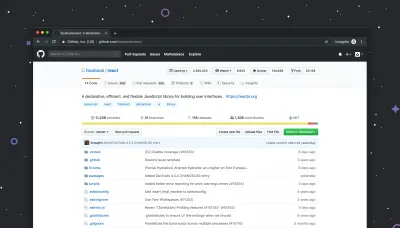

Your users aren't "discovering" you. They're scanning your repo, judging your soul, and bouncing in 7 seconds.
Let’s get the awkward bit out of the way first. Every dev-tool founder, at some point, convinces themself that a Product Hunt launch is the industry’s equivalent of a coming-of-age ceremony. Post the cat logo, bribe some friends, toss in a cute tagline, and wait for your big viral moment. And yes, you’ll get your dopamine hit and thirty inbound DMs from people who are definitely meanwhile, not your buyers.
, your prospective real users are doing something else. They’re on GitHub, quietly inspecting your repo like forensic accountants. Documentation, commit history, folder structure, examples, README quality. They’re not even remotely interested in your PH badge.
And here’s the fiendishly funny bit: while you’re celebrating orange-chroma vanity, they’re making the only real decision that matters. Will I install this or not?
Welcome to the era of the GitHub-Driven GTM, where devs treat your repo as both your storefront and your product demo, and where your README converts more revenue than your entire marketing site.
GitHub Is the New Homepage Your Growth Team Pretends Doesn’t Exist
Once upon a time, we all pretended that devs land on our homepage, scroll through our clever little illustrations, click CTA buttons like obedient lab rats, and then sign up for a demo. Bless us.
Today, less than half even bother visiting your .com domain until much later. They land straight on GitHub, thanks to StackOverflow links, Twitter/X reposts, Slack DMs, or direct recommendations buried in some random Reddit thread between a GPU argument and a Linux meme.
One founder told us (with the seriousness usually reserved for medical disclosures) that their website conversion rate was 0.9 percent while their GitHub conversion from star to install was 24 percent. They insisted the website needed more testimonials. It needed less website.
Developers don’t want your brand story. They want:
- A quick scan of the folder structure that reassures them you haven’t hacked this together over a weekend and forgotten which branch has the working code.
- A README that tells them, in the first 10 lines, whether this thing will make their life easier or ruin their Friday night deployment.
- One example they can copy-paste to test if your code is an angry liar.
The repo is the onboarding. The README is the value prop. The examples folder is your product marketing. It's all happening without your permission.
The README Is Now Your Real Landing Page, Whether You Like It or Not
Most README files look like someone wrote them on a bus after realizing documentation was part of the release checklist. A few badges, a sentence that says "super fast and simple", a dump of configuration flags, and some ASCII art if you're really unlucky.
But a good README is practically a conversion funnel in markdown. It does what your fancy homepage tries to do, except devs actually trust it.
A proper README quietly answers a dev’s three hidden questions:
- Does this solve my problem without me rewriting half my stack?
- Will I be fighting this library for the next six months?
- How quickly can I see output on my screen?
And if your README doesn’t answer those, they’ll hit Back faster than you can say “open source adoption curve”.
One founder we worked with rewrote their README following a teardown. They added a crisp two-sentence value prop, a copy-paste quickstart, three opinionated examples, and a section titled "When Not to Use This". Their install numbers spiked 3x in two weeks, without any new marketing.
The README had been doing the selling all along. It just wasn’t very good at it.
Product Hunt Is a Party; GitHub Is the Workplace
Here’s the bit your ego might dislike. A PH launch is a performance. It's a fun one, sure, but still a performance. A GitHub repo is a workplace. And developers are ruthless inspectors.
Imagine if hiring managers judged job candidates based on their LinkedIn banners instead of their resumes. That’s what you’re doing every time you brag about PH rankings while your README still says “coming soon” for three core features.
But let’s not be entirely cynical. A Product Hunt launch is useful. It gives you:
- A spike of irrelevant traffic that can still impress investors.
- A badge you can slap onto your repo for a bit of social proof.
- Maybe a few dozen founders commenting “Looks cool!” which is roughly the startup equivalent of "thoughts and prayers."
GitHub, meanwhile, gives you:
- Actual installs.
- Actual issues filed.
- Actual community feedback.
- Actual adoption.
Which one do you think deserves your 4 a.m. panic energy?
A dev once told us they use Product Hunt like a “startup zoo”. Cute animals, interesting habitat, but they’re not adopting anything. They’re going to GitHub to adopt. That’s where the paperwork happens.
The New Developer Funnel Happens Before You Even Notice Them
Your funnel isn't top, middle, bottom. It's more like:
- Someone found your repo via a link they half remember.
- They skim your README in 7.4 seconds.
- They scroll your issues and PRs to judge the energy level of your community.
- They test your quickstart example.
- They star it as a future reminder only if step 4 worked without tears.
Your homepage? They might see it three months later. Possibly by accident.
We’ve watched developers decide in under thirty seconds whether a repo "feels alive". You can practically see the instinct kick in. Last commit date. Frequency of PR merges. Issue-tagging cleanliness. They’re not trying to be difficult. They're trying not to adopt yet another package that becomes abandon-ware by Christmas.
The fun twist: these subconscious checks are your real conversion levers. Most growth teams don’t touch them because you need to talk to engineering for that, and someone once told you engineering doesn't like being bothered by marketing.
Meanwhile, GitHub metrics quietly determine your adoption rate.
Your funnel is invisible. Your funnel is markdown.
The Commit Log Is Your Real Social Proof
Forget logos on your website. Developers don’t care that Sony or Orange or some startup with a 🦄 in their logo uses your product. They care whether contributors outside your company have sent PRs.
That’s the magic signal.
A random PR titled “fix typo” from someone you’ve never met is worth more than a thousand upvotes on Product Hunt. Yes, even if it's literally just the typo of "enviroment".
Why? Because it signals life. It signals community. It signals that people who don’t owe you anything still cared enough to engage.
And if you really want to understand your repo’s perception, ask a developer what they thought when they saw your commit history. If they say “looked stable but a bit sleepy”, that’s polite-dev-speak for “I don’t trust you yet, buddy.”
A founder once panicked because their star count wasn’t growing. We checked their repo. Their last commit was 98 days old. Of course devs didn’t star it. Nobody stars a haunted house.
GitHub is a psychological space. You can feel energy. Or the lack of it.
README Conversion Architecture: How Devs Quietly Decide to Try You
Let’s walk through the anatomy of a README that converts. based on what we’ve seen in actual repos that take off, not theoretically.
Here’s the rough sequence of a developer’s brain while scanning a README:
- The First Sentence
Do you tell me what this thing is or do you tell me what it feels like?
Devs want clarity, not poetry. Nobody wants your cloud-native AI-powered synergy fluff. - The First Code Block
If the first code block doesn’t work, nothing else matters.
A missing semicolon has lost more users than bad marketing ever has. - The Install Command
If your install command takes more characters thanpip install thingornpm add thing, half your potential users have already mentally checked out. - The Examples Folder
This is your true product tour. Not the GIF, not the animated demo, not the landing page. - The “Why This Exists” Section
This is where adoption accelerates. Devs love opinionated creators.
Explain the tradeoffs. Admit the weaknesses. Declare the limits.
To show how disproportionately important this is, let’s do a mini scorecard.
Example README Impact Scorecard (for founders reclaiming their dignity)
(Higher number = stronger conversion magnet)
If every element in the top row is excellent, you don’t need a big launch. Your repo will spread naturally, like a meme but less annoying.
What Success Actually Looks Like (Hint: It’s Not Orange Badges)
Let’s paint a picture. No, not a cinematic one involving sunsets and startup dreams. Something more grounded.
A repo succeeds when:
- Stars climb steadily, not suddenly.
- Installs grow faster than awareness.
- Issues turn into discussions instead of bug rants.
- Contributors outside your core team begin to appear.
- You start getting linked in answers that say “we use X at work, here’s why”.
This last one is the real trophy. No one remembers who got #3 Product of the Day. Everyone remembers the library that saved their backend.
A strong GitHub-Driven GTM is basically building a runway made from trust. And trust doesn’t come from badges. It comes from clarity, consistency, and code that behaves itself.
Two Archetypes of Dev-Tool Startups (And Only One Survives)
After watching this long enough, you start seeing two recurring founder archetypes.
1. The Launch-Track Founder
These are the folks who:
- Spend three days designing the perfect PH thumbnail.
- Write five drafts of their launch announcement thread.
- Get angry their post didn’t make the homepage by 9 a.m.
- Blame the algorithm instead of fixing their examples folder.
They are the startup equivalent of that one student who bought expensive highlighters instead of studying.
2. The Repo-First Founder
These founders quietly do the work:
- They write three great examples before they write their homepage.
- They obsess over making the quickstart frictionless.
- They check issues twice a day.
- They document the tradeoffs honestly instead of pretending perfection.
Their growth is slower in week one but terrifyingly fast in month six.
Guess which one investors actually want?
GitHub is where seriousness shows.
The GitHub Growth Loop That Works Even If Your Marketing Is Mediocre
If you do the repo side right, a beautiful thing happens: your GTM becomes self-propelling.
The loop goes like this:
- Clear README → More installs
- More installs → More usage
- More usage → More issues
- More issues → More documentation
- More documentation → Easier adoption
- Easier adoption → More installs
- More installs → More stars + social proof
Suddenly growth isn’t a spike anymore. It’s soil. Your product becomes discoverable because it is usable.
This loop has quietly outperformed every flashy dev-tool launch tactic in the last five years.
Meanwhile, Product Hunt cannot create this loop. At best, it gives you a nice starting bump. Usually, it gives you false confidence.
The Practical Playbook: Turning Your Repo Into a GTM Engine
Right, let’s get to the actionable bit before your coffee cools.
This isn’t one of those "10 step frameworks" filled with corporate oatmeal. This is the actual checklist that’s moved numbers for multiple dev-tool teams.
1. Rewrite Your First 10 Lines
State the problem. State the solution. State the tradeoff.
Avoid poetry. Avoid widgetspeak. Avoid phrases like “reimagining the future of compute orchestration”.
2. Fix Your Quickstart Like Your Life Depends on It
Because it does. Devs will forgive ugly UIs, slow websites, and mediocre naming. They will not forgive broken quickstarts.
3. Move All Real Documentation into /docs
A messy root kills trust. A clear structure multiplies adoption.
4. Add at Least Three Real Examples
Not hello world. Real scenarios. Common use cases. The things people want to do in week one.
5. Maintain Your Issues Like a Living Room Before Guests Come
Tag them. Clean them. Close stale ones. Reproduce bugs.
Repos with clean issues feel alive.
6. Add a “Not For You If...” Section
It’s counterintuitive. It increases trust.
Adoption grows when you repel the wrong users.
7. Add a Simple Architecture Diagram
Not a NASA mission schematic. Just enough to orient people.
Do all seven and your GitHub GTM becomes stronger than most startup marketing plans.
When Product Hunt Actually Helps (Rare but Real)
Let’s be kind for a moment. PH isn’t worthless. It’s just misused.
It works only when:
- You already have a strong repo.
- You’re announcing a major version, not a brand new idea.
- You treat PH as amplification, not discovery.
- You don’t rely on it for adoption.
- You drive traffic from PH to GitHub, not to your website.
In other words, PH is dessert, not breakfast. Eating dessert for breakfast is how startups get metabolic disorders.
The Founder’s Ego vs The Developer’s Workflow
Here’s the real tension. Founders want applause. Developers want clarity.
Founders want awards. Developers want a working example.
Founders want launch tweets. Developers want working code.
Dev-tool startups succeed only when the founder’s ego surrenders to the developer’s workflow.
A strong GitHub-Driven GTM is basically saying:
‘I care more about your success than my spotlight.’
Developers notice. And they reward you with something better than upvotes. They reward you with adoption.
Quickfire FAQ for Founders In README Denial
‘Do I need a perfect README?’
No, just a good one. Mediocre READMEs lose users. Good READMEs print adoption.
‘But my product is complex.’
All the more reason your quickstart should be stupid easy.
‘Should I pay someone to write documentation?’
Only if they’ve used the product. Otherwise it’ll read like a horoscope.
‘Should I show benchmarks?’
Only real ones. Fake benchmarks age like milk.
‘Do stars matter?’
Only as a lagging indicator of trust. Not as a KPI.
‘What’s the worst README sin?’
Pretending your library has no tradeoffs. Devs smell dishonesty a mile away.
Wrap-up or TL;DR
The GitHub-Driven GTM flips the usual dev-tool marketing pyramid. Instead of obsessing over launch theatrics and shiny announcements, you invest in the unglamorous, deeply effective truth: developers adopt tools when the repo feels alive, the README feels honest, and the quickstart feels painless. Product Hunt may give you attention, but GitHub gives you traction. And in the long run, traction always wins.
Want to get ahead? Fix your README first, then worry about your launch. Your install curve will thank you.