
Why everything you’ve been told about marketing to developers is quietly nonsense
If you’ve ever sat through a workshop where someone unveils a laminated persona called ‘DevOps Derek’, complete with a stock photo beard and an affection for flat whites, you already know the dirty secret of developer marketing: none of this stuff actually matches reality. The industry keeps pretending developers are just another persona bucket you can poke with generic content and an occasional meme. Meanwhile, the developers in question are off solving actual problems while your marketing team congratulates itself for giving Derek a quirky hobby like woodworking.
This article is our collective sigh at the absurdity and our attempt to drag developer marketing into the realm of grown-ups. Because developers aren’t personas. They don’t behave like personas. And the more we cling to that fiction, the more money we torch on campaigns that never make it past a developer’s mental spam filter.
So let’s talk about the model that does work when the usual rubbish doesn’t.
The Persona Fiction
Personas predict nothing about real developer behavior
The Myth of the Predictable Developer
There’s a certain fantasy that developers can be sorted the way primary-school teachers sort crayons: by color, neat, tidy, predictable. In reality, we’d all have better luck herding caffeinated ferrets. One week they’re obsessed with Rust, the next they’re rewriting a deployment script that broke for the 28th time. And in between all that, they’re expected to pretend your webinar is the highlight of their career.
Typical personas insist developers share the same motivations or buying behavior. They do not. A backend engineer maintaining a legacy Java stack does not wake up thinking like a staff engineer building an AI infra product. Nor does a mobile dev working on crash analytics for a startup behave like an SRE firefighting another 3 a.m. outage.
Yet every persona template acts as if we can describe all of these humans with the same 12 bullet points. It makes for wonderfully tidy slides and hilariously incorrect marketing strategies.
And then comes the painful moment during pipeline reviews where someone says, with a straight face, that the reason signups from developers are down is probably because you didn’t use enough emojis in the social post. Right.
The truth is, most developer behavior is contextual rather than personal. The moment you understand that, the lights come on.
Context Beats Personas Every Single Time
Here’s the shift: stop thinking about developers as personality archetypes and start thinking in terms of developer situations. Contexts. Jobs to be done. The messy realities that govern how they behave on a given Tuesday afternoon.
You can predict almost nothing about a developer simply by knowing their job title. But you can predict a lot once you understand the job they’re trying to do.
There are roughly four contexts that determine how developers discover, evaluate, and adopt tools. These aren’t personas. They’re modes. And developers slip in and out of them depending on what’s breaking, what’s due, and whose eyebrows are twitching during standup.
Four Developer Modes
Fixer
Crisis mode. Something broke and needs immediate solution.
Builder
Exploring new tools, tinkering, creating momentum.
Evaluator
Comparing options, assessing migration costs and ROI.
Maintainer
Keeping systems alive through updates and patches.
1. The Fixer Mode
This is crisis energy. Something’s broken. Something’s slow. The pipeline is failing. The logs are cryptic. The world is on fire, and the dev is trawling GitHub Issues while refreshing StackOverflow slightly faster than medically advisable.
In this mode:
- They don’t care about your brand story.
- They definitely don’t want a webinar.
- They want the shortest path from pain to solution.
Your content either solves the problem or it doesn’t. If it does, you’ve earned trust. If it doesn’t, you’re forgotten in under sixty seconds.
Fixer-mode developers convert because your docs, examples, or GitHub README actually fixed something for them.
Marketing translation: less ‘thought leadership’, more ‘here is the exact snippet that solves the bug that’s ruining your evening’.
2. The Builder Mode
This is the creative mode, the tinkering mode, the ‘let me try this new framework because why not’ energy. They’re not trying to fix a nightmare. They’re exploring. They’re curious. They’re piecing components together to ship something new.
In builder mode, developers want:
- Tutorials that don’t insult their intelligence.
- Example repos that aren’t five commits behind reality.
- Integrations that don’t require three sacrificial lambs to configure.
This is where product-led growth shines. If the product feels smooth and powerful in the first fifteen minutes, you win. If the onboarding feels like assembling IKEA furniture blindfolded, you lose.
Builder-mode developers don’t care about enterprise alignment or your 78-slide pitch deck. They want momentum.
3. The Evaluator Mode
Ah yes, the moment where someone higher up the food chain says, ‘We should really look at what else is on the market.’ Suddenly your buyer is a developer forced to behave like procurement.
Here, the dev cares about:
- Pricing.
- Permissioning.
- Compliance.
- Integrations.
- Roadmap credibility.
- Anything that breaks on day one.
Evaluator mode is brutal because developers aren’t evaluating in a vacuum. They’re thinking about the nightmare of refactoring half the product just to adopt your shiny tool. If the migration cost is unclear or the ROI feels woolly, no amount of branding brilliance will save you.
Your job? Provide brutally honest, technically deep, migration-friendly content that treats the developer like a grown-up. Because they are.
4. The Maintainer Mode
This is the long tail of developer behavior. Once they’ve adopted your product, they’re now responsible for keeping it alive through version updates, security patches, evolving requirements, and whatever the product team dreamt up last sprint.
Maintainer mode determines whether your product stays or gets ripped out in six months. If your changelogs are cryptic, your deprecation policy is chaotic, or your documentation rots like week-old bananas, you will eventually be replaced by something less painful.
Maintainer-mode devs want calm. Predictability. A sense that you’re not going to suddenly break APIs like a toddler discovering bubble wrap.
Everything about your retention strategy should revolve around how maintainers feel about you on the worst days.
The Moment You Switch to Modes, Everything Changes
You start writing documentation for real problems instead of imaginary Derek’s woodworking habit. You design onboarding for the builder energy that shows up on day one, not for personas. You publish honest comparison pages that evaluator-mode devs actually trust. You fix migration blockers because maintainers won’t tolerate your nonsense.
And suddenly your marketing isn’t marketing. It’s product empathy.
We’ve seen companies halve churn or double conversion simply by mapping content to contexts. When developer behavior stops confusing you, developer adoption starts to compound.
If you want an actual laugh, map your existing content to these four modes. You’ll likely discover 80 percent of it caters to none of them.
Docs = Acquisition
Documentation is your most trusted marketing channel
Documentation: The Forgotten Marketing Channel
Let’s talk about the one marketing asset developers trust above all else: documentation. Not your homepage hero copy. Not your Twitter thread about how your team ‘hates boring tools’. No. Docs.
Docs are where developer intent is purest. You either teach them how to succeed or you lose them forever.
And yet, developers are subjected to:
- Outdated examples.
- Dead demo environments.
- Multi-step installs that assume root access to the universe.
- Entire SDK sections mysteriously left blank.
If docs had a Yelp rating, half of SaaS would be banned from polite society.
But the companies that treat docs as a primary acquisition lever end up winning markets they never intended to dominate. Stripe didn’t become Stripe because they ran adorable content campaigns. They became Stripe because their docs felt almost telepathic.
If developer modes are the mental model for why developers behave as they do, then documentation is the medium that ties everything together.
Builder mode? Give them clean, runnable examples.
Fixer mode? Provide error-driven docs that mirror real debugging states.
Evaluator mode? Offer architecture diagrams and migration guides.
Maintainer mode? Publish transparent changelogs and stability guarantees.
Call it marketing if you want, but it looks suspiciously like leadership.
Your Real Homepage
Developers decide credibility on GitHub, not your website
GitHub Is Your Real Homepage
You know this, but let’s say it out loud: the developer doesn’t land on your .com site first. They land on your GitHub. Or your package repo. Or the docs. Or some random Issue comment from a contributor who hasn’t slept since 2017.
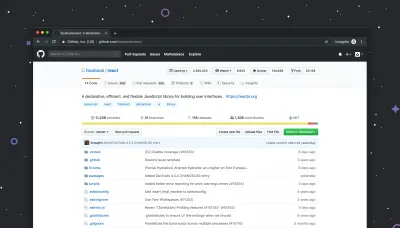
GitHub is where developers decide whether you’re credible. Your README is your brand. Your Issues page is your buyer objection handling. Your commit history is your social proof.
We’ve seen teams spend USD 300,000 on demand gen while their GitHub README still starts with ‘TODO: add explanation here’. Developers do not care that your brand colors just got refreshed. They care that your repo has a working example for the version they’re on right now.
GitHub-driven GTM isn’t just a clever phrase. It’s the reality of how developer markets behave. The companies that embrace that enjoy lower CAC, faster adoption loops, and fewer existential ‘why don’t developers care about us’ meetings.
Community Is Not a Slack Group With Three Emojis
Another industry weakness: mistaking tool support for community. Developers don’t want another idle Slack with three channels and one lonely welcome message last updated during the Jurassic era.
Community is:
- Discussions that actually resolve issues.
- Public roadmaps developers can influence.
- Templates, examples, and shared projects.
- A culture of helpfulness rather than gatekeeping.
- A place where maintainers, beginners, and power users all feel welcome.
If your community isn’t creating new value independent of your presence, it’s not a community. It’s a parking lot no one uses.
But build the right community around the right mode and magic happens. Builder-mode devs experiment together. Fixer-mode devs share solutions. Evaluator-mode devs validate your roadmap. Maintainer-mode devs become your strongest advocates.
Suddenly your marketing funnel becomes a loop.
The Framework That Actually Works: Mode-Driven Developer GTM
So here is the model your team should be using, not personas scraped from a template found in a forgotten HubSpot folder.
The Developer Mode Matrix
Think of it as four rows representing the four modes, and four columns representing the four surfaces where developer decisions are made.
Here’s what that matrix looks like in practice:
Mode-Driven GTM Matrix
Map every tactic to a mode. Delete what doesn't serve one.
Stop creating content randomly. Map everything to this. Cross off every tactic that doesn’t serve a mode. Watch your adoption curves behave like they finally got the memo.
Yes, Developers Buy on Emotion Too
Let’s annoy the traditionalists for a moment. Developers aren’t emotionless robots. They don’t choose tools purely on performance metrics. They form opinions. They get annoyed. They evangelize. They tell others a product ‘just feels good’ or ‘doesn’t irritate me’.
Emotion doesn’t disappear just because someone can write a Kubernetes operator in their sleep.
The trick is: developer emotion is earned through clarity, reliability, and respect. Not slogans. Not stock photos of people laughing near laptops. Not SEO blogs titled ‘10 Reasons Why Microservices Matter’ written by someone who’s never deployed anything.
Give developers dignity, and they give you adoption.
The Slow Death of Persona-Driven Dev Marketing
There will always be someone who insists personas are helpful because they keep the team aligned. Sure. If by alignment we mean everyone agrees on something that is entirely made up.
But developer markets punish fiction aggressively. If you misread their context, you’ll ship content they ignore, features they don’t want, onboarding they won’t complete, and sales plays they will ghost.
Persona-driven marketing dies because developer attention has no tolerance for fluff. Mode-driven marketing thrives because it aligns with how developers actually think.
The shift is inevitable. The companies who make it early will dominate categories before the rest catch up. The ones who cling to personas will be left yelling into the void while wondering why their ‘DevOps Derek’ funnel never worked.
Competent Connie
The only persona that matters: values competence over quirks
The Only Real Persona Developers Recognize: Competence
If you really must cling to a persona, here’s one that will serve you far better:
He’s called Competent Connie.
Connie doesn’t care about personal preferences. Connie cares that your product:
- Works.
- Explains itself clearly.
- Doesn’t break in surprising ways.
- Doesn’t treat developers like toddlers.
Connie is the developer who adopts your tool because it makes her life easier, and then tells the rest of the team about it because she wants fewer headaches during sprint planning.
If you can win Connie, you can win the market.
Start Small, Win Big
Each step compounds into market-leading adoption
What Teams Should Do Next
There’s no need to burn existing materials or publicly denounce all previous marketing sins. Instead, start small:
- Audit your content against the four modes.
- Rewrite your GitHub README to serve builder and fixer modes.
- Standardize your docs for evaluator mode.
- Stabilize your changelogs and deprecations for maintainers.
- Build a community people don’t avoid out of guilt.
Then watch as your developer adoption graph starts behaving less like a medical patient and more like a hockey stick.
Quick-Answer FAQ
How do you know which mode your users are in?
Check their first-touch surface. Docs usually mean fixer or builder, pricing pages mean evaluator.
What content converts developers most reliably?
Executable examples. Always.
What’s the biggest mistake in developer marketing?
Treating developers as a vibe instead of a context.
Is brand pointless in developer marketing?
No, but brand is built through product experience, not campaigns.
What channel works best for developers?
GitHub. Every time.
What about paid ads?
Useful only when paired with high-intent surfaces like docs or templates.
Do developers trust blogs?
Only if written by someone who’s actually touched the code.
Should you create a persona at all?
You can, but it won’t predict anything meaningful.
What wins long-term market share?
Migration simplicity plus maintainer happiness.
What’s the fastest way to alienate developers?
Hide documentation behind a sign-up form.
Wrap-up
If developer marketing feels chaotic, it’s because you’re using a model that tried too hard to oversimplify a wildly variable audience. Developers aren’t personas. They’re humans responding to context, pressure, curiosity, and the ghost of legacy systems haunting their daily workflow.
Switch to modes. Build content for real situations. Respect the developer’s time and intelligence. And watch your product quietly become the tool they recommend without being bribed with swag.
Want to get ahead? Start mapping your GTM to developer modes and rebuild your docs as if adoption depends on them. Because it does.