
Where devs actually hang out - and where your budget goes to die
Developer marketing has a branding problem. Everyone says they’re doing it. Very few are doing it well. And an alarming number are doing it in places developers actively resent.
Your Campaign Budget Disappears Here
Developers mock bad campaigns long after they end
Somewhere along the way, ‘developer marketing’ became shorthand for posting a Medium blog, tweeting a code snippet, and hoping a staff engineer at Stripe notices. Sprinkle in a Discord server nobody moderates and a webinar with five attendees, and voilà - strategy.
The reality is messier. Developers are famously allergic to marketing. They have finely tuned BS detectors, a long memory for bad experiences, and an uncanny ability to mock you in Slack long after your campaign ends. You don’t win them over with vibes. You win them by showing up in the right places, with the right intent, and without shouting.
So let’s talk platforms. Not the ones with the prettiest pitch decks, but the ones that actually work for developer marketing campaigns in 2025 - warts, tradeoffs, and all.
Platforms as Social Contracts
Each platform: unspoken rules. Break them, get mocked publicly.
Where developers already are (and why that matters)
The first mistake most teams make is assuming developers want to be ‘reached’. They don’t. They want to be left alone until they have a problem, then helped quickly, competently, and without a sales ambush.
That means your platform choice matters more than your copy. A lot more.
Developers congregate in places that help them do their job. If your campaign doesn’t naturally fit the context of that place, you’re already losing. This is why glossy brand videos flop on Reddit, and why a genuinely useful GitHub repo can outperform a $50,000 launch.
Think of platforms less as channels and more as social contracts. Each one comes with unspoken rules about behavior. Break them and you’ll know. Immediately. And publicly.
Let’s start with the obvious one.
GitHub: Marketing Without Calling It Marketing
What Works
Clean tools. Honest READMEs. Fast issue responses. Sensible defaults that solve real problems.
What Fails
Star-baiting. Vague promises. Repos that funnel to landing pages instead of solving anything.
The Upside
Compounds forever. Ranks in search. Shared internally at target companies. Signals competence quietly.
The Cost
Takes real effort. Maintenance overhead. Can't outsource to junior marketer with checklist.
Developers judge you here—show up with substance, not slides
GitHub as marketing without calling it marketing
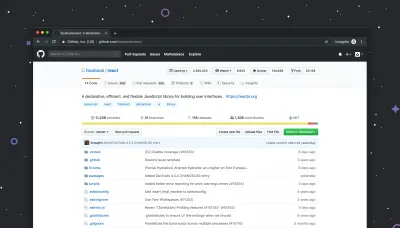
GitHub is not a marketing platform. Which is precisely why it’s one of the best ones.
Developers live here. They search here. They judge you here. And they absolutely notice when a company shows up with something real rather than a hollow README and a ‘contact sales’ button.
Successful GitHub-based campaigns usually don’t look like campaigns at all. They look like tools, SDKs, examples, or internal utilities someone bothered to clean up and share. The marketing happens quietly, in the background, while developers are busy solving problems.
What works best on GitHub is boring in the best possible way. Clear documentation. Sensible defaults. Honest issue responses. A roadmap that doesn’t read like a VC memo.
What doesn’t work is pretending GitHub is Product Hunt with code. Star-baiting, vague promises, or repositories that exist solely to funnel people to a landing page tend to get ignored, or worse, forked and improved by someone else.
The upside is enormous. A well-maintained repo compounds. It ranks in search. It gets shared internally at companies you want to sell to. It signals competence without you having to say a word.
The downside is that it takes effort. Real effort. Someone has to maintain it. Answer issues. Accept pull requests. You can’t outsource that to a junior marketer with a checklist.
Worth it, though. Every time.
Stack Overflow: The Long Game
Spam
Lead gen obvious
Occasional
Light disclosure
Helpful
Accuracy first
Patterns
Linked repeatedly
Stack Overflow and the long game of earned trust
Stack Overflow used to be friendlier. It’s sharper now. Less patient. More transactional.
Which makes it perfect for developer marketing, if you understand the rules.
The platform doesn’t reward promotion. It rewards accuracy, clarity, and restraint. Companies that succeed here do so by playing a long game: answering questions, improving documentation links, and occasionally surfacing their product as a legitimate solution when it truly fits.
The key word is occasionally.
The fastest way to get flagged, downvoted, or quietly ignored is to treat Stack Overflow as a lead gen channel. Nobody is there to ‘discover’ your startup. They’re there because something is broken and they’re annoyed.
The companies that do well here often empower engineers to participate as themselves, with light disclosure. Over time, patterns emerge. Certain tools keep showing up in accepted answers. Certain docs get linked repeatedly.
That’s marketing. Slow, unsexy, but deeply effective.
It’s also one of the few places where junior developers and principal engineers coexist, which makes it oddly powerful for awareness across experience levels.
Just don’t rush it. Stack Overflow remembers.
Reddit: Where Campaigns Die or Thrive
Campaigns Die
Smells like marketing, gets roasted publicly
Campaigns Thrive
Honest, vulnerable, specific
Transparent
Clear intent
Specific
What went wrong
Self-Aware
What still sucks
Pretense
"Future of productivity"
Magic Promises
Line-by-line dissection
Reddit isn't anti-brand—it's anti-pretense
Reddit and the art of not getting roasted
Reddit is where developer marketing campaigns go to die. Or thrive. There’s very little middle ground.
Subreddits like r/programming, r/devops, r/webdev, and niche language communities are brutally honest environments. If your campaign smells like marketing, it will be called marketing. Loudly. Often with memes.
But here’s the thing. Reddit isn’t anti-brand. It’s anti-pretense.
The campaigns that work tend to be transparent, specific, and a bit self-aware. Founders sharing a post-mortem. Engineers explaining how they built something and what went wrong. Tool builders asking for feedback and actually responding to it.
The platform rewards vulnerability and specificity. ‘We built X, here’s what we learned, here’s what still sucks’ performs far better than ‘Introducing the future of developer productivity’.
Ads can work too, especially for dev tools with clear value propositions. But the bar is high. If your ad promises magic, expect comments to dissect it line by line.
Use Reddit when you’re ready to listen as much as talk. And when your team can handle being told, publicly, that your onboarding is confusing.
Product Hunt: Beyond Launch Day Theatre
Initial Launch
One-day spike, upvote begging
Major Feature
Recurring touchpoint
Integration Drop
Show ecosystem growth
OSS Release
Developer showroom
Not just leaderboards—it's the footprint you leave
Product Hunt beyond launch day theatre
Product Hunt is often treated like a one-day event. Launch, beg for upvotes, celebrate briefly, then move on.
That’s a waste.
For developer marketing, Product Hunt works best as a recurring touchpoint rather than a single spike. New features. Major integrations. Open-source releases. Even content tools aimed at developers can find an audience here.
The platform skews toward early adopters, indie hackers, and builders who enjoy trying new things. That makes it ideal for feedback and early traction, less so for enterprise-scale lead generation.
What matters most is positioning. Developers browsing Product Hunt want to understand what your product actually does, quickly. Screenshots matter. The tagline matters. The comments matter a lot.
Teams that stick around in the comments, answer technical questions, and avoid salesy language tend to do better over time. It’s not just about the leaderboard. It’s about the footprint you leave.
Think of Product Hunt as a developer-friendly showroom, not a conversion funnel.
Paid Media: Contextual Beats Interruptive
Developers click when ads align with existing problems
Developer-focused ad platforms that don’t feel awful
Yes, paid media can work for developer marketing. No, not all ad platforms are equal.
The ones that perform best tend to be contextual rather than interruptive. Sponsoring newsletters developers already read. Advertising on sites like Stack Overflow or niche documentation portals. Running search ads that target problem statements, not personas.
Networks like Carbon Ads have built their reputation precisely because they don’t feel like traditional ad tech. The placements are subtle, the targeting is contextual, and the audience expects to see tools rather than lifestyle promises.
Similarly, platforms such as daily.dev Ads give you access to developers inside an environment they already use to curate technical reading. That changes the psychology completely. You’re not interrupting. You’re coexisting.
LinkedIn can work too, but only when used carefully. Targeting by job title alone is blunt. Targeting by tech stack, company size, and actual pain points is better, though harder.
The trick is remembering that developers don’t click ads for inspiration. They click when something aligns painfully well with a problem they’re already dealing with.
If your ad doesn’t answer ‘why now’, don’t run it.
Content Depth Drives Distribution
Content platforms that respect attention spans
Blogs still matter. So do docs. But the distribution platform shapes how that content performs.
Dev-focused platforms like DEV.to, Hashnode, and Lobsters offer built-in audiences that actually want to read technical material. The tone is different. The expectations are higher. Fluff gets ignored.
Publishing here works best when the content teaches something concrete. Tutorials. Architecture breakdowns. Migration guides. Comparisons that acknowledge tradeoffs instead of declaring winners.
Cross-posting can help, but only if you adapt the framing. A blog post written for your site might need trimming, recontextualizing, or a sharper hook to work on a community platform.
The upside is reach with credibility. The downside is that you can’t fake expertise for long.
Which, frankly, is a feature.
Communities Require Real Commitment
Time, moderation, participation—or it becomes a graveyard
Community platforms that require commitment
Discord, Slack, and forum-based communities are often pitched as the holy grail of developer engagement. Build a community and they will come. Support each other. Advocate for your product.
Sometimes that happens. Often it doesn’t.
Communities work when there’s a clear reason to exist beyond your roadmap. A shared problem space. A fast-moving ecosystem. A genuine need for peer discussion.
They fail when they’re thinly veiled support channels or announcement boards.
Running a good developer community takes time. Moderation. Thoughtful onboarding. Regular participation from your team. And the humility to let conversations drift away from your product.
If you’re willing to invest, communities can become powerful retention and advocacy engines. If not, they become ghost towns with a welcome message and three unanswered questions.
Choose carefully.
Comparing platforms without pretending there’s a winner
Here’s a simple, imperfect way to think about the major platforms for developer marketing campaigns:
No Universal Winner—Only Best Fit
| Platform | Best For | Watch Out For |
|---|---|---|
| GitHub | Credibility, long-term discovery | Maintenance overhead |
| Stack Overflow | Trust, problem-led awareness | Over-promotion backlash |
| Honest feedback, niche reach | Public criticism | |
| Product Hunt | Early adopters, launches | Short-lived spikes |
| DEV.to / Hashnode | Educational content | Requires depth |
| Paid dev networks | Targeted reach | Weak messaging ignored |
| Discord / Slack | Retention, advocacy | Needs real commitment |
Choose 2-3 platforms you can show up consistently
There’s no universal best. There’s only best-for-your-stage, best-for-your-team, and best-for-your audience.
The mistake is trying to be everywhere. The smarter move is choosing two or three platforms you can show up in consistently, with substance.
What actually makes a platform work for developers
Strip away the logos and traffic stats, and the same principles apply everywhere.
Developers respond to usefulness. To honesty. To tools and content that respect their time and intelligence. They notice when a company understands their workflow and when it doesn’t.
Platforms amplify behavior. They don’t fix bad intent.
If your campaign is rooted in genuinely helping developers solve a problem, most of these platforms can work. If it’s rooted in extracting leads as quickly as possible, even the best ones will push back.
The irony is that developer marketing works best when it barely feels like marketing at all.
Wrap-up or TL;DR
The best platforms for developer marketing campaigns aren’t mysterious. They’re the places developers already trust to do their jobs better. GitHub, Stack Overflow, Reddit, Product Hunt, and dev-centric content platforms each play a role, but only if you respect their norms and show up with something useful.
There’s no shortcut here. You earn attention through competence, consistency, and a willingness to engage without immediately selling. The platforms don’t matter nearly as much as how you behave on them.
Our bet is that the teams who treat developer marketing as a product problem rather than a growth hack will keep winning quietly, while everyone else chases the next channel.
Want to get ahead? Pick one platform your engineers already love, invest properly in it, and see what sustained, non-annoying presence can do.