
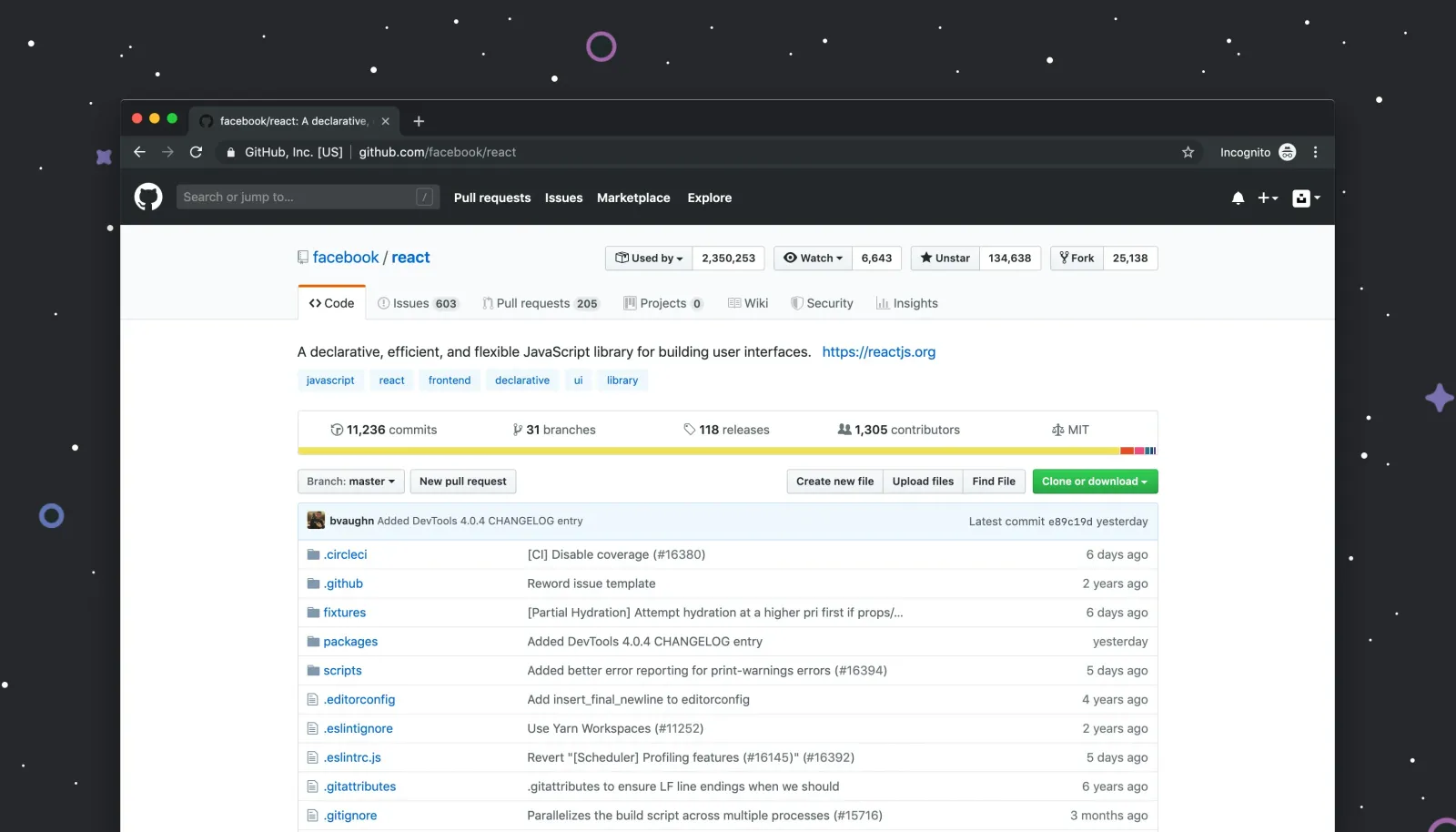
And why does almost nobody treat it that way even though it prints money when done right?
Most dev-tool companies talk endlessly about “developer experience” as if it’s some mystical force that emerges the moment they add a dark mode toggle and a tabbed code snippet. Meanwhile, HubSpot has an army, Salesforce has an ecosystem, and API-first startups cling to the idea that documentation is an afterthought to “real” marketing. You and we know better. Developer documentation is a funnel. A proper, qualified, high-intent funnel masquerading as a knowledge base. If the rest of your marketing is a loud, desperate Tinder bio, your docs are the quiet scientist in the corner who effortlessly pulls in the smartest person in the room.
Let’s take the gloves off and talk about why docs are the most undervalued acquisition weapon you already own.
The Quiet Power Your Product Team Keeps Forgetting
Here’s the funny thing about developer-first products: almost nobody wants a sales call, a case study, or that video of your founder walking around a WeWork explaining “the mission.” They want proof. And the closest thing to a notarized affidavit for a technical product is rock-solid documentation.
We’ve seen founders invest USD 25,000 a month on performance ads while completely ignoring the fact that 60 percent of their signups originated from GitHub READMEs or deep-linked doc pages. You can tell a lot about a company by the state of its docs. If the docs read like release notes written by someone who hates fun, adoption stalls. If they feel like a friendly guide written by a developer who knows the messy reality of integration, adoption skyrockets.
We once worked with a client whose “API docs” were so sparse that even ChatGPT refused to parse them. After a rewrite with examples that mimicked real-world usage, weekly activations doubled within two sprints. No ads. No webinars. Just grown-up documentation.
And that’s the point: developers don’t believe marketing pages, but they’ll believe a working cURL. They won't trust your bold Helvetica landing page, but they’ll trust your SDK showing up cleanly in Postman.
70-85% Never See Your Homepage
Developers discover you through search, not landing pages. First impressions happen in your documentation.
Why Docs Are the First Impression Nobody Thinks About
Developers don’t “convert” the way product marketers imagine. They don’t see your homepage, feel a sudden rush of emotion, and sprint toward the signup button. Instead, their first contact is usually one of these:
- A Stack Overflow answer linking to a specific endpoint
- A GitHub issue citing your SDK
- A Reddit comment explaining a workaround
- A search result that drops them straight into
/docs/agents/create
Which means your documentation is the front door. Not the glossy marketing site you spent USD 80,000 producing. Not the Product Hunt launch. Not the founder’s “We’re excited to announce…” post on LinkedIn.
The docs.
We’ve seen analytics that show 70–85 percent of first-touch traffic on dev-tools never hits the homepage. It’s like meeting someone for the first time when you’re in sweatpants. Except these sweatpants have syntax errors.
So why doesn’t every company treat docs like core growth infrastructure? Probably because docs sound boring. But boring things scale beautifully.
Developers Don't Want Convincing
Skip the marketing jargon. Show working code that solves real problems fast.
They Don’t Want Convincing, They Want Clarity
A developer making a buy/build decision cares about:
- How long will this integration take?
- Will this break at 3 AM on a Sunday?
- Does this SaaS behave like a black box?
- Is there a community of actual humans using this thing?
Try addressing those questions with a landing page headline like “Powering Intelligent Connectivity for Modern Applications.” Or you could just show a ready-to-run snippet. Developers love shortcuts. Give them one, and they’ll reward you with both respect and revenue.
Take Stripe’s magical sample code blocks. They don’t just illustrate an API call. They solve a job your user actually has. Same for Twilio’s multi-language playgrounds. Same for Supabase’s copy-paste examples that feel like cheating.
The best doc portals quietly whisper: “Look, you’re busy. Here’s the fastest path to done.” And the moment someone actually integrates your API, you’ve won more trust than 40 webinars combined.
These Aren't Keywords
Problem-based queries earn backlinks from GitHub and Stack Overflow. These pages never decay.
Documentation SEO: The Secret Channel Nobody Brags About
Everyone wants to rank for “best payment API,” which is adorable and utterly painful. Meanwhile, nobody tries to rank for:
- “webhook retry logic example”
- “oauth device flow python example”
- “create ephemeral token postman”
- “cursor-based pagination tutorial”
These aren’t keywords. They’re cries for help. And if you answer them well, you get dev teams who are already mid-build and desperately looking for the simplest route to a solution.
Documentation SEO isn’t about content mills. It’s about indexing the most annoying parts of engineering work so your product appears as the painkiller. And unlike blog posts, these don’t decay. The search volume for “how to verify HMAC signatures” hasn’t changed in a decade.
Even better, documentation pages naturally earn backlinks from GitHub repos, Postman collections, technical blogs, and Stack Overflow threads. Organic authority without the cringe.
The big irony is that most companies shove docs into subdomains like docs.example.com that aren’t even properly tracked for SEO. The sitemap sits lonely and unsubmitted. The content is invisible to crawlers. And then someone wonders why conversions are down.
Your Self-Serve Flywheel
Each page quietly moves users from awareness to expansion. Polish turns it into a flywheel.
The Onboarding Funnel Hiding in Your Docs
Think of documentation as your most honest funnel. It has awareness, evaluation, activation, and expansion all living in the same neighborhood.
But because nobody thinks like a marketer when writing docs, the funnel looks like Swiss cheese.
Let’s map the conversion flow:
Discovery
User lands on a deep-linked page for a specific endpoint.
You gain a technically literate visitor with a specific intent.
Orientation
They skim code samples, check auth patterns, compare complexity.
Your job: reduce cognitive load fast.
Trial Decision
They ask: “Should I try this or roll my own?”
A good doc page answers that question without theatrics. Clear usage patterns beat clever copy.
Activation
A first working API call. This is your real signup.
If your quickstart lets them run a request in under five minutes, you’re golden.
Expansion
They explore advanced features once the first feature works.
Dev-led growth always starts with a micro-win.
Every page in your docs quietly moves users from one stage to the next. When polished, documentation becomes a self-serve flywheel.
The Micro-Story: How We Fixed a Client’s Pipeline by Rewriting Their Docs
One of our favorite projects was a dev-tool startup whose API allowed secure session handling for SaaS dashboards. Brilliant tech, awful documentation. Their signups were okay, but activation was atrocious. Developers would register, skim the docs, and disappear into the abyss.
We rewrote:
- The quickstart to run in Postman in under 2 minutes
- The authentication example using real production objects instead of placeholders
- The entire error code section with human explanations instead of numeric poetry
- The sample projects using common frameworks (Node, Python, Go)
Within eight weeks, activation went up 92 percent. Support tickets dropped. Trial-to-paid conversion jumped.
When we finally looked at attribution, guess what? Docs pages contributed directly to almost USD 140,000 ARR within one quarter. The founders had been hunting for a new channel. They already had one, buried under typos and wishful thinking.
Write Docs That Convert
Start with outcomes, not endpoints
Use real-world examples, not sterile demos
Reduce cognitive friction relentlessly
Use pattern recognition to your advantage
Build examples before writing docs
Sound like a senior engineer, not a marketing page. Respect time. Show the shortest path.
The Science of Writing Docs That Sell (Without Sounding Like Marketing)
Documentation shouldn’t sound like a landing page. It should sound like a senior engineer who respects your time. But there are ways to make docs magnetic without making them cringe.
1. Start with outcomes, not endpoints
Don’t lead with “POST /v1/identify.”
Lead with “How to recognize returning users in your app.”
When developers search, they search by problem, not feature.
2. Use real-world examples, not sterile demos
Show messy, imperfect, working scenarios:
- Pagination
- Webhooks
- Error recovery
- Rate limits
- Timeouts
- Zero-downtime migrations
These are the things engineers fight with daily.
3. Reduce cognitive friction
Every step should feel like the shortest path possible.
No hunting for API keys. No mystery authentication flows. No seven-step environment setup rituals.
4. Use pattern recognition to your advantage
If your docs “feel” like Stripe, Supabase, or Vercel, users instantly know how to move. Familiarity reduces churn.
5. Build examples before writing docs
If you can’t build the example yourself, the feature isn’t ready.
Docs are the first usability test, not the last.
Turn Docs Into Tractor Beams
A few strategic upgrades transform documentation from textbook to magnet.
The Feel-Good Tricks That Turn Docs Into Acquisition Assets
Here’s where things get fun. A few small upgrades can turn documentation from textbook to tractor beam.
Interactive playgrounds
Developers love sandboxes where they can run requests without provisioning a server. Give them one, and suddenly you’re irresistible.
Copy-paste code blocks
But do it properly: multi-language, tested, versioned. Bonus points if the examples work the first time. The number of companies that ship broken examples should be a crime.
Inline troubleshooting
Don’t hide errors in a separate section. Developers hit errors in real time. Put solutions right next to the example.
Versioned docs with clear changes
Nobody likes surprises. Especially engineers.
Guides for real use cases
“How to implement audit logs with our API” beats “Audit Logs API Overview” any day.
Starter templates
A repo with a fully working integration is a better funnel than 20 landing pages combined.
Let’s Talk Conversion: The Numbers Behind Doc-Driven Growth
This is where heads of marketing start leaning forward. Documentation doesn’t just educate. It converts. And usually with better economics.
Here’s a comparison we often use with clients:
| Funnel Source | Avg CAC | Activation Rate | Expansion Probability | Notes |
|---|---|---|---|---|
| Performance ads | USD 450–700 | Low | Medium | Expensive, volatile |
| Content marketing | USD 180–300 | Medium | Medium | Slow ramp, requires patience |
| Sales outreach | USD 300–600 | Medium | High | Works, but resource heavy |
| Developer documentation | USD 20–60 | High | Very high | Always-on flywheel |
Documentation leads are self-qualified. They’re mid-problem. They’re actively evaluating solutions. They’re smart, skeptical, and already writing code.
You don’t need to “educate the market.” The market educates itself the moment it hits your doc pages.
Where Teams Usually Sabotage Themselves
Despite all this, companies still mess up documentation in predictable ways.
1. Treating docs as an engineering afterthought
If your docs only get updated during sprint retros with zero ownership, you’re setting money on fire.
2. Shipping docs that explain features, not jobs
Engineers don’t want a feature list. They want to understand the job the feature solves.
3. No search strategy
If your doc site search is as helpful as a broken vending machine, users bounce.
4. Tiny font sizes
Developers stare at screens all day. Make the experience humane.
5. PDF docs
Yes, some companies still do this. No, we will not elaborate.
6. Lack of examples
Nothing destroys confidence faster than docs that say “Coming soon.”
AI Ecosystem Rewards Clarity
Clear documentation earns API recommendations in coding assistants. Confused docs cause AI hallucinations.
AI Will Read Your Docs Before Humans Do
This bit is important. With chat-based search, RAG systems, and LLM assistants flooding the workspace, your documentation is becoming your new public API to the world. ChatGPT, Perplexity, and dev-assistants are already parsing your docs.
If your docs are clear, structured, and example-rich, you get:
- “Recommended APIs” in AI coding assistants
- Code-generation that actually compiles
- Three-line integrations powered by prompt engineering
- More “earned mentions” in AI answers
The AI ecosystem rewards clarity. Write good docs today, get free distribution tomorrow.
If your docs are confusing, AI will hallucinate. And nothing kills developer trust faster than AI-generated nonsense tied to your API.
The ‘Docs-as-Marketing’ Quick Test
If you want a cheeky self-evaluation, here’s a quick scorecard. Don’t worry, we’re not judging. Much.
Rate Your Docs
Score 6 or 7 and congratulations, you’ve built a funnel that quietly outperforms half of your go-to-market strategy. Anything under 4 and your documentation is probably committing revenue crimes.
TLDR
Most teams treat developer documentation like a chore. Smart teams treat it like a growth loop. The truth is simple: if your docs reduce friction, show real examples, solve jobs instead of listing features, and are built with the same care as your product, they become your best acquisition channel. Developers trust what they can run, not what they can read on a homepage.
The next wave of developer-first growth will be doc-driven growth. because it’s practical, not because it’s trendy. And quietly unstoppable.
Want to get ahead? Start by rewriting your quickstart and tracking doc-driven activations. Then, if you want help turning docs into a growth engine, you know where to find us.