

Yes, they’ll ghost you. Yes, they’ll say “It’s great” when they mean “Meh.” But there’s a better way to run customer interviews - and it starts with shutting up.
Let’s be honest: customer interviews are awkward. You’re trying to play therapist, anthropologist, and data analyst, all while hoping your Zoom doesn’t freeze mid-insight. Half the time, your interviewee answers like they’re afraid of saying the wrong thing on a first date. The other half, they say “I love it!” with the enthusiasm of a bot that’s been trained on your marketing site.
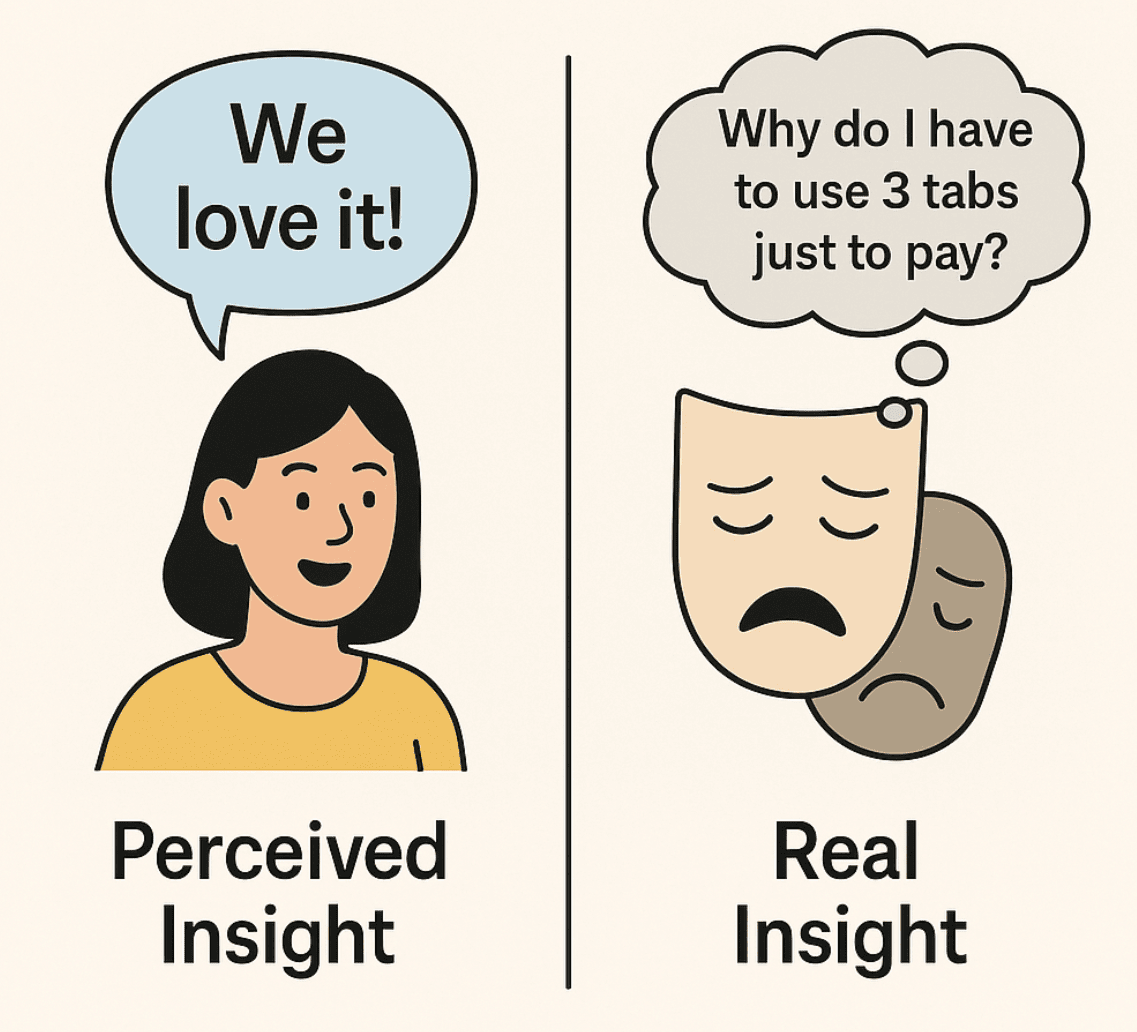
So we nod. We scribble “good feedback” in our Notion doc. We maybe even quote them in our next slide deck. But in the back of our heads, we know: we didn’t get to the juicy stuff. The real pain. The weird workaround. The rage-click they’d never confess to in front of your PM.
Customer interviewing shouldn’t feel like you’re cold-calling your ex to ask what went wrong. But it does - if you do it the way most blog posts say you should.
This is the story of how we stopped sounding like a pollster… and started hearing what actually mattered.
Stop Asking, Start Noticing
The first big aha? People lie. Not maliciously. Just… socially. They tell you what they think you want to hear. Or they summarize their experience into a neat little TED Talk that’s been through the corporate filter.
So we flipped the script. Instead of asking “What do you think of our product?”, we asked… nothing. At first.
We’d start interviews with something that sounded borderline lazy:
“So, what’s your day like?”
Turns out, the gold isn’t in direct answers. It’s in the offhand remarks. The tiny contradictions. The times they say one thing… then pause… then go, “Actually, wait.”
We started noticing things instead of interrogating. If they used words like “janky,” we’d ask what felt janky. If they shared their screen and skipped your tool entirely to open up Notion or Google Sheets - that was an insight. A painful one.
Pro tip: Don’t just listen to what they say. Watch what they do. Their tabs, their tone, the little sighs. That’s the difference between “It’s great” and “I have three unpaid invoices and your dashboard hates me.”
Kill the Script (Before It Kills the Conversation)
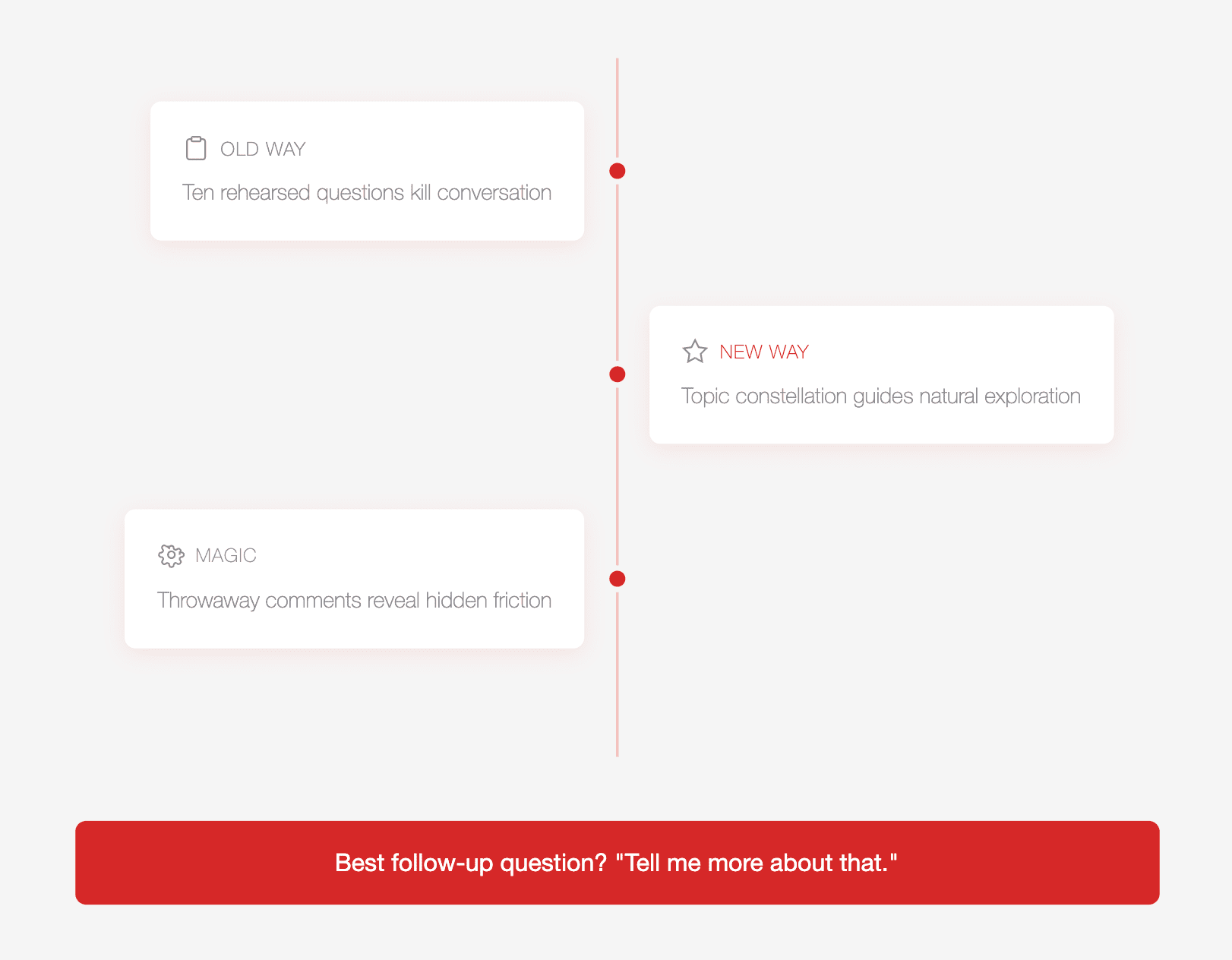
That classic 10-question script your team spent three hours debating on Slack. Toss it.
Scripts feel safe. But they turn you into a compliance officer with a clipboard. You ask your question. They answer. You ask the next one. No sparks. No follow-up. No flow.
So we ditched the rigid questionnaire and replaced it with a topic map:
A loose constellation of things we might want to explore, depending on how the convo goes.
Think of it like going to a party. You don’t walk in with 10 things you must say. You vibe it out. You follow threads. You let things get weird.
Sometimes a throwaway comment like “Honestly, I just use the export button and pray” led us down a rabbit hole that revealed a major UX issue we’d been blind to for months.
Also: The best follow-up is always “Tell me more about that.” because it works, not because it’s clever.
Ditch “Feedback Mode.” Go Full Gossip.
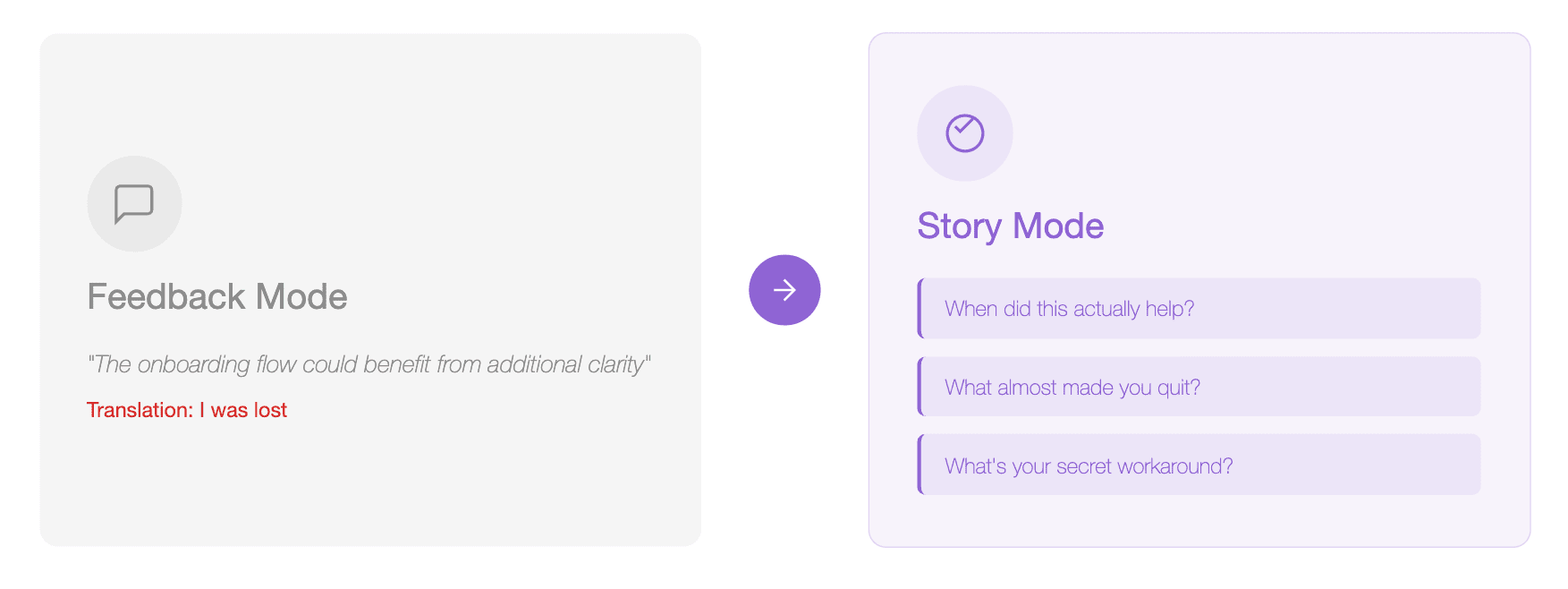
There’s this thing that happens when people feel like they’re giving feedback. They put on their polite face. They speak in MBA-ese. “I believe the onboarding flow could benefit from additional clarity.” (Translation: I was confused, gave up, and watched cat videos instead.)
We stopped asking for feedback and started asking for stories.
“When was the last time this actually helped you do something important?”
“What did you use instead before you found this?”
“What almost made you give up?”
People don’t remember features. They remember moments. Let them tell stories and they’ll reveal way more than they would in ‘feedback mode.’
And once in a while, someone gets on a roll and spills the tea: how they hacked a workaround, what their boss hates, which team always messes up the handoff. Now you’re not getting answers. You’re getting gossip. That’s when you know it’s working.
Interviews Aren’t Surveys. They’re Therapy.
Let’s clear something up: interviews aren’t about collecting responses. They’re about making people feel heard.
We treated interviews like qualitative research, but forgot the human part. That people don’t open up unless they feel safe. Or seen. Or - dare we say it - like you actually care.
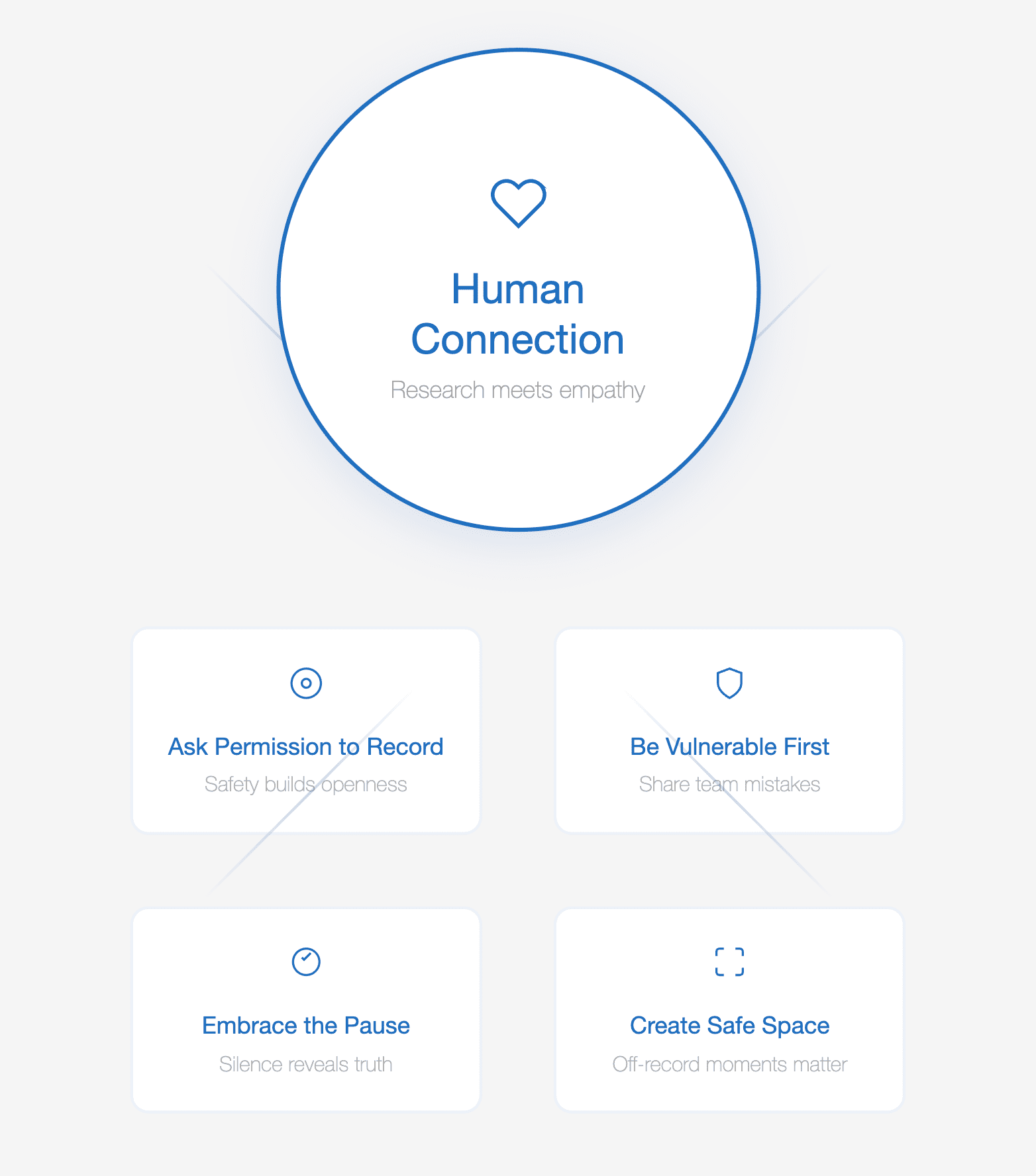
So we started doing three simple things:
- Ask permission to record. But say they can go off the record anytime. It makes them relax.
- Be vulnerable first. Mention something your team got wrong. Watch the defenses drop.
- Shut up more. People fill silence. Let them.
One customer once said, “Honestly, I thought you guys would be defensive. This is the first time I’ve said this out loud.” That moment gave us more insight than a year of NPS scores.
Also, shoutout to the pause. Learn to love it. Let it linger. Someone will break it - and what they say next is usually the realest bit.
The Real Work Happens After the Call
Even if you nail the interview, insights don’t magically show up in your transcript like highlighted gems.
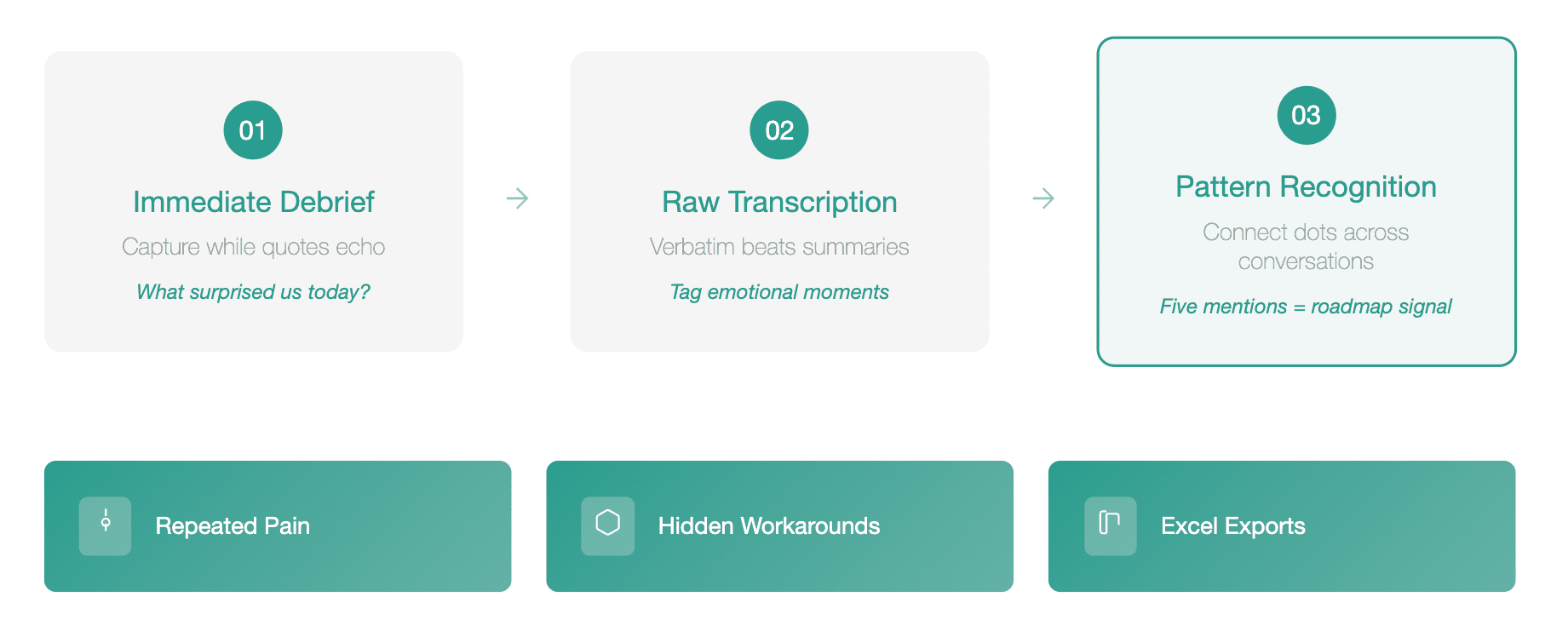
We started doing debriefs immediately after every call. While it was fresh. While the quotes were still echoing in our heads.
One person would write down “What surprised us?”, “What did they actually want?”, and “What felt emotionally charged?”
Another would tag timestamps and transcribe juicy bits verbatim. No summaries. Just raw words. They hit different when you hear them back.
And then - this is crucial - we’d connect the dots across interviews.
If three different customers described your reporting as “chaotic,” you have a problem. If five of them mentioned exporting to Excel, maybe your insights aren’t insightful enough.
It’s less about individual opinions and more about repeated pain. Patterns. And if you see the same issue come up again and again? That’s your roadmap.
When in Doubt, Pretend You’re Louis Theroux
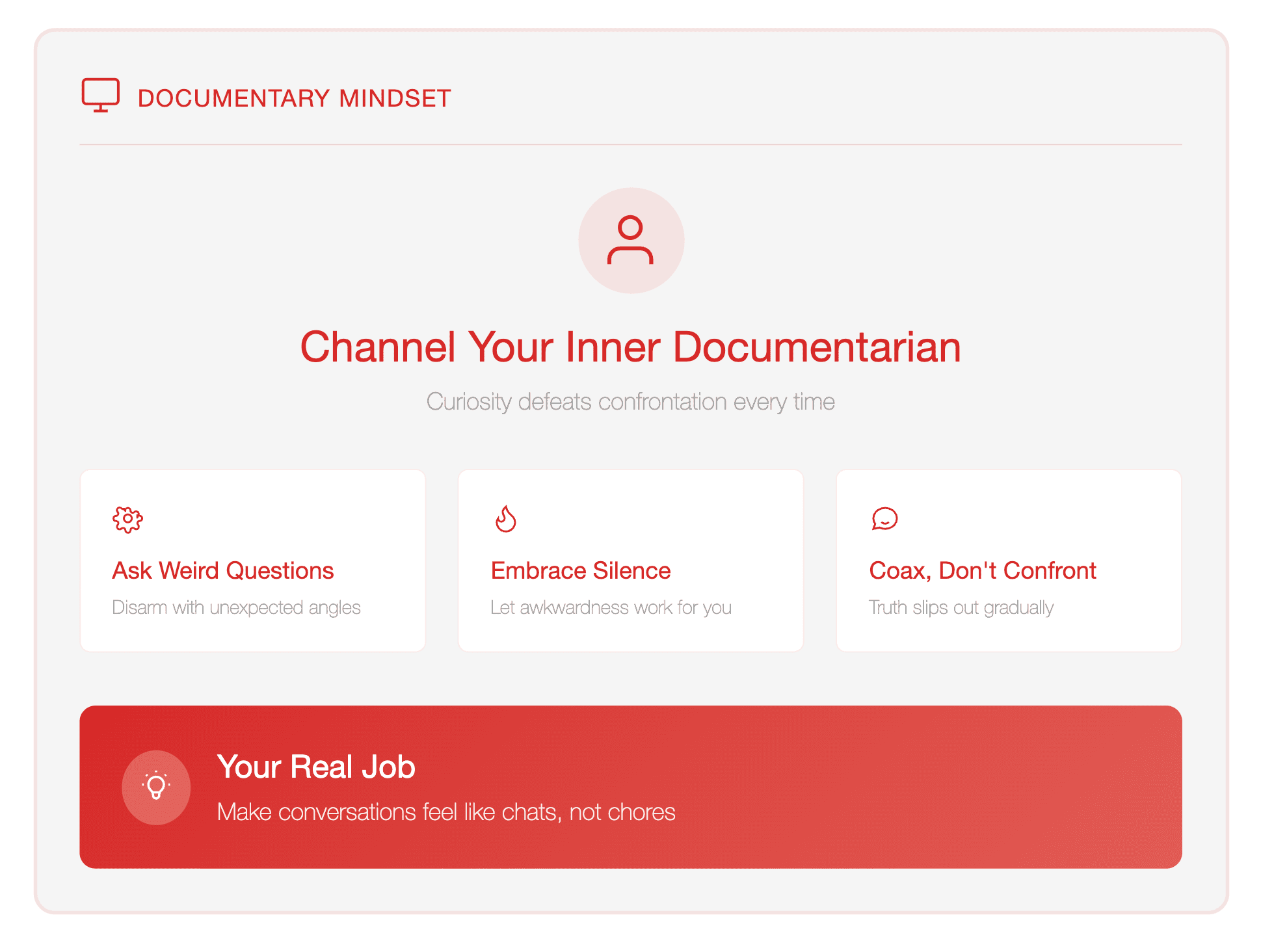
If all else fails, channel your inner British documentarian. Curiosity, not confrontation.
Ask weird questions. Go quiet. Get awkward. Nod thoughtfully.
Louis doesn’t barge in with assumptions. He coaxes. He meanders. He gets people to say things they didn’t plan to.
Your job isn’t to confirm your roadmap. It’s to disarm people long enough for the truth to slip out.
So next time you're prepping for an interview, don’t ask yourself “What should I ask?” Ask “How do I make this feel like a chat, not a chore?”
Bonus Bits: The Interview Survival Pack
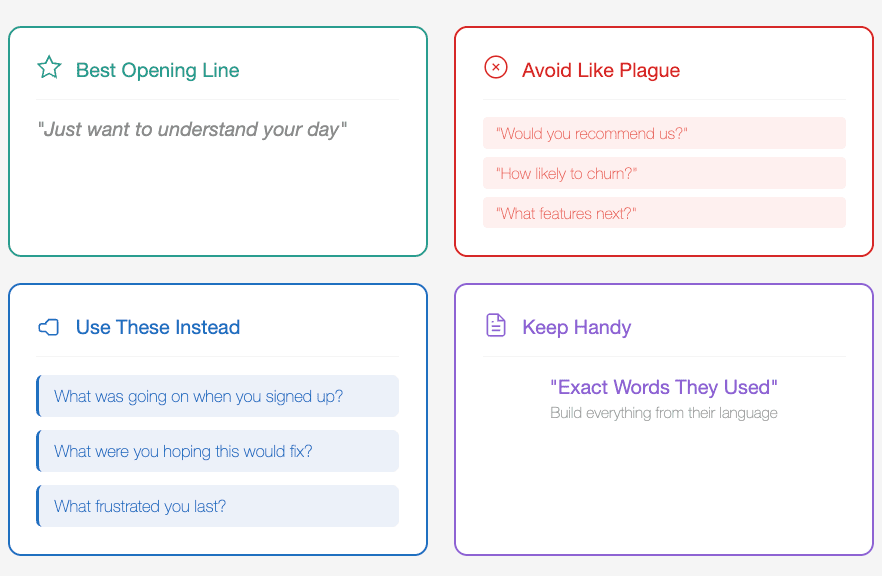
Best opening line:
"Thanks for doing this - honestly, I just want to understand what your day’s like and how our stuff fits into it. No pressure."
Avoid these questions like the plague:
- “Would you recommend us to a friend?”
- “How likely are you to churn?”
- “What features would you like next?” (Unless you love getting a wishlist of contradictory demands)
Use these instead:
- “What was going on the day you signed up?”
- “What were you hoping this would fix?”
- “What’s the last thing that frustrated you while using it?”
Keep handy:
A doc titled “Exact Words They Used.” Don’t paraphrase. Build your copy, your roadmap, and your positioning around their language - not yours.
Wrap-up
Interviewing customers can feel weird. But it doesn’t have to be robotic. If you kill the script, go story-first, and listen like a curious human instead of a metrics-hungry PM, you’ll find the insights are there. Hiding in plain sight. In the awkward pauses, the offhand remarks, and the bit where they accidentally open a competitor tab.
Want to actually learn something in your next customer interview? Start by talking less. And noticing more.
FAQ
1. What’s the biggest mistake people make in customer interviews?
Treating them like surveys. If you’re just rattling off a list of pre-written questions, you’re not interviewing - you’re collecting polite lies. The real value comes from unscripted conversations where people say what they didn’t even know they were thinking.
2. How do I get customers to actually show up to interviews?
Make the ask personal and low-pressure. Tell them why their input matters (not in generic “we value your feedback” terms), and offer something in return - a sneak peek, a gift card, or just the chance to shape what they’ll use. Also: send a calendar invite, confirm the day before, and assume they’ll flake at least once.
3. Should I record interviews?
Yes, but only if you ask permission and offer off-the-record options. Recording lets you focus on listening instead of frantic note-taking. More importantly, you can go back and hear how they said things - not just what they said.
4. How do I ask better questions?
Ditch abstract questions like “What do you think of our UX?” and go for stories instead: “Tell me about a time you got frustrated using our tool.” Specific moments are where the gold is. And if they give a vague answer, just say “Can you walk me through that?” and let the awkward silence do the rest.
5. What if someone gives only positive feedback?
Assume they’re being polite. Smile, nod, and dig. Try “Was there anything that almost stopped you from using it?” or “What’s something that could have made this easier?” No product is perfect. If you don’t hear a single complaint, they’re either lying or you’re not listening hard enough.
6. How do I handle someone who's clearly annoyed or frustrated?
Lean in, gently. Acknowledge their frustration without defending the product. Say, “That sounds frustrating - can you tell me more about what happened?” Angry customers often give the best insights, because they care enough to rant instead of just disappearing.
7. Is it okay to steer the conversation?
Yes, but like a good dinner party host, not a courtroom lawyer. You’re guiding, if it veers off into irrelevance, not interrogating. Let the conversation flow naturally, gently bring it back with “I’m curious - when that happened, did our tool help or get in the way?”
8. How many interviews should I do?
Start with 5–8, then look for patterns. If you're hearing the same themes repeatedly, you're close to saturation. But if every interview feels like a different planet, keep going. You’re not aiming for statistical significance - you’re chasing recurring insights.
9. What do I do after the interview?
Debrief immediately. Write down what surprised you, what they actually wanted, and the exact phrases they used. Then look across interviews for emotional hotspots - those are the themes to prioritize in your roadmap, messaging, or UX work.
10. Can I use these interviews for marketing content too?
Absolutely. Verbatim quotes make excellent copy. Just get permission first. If a customer drops a line like “this saved me five hours a week,” that’s not just feedback - it’s headline material. But never sanitize their language too much. Real words hit harder than polished ones.