
Why your funnel is scaring away whales - and how to fix it without a Tony Robbins webinar
If we had a dollar for every guru promising six figures from affiliate marketing “while you sleep,” we’d… well, we’d probably still be broke - because they’re spending those dollars on cold-traffic Facebook ads and poorly lit Zoom webinars. High-ticket affiliate marketing (read: commissions north of $500 a pop) isn’t about plastering links on Twitter or praying to the SEO gods. It’s about building a funnel so convincing, it could sell a yacht to a monk.
Most marketers treat all affiliate offers the same, whether it’s a $9 ebook or a $5K SaaS annual plan. That’s like trying to sell a Ferrari the same way you’d hawk socks at a flea market.
So let’s get real. If you want to close bigger deals and stop wasting time with freebie hunters, here’s how to build an affiliate funnel that actually converts high-ticket leads - without selling your soul or staging a fake “countdown timer.”
Most Funnels Are Built for Low-Stakes Clicks
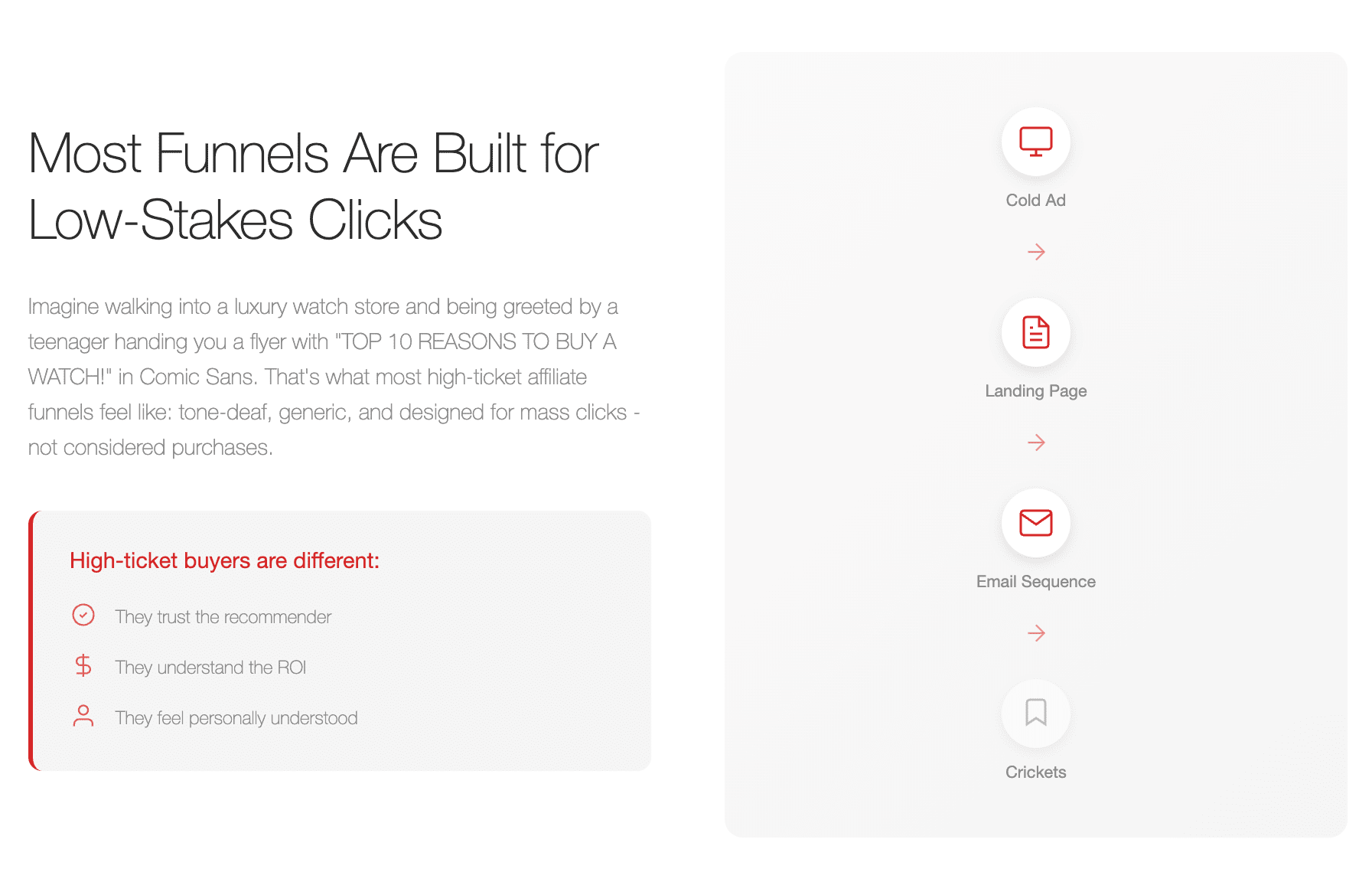
Imagine walking into a luxury watch store and being greeted by a teenager handing you a flyer with “TOP 10 REASONS TO BUY A WATCH!” in Comic Sans. That’s what most high-ticket affiliate funnels feel like: tone-deaf, generic, and designed for mass clicks - not considered purchases.
High-ticket buyers are different. They’re not impulse-clickers. They’re researchers, spreadsheet-makers, LinkedIn lurkers. They're not buying a $2,000 course or a $1,500 annual software license because you slapped “limited-time bonus” on it. They're buying because:
- They trust the recommender (that’s you).
- They understand the ROI.
- They feel personally understood.
But most affiliate funnels are structured like this:
- Cold ad > Landing page > Email signup
- Generic nurture sequence > Affiliate link
- Crickets
This works (sometimes) for tripwires and templates. But for high-ticket? It’s like proposing on the first date - risky, a bit creepy, and almost guaranteed to fail.
Your Authority Is the Funnel
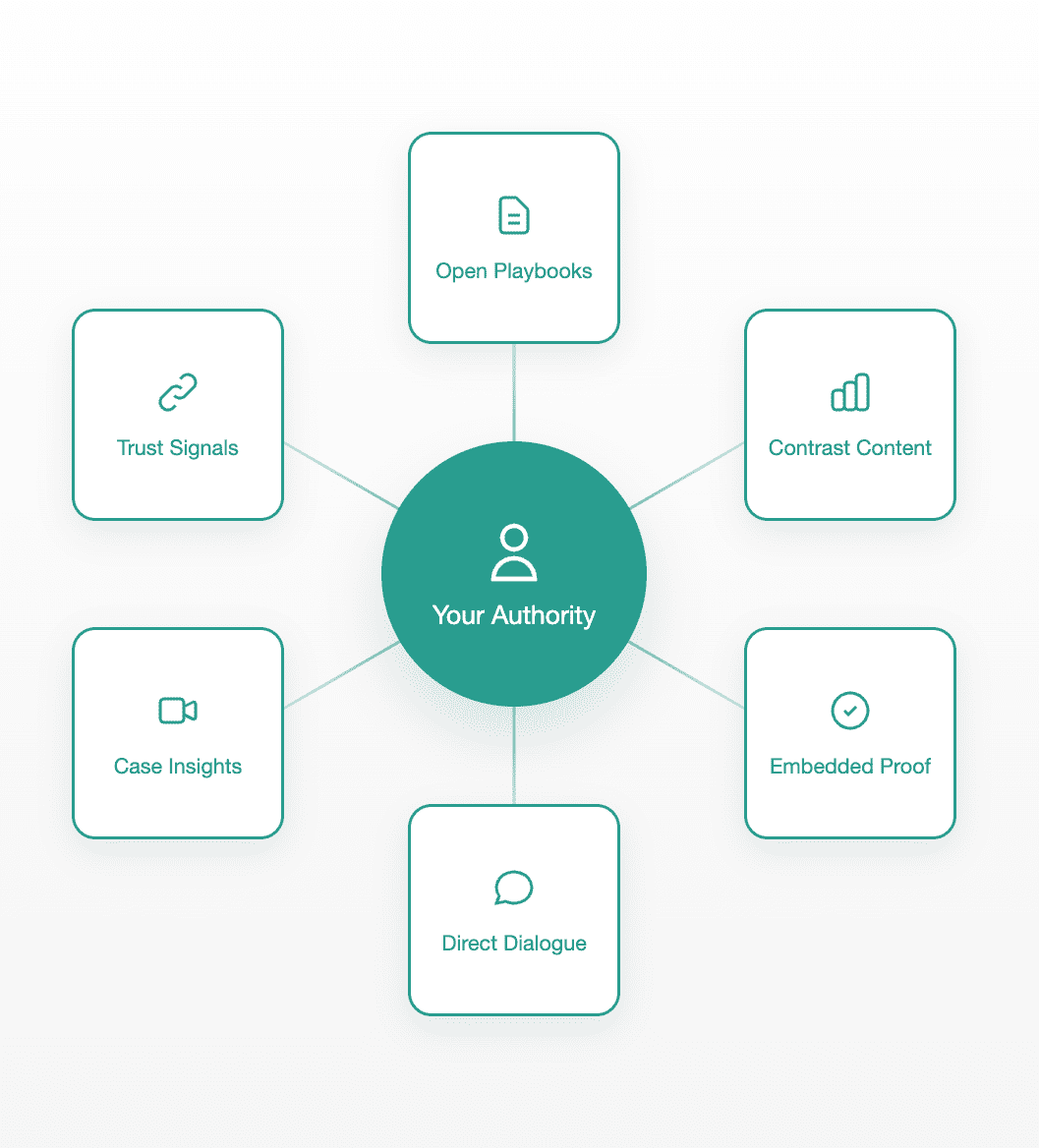
When you're selling something high-ticket, the funnel isn’t just a series of landing pages. It’s you. Your face. Your content. Your DMs. Your soapbox on LinkedIn or YouTube. You are the reason someone even considers the product.
Here’s the hard truth: If they don’t buy from you, they’ll still buy - just from someone they trust more.
So how do you earn that trust without cosplaying a life coach?
- Build open playbooks: Instead of regurgitating the product’s sales page, show people how you’re actually using it. Share your dashboards, your tweaks, your failures. Show don’t sell.
- Create “contrast content”: Stack your affiliate product against known competitors in public. People want to know why you chose Product A over B, C, and D - and what tradeoffs they’re in for.
- Embed proof casually: Don’t scream “I MADE $9,347 IN 30 DAYS” in caps. Instead, mention it offhand in a story. “Funny enough, this client came from a lead I closed after using [Product] for six months…” Less MLM, more NPR.
High-ticket buyers are allergic to hype but addicted to insight. Be the latter.
Nurture Like a Concierge, Not a Nurturebot
The traditional drip campaign is dead. Or at least, on life support with an open-rate IV.
Instead of “5-day email sequences,” try this mindset: act like a concierge for the buying journey. Your job isn’t to persuade - it’s to curate.
Let’s break that down:
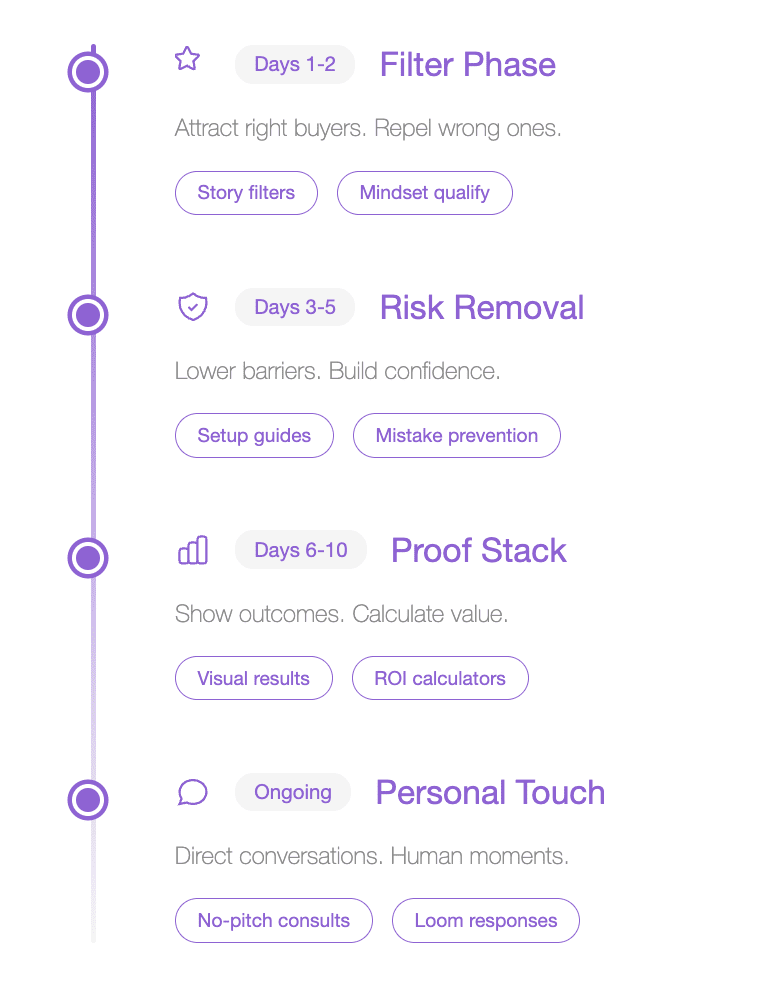
- Day 1–2: “Is this for you?” filter
Use story-driven content to attract the right people and repel the wrong ones. This isn’t about qualifying leads - it’s about pre-qualifying mindsets. - Day 3–5: Risk-lowering guides
Think beyond “features.” What does onboarding look like? How do you avoid common mistakes? Build mini-guides that make the buyer feel smarter before they buy. - Day 6–10: Case studies + calculator content
Show what success looks like - visually. ROI calculators, outcome screenshots, teardown-style content (“How I made X using Y”) all crush here. - Ongoing: One-on-one touchpoints
Offer a 15-min “no pitch” consult. Invite them to your Slack group or webinar. DM them a loom video answering their question. These micro-trust moments drive macro decisions.
Basically, stop acting like a funnel. Start acting like a helpful nerd who loves the product and knows exactly who should (and shouldn’t) use it.
Strategic Friction: Yes, Make It Harder to Buy
Counterintuitive, but stay with us.
Low-ticket funnels are frictionless by design. You want as few steps as possible between the click and the ka-ching. But with high-ticket? You want friction - strategic friction.
That means adding steps that qualify, educate, or deepen trust.
Examples:
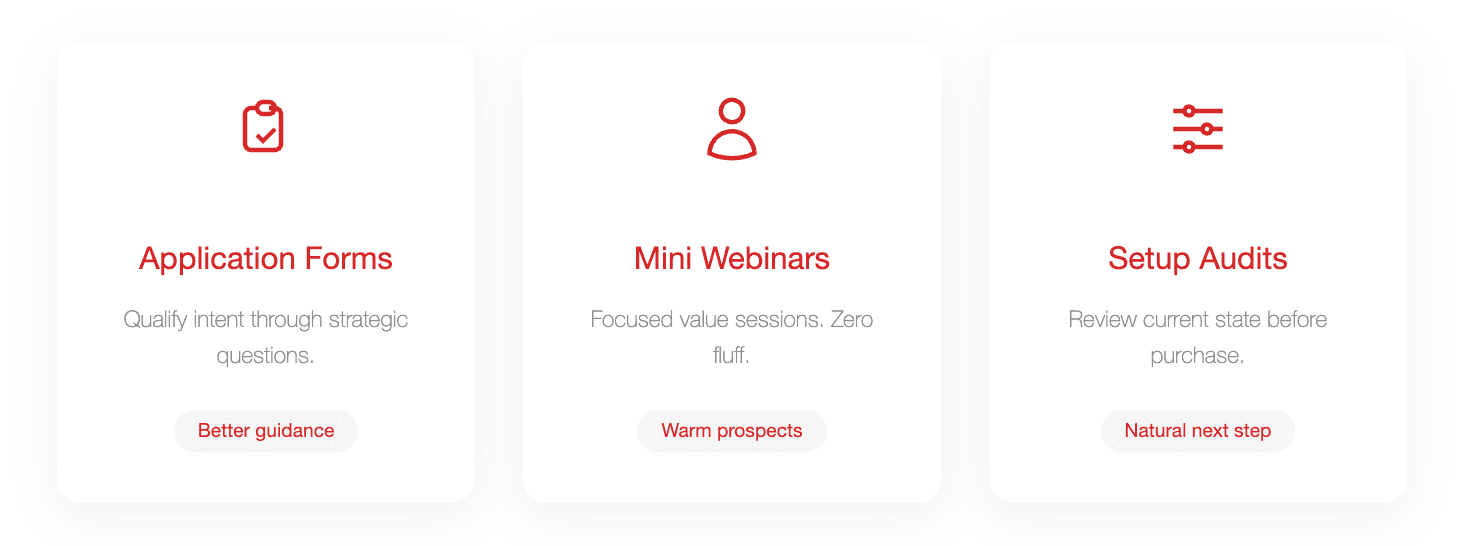
- Application forms: Want access to your special bonus or discount? They fill in a few questions. to guide them better (and upsell smarter), not to gatekeep.
- Mini-webinars with zero fluff: 15 minutes of focused, not 60 minutes of backstory, tactical value. If they make it through, they’re warm - and now they see you as a peer.
- Pre-purchase audits or reviews: Offer to look over their current setup or needs. Your affiliate link becomes the natural next step. Not a CTA, just the logical next tool.
When the product is expensive, the buyer wants to be sure. Friction done right makes them feel cared for - not conned.
Don’t Just Track Clicks. Track Clues
We know, everyone and their tracking pixel is obsessed with click-through rate (CTR). But CTR tells you who’s curious, not who’s committed.
In high-ticket affiliate land, these are the signals that actually matter:
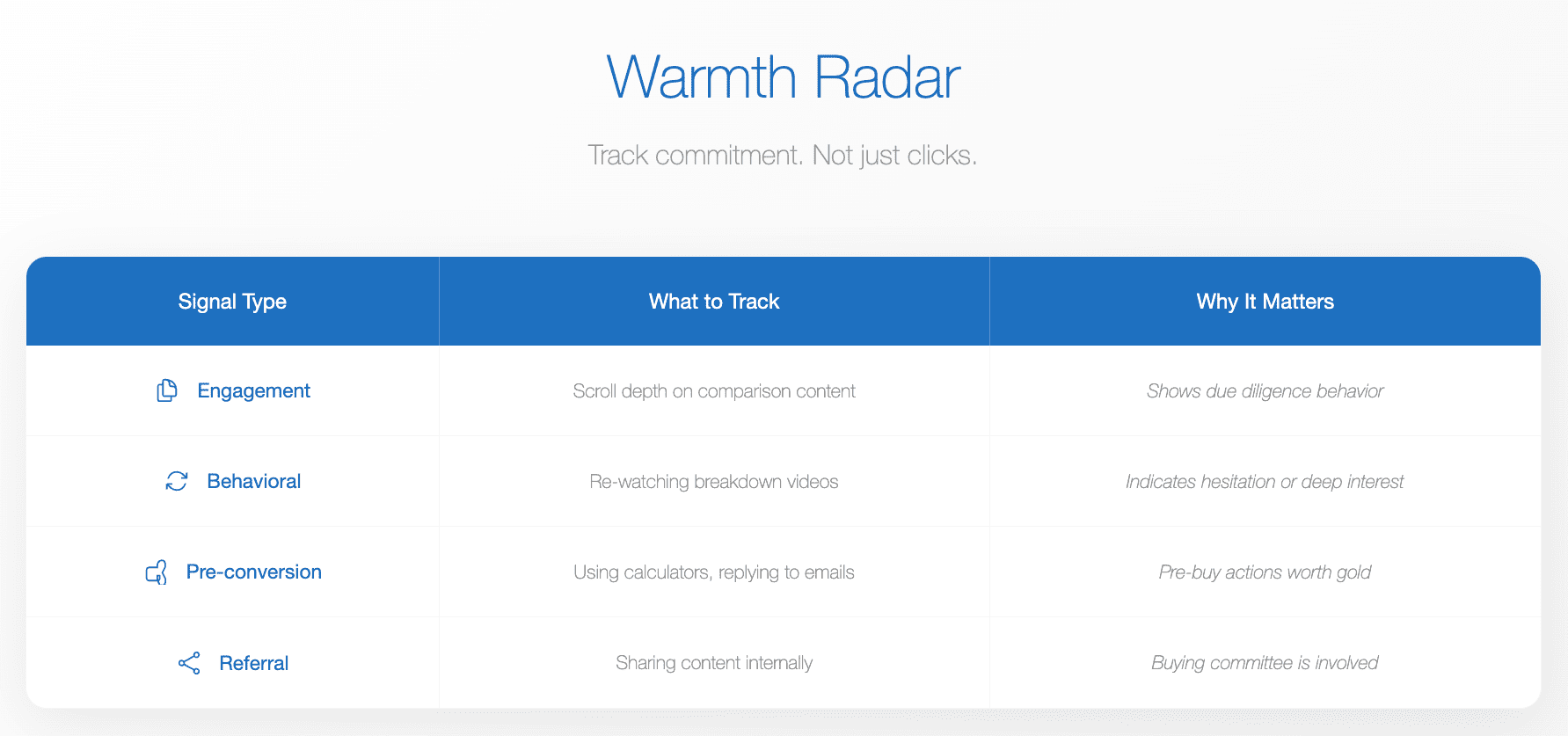
What you want is a “warmth radar,” not just a funnel dashboard. Tag these behaviors. Set alerts. Follow up like a detective, not a discount code.
Bonus: when you see someone stuck on the fence, send a personalized recommendation, not a broadcast nudge. “Hey Tom, saw you ran the ROI calculator - want me to walk you through my setup?” That’s a $1K close wrapped in a casual email.
Are You Whale-Ready?
Let’s do a quick vibe check on your funnel. Give yourself a score from 1 (yikes) to 5 (chef’s kiss):
| Funnel Element | Your Score |
|---|---|
| Trust-Building Content | |
| Personalized Follow-ups | |
| Strategic Friction (Qualifiers) | |
| ROI-Focused Messaging | |
| Post-Click Value Add (Bonuses, Audits) | |
| Proof, Not Hype | |
| Human Touchpoints (Calls, Looms) |
If you’re under 25, you’ve got work to do. But don’t panic - start with one area. Usually, adding trust (through proof and clarity) lifts everything else with it.
Don’t Sell the Product - Sell the Payoff
Here’s the secret most “affiliate hacks” miss: the buyer doesn’t really care about the product. They care about the future version of themselves the product unlocks.
Your job is to make that transformation feel believable, specific, and desirable.
No funnel wizardry can replace that. But if you build a high-trust, insight-rich, buyer-friendly journey - with the right touches of personalization and proof? You’ll sell high-ticket offers with the ease of a glassy-eyed golf dad upselling his favorite putter.
Want to see this kind of funnel in action? Pick one high-ticket product you already use, and start building your concierge-style funnel. You’ll know it’s working when people thank you before they even click the link.
FAQ
1. What’s the biggest mistake people make when trying to sell high-ticket affiliate products?
Trying to use the same funnel tactics meant for low-ticket impulse buys. High-ticket buyers need more education, trust, and time. They want proof, not pressure. A generic email blast or salesy landing page won’t cut it—they’re looking for a peer, not a peddler.
2. How long should a high-ticket affiliate funnel be?
There’s no magic length, but the journey should match the decision complexity. For a $2,000 product, a few days of nurturing is rarely enough. Think in terms of stages—awareness, consideration, trust-building, then conversion. If you’re skipping steps, you’re skipping sales.
3. Do I need to show my face to convert high-ticket leads?
some form of personal presence—voice, not necessarily, name, video, or thoughtful commentary—goes a long way. People buy from people, especially when the price tag makes them hesitate. You don’t need to be an influencer; you just need to be visible and credible.
4. Should I use webinars or videos in my funnel?
Yes, but only if they’re useful and respectful of your audience’s time. A 15-minute tactical video will often outperform a 90-minute fluff-filled webinar. Use video to deepen trust and simplify complexity, not just to pitch. The goal is clarity, not captive retention.
5. How can I stand out if 50 other affiliates are selling the same product?
By injecting you into the mix. Use your own use cases, comparisons, success stories, and critiques. Build calculators, guides, or bonus content. Think like a product concierge—your angle isn’t the product itself, but the way you help people get value from it.
6. What kind of lead magnets work best for high-ticket affiliate funnels?
Lead magnets that help the buyer make an informed decision work best. Think ROI calculators, buyer’s guides, competitor comparisons, onboarding templates, or personal setup walkthroughs. If your lead magnet makes the buyer smarter, it makes the sale smoother.
7. Do I need to offer bonuses to drive high-ticket conversions?
Bonuses help, but they shouldn’t be filler. Avoid the classic pile-of-junk PDF bundle and instead offer things like 1:1 consults, implementation reviews, SOPs, or tools you actually use. A well-positioned, relevant bonus can tip the scales when someone’s on the fence.
8. How do I track whether my funnel is working if conversions are rare?
Track behavioral intent, not just clicks. Look for signs like scroll depth, repeat visits to comparison pages, ROI calculator use, video replays, or email replies. These clues tell you who’s warming up. High-ticket sales often come after several “invisible” touchpoints.
9. Is retargeting useful in a high-ticket affiliate funnel?
Absolutely—but only if your retargeting ads are helpful, not harassing. Don’t just flash the same product banner at them. Show them new testimonials, case studies, or fresh insights. Use retargeting to reinforce trust and relevance, not remind them you exist.
10. What’s the best way to follow up with a lead who didn’t convert?
Send a thoughtful, personalized message—not a pushy promo. Reference what they engaged with, and offer to help them think through their decision. Sometimes the best follow-up is a question, not a CTA. Show up like a strategist, not a salesperson.