

Let’s get this out of the way: most product-led growth (PLG) SaaS onboarding is a dumpster fire in a wind tunnel.
You know it. I know it. The only people who don’t know it are the ones still A/B testing their “Welcome!” modals for the 47th time, convinced that a slightly bluer button will finally unlock the gates of user retention Valhalla.
Still think your onboarding is the messiah? Cute.
Here’s the dirty secret: for all the TED talks, Medium thinkpieces, and “frictionless” Figma flows, most SaaS onboarding is a parade of lazy assumptions, cargo-cult best practices, and a pathological fear of talking to actual users. The result? A graveyard of trial signups, a CAC-to-LTV ratio that would make WeWork blush, and a user journey that feels like being waterboarded with tooltips.
But at least you’ve got a checklist, right?
Let’s torch the sacred cows, expose the lazy thinking, and end with a practical ‘what now’. Buckle up.
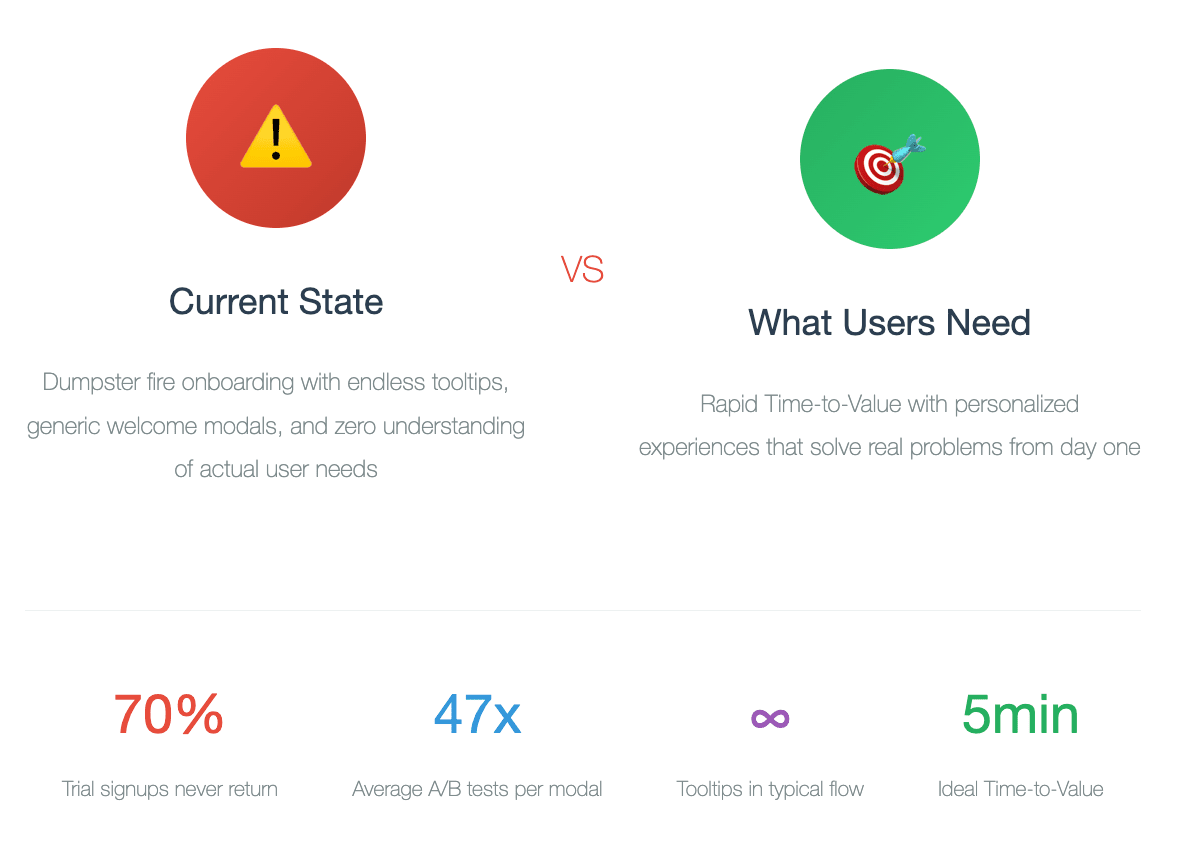
THE MYTH: “PLG Onboarding Is Self-Serve Nirvana”
If you build it, and slap a ‘Start Free’ button on it, they will come. And stay. And pay. And tell their friends.”
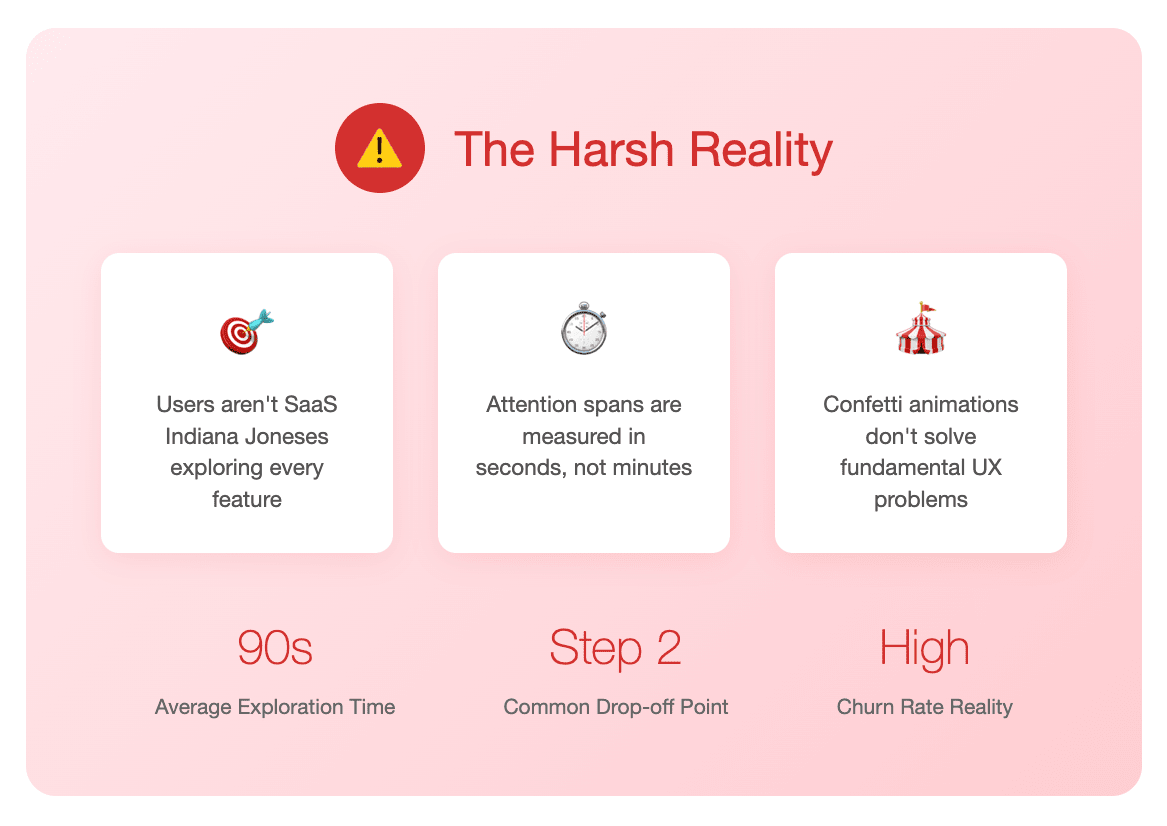
This myth is so pervasive it’s practically a SaaS commandment. The idea is that users are rational, motivated, and—most importantly—desperate to explore your product’s every nook and cranny, unaided, like SaaS Indiana Joneses.
So you build a “frictionless” onboarding: no sales calls, no hand-holding, just a blank canvas and a cheery tooltip. Maybe a confetti animation if you’re feeling spicy.
Still think that’s what users want? That’s adorable.
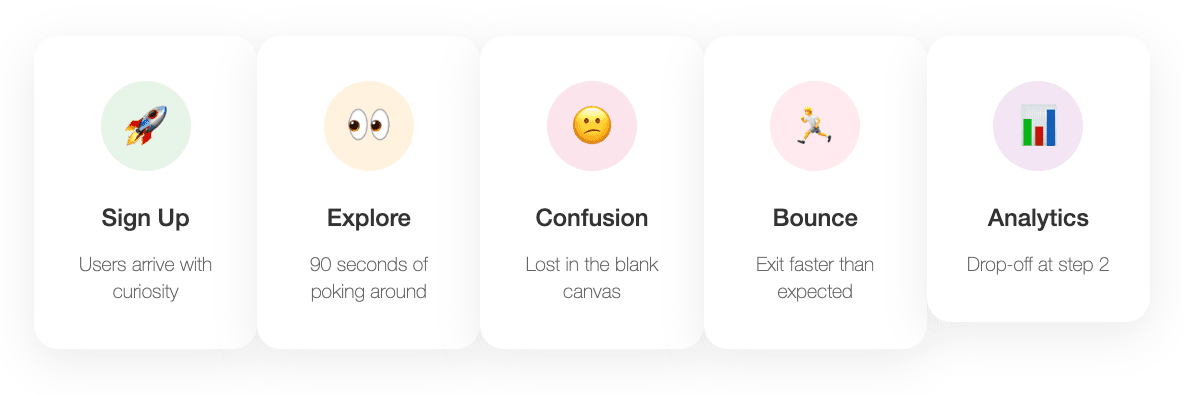
Here’s what actually happens: users sign up, poke around for 90 seconds, get lost, and bounce harder than a Super Ball in a tile bathroom. Your analytics dashboard lights up with “drop-off at step 2,” and your growth team starts another Slack thread about “activation levers.”
Meanwhile, your churn rate is quietly auditioning for a Fast & Furious sequel.
“Most SaaS onboarding is a parade of lazy assumptions, cargo-cult best practices, and a pathological fear of talking to actual users.”
THE REALITY: “Self-Serve ≠ Self-Explanatory”
Let’s get real. The average SaaS user is not a product manager with a PhD in UX. They’re busy, distracted, and have the attention span of a TikTok goldfish. They don’t want to “explore.” They want to get one thing done, fast, with minimal cognitive load.
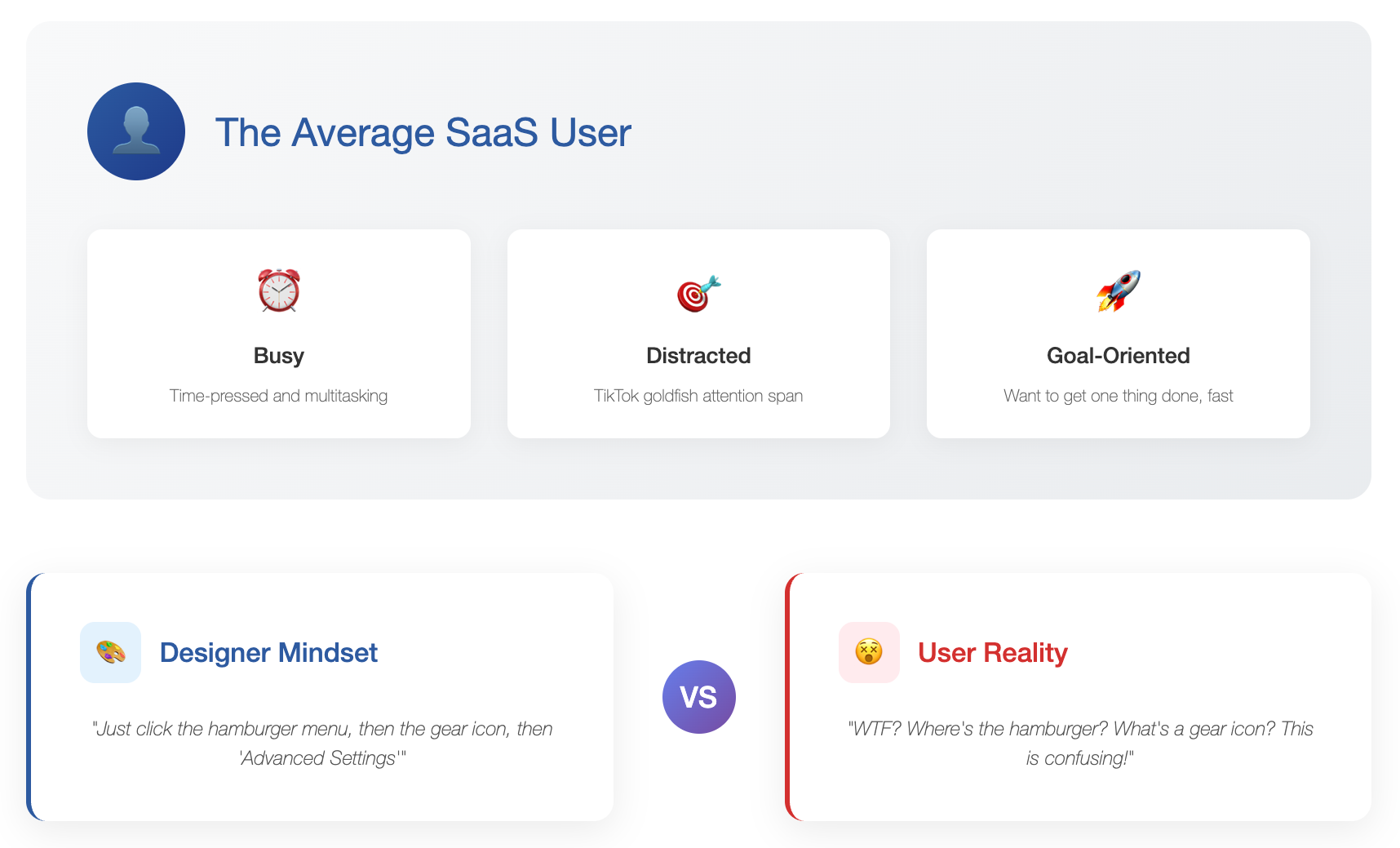
But most onboarding flows are designed by people who already know the product inside out. You know, the same folks who think “just click the hamburger menu, then the gear icon, then ‘Advanced Settings’” is intuitive.
The result? A user journey that’s less “aha!” and more “WTF?”
Let’s talk numbers. According to OpenView’s 2023 SaaS Benchmarks, the median free-to-paid conversion rate for PLG companies is a paltry 4%. That means 96% of your precious signups are ghosting you harder than a Tinder date who saw your crypto tweets.
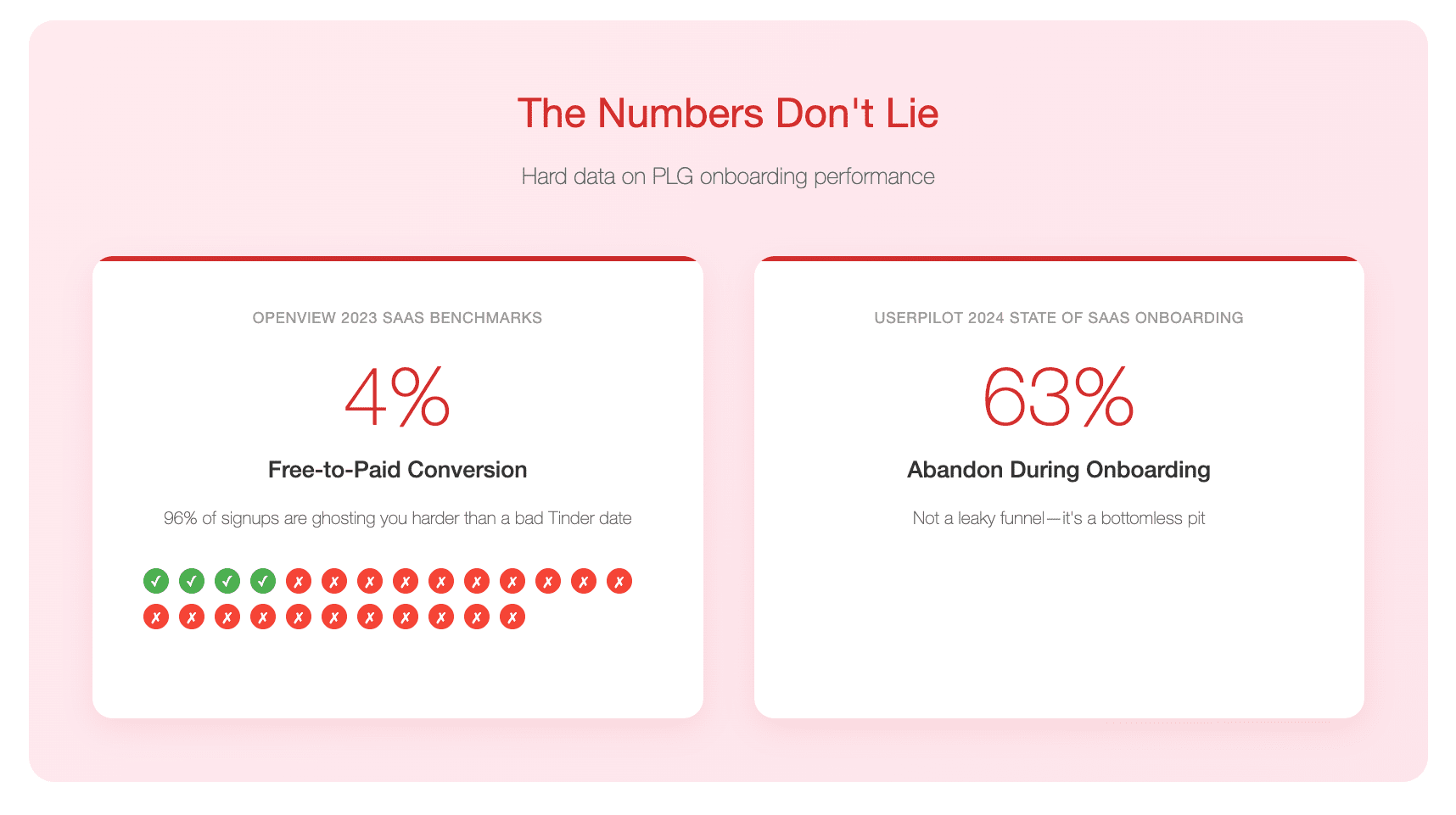
And it gets worse. Userpilot’s 2024 State of SaaS Onboarding report found that 63% of SaaS users abandon a product during onboarding. That’s not a leaky funnel—it’s a bottomless pit.
Still think your “interactive walkthrough” is the answer? Bless your heart.
“Self-serve onboarding is not a substitute for empathy. It’s a mirror reflecting your product’s worst habits back at your users.”
THE FALLOUT: “Churn, Burn, and the Cult of the Checklist”
Let’s tally the body count.
First, there’s the wasted ad spend. The average B2B SaaS company spends $1,450 to acquire a single trial user (source: ProfitWell, 2023). If 96% of those users never convert, you’re basically lighting $1,392 on fire for every signup.

Second, there’s the brand damage. Every user who bails during onboarding is a future detractor. They’ll tell their friends, their LinkedIn followers, and anyone who’ll listen at SaaS conferences that your product is “confusing,” “overwhelming,” or “just not worth it.”
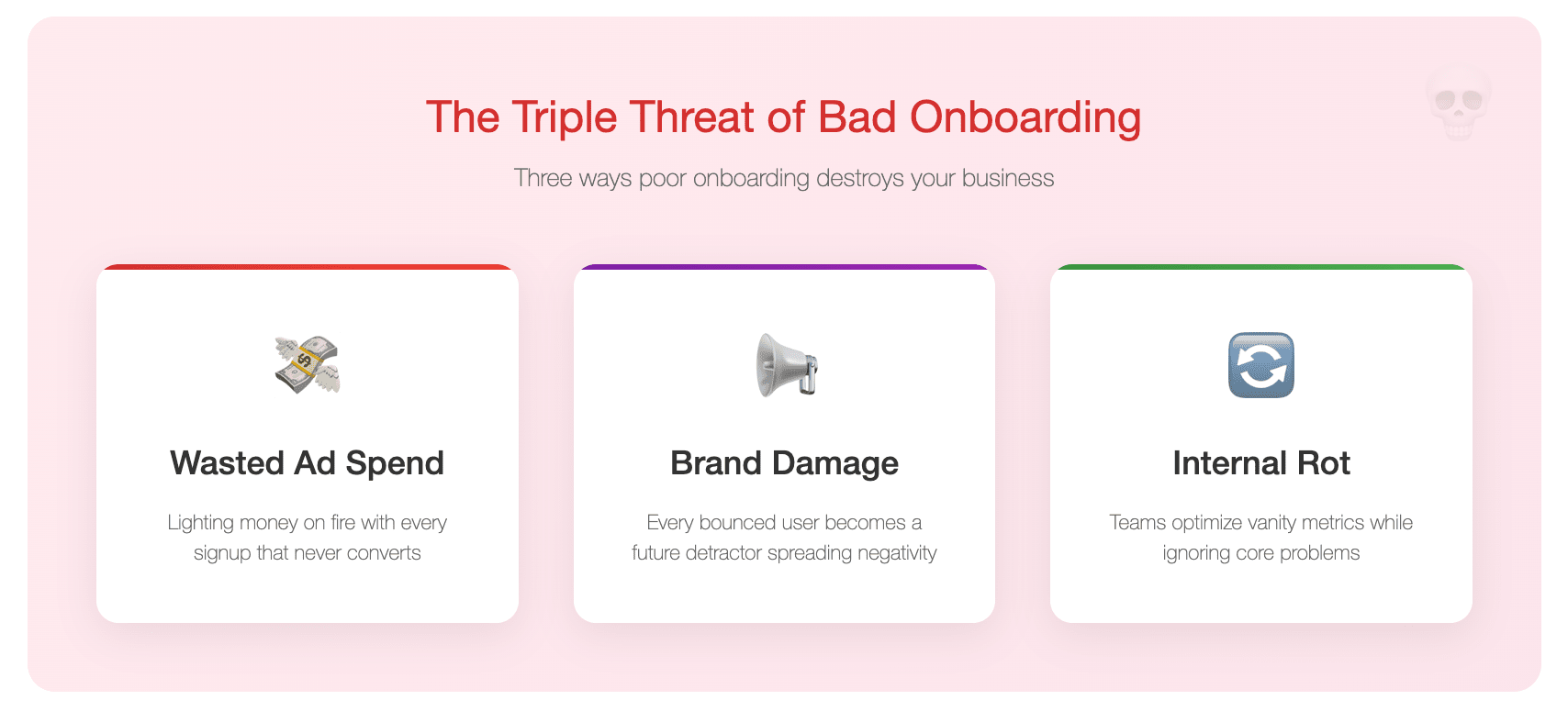
Third, there’s the internal rot. Teams start optimizing for vanity metrics—“We increased onboarding completion by 12%!”—while ignoring the fact that nobody sticks around past day three. You get endless debates about whether the tooltip should be on the left or right, while the real problem (nobody knows what the hell your product does) goes unsolved.
And let’s not forget the Rogues’ Gallery:
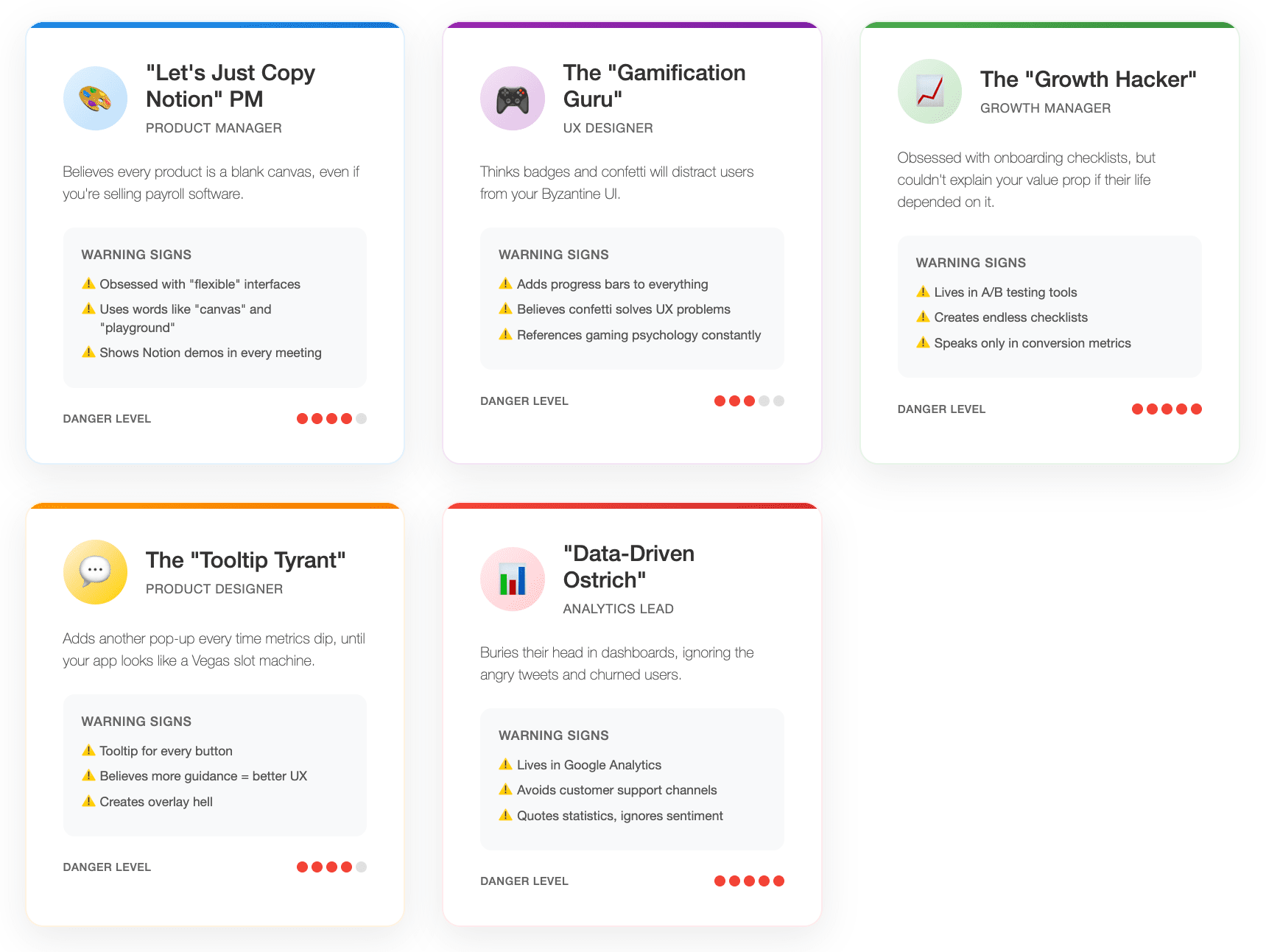
Rogues’ Gallery: The Usual Suspects
- The “Let’s Just Copy Notion” PM: Believes every product is a blank canvas, even if you’re selling payroll software.
- The “Gamification Guru”: Thinks badges and confetti will distract users from your Byzantine UI.
- The “Growth Hacker”: Obsessed with onboarding checklists, but couldn’t explain your value prop if their life depended on it.
- The “Tooltip Tyrant”: Adds another pop-up every time metrics dip, until your app looks like a Vegas slot machine.
- The “Data-Driven Ostrich”: Buries their head in dashboards, ignoring the angry tweets and churned users.
Still think you’re not on this list? Check your Slack channels.
THE FIX: “Onboarding as a Service, Not a Feature”
Here’s the part where I’m supposed to offer a silver bullet. Sorry, there isn’t one. But there is a better way.
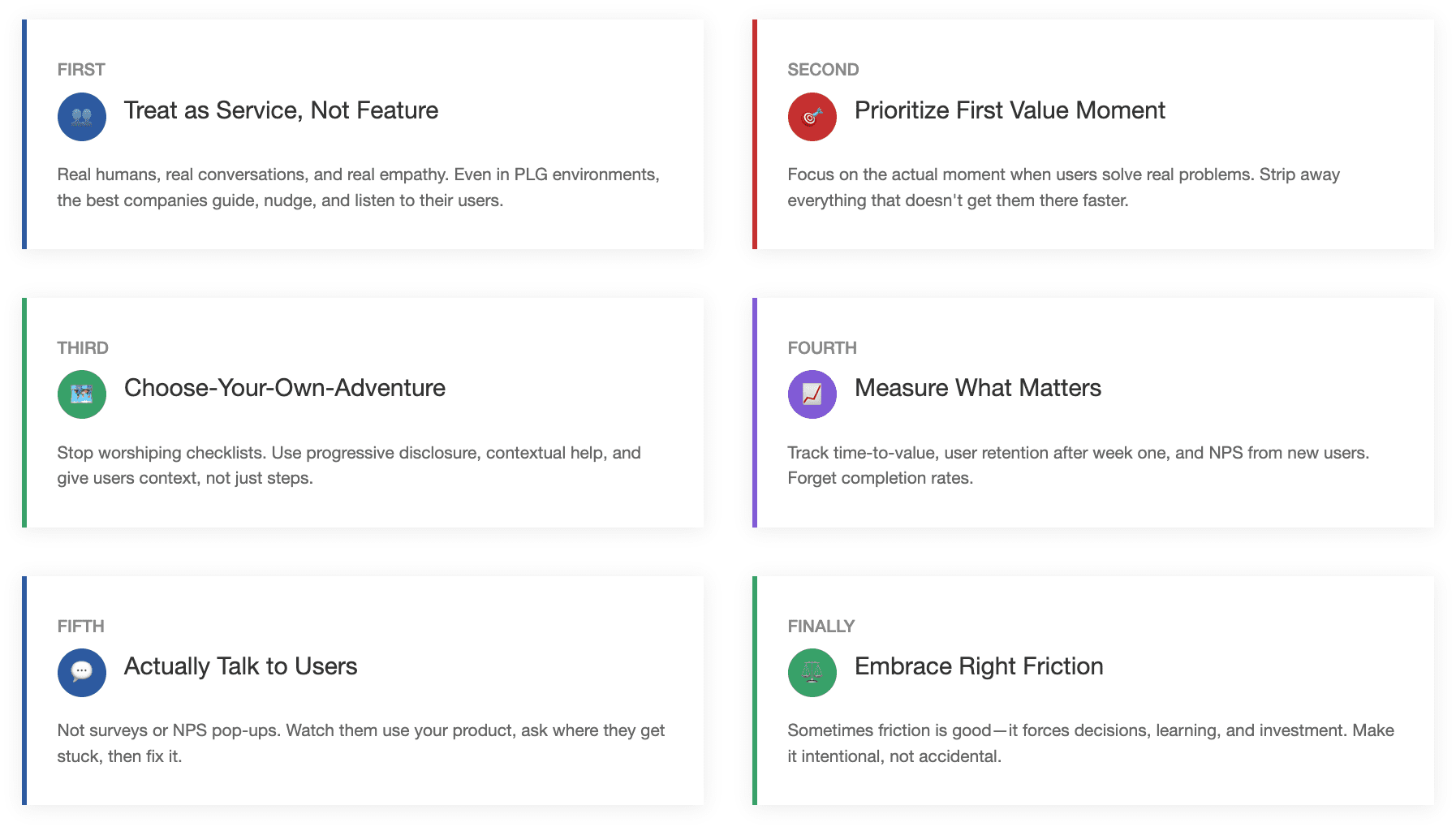
First, treat onboarding as a service, not a feature. That means real humans, real conversations, and real empathy. Yes, even in a PLG world. The best PLG companies—think Figma, Notion, and Slack—don’t just throw users into the deep end. They guide, nudge, and listen.
Second, ruthlessly prioritize the first value moment. the actual moment when a user solves a real problem, not the “aha!” moment your product team dreams about. Strip away everything that doesn’t get them there faster.
Third, stop worshiping the checklist. Onboarding isn’t a linear path; it’s a choose-your-own-adventure. Give users context, not just steps. Use progressive disclosure, contextual help, and—gasp—actual customer support.
Fourth, measure what matters. Forget onboarding completion rates. Track time-to-value, user retention after week one, and NPS from new users. If your onboarding isn’t moving those needles, it’s just window dressing.
Fifth, talk to your users. Not in a survey. Not in a Net Promoter Score pop-up. Actually talk to them. Watch them use your product. Ask them where they get stuck. Then fix it.
And finally, embrace friction—the right kind. Sometimes, a little friction is good. It forces users to make decisions, learn, and invest. The trick is to make it intentional, not accidental.
“Burn the Playbooks, Build for Humans”
Here’s the bottom line: most PLG SaaS onboarding sucks because it’s designed for the product, not the person. It’s a shrine to best practices, not the best outcomes. It’s a checklist, not a conversation.
You can keep worshiping at the altar of frictionless onboarding, or you can build something that actually works. Something that treats users like humans, not conversion metrics. Something that earns trust, not just clicks.
Join us or cling to the past—your call.
FAQ
1. What is PLG onboarding, and why does it matter?
PLG (Product-Led Growth) onboarding is the process by which new users are introduced to a SaaS product in a self-serve, hands-off way, ideally leading them to discover value quickly and independently. It matters because it’s the first real impression users get of your product, and a bad onboarding experience can tank your conversion and retention rates before you even get started.
2. Why do so many SaaS companies get onboarding wrong?
Most SaaS companies design onboarding for themselves, not their users. They assume users are as motivated and knowledgeable as the product team, leading to flows that are either too generic, too complex, or too reliant on tooltips and checklists. The result is confusion, frustration, and high abandonment rates.
3. Isn’t “frictionless” onboarding always better?
Not necessarily. While reducing unnecessary steps is good, removing all friction can backfire. Some friction is necessary to help users make decisions, learn key concepts, and invest in the product. The goal isn’t zero friction—it’s the right friction, at the right moments.
4. What’s the biggest myth about self-serve onboarding?
The biggest myth is that users want to explore and figure things out on their own. In reality, most users want to accomplish a specific task as quickly as possible. They don’t want a tour—they want results.
5. How can I tell if my onboarding is actually working?
Look beyond completion rates. Track metrics like time-to-value (how quickly users achieve their first meaningful outcome), week-one retention, and qualitative feedback from new users. If users are sticking around and telling you they “get it,” you’re on the right track.
6. What’s the role of customer support in PLG onboarding?
Customer support is still crucial, even in a PLG model. Live chat, contextual help, and proactive outreach can bridge the gap when users get stuck. The best PLG companies blend automation with human touch, especially during the critical first days.
7. Should I copy onboarding flows from successful SaaS products?
Blindly copying onboarding flows is a recipe for disaster. What works for Notion or Slack may not work for your product or audience. Use other products for inspiration, but always validate with your own users and iterate based on real feedback.
8. How do I prioritize what to show new users during onboarding?
Focus on the fastest path to value. Identify the core action or feature that delivers a meaningful result, and design your onboarding to get users there as quickly and clearly as possible. Everything else is secondary.
9. What’s a common mistake teams make when iterating on onboarding?
Teams often obsess over micro-optimizations—like button color or tooltip placement—while ignoring the bigger picture: does the user understand what to do and why it matters? Don’t let “best practices” distract you from solving real user problems.
10. How do I make onboarding a continuous process, not a one-time event?
Treat onboarding as an ongoing conversation. Use in-app messaging, email nudges, and regular check-ins to guide users as they explore deeper features over time. Keep listening, keep iterating, and never assume onboarding is “done.”