
A brutally honest guide for marketing leaders who are expected to ‘prove brand value’ before the logo’s even finalized.
There’s a moment in every start-up or scale-up marketer’s life when they realize they’re not building a brand - they’re MacGyvering one from duct tape, pitch decks, and vibes.
Meanwhile, the CEO wants awareness metrics by Tuesday, the product team’s changing the ICP again, and your "visual identity" is still a Google Doc with hex codes and hopes.
Welcome to growth-stage branding. It’s chaotic. It’s political. It’s misunderstood. And yes, it’s absolutely critical.
So, how do you define a brand before you’ve got headcount? Or defend top-of-funnel spend to a CFO who thinks content is just what interns post on Instagram?
Let’s talk about it - with coffee in one hand and an existential crisis in the other.
The ‘Why Do We Even Need a Brand?’ Problem
Hint: if you're asking this, you're already late.
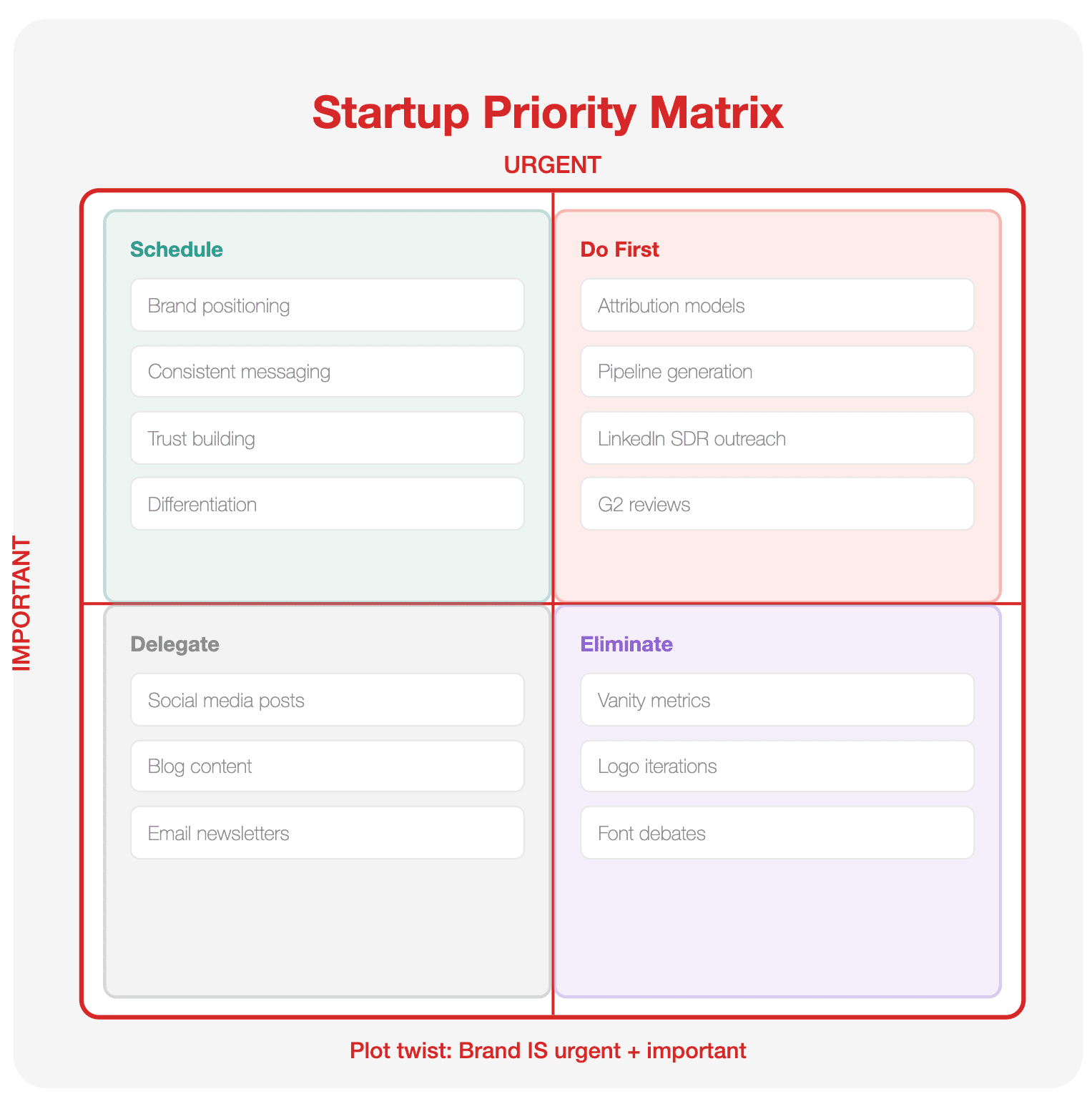
In early-stage companies, "brand" is often seen as window dressing - something for the Series C rebrand, not the scrappy growth sprints. Founders want attribution models, not archetypes. Pipeline, not positioning.
But here’s the catch: the fastest-growing companies aren’t waiting until things slow down to build their brand. They know that in a world drowning in choice, your brand is your shortcut to trust.
We’re not talking about fonts and logos (though your typeface from 2011 is quietly hurting you). We’re talking about clarity, coherence, and repeatable storytelling.
Because if your prospects can’t tell you apart from the other 14 tools they’re evaluating on G2, no amount of LinkedIn SDR-ing will save you.
“But we don’t have budget for brand work.”
Cool. Do you have budget for confusion? For commoditization? For paying $80 per click just to maybe get on a prospect’s radar?
Exactly.
Reality Bites: The Brand Debt You’re Already Carrying
Like tech debt, but it makes your messaging smell like burnt toast.
Let’s unpack a painful truth: every time you launch a new product, post a disjointed LinkedIn ad, or roll out pricing before your positioning’s clear - you’re taking on brand debt.
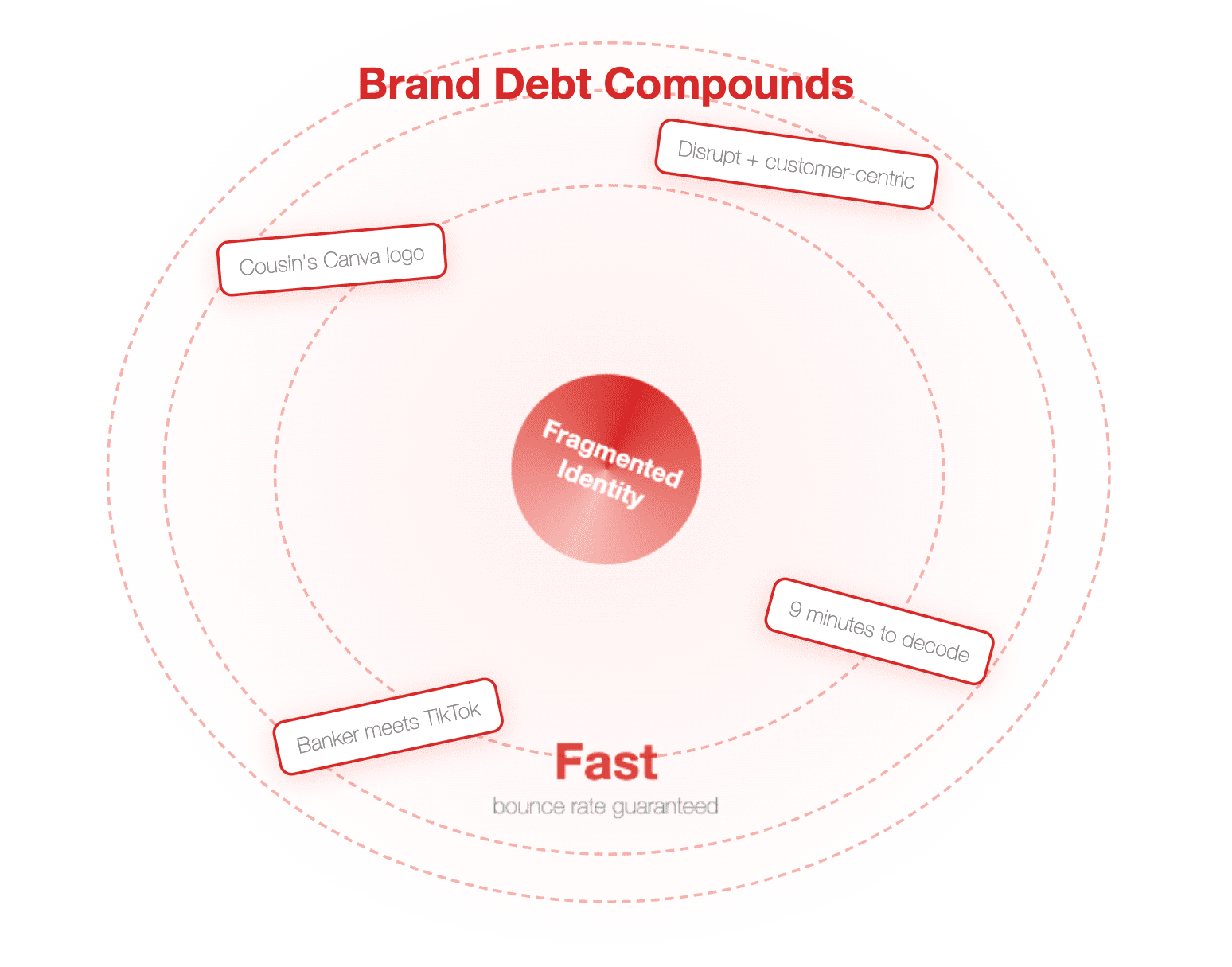
And much like tech debt, it compounds. Fast.
You start with:
- A logo your co-founder’s cousin made in Canva.
- A mission statement that includes “disrupt” and “customer-centric” in the same sentence.
- A tone of voice that switches between “buttoned-up B2B banker” and “TikTok intern with a ring light.”
The result? Fragmented identity. Mixed messages. Low trust.
Buyers - especially in B2B - don’t want to spend 9 minutes decoding your homepage to understand what you do. They’ll bounce faster than a Verstappen overtake if things aren’t crystal clear.
So while your brand may be “still evolving,” your audience is already making decisions.
Brand in the Boardroom: Why Your CFO Doesn’t Care (Yet)
Spoiler: They think brand is fluffy until revenue sneezes.
Convincing the board or CFO to care about brand is a bit like getting your dad to take probiotics. They’ll resist - until something breaks.
So your job isn’t to argue brand vs performance. It’s to show how brand amplifies performance.
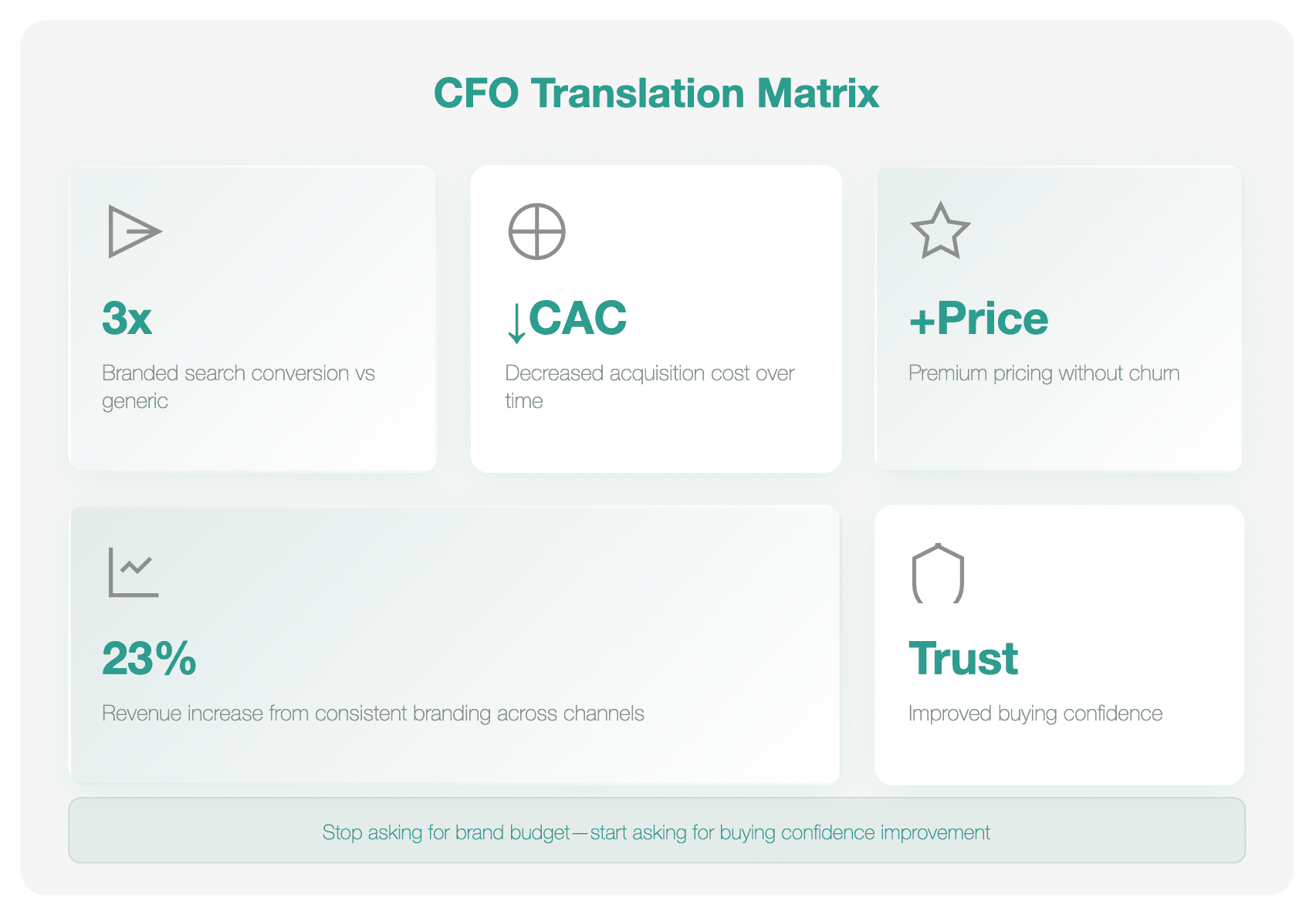
That means translating abstract concepts into business terms. Try:
- “We’re not building brand awareness. We’re decreasing CAC over time.”
- “Brand isn’t soft. It’s a force multiplier for every touchpoint in the funnel.”
- “We’re not investing in color palettes. We’re shortening the sales cycle by making our value easier to grasp.”
Still facing skepticism? Hit them with data:
- Branded search terms convert 2–3x better than generic ones.
- Companies with strong brand equity can raise prices without losing customers (hello, Apple).
- Consistent branding across channels increases revenue by up to 23%.
Metrics matter - but so does framing. Stop asking for budget to ‘build a brand.’ Start asking for budget to ‘improve buying confidence.’
Your Brand Isn't Your Logo. It's a System.
And no, “bold blue with a sprinkle of trust” isn’t a system.
Here’s the thing: brand isn’t a deliverable. It’s an operating system. One that should inform every demo, every job ad, every customer success call.
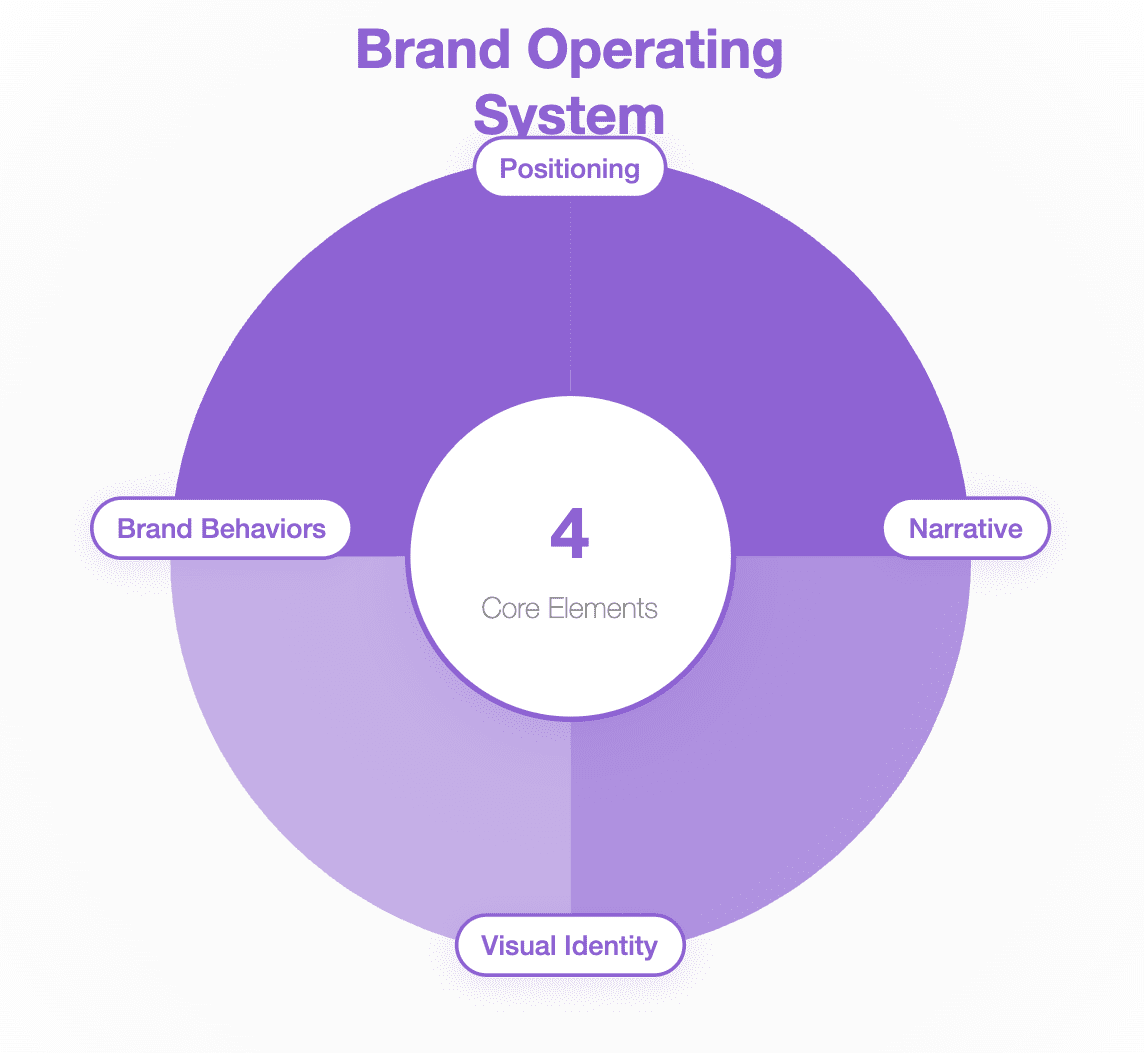
At minimum, your brand system at growth stage should include:
- Positioning: Who are we for, and what problem do we solve better than anyone else?
- Narrative: What’s our point of view on the world - and how do we communicate it?
- Visual & Verbal Identity: Fonts, colors, imagery, tone, and how we show up consistently.
- Brand Behaviors: What does it feel like to work with us or buy from us?
This system doesn’t have to be perfect. But it does have to be codified. Otherwise, you’ll spend your days editing rogue decks and cringing at “fun” posts that feel like a hostage note from your intern.
Need to start somewhere? Get your positioning and narrative locked first. Everything else flows from there.
Branding on a Budget (Without Losing the Plot)
Because sometimes your brand budget is a $49 Figma subscription and a dream.
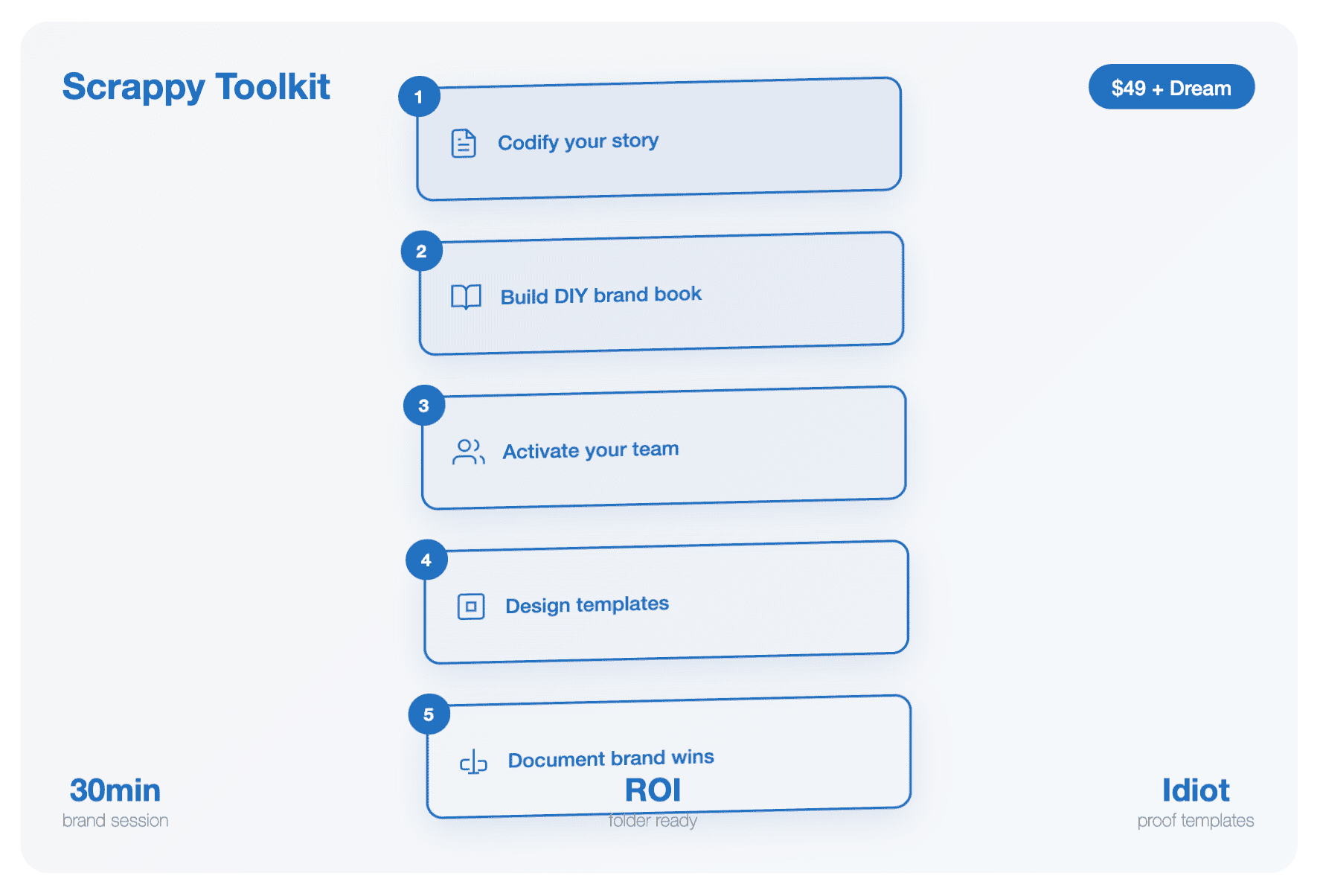
Let’s get scrappy. Here’s how to build the foundations without blowing the bank:
1. Codify your story
Write the one-pager. Who you help, what you do, why you matter, and how you're different. Use it to audit your site, pitch deck, and outbound.
2. Build a DIY brand book
Yes, in Google Slides. Include logo usage, tone guidelines, color palette, and writing dos/don’ts. Doesn’t have to be award-winning - just consistent.
3. Activate your team
Brand isn’t marketing’s job alone. Get sales, support, and product talking the same language. Run a 30-min brand narrative session and record it. Bonus: turn it into internal training.
4. Design templates
Decks, one-pagers, blog banners. Anything that gets reused should be brand-aligned and idiot-proof. Your future self will thank you.
5. Document brand wins
Capture screenshots of branded search, higher conversion rates, standout content, etc. These will become your brand ROI folder for the next budget meeting.
Bonus Bits: Brand Smell Test
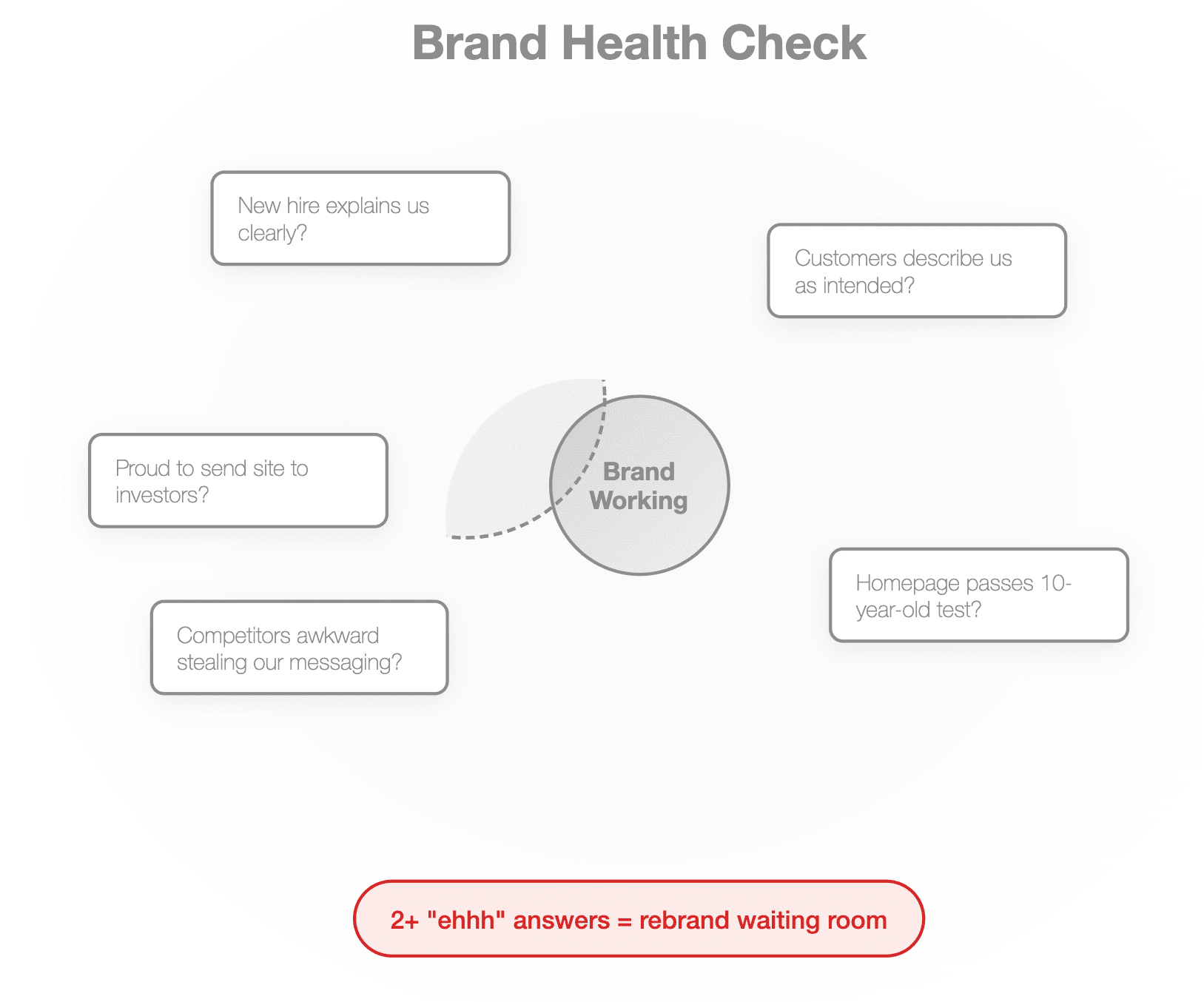
Not sure if your brand’s working? Ask these:
- Can a new hire explain what we do without sounding confused?
- Do our top customers describe us in the way we want to be perceived?
- Would our competitors sound awkward trying to steal our messaging?
- Does our homepage pass the “explain to a 10-year-old” test?
- Are we proud to send our website to a potential investor?
If you answered “ehhh…” to more than two - welcome to the rebrand waiting room.
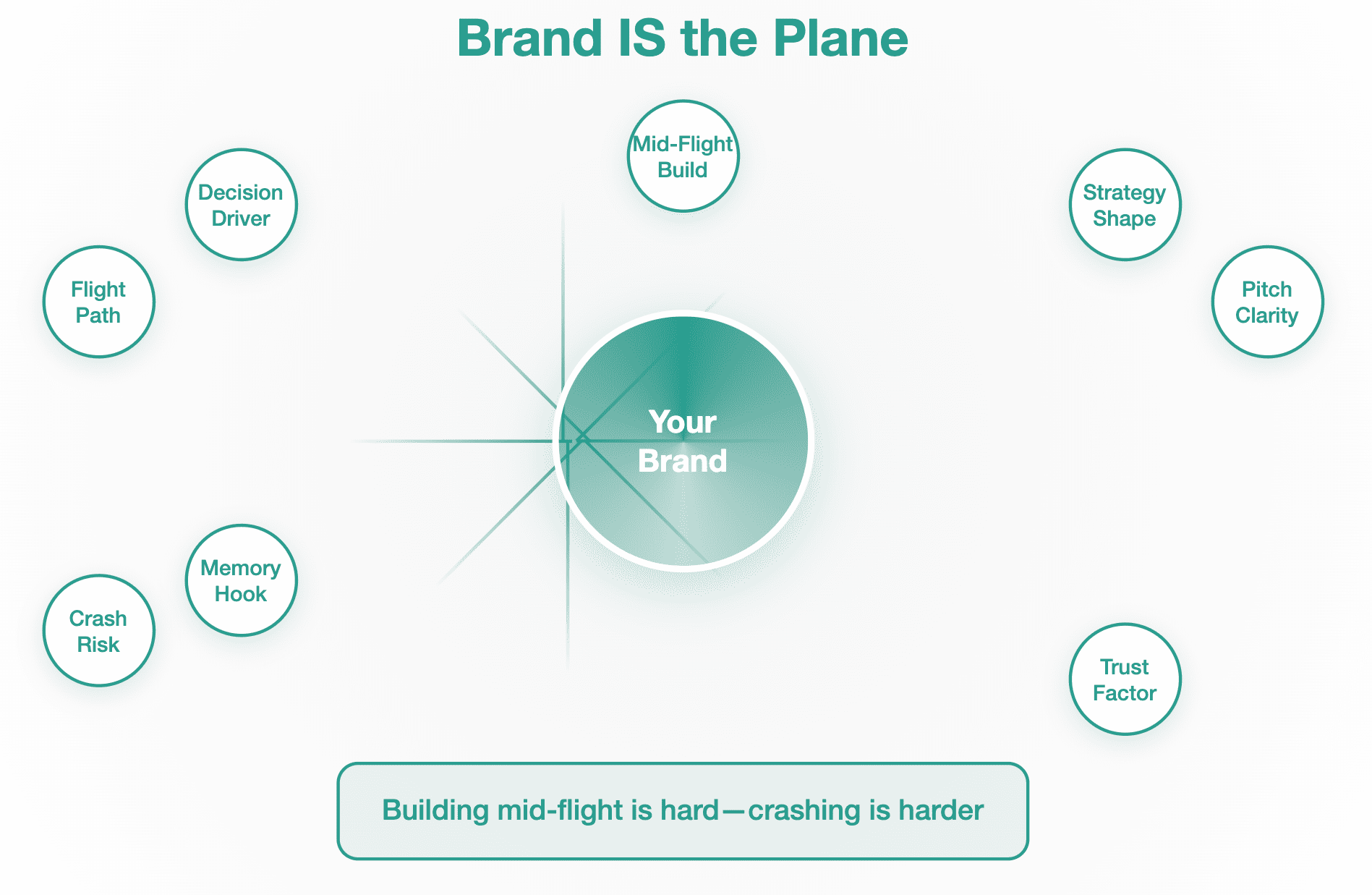
Brand Is the Plane
If there’s one truth we’ve learned from doing this a dozen times: your brand is not just the paint on the fuselage. It is the plane.
It's the shape of your strategy. The clarity in your pitch. The thing people remember when they're deciding whether to trust you - or ignore you.
So yeah, building it mid-flight is hard. But it’s harder to crash.
Want help decoding or defending your brand? Start with the story. The rest will follow.
FAQ
1. Do we really need to invest in brand this early?
Yes, because you're already building a brand whether you like it or not - through every tweet, sales call, and typo-laden onboarding doc. Doing it intentionally early helps you build trust faster and reduces the cost of fixing perception later.
2. What’s the biggest mistake growth-stage companies make with branding?
Treating it like a cosmetic exercise. Slapping a logo and a mood board on top of messy messaging is like putting lipstick on a pitch deck. The real power comes from defining positioning, narrative, and consistency across the board.
3. How do I convince leadership to prioritize branding?
Speak their language. Link brand to revenue impact: lower CAC, faster sales cycles, better retention. Share examples of brand-led growth and show how brand drives buyer confidence at every stage of the funnel.
4. Can we build a strong brand without hiring a big agency?
Absolutely. Start by clarifying your story and applying it consistently. Small internal teams (or solo marketers) can punch above their weight with clear narrative, simple design rules, and aligned messaging across channels.
5. Our product is still evolving - should we wait to define our brand?
Nope. Brand clarity actually helps you steer product evolution. A strong narrative attracts better-fit customers, shapes feature prioritization, and prevents you from chasing shiny objects that don’t align with your value.
6. How does brand impact performance marketing?
Good brand shortens the path to conversion. It boosts ad recall, increases CTRs on branded search, and makes people more likely to click 'book a demo' because they already trust you. It also improves retargeting performance by creating familiarity.
7. What’s the minimum viable brand system we need?
You need a clear positioning statement, one consistent narrative, a tone of voice guide, a visual identity set of tools (even if it's barebones), and shared language across departments. If your team can’t describe the company the same way, you’ve got a problem.
8. How do we measure brand success without brand lift studies?
Look at indirect signals: rise in branded search, referral traffic, organic mentions, direct traffic growth, sales call readiness, or customer word-of-mouth. Also track consistency: is your brand showing up the same way across decks, ads, and support emails?
9. How do I make sure our brand scales with us?
Codify it. Document the narrative, tone, values, and visual system in an accessible brand playbook. Make onboarding brand literacy part of new hire training. And revisit your positioning every 6–12 months as your market and product mature.
10. Can we evolve the brand later without confusing people?
Yes, but only if the foundation is solid. If your core message is clear and trusted, design and messaging can flex without breaking trust. Confusion only happens when you rebrand without a story or shift tone without purpose.